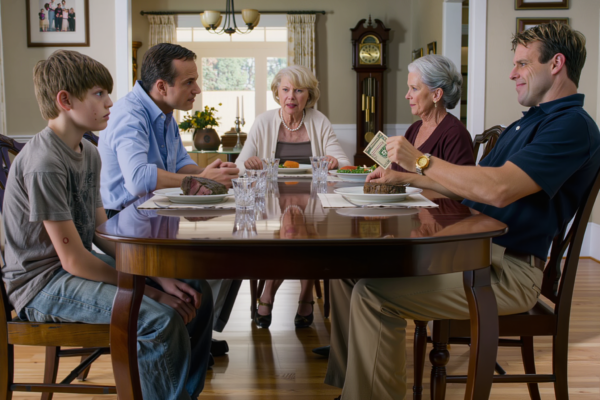
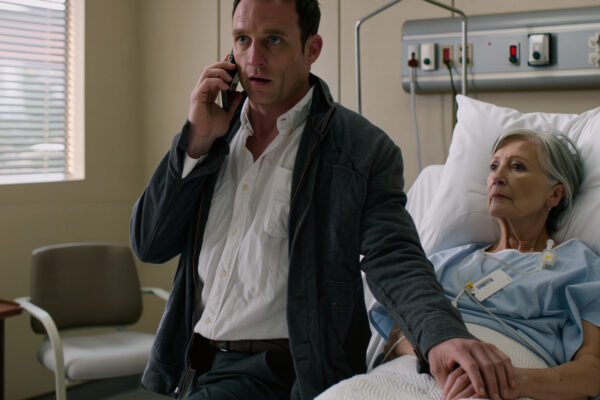
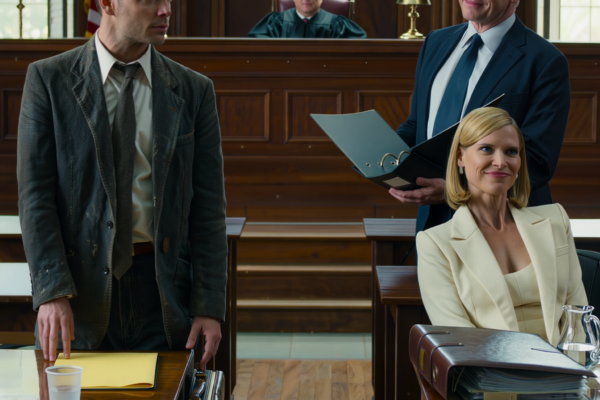
When my husband and mother-in-law heard the doctor say I had three days left, she smirked and said, “Three days? Perfect. I’m taking the house.” My husband laughed. “And in three days, I can marry Jennifer.” After they left, I called my father and said, “Dad, it’s time.” He answered, “I’ve been waiting for this call.”
The Three Days They Had Already Spent
“Three days,” Eleanor said.
Not cried.
Not whispered.
Said.
She sat two chairs away from me in Dr. Whitfield’s office, one hand resting on the strap of her handbag, as if we were discussing a delayed flight instead of how long I might have left to live.
The doctor had just finished explaining the mass in my head.
Aggressive-looking.
Advanced.
Tests still incomplete, but concerning enough that he had used phrases like rapid progression and extremely limited time.
Then he gave me the number.
Three days, perhaps less.
The room had gone strangely quiet after that.
I remember staring at my hands in my lap.
My wedding ring looked absurdly normal.
Eleven years of marriage reduced, in that moment, to a thin gold band catching fluorescent hospital light.
I waited for Warren to reach for me.
He didn’t.
His mother exhaled.
Then she turned slightly toward him.
“Three days,” she repeated.
Warren’s face remained unreadable.
Eleanor nodded once, as if confirming something to herself.
“Perfect.”
I looked at her.
“What?”
She glanced at me, almost surprised I had spoken.
Then she said, “I’m taking the house.”
Dr. Whitfield’s eyes moved from her to me.
For one second I genuinely believed I had misunderstood.
I laughed.
Not because anything was funny.
It was one dry, disbelieving sound that escaped before I could stop it.
Eleanor didn’t flinch.
She was already talking about paperwork.
The deed.
The family.
How the property should have remained with “the right people” in the first place.
Warren still hadn’t touched me.
I turned toward him.
That was when he finally spoke.
He leaned back in the chair.
A faint smile crossed his face.
“And in three days,” he said, “I can marry Jennifer.”
The name hit differently from the diagnosis.
Not harder.
Cleaner.
A diagnosis can arrive from nowhere.
Jennifer had been standing in the corners of my marriage for almost a year.
I just hadn’t allowed myself to look directly at her.
The late meetings.
The phone angled away from me.
The sudden interest in passwords.
The way Warren had begun smiling at his screen with an expression I remembered from when we first met.
Now he had named her himself.
In a doctor’s office.
While I was sitting three feet away after being told I might have seventy-two hours left.
Dr. Whitfield closed the folder on his desk.
His expression was one part concern and one part the stunned discomfort of a person who had accidentally opened a door into a family room nobody should have been invited into.
“I’ll give you a few minutes,” he said.
He stood.
Before leaving, he looked directly at me.
“Claire, a nurse will come back with information about symptom management and next steps. We still have additional records to review.”
I nodded.
At the time, I barely registered the second sentence.
We still have additional records to review.
All I heard was three days.
The door closed.
Eleanor adjusted one cuff of her cream jacket.
“You should think practically,” she said.
I looked at her.
“Practically.”
“You heard the doctor.”
“So did you.”
“No one is saying this is easy.”
I nearly laughed again.
Warren rubbed one hand over his jaw.
“Mom.”
“What? Somebody has to think about what happens after.”
I stared at my husband.
“Is Jennifer coming to the funeral?”
That wiped the smile from his face.
“Claire.”
“I’m asking.”
“This isn’t the time.”
“When is the time, Warren?”
He looked toward the window.
Eleanor answered for him.
“You’re upset.”
“I’ve just been told I’m dying.”
“Yes.”
“And within thirty seconds you claimed my house.”
Her mouth tightened.
“It was your mother’s house before it was yours.”
That sentence told me something I did not yet fully understand.
Before I could ask what she meant, Warren stood.
“Can we not do this here?”
I looked up at him.
He had said those words in different forms throughout our marriage.
Can we not do this now?
Can we talk about it later?
You know how my mother is.
Don’t make this bigger than it needs to be.
For eleven years, almost every disagreement had ended with me shrinking the question until it became small enough for Warren to live beside.
That afternoon, for the first time, I saw what all that shrinking had bought me.
Nothing.
I put on my coat.
Warren glanced at me.
“Do you want me to drive you?”
I stared at him.
He sounded sincere.
That was the strangest part.
People are capable of extraordinary cruelty without becoming monsters in every moment.
Warren could plan a future with another woman while I sat under a death sentence and still think offering me a ride home counted as kindness.
“No,” I said.
“I’ll manage.”
I walked out.
My headache was still there.
It had been there for three weeks by then.
Dull at first.
Pressure behind my right eye.
Then dizziness.
Then a morning when I tried to stand beside the bed and the room tilted hard enough that I had to sit back down.
Warren had been in the kitchen scrolling on his phone.
“I need to go to the hospital,” I told him.
He didn’t look up.
“For a headache?”
“I almost fell.”
“Take something.”
“I have.”
He sighed.
“I have a work thing I can’t move today.”
That was how I drove myself.
Eleanor volunteered to meet me there.
At the time, I mistook that for concern.
Later, I understood she wanted information.
Accurate information.
Immediate information.
The kind a person wants when she believes someone else’s death is about to solve a property problem.
I sat in my car in the hospital parking garage for several minutes after the appointment.
No tears came.
My body seemed to have skipped over crying.
I was thirty-eight years old.
I had a husband who wanted to marry someone named Jennifer three days after my expected death.
A mother-in-law already discussing the house.
A doctor who had just told me time might be measured in hours instead of years.
And suddenly the only person I wanted was my father.
Walter answered on the second ring.
“Hey, kiddo.”
I opened my mouth.
Nothing came out.
“Claire?”
“Dad.”
My voice broke.
He went quiet immediately.
“What happened?”
I put one hand over my eyes.
“The doctor says I have three days.”
Silence.
Not the empty kind I had just experienced inside the hospital.
This silence was full.
Listening.
“What doctor?”
I told him.
“What exactly did he say?”
“There’s a mass. They think it’s aggressive. He said maybe three days.”
My father inhaled slowly.
“Where are you?”
“Parking garage.”
“Are you alone?”
“Yes.”
“Warren?”
I looked through the windshield.
“He’s with his mother.”
Another silence.
Then I said, “Dad, it’s time.”
I don’t know why I chose those words.
Maybe because some part of me had known for months that my marriage was already standing beside an edge.
Maybe because Walter and I had always been able to speak in unfinished sentences.
He understood things before I could explain them.
This time, though, his response surprised me.
“I’ve been waiting for this call.”
I lowered my hand.
“What?”
“Don’t go home.”
“Dad—”
“Come here.”
“What are you talking about?”
“Claire, please.”
Something in his voice changed.
Not panic.
Urgency held under control.
“There are things you need to know.”
“What things?”
“About Warren.”
My stomach turned.
“And the house.”
I gripped the steering wheel.
“What about the house?”
“Come here first.”
For perhaps the first time that day, I stopped thinking about dying.
I drove to my father’s house.
Walter lived forty minutes away in the same brick ranch house where I had spent most of high school.
My mother, Diane, had died six years earlier.
Cancer.
Different from what the doctors thought I had, but the word itself still carried her shape in our family.
Her gardening gloves remained in the mudroom for two years after she died because Dad couldn’t throw them out.
Eventually I did.
The house I shared with Warren had originally belonged to her family.
That much I knew.
What I didn’t understand was how the ownership had changed after her death.
Walter was sitting on the front porch when I pulled up.
He stood before I shut off the engine.
I barely reached the steps before he wrapped both arms around me.
My father was not an especially demonstrative man.
He loved through repairs.
Oil changes.
Sending weather alerts.
Arriving too early.
That hug frightened me more than the doctor had.
When he finally stepped back, his eyes were wet.
“Come inside.”
We sat at the kitchen table.
My mother’s old blue ceramic bowl still sat in the center filled with lemons.
Walter had made coffee and forgotten to pour it.
“You need to tell me everything the doctor said.”
So I did.
The headache.
The scan.
The mass.
The rushed results.
Three days.
Then Warren.
Jennifer.
Eleanor.
The house.
My father listened without interrupting.
When I finished, he pressed both palms flat against the table.
“Did you get a second opinion?”
“No.”
“Did they biopsy it?”
“No.”
“Did they review all the imaging?”
“I don’t know.”
His jaw tightened.
“Then we start there.”
“Dad, he was very clear.”
“Doctors can be clear and wrong.”
“You think I’m not dying?”
“I think nobody gets to decide you have three days without another qualified physician looking at everything.”
I started crying then.
Not because he sounded hopeful.
Because somebody was finally fighting for time I had already been told I didn’t have.
Walter came around the table and sat beside me.
After a while, he said, “There’s more.”
I wiped my face.
“About Warren?”
“Yes.”
“How much do you know?”
My father looked toward the kitchen window.
“Enough that you’re going to be angry with me.”
“That’s not an answer.”
“I know.”
He went down the hall and returned carrying a gray document box.
He set it on the table.
For eighteen months, Walter had been quietly gathering information about my husband.
Not himself.
He had hired a licensed private investigator after noticing financial activity that didn’t make sense.
Warren had always presented himself as comfortable but careful.
Good salary.
Conservative spending.
Yet my father had noticed charges and behaviors that did not fit that picture.
Hotel stays.
Jewelry.
A second phone plan connected through a small company account.
Meals in places Warren claimed he had never visited.
At first, Walter thought the problem was debt.
Then he suspected an affair.
“I didn’t tell you because I didn’t want to walk into your marriage with half a story,” he said.
I stared at him.
“You knew for a year and a half?”
“I suspected for a year and a half.”
“What did you know?”
“Later, more.”
“How much later?”
“About six months ago, we had enough to identify Jennifer.”
I stood.
My chair scraped backward.
“You knew her name?”
“Yes.”
“And you didn’t tell me?”
“No.”
“Why?”
“Because every time I came close, you defended him before I even accused him.”
“That is not your decision to make.”
“You’re right.”
The answer stopped me.
No excuses.
No I was protecting you.
No you wouldn’t have listened.
Just:
“You’re right.”
My anger had nowhere easy to go.
Walter opened the box.
“I made the wrong choice. I thought proof would hurt less than suspicion.”
“It doesn’t.”
“I know that now.”
He showed me summaries.
Dates.
Photographs taken in public places.
Hotel records lawfully obtained through the investigator’s work.
Evidence Warren and Jennifer had been seeing each other for more than a year.
I sat back down.
Each individual item seemed almost boring.
Two adults entering a hotel lobby.
Dinner.
A parking garage.
A jewelry purchase.
The cumulative effect was worse than a dramatic confession.
Routine.
They had built a routine together.
While I had been trying to understand why my husband seemed tired of me, Warren had been spending energy elsewhere.
Then Walter pulled out another folder.
“This is the part that worries me more.”
Inside were copies of documents Warren had brought home over the previous year.
I recognized them.
He had asked me to sign forms “in case something happened.”
Emergency paperwork.
Financial authorizations.
He presented them as ordinary married-adult planning.
I had delayed.
Not because I suspected fraud.
Because paperwork bored me and I kept forgetting.
For once, procrastination had served me.
Some of the documents would have given Warren broad authority over assets he believed I controlled.
“He kept pushing these because he thinks your mother left everything directly to you,” Walter said.
“She did.”
“No.”
I looked at him.
“What?”
“That’s what Warren thinks.”
“What do you mean, no?”
My father opened another envelope.
Two years earlier, after concerns about Warren’s finances began surfacing, Walter had worked with the estate attorney who originally handled my mother’s property.
Assets connected to my mother—including the house—had been restructured into an irrevocable trust.
I was the sole beneficiary.
But I did not personally hold title to the house.
The trust did.
That distinction mattered.
A spouse could not simply take control through a casual power-of-attorney form over assets I did not personally own.
The trust had its own terms.
Its own trustee.
Its own protections.
Warren knew the house came from my mother.
He did not know how ownership was structured.
Neither did Eleanor.
I stared at my father.
“You changed this without telling me?”
“We didn’t take anything from you.”
“That isn’t what I asked.”
“No.”
Walter folded his hands.
“Your mother’s estate plan already allowed restructuring. After she died, we completed what she had discussed with the lawyer before she got sick.”
“Why didn’t anyone tell me?”
“Because the benefit to you didn’t change. You still had the right to live there and benefit from the property.”
“That is not the point.”
“I know.”
I stood again.
In less than six hours, almost every person I trusted had revealed a version of my life I had not known existed.
My husband was cheating.
His mother wanted my house.
My father had investigated my marriage.
My mother’s property had been placed into a trust whose mechanics I barely understood.
And I might die in three days.
“I need air.”
Walter nodded.
I went into the backyard.
My mother had planted hydrangeas along the fence.
Most were bare at that time of year.
I stood beside them and tried to understand what exactly I was grieving.
My marriage?
My health?
My father’s secrecy?
The answer was all of it.
Walter came outside several minutes later.
He did not approach until I looked at him.
“Do you want me to explain more?”
“Not now.”
“Okay.”
“Get me that second opinion.”
“I already called.”
I stared at him.
“You what?”
“A colleague I’ve known for twenty years is an oncologist. He’s reviewing whether his group can see you tomorrow morning.”
I almost laughed.
“You really have been waiting for this call.”
His face crumpled slightly.
“No.”
He shook his head.
“I’ve been afraid of it.”
That night, I slept in my father’s guest room.
Or tried to.
Warren called five times.
I did not answer.
He texted:
Where are you?
Then:
Mom is upset. Can we please not make this worse?
Then:
Claire, we need to discuss practical arrangements.
Practical.
Eleanor’s word.
I turned off the phone.
At two in the morning, I got up and walked through the house.
The hallway light had always flickered slightly.
My mother hated it.
Dad never fixed it because he claimed the problem was “temperamental wiring,” which was his way of admitting he didn’t know.
I stood outside my old bedroom.
The walls were a different color now.
The room no longer belonged to the girl I had been.
That helped.
I was not twenty-seven anymore.
Not newly married.
Not trying to convince Eleanor I was good enough for her son.
At eight the next morning, Walter drove me to the second oncology appointment.
Dr. Samuel Levin reviewed the scans before speaking to us.
He also ordered additional imaging because parts of the original study were incomplete.
Nobody promised good news.
That mattered.
The staff did not tell me not to worry.
They did not dismiss Whitfield.
They simply said the information did not yet justify the certainty I had been given.
We waited.
Tests took hours.
I became more frightened as hope appeared.
Despair is terrible, but certainty has a kind of numbness.
Hope reopens every nerve.
Late in the afternoon, Dr. Levin sat down with us.
“The mass is real.”
I gripped Walter’s hand.
“But I do not agree with the three-day prognosis.”
I stared at him.
“What does that mean?”
“It means we need treatment quickly. Surgery is likely. There are risks. Recovery will not be simple.”
“Am I dying?”
He paused.
“Everyone is eventually.”
I almost laughed.
Then his expression softened.
“I do not see evidence that you have seventy-two hours to live.”
My father’s hand tightened around mine.
I started crying before Dr. Levin finished.
The initial interpretation had been based on an incomplete and rushed reading of imaging that made the lesion appear more immediately catastrophic than subsequent studies suggested.
It was serious.
It required urgent treatment.
But it was treatable.
Survivable.
Not guaranteed.
Not easy.
But possible.
I bent forward with both hands over my face.
Walter put his arm around me.
For perhaps a minute, I was simply alive.
Not betrayed.
Not married.
Not rich or poor or protected.
Alive.
The emotion was so large it became physical.
When I finally looked up, Dr. Levin was waiting.
“We should talk about surgery.”
“Yes,” I said.
“Soon.”
“Yes.”
We scheduled it.
Then I asked for one thing.
“Please don’t release information to my husband without my permission.”
The doctor nodded.
“That is your choice.”
That afternoon, Walter and I met with the attorney involved in my mother’s trust.
Her name was Margaret Sloan.
She was in her sixties, precise without being cold, and unimpressed by family drama.
She explained the structure more clearly than anyone had before.
The house belonged to the trust.
I was the sole beneficiary.
I had occupancy and beneficial rights.
Warren did not own it.
Eleanor had no claim to it simply because I died.
Depending on the trust terms, the property would remain administered according to my mother’s estate plan rather than automatically becoming Warren’s personal asset.
“What if I had signed the power-of-attorney forms he brought me?”
“It would not have transferred title out of the trust.”
“So he couldn’t have taken the house.”
“Not through those forms.”
I sat back.
Eleanor had been planning for a property she never had a legal path to claim.
Warren had been planning around assets he did not fully understand.
Then Margaret asked, “Do you want to remain married?”
The bluntness startled me.
Walter looked away.
I stared at the table.
Twenty-four hours earlier, I had believed I would die married to Warren.
Now I had to decide whether I wanted to live married to him.
“I don’t know.”
“That is an acceptable answer.”
“There’s Jennifer.”
“I understand.”
“And he’s been trying to get me to sign financial authority documents.”
“That is relevant.”
“Does that mean he gets nothing in a divorce?”
Margaret shook her head.
“Divorce is not a punishment mechanism. Separate property, marital property, trust assets, debts, conduct, and state law all matter. We document facts and let the process work.”
That steadied me.
I did not want a fantasy courtroom victory.
I wanted clean separation.
I wanted treatment.
I wanted a life that did not require me to interpret every silence from my husband.
Margaret referred me to a family-law attorney.
We began preserving records.
The investigator’s findings.
The documents Warren had asked me to sign.
Financial information.
Nothing stolen.
Nothing accessed unlawfully.
Facts.
That evening, I called Warren.
He answered immediately.
“Claire.”
He sounded breathless.
“Where are you?”
“With Dad.”
“Why haven’t you answered?”
“I had another appointment.”
Silence.
“What kind?”
“Oncology.”
His voice changed.
“Oh.”
I closed my eyes.
“I’m not dying in three days.”
Nothing.
Not relief.
No sharp inhale.
No “thank God.”
Just silence.
I counted without meaning to.
One.
Two.
Three.
Then Warren said, “What do you mean?”
“The first prognosis was wrong.”
“How wrong?”
“Wrong enough that I have surgery scheduled.”
He remained quiet.
I thought of the man he had been eleven years earlier.
The man who held my face with both hands on our wedding day because he could not stop smiling.
The man who slept on the floor beside my mother’s hospital bed because there were no chairs left.
I had expected some fragment of that man to return when he heard I might live.
Instead, he asked:
“So what happens now?”
The question was almost funny.
“With what?”
“Everything.”
“The house?”
He didn’t answer.
“Jennifer?”
Another silence.
Finally he said, “Claire, you’re twisting this.”
“How?”
“What I said yesterday was horrible.”
“Yes.”
“I was in shock.”
“You were planning a wedding.”
“That’s not what I meant.”
“You used her name.”
“Because you already suspected.”
I laughed softly.
There it was.
His defense was that I should have known.
“Does your mother know I’m not dying?”
“No.”
“Tell her.”
“Claire—”
“I’m hanging up.”
“Wait.”
I almost did.
Then he said, “Can I come see you?”
“No.”
“Why?”
“Because I have surgery to prepare for.”
“I’m your husband.”
“You were my husband yesterday too.”
He had no answer.
I ended the call.
Eleanor learned shortly afterward.
I know because she called my father.
Walter let it go to voicemail.
Then she called me.
I answered once.
“Claire.”
“Yes.”
“I heard there has been some misunderstanding.”
“About whether I’m dying?”
She inhaled.
“The doctor apparently overstated things.”
“Yes.”
“I’m relieved.”
Her voice was careful.
I wanted to believe her.
Maybe some part of her was relieved.
People are complicated enough to feel disappointed about property and still not actively wish someone dead.
I gave her that much.
Then she said, “We should clarify the house situation.”
There it was.
“No.”
A pause.
“What do you mean, no?”
“I mean I am preparing for surgery, and I will not discuss my mother’s property with you.”
“I only meant that yesterday was emotional.”
“You claimed it thirty seconds after hearing I might die.”
“I was thinking about continuity.”
“You were thinking about curtains.”
“That is unfair.”
“Probably.”
Another silence.
Then I said, “The house does not belong to Warren.”
“What?”
“It doesn’t belong to me personally either.”
I could almost hear her sit straighter.
“What are you saying?”
“It belongs to a trust.”
“That makes no sense.”
“It makes perfect sense. You just didn’t know.”
She tried to speak.
I ended the call.
Two days later, I went into surgery.
Before they wheeled me back, Walter sat beside the bed.
He held my hand.
“You scared?”
“Yes.”
“Good.”
I looked at him.
“That’s a terrible thing to say.”
“You always get bossy when you’re scared.”
“I’m not bossy.”
The nurse glanced over.
Walter smiled.
“That reaction tells me you’re ready.”
I laughed.
It hurt my head.
But I laughed.
The surgery went as well as anyone could reasonably hope.
Recovery did not.
Recovery was slow.
Painful.
Humbling.
There were days I could not read because concentration exhausted me.
Days when walking to the bathroom felt like an expedition.
Days when I resented every encouraging phrase.
You’re so strong.
You’ve got this.
One step at a time.
Some days I did not want to be strong.
I wanted my mother.
I wanted the marriage I thought I had.
I wanted to go backward to before headaches and Jennifer and three days and trusts.
Walter never told me I should be grateful.
He simply came.
Appointments.
Meals.
Medication schedules.
Quiet television in hospital rooms.
Once, during a particularly bad week, I snapped at him because he bought the wrong yogurt.
He looked at the container.
“You hate strawberry?”
“I’ve always hated strawberry.”
“You ate it as a kid.”
“I was eight.”
He threw the yogurt into his bag.
“Apparently I’ve failed as a father.”
I started crying.
He sat beside me until I stopped.
That was recovery.
Not empowerment speeches.
Wrong yogurt.
The divorce proceeded alongside treatment.
I hated that.
I wanted life to schedule one catastrophe at a time.
It did not.
Warren resisted at first.
Then apologized.
Then blamed stress.
Then blamed Eleanor.
Then blamed the affair on loneliness.
Then returned to apologizing.
Jennifer disappeared from his plans before the divorce was final.
I never learned whether she left him or whether the relationship could not survive daylight.
I did not ask.
The house remained protected by the trust.
There was no dramatic moment where Eleanor was thrown onto a sidewalk because she had never lived there.
She had simply imagined inheriting something that was never available to her.
That seemed consequence enough.
Warren’s attempts to gain broad financial authority became part of the record.
So did the affair.
So did our actual marital finances.
The settlement was not annihilation.
It was division.
Clearer than our marriage had ever been.
Warren received what he was legally entitled to from marital property.
He received no ownership interest in the trust house because it was not his.
I kept the house.
More precisely, the trust continued to own it for my benefit.
That distinction became important to me.
Ownership, I had learned, is not always the same thing as entitlement.
Neither is marriage.
Neither is love.
Months after surgery, I went back to the house alone.
I had not lived there during early recovery because Walter’s place was easier.
No stairs.
Closer to doctors.
Less history.
The first thing I noticed when I opened the door was how stale the air smelled.
I opened windows.
Pulled sheets off furniture.
Made coffee.
Then I stood in the living room where Warren had once asked me to sign one of those “just in case” forms.
I remembered him placing the papers on the coffee table.
Nothing threatening.
Nothing dramatic.
“Everybody should have these,” he had said.
I believed him.
That memory hurt more than the affair photographs.
Jennifer represented desire.
The documents represented planning.
There is something uniquely painful about realizing someone was organizing around your trust while you were still giving it freely.
I collected the remaining things Warren had left.
Books.
A winter coat.
Two framed photographs.
A box of tools.
I did not throw anything out.
I arranged for him to collect them.
Then I changed the locks.
Not because I believed he would break in.
Because I wanted a physical action that matched the legal one.
The key he once carried no longer belonged to the door.
By spring, my hair had begun growing back where treatment had thinned it.
The headaches were different now.
Less constant.
Every ache still frightened me.
I learned that survival has its own kind of anxiety.
Everyone celebrates being told you have more time.
Nobody warns you that more time means living with the knowledge that time can be taken.
I returned to work gradually.
At first, half days.
Then full.
My concentration improved.
My stamina followed slowly.
Walter stopped calling every morning once I threatened to block him.
He called every other morning instead.
One Saturday, almost a year after the hospital office, we sat on my back porch.
The hydrangeas had started coming in.
Dad had brought coffee.
I said, “I’m still angry you didn’t tell me about Warren.”
“I know.”
“I understand why.”
“That doesn’t mean it was right.”
“No.”
He looked toward the yard.
“I thought I was protecting you the way your mother would have.”
“That’s exactly the problem.”
He nodded.
“I know.”
We sat quietly.
Then I asked, “Did Mom really know the trust would protect the house from a spouse?”
“Yes.”
“Why?”
Walter smiled faintly.
“Because she loved you.”
“That’s not an answer.”
“It’s the only one I have.”
He looked at me.
“Your mother liked Warren at first.”
“So did I.”
“She also believed people should have something that remained theirs even inside a marriage.”
“That sounds like Mom.”
“She said love is better when nobody has to stay because leaving would destroy them.”
I swallowed.
That sounded exactly like her.
The house felt different after that.
Less like a secret my father had engineered.
More like something my mother had tried to preserve without knowing whether I would ever need the protection.
I wished she had told me.
I wished Walter had told me.
I wished Warren had been a man who made those protections unnecessary.
Life is full of things that should have happened differently.
You do not heal by pretending otherwise.
The last time I saw Eleanor was at a mediation appointment connected to the divorce.
She looked older.
Not ruined.
Not destitute.
Just older.
She sat across from me and avoided my eyes until Warren left the room briefly.
Then she said, “I was cruel that day.”
I looked at her.
She folded her hands together.
“When the doctor said three days.”
“Yes.”
“I don’t expect you to forgive me.”
That surprised me.
“No?”
“No.”
She looked down.
“I spent years thinking the house was something your family had taken from ours.”
“It was my mother’s family’s property.”
“I know that now.”
“You knew it then.”
Her mouth tightened.
“Not in the way I wanted to.”
That was perhaps the most honest thing Eleanor had ever said to me.
She had built a story in which marriage made Warren entitled to my mother’s house.
Then she lived inside that story until a doctor’s terrible prognosis made her believe entitlement was about to become ownership.
“What did you think would happen?” I asked.
“If I actually died?”
She looked miserable.
“Yes.”
“I thought Warren would inherit through you.”
“And then?”
“He would keep the house.”
“For you.”
She did not answer.
I almost felt sorry for her.
Almost.
“I hope you understand why I don’t want a relationship with you.”
“I do.”
Warren came back into the room.
The conversation ended.
There was no reconciliation.
That was fine.
Not every apology exists to reopen a door.
The divorce became final.
I left the courthouse carrying one folder.
Walter waited outside.
He held out a paper cup.
“What is it?”
“Coffee.”
“What kind?”
“Not strawberry.”
I stared at him.
“That doesn’t even make sense.”
“I’ve been saving it for months.”
I laughed.
We walked toward the parking garage.
My father did not ask if I felt free.
I was grateful.
Freedom is too simple a word for ending an eleven-year marriage.
I felt grief.
Relief.
Anger.
Embarrassment.
Hope.
Loneliness.
All of it together.
I also felt hungry, so we stopped for lunch.
That mattered too.
Life continued through ordinary needs.
A year after the diagnosis, I went back to Dr. Levin for follow-up imaging.
Walter offered to come.
I told him no.
Then changed my mind in the parking lot and called him.
He was there in twenty minutes.
The scan was stable.
Not a guarantee.
A good result.
We celebrated with grocery-store cupcakes because the bakery we wanted was closed.
That evening, I drove home.
The trust house.
My house in every way that mattered to daily life.
The same front door.
Different key.
I set my purse on the chair by the entry.
On the kitchen counter was a stack of mail.
Nothing urgent.
No power-of-attorney forms.
No messages from Warren.
No Eleanor explaining what belonged to her.
I opened the back door and stepped outside.
My mother’s hydrangeas were blooming along the fence.
I had once thought the worst day of my life was the day a doctor said I had three days.
It wasn’t.
The worst part was not the diagnosis.
Not Warren’s affair.
Not Eleanor’s greed.
It was the moment I realized the two people sitting beside me were already arranging their lives around my absence while I was still in the room.
The strange thing is that the diagnosis was wrong.
But their reaction to it wasn’t.
That had been completely real.
I could not unknow it.
I no longer wanted to.
I sat on the back step until the evening cooled.
Inside, my phone rang once.
Walter.
I let it ring twice before answering.
“You okay?” he asked.
“Yes.”
A pause.
Then he said, “You sound like your mother.”
“Is that supposed to be a compliment?”
“Usually.”
I looked at the flowers.
“Good night, Dad.”
“Night, kiddo.”
I ended the call.
The house was quiet behind me.
Not empty.
Not waiting for someone else to claim it.
Just quiet.
For years, I had mistaken being loved for being safely included in other people’s plans.
Now I understood something better.
The people who love you do not start spending your absence before you are gone.
I went inside.
Locked the door.
And left the porch light on for myself.