Just 90 seconds before boarding my flight, I publicly announced that I was divorcing my billionaire CEO husband. He was with his mistress, waiting for her to give birth, when he saw the post. He immediately rushed to the airport, trying to reach me before I boarded—and suddenly, the man who had chosen someone else was desperate to stop me from leaving.
Eleven Words Under His Plate
Crawford knocked three times on the door of my Amsterdam apartment.
Not pounding. Not shouting.
Three measured knocks, spaced evenly apart, as if enough control could make the situation itself controlled.
I was standing in the kitchen with my second cup of coffee when they came. The apartment was small enough that I could see the front door from where I stood, beyond the narrow hall and the old wood floor that dipped slightly near the radiator.
I did not move at first.
He knocked again.
Then silence.
The morning outside was gray. Across the street, a woman was setting buckets of flowers in front of her shop. Orange ranunculus. White tulips. Pale pink roses wrapped in paper.
I put my coffee down and walked to the door.
The building had an old glass peephole, warped enough to make everything on the other side curve at the edges.
Crawford stood in the hallway wearing a dark wool coat.
He had shaved.
His hair was combed.
From a distance, he looked like the same man I had married four years earlier: controlled, expensive, composed.
But I knew Crawford’s face well enough to see what had changed.
He looked like someone holding a wall upright with both hands while pretending the structure was fine.
I stood there longer than he knew.
I remembered another door.
A hotel bathroom door the night before our wedding.
My veil hanging from a hook.
My phone in my hand.
His voice coming through the speaker in a voicemail he had meant to send someone else.
And one name.
Nichollet.
I had spent four years pretending that voicemail belonged to a version of our marriage that never happened.
Now Crawford was on the other side of my door in Amsterdam because the version that did happen had finally become impossible to ignore.
“I know you’re there,” he said.
His voice came through the wood.
“I’m not going to cause a scene.”
I closed my eyes.
Crawford had never caused scenes.
He had people for that.
Assistants to correct calendars.
Drivers to manage arrivals.
Lawyers to clean up inconvenient edges.
Public relations people to change the language around mistakes until the mistakes sounded temporary.
Even in our marriage, Crawford preferred problems that could be scheduled.
I turned away from the door.
“I just need you to hear me,” he said.
I went back to the kitchen and sat at the small oak table.
My coffee steamed between my hands.
“All right,” I said loudly enough for him to hear.
There was a pause.
Then Crawford said, “I was wrong.”
For four years, I had imagined what it would feel like to hear those words.
I thought they would satisfy something.
They didn’t.
They simply arrived late.
The first time Crawford told me he loved me, he had said it without hesitation.
That was what I remembered most about the man I married.
His certainty.
He could make decisions while everyone else was still organizing the question.
He could walk into a room already knowing where he wanted to sit, what outcome he expected, and how long he intended to stay.
At twenty-eight, I mistook that certainty for safety.
The night before our wedding, I was at the hotel alone.
Crawford was downstairs with friends.
I had showered and wrapped myself in the white robe the hotel had left on the bed. My veil hung on the back of the bathroom door so it would not wrinkle.
My phone buzzed.
A voicemail.
Crawford.
I smiled before I played it.
That is the part I remember most clearly.
I smiled.
Then his voice filled the bathroom.
He was speaking to someone he thought was his best friend.
I understood almost immediately that he had called the wrong number.
He was talking about marriage.
About me.
And then about Nichollet Pharaoh.
His college girlfriend.
His great love.
Those were his words.
He said there were people you loved because life fit, and people you loved because some part of you never learned how not to.
Nichollet, he said, belonged to the second category.
I played the voicemail three times.
The first time, I thought I had misunderstood.
The second time, I listened for context.
The third time, I stopped lying to myself about what I had heard.
Then I deleted nothing.
I told no one.
The next morning, I put on my dress.
I walked down the aisle.
Crawford looked at me the way a groom is supposed to look at his bride.
And I made a decision that would take four years to undo.
I believed people could carry an old love and still choose a new life.
I believed being chosen mattered more than what had been felt before.
Maybe that belief was not foolish.
Maybe only the person I applied it to was wrong.
For the first year, it was easy enough to believe I had been right.
Then work expanded.
Dinners moved.
Weekends disappeared.
Trips became obligations I was expected to understand.
Crawford never announced that our marriage mattered less.
That would have been easier to confront.
Instead, he behaved as though the marriage were permanent infrastructure.
Something built once.
Something that required no maintenance.
If I complained, he apologized.
If I withdrew, he noticed briefly.
If I stopped asking, he seemed relieved.
I became good at translating neglect into reasonable explanations.
He is busy.
The quarter is difficult.
The board is demanding more.
The travel is temporary.
This is what partnership looks like when one person carries extraordinary responsibility.
I told myself those things because the alternative required me to admit that I had heard the truth before the wedding and walked toward it anyway.
By our fourth anniversary, the marriage had become quiet enough that most people mistook it for stable.
Our anniversary was June 12.
That morning, I woke at five.
The Tribeca penthouse faced east, and summer light entered the kitchen early, turning the stone counters gold.
I decided to cook.
Really cook.
Not because pasta could repair a marriage.
I knew better than that.
But food had always been the language I used when ordinary words began failing.
My grandmother taught me to make pasta when I was nine.
She had believed dough knew when you were impatient.
“Push too hard,” she used to say, “and it fights you.”
So I worked slowly.
Flour.
Eggs.
Salt.
My palms pressed the dough until the surface became smooth.
I rolled it thin enough that I could almost see light through it, then cut wide sheets and left them drying over the rack.
I started the sauce before nine.
Italian sausage.
Cherry tomatoes.
Wine.
Hours of low heat.
The apartment filled with the smell of something that had been given time.
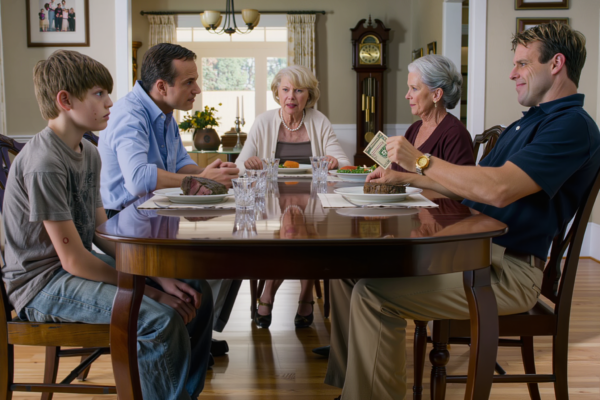
I set the dining table with a linen cloth I had ordered six weeks earlier.
Two candles.
Crawford’s favorite wine.
Two plates.
Under his plate, I placed a small card.
Eleven words.
Four years, and still glad it was you. Happy anniversary, Crawford.
I read it twice before sliding it beneath the plate.
At six forty-five, I heard the elevator.
The private doors opened.
His briefcase landed on the bench near the entryway.
I stood in the kitchen doorway.
Crawford entered while looking at his phone.
Then he saw me.
Then the table.
The candles.
The wine.
For one second, something crossed his face.
Not guilt.
Not affection.
Recognition.
The expression of a man remembering an appointment that had not been entered into the correct calendar.
“I forgot we had something tonight.”
I looked at him.
“It’s our anniversary.”
He glanced at the table again.
“I thought that was next week.”
I said nothing.
“I’m sorry.”
He was already moving toward the bedroom.
“I have the Meridian dinner. I can’t cancel. They’ve had it scheduled for weeks.”
The bedroom door closed behind him.
One candle had already begun dripping wax.
I remember watching it travel down the side.
Slowly.
Pointlessly.
When Crawford came back out, he had changed his tie.
He kissed my cheek.
“I’ll make it up to you.”
Then he left.
I sat down.
Poured wine.
Ate the pasta alone.
It was excellent.
That irritated me more than if I had ruined it.
Four hours of work, and the food had done exactly what it was supposed to do.
The marriage had not.
By midnight, the candles had burned low.
That was when Mr. Yun sent the photograph.
Crawford’s personal assistant had worked for him for nearly a decade.
Eight months earlier, Mr. Yun had become something else to me.
Not a friend exactly.
A witness.
That distinction mattered.
His message contained one photograph taken outside a restaurant on the Upper West Side.
Crawford was walking beside Nichollet Pharaoh.
His hand rested against the small of her back.
Her face was turned toward him.
She was laughing.
And she was unmistakably pregnant.
I looked at the photograph for a long time.
Then I poured another glass of wine.
I did not call Crawford.
I did not call Nichollet.
I did not throw the glass.
I went upstairs to my dressing room and opened the safe.
Inside was an envelope from Ms. Obasi.
Eight months earlier, I had walked into her office on Park Avenue South and said, “I think I’ve known for a long time. I’m waiting for myself to be ready.”
She did not ask whether I wanted revenge.
She asked what I wanted my life to look like after.
That question changed everything.
Most people imagine leaving as one dramatic decision.
A suitcase.
A slammed door.
A final argument.
Ms. Obasi taught me that leaving well was mostly administration.
Documents.
Accounts.
Copies.
Dates.
Evidence.
A destination.
“Not just somewhere to run,” she told me. “Somewhere that belongs to the life you are building next.”
She showed me an apartment listing in Amsterdam.
Second floor.
Narrow brick building.
Tall windows.
A small balcony.
De Pijp.
Bicycles on the street.
A flower market nearby.
Nothing about the apartment resembled my life in Manhattan.
That was why I chose it.
I wired the deposit that week.
I told no one.
For eight months, I prepared quietly.
Not because I enjoyed secrecy.
Because I had learned that Crawford responded to discomfort by controlling the available options.
If I confronted him before I was ready, the conversation would become about his explanations.
His timing.
His promises.
His request for patience.
I needed the next decision to belong entirely to me.
Mr. Yun helped because by then he had seen enough.
The late dinners.
The private hotel arrangements.
The unexplained schedule changes.
The payments that did not match the explanations.
He never dramatized what he sent.
A date.
A photograph.
A confirmation.
That was all.
Ms. Obasi handled the legal structure.
A forensic accountant reviewed financial records.
I kept copies.
Not because I wanted Crawford destroyed.
Because I wanted him unable to revise reality after I left.
The morning after our anniversary dinner, Crawford returned before sunrise.
I was awake.
I heard him enter quietly.
He came upstairs.
Stopped outside the bedroom.
Then continued to the guest room.
We said nothing.
That silence told me more than any confession would have.
Three days later, Mr. Yun told me Nichollet’s due date was approaching.
I booked the flight.
KL6112.
New York to Amsterdam.
One way.
I packed less than I expected.
Clothes.
Documents.
My grandmother’s recipe notebook.
Three framed photographs with no Crawford in them.
A blue ceramic bowl I had bought before we married.
The rest could be shipped.
Or sold.
Or forgotten.
Ninety seconds before the gate closed, I was still standing in the terminal.
My carry-on had been tagged.
My boarding pass had already scanned.
The gate agent had asked whether I was boarding.
I told her yes.
Then my phone buzzed.
Mr. Yun.
A photograph.
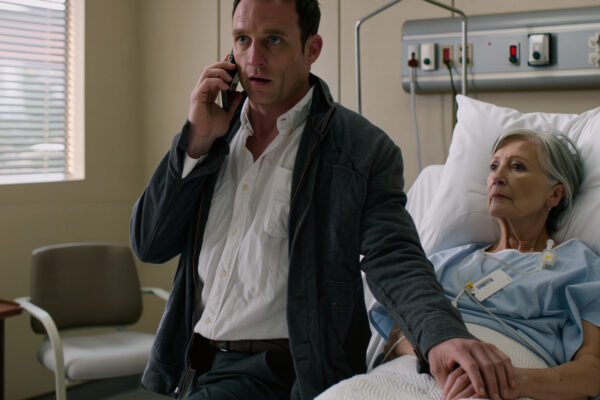
Crawford stood in the corridor of a private maternity ward in Manhattan.
His tie was loosened.
His jacket hung over one arm.
One hand rested against the wall beside a delivery-room door.
He was staring at the door.
There was an intimacy in his posture that I understood before I read the next message.
Nichollet had been admitted two hours earlier.
Crawford had instructed Mr. Yun not to disturb him for anything.
His phone was silent.
I enlarged the photograph once.
Not because I needed proof.
Because I wanted to remember the exact moment I stopped needing more.
Above me, the departure screen changed.
FINAL BOARDING.
For eight months, Ms. Obasi had warned me against impulsive public action.
She was right.
Nothing about what I did next was impulsive.
The post had been prepared.
Nine slides.
Every item verified.
Our marriage certificate.
A photograph of the anniversary table Crawford never sat at.
Documented evidence of the relationship with Nichollet.
The maternity intake information showing Crawford listed where no husband should find another man’s name.
Photographs.
And the divorce documents already prepared for filing.
I had spent weeks deciding whether I would ever publish it.
At the gate, I finally understood why I wanted to.
Crawford had protected his double life using my silence.
He relied on my discretion.
My willingness to absorb humiliation privately.
My habit of making things easier for him.
I was finished participating in that arrangement.
I uploaded the post.
Set the phone into my coat pocket.
And walked down the jet bridge.
The gate agent called my name behind me.
I kept walking.
I did not look back.
Eight hours later, I landed in Amsterdam.
By then, almost everyone in Crawford’s world knew.
I learned the details later.
I did not watch them happen in real time.
That mattered to me.
Crawford saw the post in the hospital corridor.
According to Mr. Yun, his phone began lighting up faster than he could process the notifications.
Family.
Board members.
Executives.
People who had known me socially.
People who had apparently known about Nichollet.
People who had known nothing.
For several minutes, he remained outside the delivery room.
Then the baby was born.
A girl.
Healthy.
Whatever anger I felt toward Crawford, the child had nothing to do with it.
I have always been clear about that.
She did not choose the circumstances around her birth.
She did not betray anyone.
She entered a complicated room because adults had complicated it before she arrived.
Crawford held her briefly.
Then the business calls began.
The board.
His father.
His mother.
His communications team.
The worlds Crawford had kept in separate compartments collided at once.
He left the hospital.
Drove to JFK.
Reached the gate after my plane had already pushed back.
Someone recognized him standing near the terminal glass.
Someone else recorded him.
By that night, the story had escaped the limits of my own post.
That was the part I had not fully predicted.
Online strangers converted private pain into entertainment with extraordinary speed.
Clips circulated.
Commentary multiplied.
People who knew nothing about us decided who I was, who Nichollet was, who Crawford was.
I shut off my phone before the flight landed.
Later, Ms. Obasi told me Whitmore-level corporate crises—though Crawford’s company was its own institution—were never really about one scandal. They were about confidence.
And confidence moved quickly.
The board placed Crawford on administrative leave while they reviewed the fallout.
His mother assumed an interim role.
The share price reacted badly.
His father experienced a serious health scare and was admitted for observation.
I was sorry about that.
Genuinely.
Pain spreading outward had never been the goal.
But consequences do not always ask whether you intended them.
Crawford’s mother also went to the hospital where Nichollet was recovering.
I heard conflicting versions of that meeting, so I never pretended to know every word.
What was clear was that the family intended to confirm paternity and establish financial responsibility for the child while separating those obligations from any promises Crawford may have made Nichollet about his marriage or future.
Nichollet retained her own attorney.
She was not disappearing.
She had her own interests to protect.
Her own child.
Her own version of Crawford’s promises.
I found that strangely clarifying.
For years, I had imagined her as the shadow behind my marriage.
But in reality, she was a person who had also built expectations around a man who specialized in giving different people enough information to let them believe what they needed to believe.
Whatever happened between them next did not belong to me.
By the time those events unfolded, I was standing outside Amsterdam Centraal with one suitcase, a carry-on, and no idea which side of the bike lane was most likely to get me killed.
The air smelled like rain.
I bought a warm stroopwafel from a cart because I recognized the word and nothing else.
It was too sweet.
I ate all of it.
That first evening in the apartment, I opened the balcony door even though it was cold.
Below me, bicycles moved along the canal.
People passed carrying groceries and flowers.
Nobody knew my name.
Nobody knew Crawford.
Nobody had seen the post.
The anonymity felt almost physical.
My phone remained off until after dinner.
When I finally turned it on, there were dozens of messages.
I ignored almost all of them.
One came from Crawford.
Where are you
No punctuation.
No greeting.
I put the phone down.
Another arrived later.
I know Yun helped you. You don’t have to confirm it.
I read that twice.
Even then, his first instinct was to identify the breach.
To understand who had lost control of the information.
Forty minutes later:
I bought a ticket. I’ll be there in the morning.
I looked around the apartment.
My apartment.
The phrase felt unfamiliar.
I typed nothing.
I set my alarm.
Then I slept for almost nine hours.
It was the deepest sleep I had experienced in years.
No part of me was listening for the elevator.
No part of me wondered what time Crawford would come home.
No part of me rehearsed a conversation.
The next morning, I made coffee.
At 9:17, he knocked.
Which was how we arrived at the door.
“I was wrong,” Crawford said from the hallway.
I sat at the kitchen table.
“About everything.”
I looked toward the flower stall.
The woman across the street had begun trimming the orange ranunculus.
“I had something real,” he continued, “and I treated it like it would remain real no matter what I did.”
That sounded like Crawford.
Even his apology was precise.
“I don’t have a defense.”
I surprised myself by believing him.
“I know.”
Silence.
“I’m sorry.”
“I know that too.”
“I mean it.”
“I know.”
The hallway went quiet.
Then he said, “Can you open the door?”
“No.”
Not angrily.
Not dramatically.
Just no.
I heard his breath.
“All right.”
Another silence.
“What I did on the anniversary—”
“I made pasta.”
He stopped.
I stood and walked closer to the door, though I still did not open it.
“It took four hours.”
“I know.”
“No, you don’t.”
My voice remained steady.
“I made the dough at five in the morning. I rolled every sheet by hand. I started the sauce before breakfast. I bought the tablecloth six weeks earlier.”
Nothing from the hallway.
“You came home, looked at the table, told me you thought our anniversary was the following week, changed your tie, and left.”
“I know.”
“You went to dinner with her.”
“Yes.”
There it was.
The admission.
Small.
Late.
Unavoidable.
“I ate alone.”
Crawford said my name.
I had not realized how much I dreaded hearing it in his voice until then.
“There was enough food for six people,” I continued. “I threw the rest away.”
“I’m sorry.”
“I wrote you a card.”
A long pause.
“Eleven words.”
I could see the table in Tribeca as clearly as though I were standing beside it.
Two candles.
Two plates.
One untouched.
“It’s still under your plate.”
Crawford did not answer.
“You never sat down, so you never saw it.”
I returned to the kitchen table.
“Mr. Yun still has access to the apartment. If you want the card, go home and read it.”
His voice changed.
“I don’t want the card. I want you.”
Four years earlier, that sentence would have undone me.
Even eight months earlier, it might have.
Now I looked at the orange flowers across the street.
“You want to stop losing me.”
“That’s not the same thing.”
“It is right now.”
“No.”
His voice sharpened for the first time.
Then he caught himself.
“No. I know what this looks like. I know I waited until everything collapsed. But I’m here.”
“You flew to Amsterdam.”
“Yes.”
“You left Nichollet in a hospital after she gave birth.”
Silence.
“You ran from one crisis to another, Crawford. That’s not choosing me.”
“That’s not fair.”
There was the Crawford I knew.
Not cruel.
But uncomfortable whenever the frame shifted beyond his control.
I almost smiled.
Not because anything was funny.
Because the sentence was so familiar.
“I’m not trying to be fair.”
He went quiet.
“I spent four years trying to be fair.”
I wrapped my hands around the coffee mug again.
“I tried to understand your work. Your schedule. Your travel. Your exhaustion. Your obligations. I tried to make room for every explanation because I thought that was what a good marriage required.”
“It does.”
“No. A marriage requires two people making room.”
He did not answer.
“I kept adjusting. You kept arriving whenever it was convenient.”
“That isn’t how I saw it.”
“I know.”
That was the tragedy of it.
Crawford had not spent four years waking every morning thinking, I will neglect my wife today.
He had simply assumed I would remain.
He treated permanence like permission.
“I thought you were happy,” he said.
I laughed once.
Softly.
“Crawford.”
“I did.”
“You thought I was quiet.”
He said nothing.
“And quiet was easier for you.”
The wood between us suddenly felt less like a barrier than the first honest thing in our marriage.
“What do I have to do?” he asked.
I leaned back.
There was no demand in his voice anymore.
No executive certainty.
Only a man finally encountering a problem that could not be solved by sufficient effort after the deadline.
I thought carefully before answering.
“Nothing.”
“What?”
“Nothing.”
“I don’t understand.”
“That’s what I’ve been trying to understand for eight months.”
I looked around the apartment.
A half-unpacked box stood near the wall.
My coat hung from a hook.
One mug was drying beside the sink.
“There isn’t one thing you can repair.”
“We can go to counseling.”
“No.”
“I can step away from the company.”
“No.”
“I can end everything with Nichollet except what’s required for the child.”
“No.”
“Then tell me what you want.”
“I want you to understand that this is not a negotiation.”
Silence.
The sentence hurt me too.
That was the part I had not expected.
Leaving someone you no longer trust does not erase the years when you did.
It does not erase the person you were when you chose them.
I still remembered Crawford laughing in our first apartment before the penthouse.
I remembered believing his ambition was something we were building around, not something that would eventually build a wall through the middle of us.
I remembered the wedding.
The voicemail.
My own decision to proceed.
I did not hate the woman who walked down that aisle.
For a long time, I had.
I thought she had been weak.
Desperate.
Afraid to embarrass herself.
But sitting in Amsterdam, I understood her differently.
She had loved someone.
She had believed a promise.
She had tried.
That deserved compassion, even if the promise failed.
“For four years,” I told Crawford, “I was married every day.”
His breath caught slightly.
“And you were married when it fit.”
“That’s not true.”
“It is true enough.”
“I loved you.”
“I believe you.”
He went completely quiet.
That answer seemed to hurt him more than accusation would have.
“I believe you loved me,” I said. “I just don’t believe loving me changed enough of your behavior.”
I heard fabric move against the door.
Then the slow drag of his coat.
Crawford had sat down in the hallway.
The image reached me strangely.
Mr. Yun had told me Crawford had sat against the terminal glass after missing my flight.
Now he was sitting against another barrier.
Two cities.
Two closed doors.
“What happens now?” he asked.
“Ms. Obasi files Monday.”
“The divorce.”
“Yes.”
“I haven’t signed anything.”
“You will when the papers reach you.”
“You sound very certain.”
“I learned from you.”
That silenced him.
For several minutes, neither of us spoke.
Outside, the woman at the flower stall carried another bucket onto the sidewalk.
A bicycle bell rang.
Someone laughed below my window.
Ordinary sounds.
The sort of sounds I had stopped noticing in New York because my attention was always tuned toward Crawford’s arrival.
Finally he said, “Do you hate me?”
“No.”
That answer was immediate.
Maybe too immediate.
But true.
“I’m angry.”
I looked at the door.
“I’m disappointed.”
Another pause.
“And I’m tired.”
His breathing was barely audible.
“But I don’t hate you.”
“I don’t know if that’s better.”
“It isn’t for you.”
He made a sound that might have been a laugh if either of us had lived a different life.
Then he said, “Was any of it real?”
I closed my eyes.
“All of it was real.”
The wedding.
The dinners.
The trips.
The silences.
The betrayal.
The hope.
The pasta.
The apartment.
The plane.
That was the problem with people who wanted clean endings.
They imagined one truth had to cancel another.
It didn’t.
“I loved you when I married you.”
Crawford did not move.
“I loved you for a long time after I understood I should leave.”
His voice dropped.
“And now?”
I looked at my coffee.
“I love myself enough not to come back.”
Nothing came from the other side of the door.
I wondered whether the sentence sounded cruel.
Then I decided it did not matter.
Not every painful sentence is cruel.
Sometimes pain is simply what truth costs after being postponed.
“I’m sorry,” Crawford said again.
“I know.”
“Can I at least see you?”
“No.”
“Once.”
“No.”
Another long silence.
“All right.”
His voice had changed.
Not defeated exactly.
Finished.
Footsteps came a minute later.
Slow at first.
Then steady.
I listened as they moved down the hallway.
The elevator door opened.
Closed.
I remained at the table until my coffee went cold.
At ten, Ms. Obasi sent a message.
He’s headed to the airport. Do you want updates on the board situation?
I typed:
No. But thank you for everything.
She replied with a single thumbs-up.
That was one of the things I liked about her.
She knew when a conversation was over.
I showered.
Put on jeans, flat shoes, and a jacket.
Then I went outside.
The night’s rain had left the cobblestones dark.
The flower stall across the street was fully open now.
The woman behind it said something to me in Dutch.
I did not understand.
Not yet.
But her expression suggested good morning.
I smiled.
“Goedemorgen,” I said, probably badly.
She smiled wider.
Progress.
I pointed toward the ranunculus.
The orange ones.
She gathered a small bunch.
Wrapped the stems in brown paper.
Told me the price.
I paid.
No explanation required.
I wanted the flowers.
I could afford them.
That was enough.
I carried them to the café on the corner.
Inside, I attempted to order coffee in Dutch.
The woman behind the counter answered in English without making a show of rescuing me.
Then she placed an almond pastry beside the cup.
“I didn’t order this.”
She shrugged.
“First week?”
I smiled.
“Is it obvious?”
“Only to everyone.”
I laughed.
It felt unfamiliar.
Not because I had not laughed in four years.
Because there was no one beside me whose mood I needed to check before enjoying it.
I sat near the window.
The flowers rested on the chair next to me.
People passed outside.
Cyclists.
Parents with children.
A man unloading crates.
A woman walking a small dog that seemed to believe every bicycle belonged personally to it.
My phone remained in my jacket pocket.
I knew messages were waiting.
Crawford’s mother.
Friends.
People wanting details.
People wanting to know whether I was all right.
People who enjoyed proximity to disaster.
I did not check.
The divorce would proceed.
Maybe Crawford would resist at first.
Maybe his attorneys would call Ms. Obasi’s attorneys.
Maybe there would be arguments about property and timing and language.
Those were processes now.
Not my entire life.
Nichollet had her own decisions.
Her daughter had her own future.
Crawford had consequences he would have to meet without me managing his feelings through them.
The company would survive or change.
People would stop talking eventually.
The internet always found another story.
I looked at the orange flowers.
A week earlier, my entire sense of future had been defined by departure.
Leave the apartment.
Reach the airport.
Board the plane.
Do not turn around.
But departure was only an action.
It was not a life.
A life required smaller decisions.
Which grocery store.
Which street home.
Where to buy coffee.
Whether to learn enough Dutch to embarrass myself properly.
Who I would eventually invite to dinner.
What I would cook when nobody else’s schedule mattered.
I thought about the pasta.
For months, the anniversary meal had felt like evidence of humiliation.
Four hours spent preparing something for a person who never sat down.
Now I remembered my grandmother’s hands guiding mine over dough when I was nine.
The recipe had existed before Crawford.
It belonged to me before it belonged to our anniversary.
Someday I would make it again.
Maybe for friends I had not met yet.
Maybe for myself.
Maybe for six people who actually arrived hungry.
The thought did not make me sad.
That surprised me.
I finished the pastry slowly.
Then the coffee.
Outside, the morning kept moving without asking whether I was ready.
I liked that.
For four years, I had spent too much time waiting for Crawford to arrive.
Waiting for him to notice.
Waiting for the right conversation.
Waiting for the right proof.
Waiting to become the kind of woman who could leave without needing him to understand why.
Maybe there was no such woman.
Maybe courage was never becoming someone different.
Maybe it was simply reaching the point where the version of you who had endured enough was allowed to make the next decision.
I stood.
Put on my jacket.
Picked up the flowers.
At the door, I finally took out my phone.
There was one message from Crawford.
No demand.
No question.
Just:
I found the card.
I stared at the screen.
Eleven words.
Four years, and still glad it was you. Happy anniversary, Crawford.
For one second, the old grief returned so sharply I had to grip the flower stems tighter.
Because I had meant every word when I wrote them.
That woman had been real too.
I did not need to despise her in order to leave the life she had tried to save.
I locked the phone.
Put it away.
Then stepped outside.
The street divided at the canal.
Left would take me toward the market.
Right toward a neighborhood I had not walked yet.
I stood there with flowers wrapped in brown paper under my arm.
No driver.
No assistant.
No Crawford.
No table set for someone who might not come home.
I chose the street I did not know.
And walked.