My brother mocked me in court. “You don’t even have a lawyer. You’re finished.” My father sat there smiling while I stood completely alone. Then the judge read a single page from my case file and fell silent. When he finally spoke, my father’s smile vanished—and his face went completely pale.
The Measure They Used Against Me
The first person to notice that I had come to court without a lawyer was my brother.
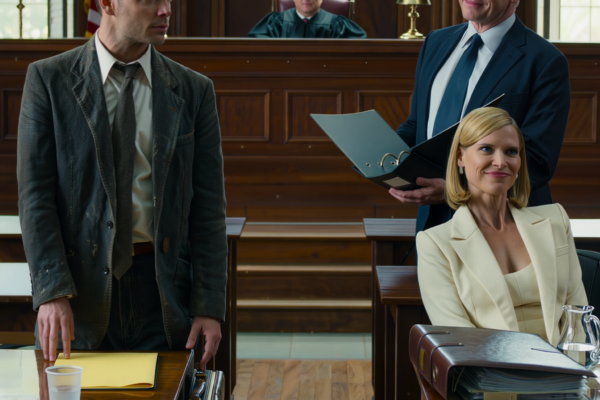
Diego leaned toward our father, said something under his breath, then looked across the aisle at me with the expression he had worn since we were children whenever he thought I had made a mistake he could enjoy.
Attorney Morales sat beside them with two leather binders open in front of him. My father, Roberto, wore a dark suit and the calm, satisfied look of a man who believed the difficult part was already over.
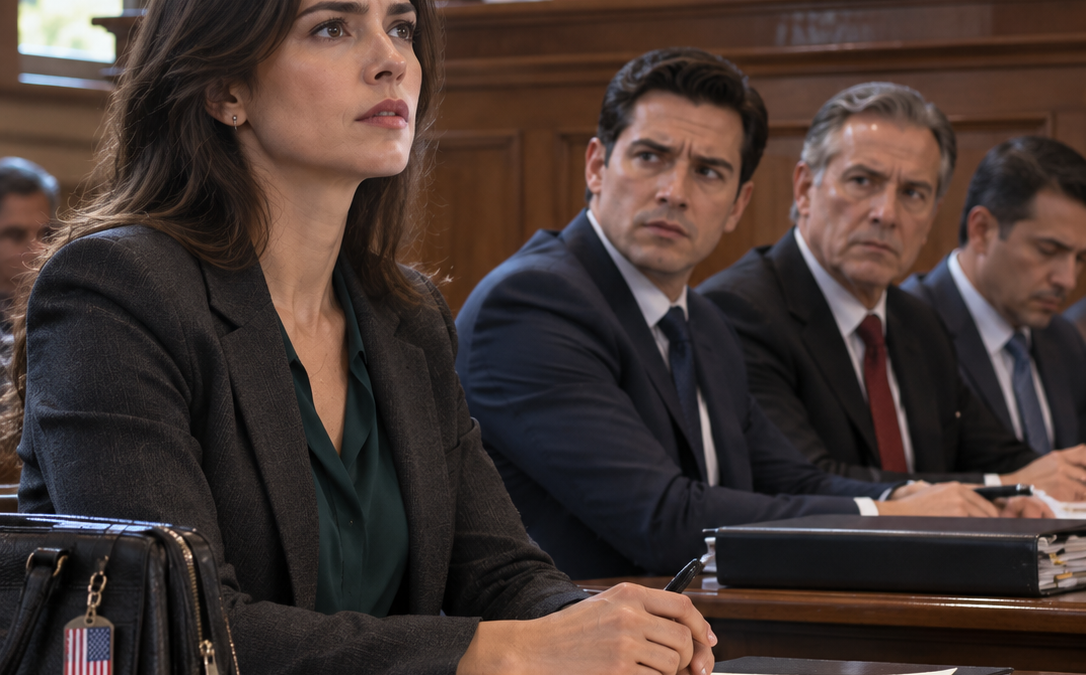
I had one legal pad, a black briefcase, and an empty chair beside me.
Diego finally stopped whispering.
“You really came alone?”
His voice carried farther than he intended.
A few people behind him glanced over.
I looked up from my notes.
“Yes.”
He gave a short laugh.
“Then this is going to be easier than I thought.”
My father did not laugh with him. He did something worse.
He smiled.
For most of my life, that smile had meant the same thing: Diego had done something clever, and I had confirmed what my father already believed about me.
Judge Vargas entered a few minutes later.
Everyone stood.
The clerk called the case, and I listened to my full name followed by the names of my father and brother and the phrase estate dispute.
Six months earlier, those words would have sounded impossible.
My grandfather Mateo had still been alive then.
Now his death had brought the three of us into a courtroom in Mexico City to fight over what he had left behind.
Or, more accurately, what he had left to me.
Morales rose first.
He was good at appearances. His suit fit perfectly. His voice was measured. He never looked at a page longer than necessary.
He explained that my father and brother were contesting Mateo’s final will because they believed my grandfather had been improperly influenced during his last months.
By me.
Morales used careful language.
Concern.
Vulnerability.
Isolation.
Dependency.
Undue influence.
He never called me a thief.
He did not need to.
By the time he finished his opening remarks, the accusation had been placed neatly on the table anyway: Elena had spent too much time alone with an elderly man, Elena had controlled access to him, Elena had benefited from a sudden change to his estate plan.
I listened without interrupting.
When Morales sat down, Diego looked at me again.
He mouthed two words.
No lawyer.
I wrote something on my legal pad.
Not because it mattered.
Because looking down kept me from reacting.
Judge Vargas reviewed the papers in front of him.
Then he looked toward me.
“Ms. Elena Vargas, you understand that you have chosen to represent yourself?”
“Yes, Your Honor.”
Morales shifted slightly.
The judge continued.
“You also understand that you will be held to the same procedural requirements as counsel?”
“I do.”
“Your professional background is listed in the materials submitted with your response.”
I nodded.
Judge Vargas read from the page.
“Director of investigations and forensic audit.”
Diego’s expression changed.
Only slightly.
My father turned his head toward me for the first time that morning.
The judge continued.
“Ten years in complex financial investigations?”
“Yes.”
Morales looked over his shoulder at Roberto.
It was not panic.
Not yet.
Just the first visible sign that something in his preparation had not been complete.
Judge Vargas set the page down.
“You are entitled to counsel, Ms. Vargas. You are also entitled to proceed without one. We will continue.”
That was all.
No speech.
No dramatic endorsement.
But I watched my father’s smile disappear.
He had known what I did for a living in the vague way families sometimes know things about the child they do not pay attention to.
Elena works with numbers.
Elena has an office job.
Elena travels.
Elena does something with audits.
He had never asked enough questions to understand that I spent my working life taking complicated stories people told about money and comparing them with records that could not lie for them.
For the first time that morning, I felt something almost like gratitude for his indifference.
It had left him unprepared.
My father’s problem with me began long before court.
Growing up, there was an unwritten rule in our house.
Diego mattered first.
Nobody announced it.
Nobody needed to.
When Diego failed a class, the teacher had not explained the material properly.
When I brought home a ninety, my father asked what happened to the other ten points.
When Diego wanted something expensive, Roberto talked about confidence, ambition, and giving a young man opportunities.
When I asked for help, he talked about discipline.
I was sixteen when I finally stopped expecting the imbalance to correct itself.
That year, Diego wrecked an expensive truck after drinking.
My father’s response was to help replace it.
A few weeks later, I asked whether he would help with costs connected to university.
He said I needed to learn independence.
I remember standing in the kitchen holding the form I needed signed, listening to Roberto explain that money did not grow on trees while Diego’s replacement vehicle sat in the driveway.
My grandfather Mateo found me crying later that evening.
He did not ask what had happened immediately.
He sat beside me at the dining table until I was embarrassed enough to wipe my face.
Then he said, “Your father again?”
I nodded.
Mateo leaned back.
He had built his business from almost nothing: construction first, then property, then a group of companies that owned land, buildings, and commercial projects across several parts of the city.
He could be difficult.
Impatient.
Blunt.
But he had one quality my father lacked.
He paid attention.
After I explained what happened, Mateo was quiet for a long time.
Then he said, “They’re measuring your value with the wrong ruler.”
I looked at him.
“That doesn’t make the result feel different.”
“No,” he said. “But it should change whose measurement you trust.”
I remembered that sentence for years.
I did not become successful to prove my father wrong.
At least, that is the version I prefer.
The truth is messier.
Part of me absolutely wanted him to notice.
I studied hard.
I worked through university.
I took entry-level assignments other people avoided because complicated accounts and ugly records interested me more than polished presentations.
I learned how fraud hides inside ordinary transactions.
I learned that most financial deception is not clever.
It is repetitive.
People who think they are smarter than everyone else eventually become lazy.
The same vendor appears too often.
The timing becomes predictable.
A signature changes.
An account begins receiving transfers it cannot explain.
By thirty-two, I was leading investigations instead of assisting with them.
I had spent years tracing losses for corporations that could afford teams of lawyers.
Meanwhile, my own father still introduced Diego as “the one with the business sense.”
I stopped correcting him.
Mateo never needed correcting.
He called when I was promoted.
He remembered where I was traveling.
He asked about cases without demanding details I could not legally share.
More importantly, he never treated my work like a strange hobby that made me less feminine, less warm, or less useful to the family.
When he died, six months before the hearing, grief arrived quietly.
There was no dramatic final conversation between us.
No bedside confession.
No mysterious package handed to me.
His health had declined, then stabilized, then declined again.
I visited when I could.
I was also away for work for a long stretch during his final year.
His funeral was crowded.
My father moved through the room greeting people he knew from business.
Diego spent too much time checking his phone.
I stood near the back for part of the service and watched people speak about Mateo as if each of them owned a different version of him.
Builder.
Employer.
Investor.
Difficult father.
Generous grandfather.
Relentless negotiator.
Old man who hated wasting time.
I missed the person who had once sat beside a crying sixteen-year-old and told her not to trust a bad ruler.
A few days later, his final will was read.
Mateo’s estate included properties, investment accounts, land holdings, and his interests in the companies he had built.
He left them to me.
Not mostly.
Not controlling interest.
Everything the final will covered passed to me.
My father stared at the document.
Diego laughed.
I remember that clearly.
He laughed because he assumed someone had made a mistake.
Then Roberto demanded that the document be read again.
When it was, he slammed his palm against the table.
“You did this.”
I looked at him.
“Did what?”
“You got to him.”
“I didn’t.”
“He would never cut out his son.”
Mateo had.
“And Diego?” my brother demanded. “He left nothing to me?”
The notary answered carefully.
The final instrument was clear.
My father stood.
“You manipulated an old man.”
I could have defended myself.
Instead, I asked the one question that still bothers me when I think about that day.
“When was the last time either of you visited him when you didn’t need something?”
Roberto stared at me.
Diego’s face hardened.
Within weeks, they sued.
Their claim was simple enough.
Mateo had been elderly.
I had been close to him.
The final will favored me completely.
Therefore, they argued, the will could not reflect his independent judgment.
Morales built the case around access.
He intended to show that I had isolated my grandfather and influenced him while he was vulnerable.
That was why his first witness mattered.
Carmen had helped care for Mateo during his final months.
When she entered the courtroom, I recognized her immediately.
She had always been polite to me.
Not warm.
Not cold.
Professional.
That morning, she would not look directly at my table.
Morales approached her gently.
“You cared for Mr. Mateo Vargas during the final year of his life?”
“Yes.”
“You were present in his home regularly?”
“Yes.”
“And you saw his granddaughter Elena there?”
Carmen glanced at me.
“Very often.”
Morales let the answer sit.
“Would you describe Ms. Vargas as involved in her grandfather’s personal affairs?”
“Yes.”
“In what way?”
“She spent a lot of time alone with him.”
“How much time?”
“A lot.”
“During November of last year?”
Carmen hesitated.
“Yes.”
I wrote the month on my pad.
November.
Morales continued.
“Did you ever hear private conversations between them?”
“Not clearly.”
“But you saw them speaking privately?”
“Yes.”
“And did Ms. Vargas ever speak quietly enough that you could not hear what she was saying?”
“Yes.”
My father shifted beside Morales.
Diego crossed his arms.
Morales walked a few steps.
“Based on what you personally observed, did Ms. Vargas have opportunities to influence Mr. Vargas concerning his estate?”
Carmen looked down.
“Yes.”
The answer was not as dramatic as the version Diego wanted.
But it was useful.
Morales sat.
Judge Vargas looked toward me.
“Your witness.”
I stood.
I left my notes on the table.
Not as a performance.
I had already memorized the only part that mattered.
I walked toward the witness stand.
Carmen watched me approach, then looked past my shoulder.
“Ms. Carmen,” I said, “you testified that I was frequently alone with my grandfather in November of last year.”
“Yes.”
“Not once?”
She frowned.
“I didn’t say once.”
“Frequently.”
“Yes.”
“And you remember the month?”
“I believe so.”
“November.”
“Yes.”
I opened my briefcase and removed a folder.
Morales leaned forward.
I handed copies to the clerk according to the court’s procedure.
“These are travel and immigration records previously disclosed with my response.”
Morales’s eyes moved across his own copy.
His shoulders changed.
Small movement.
Important movement.
I turned back toward Carmen.
“Do you know where I was during November?”
She swallowed.
“No.”
“I was in Frankfurt, Germany, working on an audit assignment.”
Carmen blinked.
I continued.
“I was outside Mexico for one hundred twenty days during that assignment. November fell entirely within that period.”
Judge Vargas reviewed the records.
Morales stood.
“Your Honor—”
The judge lifted one hand.
“Counsel, the records were disclosed.”
Morales sat again.
I looked at Carmen.
“Were you mistaken about the month?”
Her fingers tightened together.
“I may have been.”
“That’s possible.”
I paused.
“When did you last see me alone with Mateo?”
“I don’t remember exactly.”
“Before my trip?”
“Maybe.”
“After I returned?”
“I’m not sure.”
“Then when you told this court I was frequently alone with him throughout November, you were giving a specific answer about a period when I was not in the country.”
Carmen’s eyes moved toward Morales.
Then toward my father.
There.
That glance mattered more to me than any dramatic accusation would have.
I did not ask who told her what to say.
I did not need to.
Not yet.
I returned to my table.
My father leaned toward Morales.
This time the lawyer did not reassure him immediately.
The first part of their case had not disappeared.
But it had changed.
Their witness had turned a broad suspicion into a verifiable claim.
And the claim was wrong.
Morales tried to recover.
He argued that a mistaken month did not eliminate other opportunities for influence.
Legally, he was right.
I knew that.
One weak witness did not decide the case.
Which was why I had never intended to rely on Carmen.
I opened my briefcase again.
Inside was a small encrypted storage device and the printed index of documents I had already provided through the proper process.
For weeks, my father and brother had treated my inheritance as the issue.
It wasn’t.
The inheritance was the result.
The issue was why Mateo had changed his will.
That answer lived in his business records.
My grandfather had not asked me to investigate Diego.
That distinction mattered.
I discovered the irregularities only after Mateo’s death, when I began reviewing estate and company records because I had inherited responsibility for them.
At first, nothing looked dramatic.
That is how these things usually begin.
A transfer that lacked supporting paperwork.
Then another.
A loan carrying authorization that did not fit the company’s normal process.
Cash withdrawals that had been classified in ways that made little operational sense.
I kept going.
Three years of records produced a pattern.
Funds had moved out of operating accounts connected to Mateo’s construction business.
Some payments aligned with expenses Diego had benefited from.
Luxury vehicles.
Travel.
Personal debts.
Other transactions moved through entities and accounts that required more careful tracing.
The total irregular amount approached twelve million pesos.
I did not need to guess whether Mateo had known.
I found proof that he had.
The first was correspondence with his personal accountant.
The second involved internal account reviews.
The third was a message sent only days before his death.
And woven through the records was my father.
Not as an innocent parent who had failed to notice.
As someone who had helped conceal what was happening.
Judge Vargas allowed the relevant financial materials to be considered in connection with Mateo’s motive for changing his estate plan.
Morales objected to parts of it.
Some objections were sustained.
Others were not.
That was normal.
Real courtrooms are slower and less theatrical than people imagine.
But the emotional effect on my family was immediate anyway.
The first set of records established unauthorized transfers from company accounts.
Diego stopped looking at me.
My father began writing notes to Morales.
The next documents showed payments connected to Diego’s personal expenses.
Morales argued that the records needed context.
I agreed.
So I gave context.
Corporate authorization procedures.
Normal signatures.
Approval limits.
Timing.
Account ownership.
I did not accuse.
I explained.
That was much harder for my father to fight.
When people expect anger, facts can sound unnervingly calm.
Morales interrupted twice.
Judge Vargas allowed him to.
Then I moved to the signature comparisons.
Mateo’s verified signatures across routine documents had consistent features.
Several authorizations tied to disputed transactions did not.
I was careful.
I did not tell the court I was a handwriting expert.
I wasn’t.
I said the discrepancies were among the reasons the transactions had been flagged and required further review.
Morales could not accuse me of overstating.
That frustrated him more than if I had tried.
Then came the correspondence.
A message from Mateo to his accountant, sent three days before his death.
I had read it so many times that I could picture the formatting without looking.
Mateo wrote that he had discovered Diego had been taking money from the business.
He also wrote that Roberto had helped conceal the activity.
Then he gave an instruction.
Prepare the new will immediately.
Everything will go to Elena.
The courtroom became very quiet.
Judge Vargas read the message again.
Morales asked to examine metadata and authentication records.
They had already been produced.
He reviewed them.
My brother finally spoke without permission.
“That’s not what happened.”
The judge looked at him.
“Mr. Vargas, do not speak unless instructed.”
Diego leaned back.
His breathing had changed.
My father put a hand on his arm.
Diego pulled away.
That movement told me something I had not expected.
Until that moment, the two of them had presented a united front.
Whatever had happened between them financially, the lawsuit required them to tell the same story.
Mateo had been manipulated.
Elena had taken advantage.
The will was invalid.
But once the message appeared, that story became dangerous.
If Mateo had changed his will because he discovered financial misconduct, then attacking the will meant explaining the misconduct.
Diego understood before Roberto did.
Morales requested a brief recess.
Judge Vargas granted it.
In the hallway, I stood alone near a window.
I could see my father arguing with Morales twenty feet away.
Diego paced beside them.
At one point, he said something sharply and pointed toward Roberto.
My father grabbed his elbow.
Diego yanked free.
I looked outside.
Traffic moved below.
People bought coffee, checked phones, crossed streets.
The ordinary city continued while three generations of one family were being reduced to documents upstairs.
I thought of Mateo.
Not the wealthy man.
Not the man whose will had caused all of this.
The grandfather who had told me the wrong ruler could ruin a measurement.
For years, I thought he meant self-esteem.
Standing in that hallway, I understood something else.
A family can create its own system of value.
The favored child becomes trustworthy because he is favored.
The ignored child becomes suspicious because she is ignored.
Then every new fact gets bent around the old story.
Diego deserved second chances because he was Diego.
I deserved scrutiny because I was Elena.
Even now, my father could look at financial records showing millions missing from Mateo’s business and still believe the real problem was that I had inherited what remained.
When court resumed, Morales asked whether I had personally confronted Diego about the transactions before Mateo died.
“No.”
“Did you know about them before Mateo died?”
“No.”
“So you are asking this court to believe that your grandfather independently discovered these matters, independently changed his will, and you happened to become the sole beneficiary.”
“Yes.”
“That is remarkably convenient.”
“For me?”
Morales paused.
“Yes.”
I looked at the records.
“It would have been more convenient if my grandfather had not discovered that his own family was taking from his business.”
Morales objected to the characterization.
I rephrased.
The judge allowed the record to speak for itself.
Then Diego broke.
It was not dramatic at first.
He leaned toward Morales and whispered urgently.
Morales told him to stop.
Diego said something again.
My father turned.
“What?”
The judge looked over.
“Is there a problem?”
Morales stood.
“No, Your Honor.”
Diego stood too.
“Yes.”
Morales reached for his arm.
“Sit down.”
Diego pulled away.
“You told me this was about the will.”
Roberto whispered, “Diego.”
My brother looked at him.
Something in his face had changed completely.
Fear has a way of rearranging hierarchy.
For thirty-two years, Diego had been protected by my father.
Now he was calculating whether that protection still existed.
“You said the records wouldn’t matter,” he told Roberto.
My father’s voice dropped.
“Sit down.”
Diego shook his head.
Then, in front of the judge, he said the sentence that ended their alliance.
“He showed me how.”
Nobody spoke.
Roberto stared at his son.
“What are you talking about?”
“The approvals.”
Morales closed his eyes briefly.
“Diego,” he said, “stop speaking.”
But Diego had spent his entire life assuming someone else would absorb the consequence.
Old habits are difficult to break.
He pointed toward our father.
“He handled the signatures. He told me how to move things so Granddad wouldn’t see them right away.”
Roberto stood.
“That is a lie.”
Diego laughed once, but there was no humor in it.
“You’re going to blame me for all of it.”
“I told you to sit down.”
“You already knew he was reviewing the accounts.”
Morales stepped between them verbally before the argument could go further.
Judge Vargas ordered both men to sit and reminded them that their statements could have consequences beyond the inheritance dispute.
That finally quieted Diego.
My father did not look at him again.
The courtroom did not transform into chaos.
No one applauded.
No one shouted from the gallery.
But the lawsuit changed in that moment.
The family narrative had cracked under pressure.
The lawyer who had entered that morning arguing that I manipulated Mateo now had two clients beginning to accuse each other of conduct that explained exactly why Mateo might have changed his will.
Judge Vargas recessed again to address procedural issues and ordered the relevant financial records preserved for referral to the appropriate authorities.
The inheritance dispute itself was still before him.
But the accusation against me had lost its center.
Carmen’s testimony had been undermined.
My travel records contradicted the period she identified.
Mateo’s correspondence showed his own reason for changing the will.
And now Diego had publicly connected Roberto to the financial activity.
I could have stopped there.
Part of me wanted to.
Winning the inheritance dispute had never been satisfying in the way Diego seemed to imagine money should be satisfying.
Every piece of evidence came attached to someone I had once wanted to trust.
Then my father said something during the final portion of the hearing.
Morales was arguing that even if Mateo had been angry about company finances, the estate plan was still disproportionate.
Roberto turned toward me and muttered, just loudly enough for me to hear:
“You think this makes you better than us? You’ll still go home alone. I still have my house.”
Las Lomas.
The mansion where I grew up.
The house where Diego’s trophies stayed on the living-room shelves long after he stopped winning anything.
The house where my university forms sat unsigned on the kitchen counter while his truck keys hung by the door.
I looked at my father.
For years, that house had represented permanence to him.
Business could rise and fall.
Relationships could break.
But the house meant status.
It meant Roberto Vargas had succeeded.
What he did not know was that Mateo had discovered more than the missing business funds.
During my review of the estate, I had found property records relating to the Las Lomas residence.
Roberto had borrowed heavily against it.
Quietly.
The debt had become distressed.
Three days before Mateo died, Mateo had acquired the mortgage obligation from the lender as part of a documented settlement.
The legal steps that followed were not magic and they were not instantaneous. Notices had been issued. Default provisions had been triggered. Property records had been updated through the proper process.
By the time the estate records came to me, the ownership issue had already been resolved.
The house Roberto still spoke of as unquestionably his was part of what Mateo had left under the final estate plan.
I had brought the certified property documents because Morales had repeatedly described my father as the natural heir who had been unfairly stripped of everything.
If Roberto was going to make the house part of his argument, the record needed to be accurate.
I opened my briefcase.
The documents were inside a red envelope from the property registry.
I did not wave it.
I did not look at Diego.
I simply stood.
“Your Honor, because my father has raised the Las Lomas property in connection with his claimed loss, I have certified title records relevant to that issue.”
Morales turned toward Roberto.
For the first time all day, my father looked genuinely confused.
The clerk took the envelope.
Judge Vargas reviewed the documents.
He took longer with these than with the others.
Then he looked at Morales.
“Counsel, have you reviewed the current title status of the Las Lomas property?”
Morales hesitated.
“Not in connection with this petition, Your Honor.”
“You may wish to.”
Copies were handed over.
Morales read the first page.
Then the second.
He leaned toward Roberto.
My father shook his head.
“No.”
Morales whispered something.
Roberto took the document himself.
He read it.
Then read the same section again.
“That’s impossible.”
Judge Vargas looked at him.
“Mr. Vargas.”
“My father couldn’t do that.”
“The record indicates he acquired the mortgage obligation before his death.”
“It was my house.”
“The record also indicates default and subsequent transfer through the procedures shown here.”
Roberto looked at me.
“What did you do?”
There it was again.
The same instinct.
If the result hurt him, I must have created it.
“I found the records,” I said.
“You took my house.”
“I did not.”
“You knew.”
“I learned when I reviewed the estate.”
Morales touched Roberto’s sleeve.
“Let me handle this.”
My father ignored him.
“You planned this.”
“No.”
“You wanted everything.”
That accusation hurt more than I expected.
Not because I believed it.
Because some part of me was still that sixteen-year-old girl at the kitchen table hoping her father might, just once, look at her without comparing her to Diego.
I lowered my voice.
“I wanted you to ask who I was before you decided what I was capable of.”
Roberto stared at me.
I continued.
“You never did.”
He sat back.
The anger did not disappear.
But something else entered his face.
Disorientation.
The world he understood had been built around certain fixed points.
Diego was the son who mattered.
Roberto was Mateo’s rightful successor.
I was the daughter who worked somewhere with numbers and had somehow stolen a will.
Now the records said something else.
Mateo had discovered the business losses.
Mateo had changed his estate plan.
Mateo had taken action concerning the house.
None of those facts required me to manipulate him.
They required only that my grandfather had known exactly what was happening.
Judge Vargas ruled on the estate challenge later that afternoon.
The petition to invalidate Mateo’s final will was denied.
The record did not support the claim that I had exercised improper influence over him.
The court’s conclusion rested not on my career or my confidence or whether the judge liked me.
It rested on evidence.
My extended absence contradicted key testimony about the alleged period of manipulation.
Mateo’s communications documented his concerns and his intent.
The financial records provided a rational explanation for why he changed his will.
The property documents confirmed that other steps attributed to his independent decisions had been taken before his death.
Copies of the financial materials and statements made during the proceeding would be referred to the appropriate authorities for review.
That meant questions remained.
Investigations.
Possible liability.
Account tracing.
For the first time all day, I had no desire to know every answer immediately.
My job had trained me to follow money until the story became clear.
My family had taught me something different.
Sometimes the story becomes clear before every consequence arrives.
Diego sat with both hands pressed together between his knees.
Morales spoke quietly to him.
My father did not speak at all.
When the hearing ended, people began gathering papers.
Chairs moved.
The clerk organized files.
The ordinary mechanics of a courtroom resumed.
I placed my legal pad inside my briefcase.
Then Roberto said my name.
“Elena.”
I stopped.
He was still seated.
“What happens to the house?”
The question was so practical that it almost surprised me.
I looked at the red envelope.
“The title is part of the estate I inherited.”
“I live there.”
“I know.”
“You’re throwing me out.”
I thought of the source version of myself I could have become in that moment.
The victorious daughter.
The woman who gives him twenty-four hours.
The woman who stands over the father who ignored her and turns his own cruelty back on him.
For one second, I understood the temptation.
Then I looked at Roberto and saw an aging man whose favorite son had just accused him in open court.
He had spent my childhood teaching me that power meant deciding who deserved help.
I did not want to become good at his version of power.
“You need to make arrangements,” I said. “We’ll handle the property through the proper process.”
His jaw tightened.
“So you do want me gone.”
“I don’t want to live like this anymore.”
“That isn’t an answer.”
“It’s the only one I have today.”
Diego stood.
“Elena.”
I turned toward him.
He looked smaller than he had that morning.
Not physically.
Socially.
The confidence that came from standing beside our father had disappeared.
“I didn’t know Granddad was going to leave you everything.”
“I know.”
“If I had known—”
I almost laughed.
Not because it was funny.
Because he stopped himself.
If I had known, I would have behaved differently.
That was not remorse.
That was strategy.
He tried again.
“We’re still family.”
“Yes.”
His face relaxed slightly, as if he thought he had found a door.
Then I finished.
“And being family doesn’t give you the right to take what isn’t yours.”
The door closed again.
He looked down.
Behind him, Roberto began to stand.
He made it halfway before gripping the table.
Morales reached for him.
My father waved him off.
Then his balance failed.
Everything after that happened quickly but without the theatrical clarity people later assign to frightening moments.
Someone called for medical assistance.
A court officer moved toward him.
Diego knelt beside his chair.
Morales stepped back to give them room.
I remained where I was.
Not because I wanted him hurt.
Because I did not know where I belonged.
For most of my life, I had been trained to move toward the family crisis after everyone else created it.
Fix the paperwork.
Solve the number.
Absorb the insult.
Be responsible.
Watching my father being helped on the courtroom floor, I felt the old reflex rise.
Then I saw Diego beside him.
For once, my father’s chosen son was already there.
I did not need to replace him.
Medical personnel arrived and began attending to Roberto.
He was conscious.
That mattered.
I let myself breathe.
Morales spoke to Diego.
The judge had already left the bench.
The courtroom, which had seemed enormous that morning, suddenly felt too small.
I closed my briefcase.
The red envelope was inside.
So was the storage device.
So were the travel records that had dismantled Carmen’s testimony.
Objects.
Paper.
Data.
None of them felt victorious.
They were simply evidence that the story my family had told about me had never been the only story.
I walked toward the doors.
Diego called my name once.
I did not turn around immediately.
When I finally did, he was still kneeling near our father.
His expression was frightened.
“Elena.”
“What?”
“What are we supposed to do now?”
For years, that question would have pulled me back.
I would have answered.
Made a list.
Found the next step.
Explained.
This time, I looked at him.
“I don’t know.”
He blinked.
It may have been the first time I had ever allowed him to have a problem without volunteering to solve it.
Then I left.
Outside, Mexico City was bright enough that I had to narrow my eyes.
The courthouse steps were hot beneath my shoes.
Traffic rolled past.
A vendor was arguing with someone over change.
Two office workers hurried by carrying coffee.
Nothing in the city looked different.
That steadied me.
I stood near the curb with my briefcase hanging from one hand.
My phone vibrated.
I expected Diego.
It was work.
A message about an audit meeting the following morning.
For a moment I stared at it.
Then I laughed softly.
I had spent months being reduced to somebody’s granddaughter, somebody’s daughter, somebody’s sister.
Tomorrow, a room full of people would expect me to walk in and do my job.
Not because of Mateo’s estate.
Not because of my father’s failure.
Because I had built something of my own long before any will made me wealthy.
I put the phone away.
The red envelope pressed against the side of my briefcase.
Las Lomas was legally mine.
Mateo’s estate was mine.
The court had rejected the claim that I manipulated him.
But the thing I felt most strongly on those steps was not ownership.
It was distance.
There would be investigations after that day.
Questions about the company.
Questions about the transactions.
Questions for Diego and Roberto that I could not answer for them.
There would be practical decisions about the house.
There would be documents, deadlines, and conversations I did not look forward to.
None of that was resolved by walking out of the courtroom.
But one thing was.
I no longer needed my father’s version of me to become accurate.
He could keep believing I was cold.
Diego could keep telling himself he had been misled.
Morales could build whatever legal strategy came next.
Those were their measurements.
Not mine.
A taxi pulled toward the curb.
I opened the back door and set my briefcase beside me.
For a second, before getting in, I looked back at the courthouse.
I thought about Mateo at the kitchen table sixteen years earlier.
They’re measuring your value with the wrong ruler.
At thirty-two, I finally understood the whole sentence.
The ruler had never been my responsibility.
I got into the taxi, closed the door, and gave the driver my address.
The courthouse disappeared behind us.
I did not look back again.