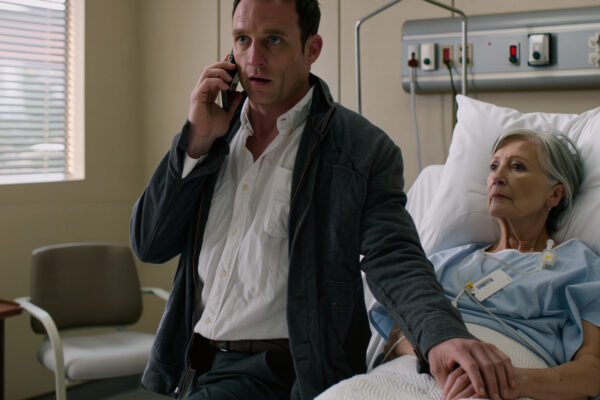
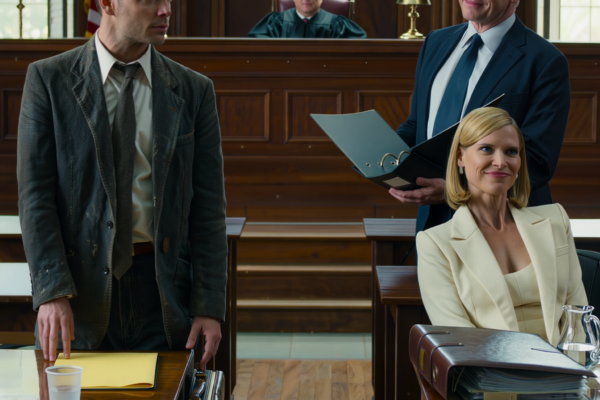
My brother demanded my inheritance because he was the “only man in the family.” “The inheritance is mine,” he insisted. Then the lawyer opened the document and read the line that settled everything: “He receives exactly what he earned.” The amount listed beside his name was $0.

Julian put the papers in my lap as if he were handing me instructions rather than asking me to give up my inheritance.
We were sitting in our father’s office three days after the funeral. The flowers downstairs had already started to turn at the edges. Their sweetness had become heavy in the house, mixing with furniture polish and the faint medicinal smell I still imagined in the hallway even though there were no medications left to organize.
Julian stood behind Dad’s oak desk.
That bothered me more than I expected.
For five years, while our father’s illness narrowed his world from business meetings and construction sites to a bedroom, a recliner, and eventually a hospital bed at home, that desk had remained his. Even when he became too weak to sit behind it, I never used his chair.
Julian had been back in the house less than a week.
He had already claimed it.
“Let’s be realistic, Roxy.”
He tapped the pages against my knee.
I looked down.
A waiver.
The language was dense, but the intention was simple enough. Julian wanted me to surrender any claim I might have against the estate before the formal probate process moved forward.
I looked up at him.
“What exactly do you think I’m signing?”
His mouth tightened with impatience.
“You know what it is.”
“I want to hear you say it.”
He planted both hands on the desk.
“Dad built the company. He built the properties. He built everything this family has.”
“I know.”
“And I’m the one who should run it.”
“Why?”
He actually looked surprised by the question.
“Because I’m his son.”
“So?”
His jaw shifted.
“Don’t make this difficult.”
“I’m asking you a question.”
He stepped around the desk.
“You spent five years sitting in this house.”
I stared at him.
He continued before I could answer.
“You took care of Dad. Fine. I’m not saying that meant nothing. But caregiving and running a real estate business are not the same thing.”
“No one said they were.”
“You haven’t been involved in the company.”
“Neither have you in the way you’re pretending.”
His face changed.
Only for a second.
Then the confidence came back.
Julian had always been good at confidence. He wore it like a tailored jacket—something designed to make other people assume there must be substance underneath.
He pointed at the papers.
“Dad’s business needs a man who understands how this world works.”
There it was.
Not hidden.
Not softened.
A belief he had repeated in different forms for most of our adult lives.
He had never needed to prove he deserved more than I did.
He believed being male was the proof.
“I’m offering you something reasonable,” he said.
“What?”
“A thousand dollars a month.”
I thought I had misheard him.
“For what?”
“As an allowance.”
I stared at him.
He seemed pleased with himself now, as though he had arrived at the generous part of the conversation.
“You’ll be taken care of.”
“By you.”
“Yes.”
“With money from an estate that hasn’t even been distributed.”
His expression hardened again.
“Don’t start playing lawyer.”
“I’m not.”
“Then sign.”
I placed the papers on the desk between us.
“No.”
The word seemed to confuse him.
He looked down at the waiver, then back at me.
“Excuse me?”
“I’m not signing anything today.”
Julian laughed once.
There was no humor in it.
“You think you have leverage?”
“I didn’t say that.”
“You don’t.”
He leaned forward.
“If you force me to fight you over this, I will. I’ll stop paying anything connected to this house. Utilities. Maintenance. Whatever I can legally stop, I’ll stop.”
“You don’t control the estate yet.”
“I will.”
He straightened.
“And when I do, you’re going to wish you had taken my offer.”
I looked at him standing behind Dad’s desk.
A week earlier, I would have been more afraid.
Not because I believed Julian had every power he claimed, but because exhaustion changes the size of threats. After five years of measuring medications, listening for movement in the middle of the night, helping Dad from one room to another, calling offices, cooking food he could tolerate, washing bedding, organizing appointments, and watching a strong man slowly surrender pieces of independence, I had no reserve left for another battle.
But the night before, I had found the leather briefcase.
And because of that, Julian’s certainty no longer frightened me in the same way.
I pushed the waiver back toward him.
“I said no.”
His fist hit the desk.
The sound traveled through the room.
I did flinch then.
Not dramatically.
Just enough that he saw it.
His expression softened into something satisfied.
“That’s what I thought.”
I stood.
“You should move out of Dad’s chair.”
He blinked.
“What?”
“It wasn’t yours yesterday. It isn’t yours today.”
Then I walked out of the office.
For five years, that house had operated around illness.
People who have never cared for someone through a long decline imagine caregiving as a collection of dramatic moments.
It isn’t.
Mostly, it is repetition.
The same glass placed on the same bedside table.
The same pills counted twice because being wrong matters.
The same question asked at two in the morning because pain does not care that you answered it at midnight.
Dad had spent most of his adult life building a real estate company from a handful of properties into a substantial family business. He knew contractors by first name, remembered which commercial tenants paid early and which always needed a reminder, and could walk through an aging building and estimate the cost of its problems before anyone finished explaining them.
Illness reduced that man slowly.
At first, he still went into the office.
Then he worked from home.
Then people came to him.
Eventually, the phone rang less often because everyone understood there was nothing professional left to ask.
My life narrowed with his.
I told myself I was staying temporarily.
One season.
Then another.
I stopped making long-term plans because long-term plans felt disrespectful in a house where we could not predict what the next month would look like.
Julian rarely came.
He lived in the city and always seemed to have something more urgent.
A dinner.
A trip.
A business obligation.
A problem with one of his own investments.
He called occasionally, usually at times when Dad was too tired to talk.
When he visited, he stayed just long enough to confirm that things were serious and just briefly enough to avoid becoming responsible for anything.
I resented him.
Then I resented myself for resenting him.
Dad was my father too.
I had chosen to stay.
That was the argument I used whenever anger surfaced.
It worked until the funeral.
Julian arrived the afternoon before the service wearing grief beautifully.
Dark suit.
Quiet voice.
A hand resting on my shoulder when relatives were watching.
He spoke about Dad’s legacy as though he had been standing beside him every night.
I watched people hug him and tell him how difficult the past few years must have been.
He accepted their sympathy.
I said nothing.
By the morning after the funeral, he had started walking through the house differently.
Opening cabinets.
Looking into drawers.
Asking where Dad kept property records.
Wanting to know which cars were titled personally and which belonged to the company.
He stood in the library with his hands in his pockets and talked about renovations he would make once “everything settled.”
At one point he referred to the house as his.
That was the first time I stopped grieving long enough to become angry.
The briefcase appeared that evening.
I had gone into Dad’s closet because I needed something ordinary to do.
His clothes were still there.
Shirts arranged by color.
Two winter coats.
Shoes he had not worn in more than a year.
I stood in the doorway for a long time before touching anything.
Then I began with the top shelf.
At the back, behind folded blankets, was an old leather briefcase.
I recognized it.
Dad had carried it when we were children. By the time I was in college, he had replaced it with something newer and lighter, and I had not seen the old one in years.
It was locked.
I tried the small brass clasp twice before accepting that it would not open.
For a few minutes, I simply sat on the closet floor with it beside me.
Then I noticed Dad’s watch case on the dresser.
The watch itself had become one of the objects I associated most strongly with him.
Before he got sick, he wore it every day.
Brown leather strap.
Scratched metal case.
Nothing flashy.
When he became too thin for the strap to fit comfortably, he stopped wearing it.
I opened the box.
The watch lay where I had placed it months earlier.
When I lifted it, the velvet lining underneath shifted.
Something clicked against wood.
I pulled the lining back.
A small brass key had been tucked beneath it.
My hands started trembling before I even knew whether the key fit.
It did.
The briefcase opened with a soft mechanical click.
I expected legal papers.
Maybe property titles.
Maybe an older will.
Instead, I found financial records.
Bank statements.
Internal company documents.
Copies of transfers.
Accounting summaries.
And reports that had clearly been prepared by someone who knew exactly what they were looking for.
I read the first pages slowly.
Then faster.
Then slowly again.
The pattern was impossible to miss.
For approximately three years, money had moved out of business accounts through transactions connected to Julian.
Some were described as advances.
Others as reimbursements or investment expenses.
Several appeared tied to ventures that had little to do with the company.
The total climbed into the hundreds of thousands.
I sat on the carpet until my legs went numb.
Julian had spent years acting as though he were the obvious heir to everything Dad built.
Meanwhile, Dad had apparently been documenting how much his son was taking from it.
At the bottom of the stack was an envelope.
My name was written on the front in Dad’s handwriting.
Roxy.
I held it for several minutes before opening it.
The letter inside was only two pages.
By then, Dad’s handwriting had become shakier than it had once been. Some letters leaned into each other. A few words had been corrected.
But it was unmistakably his.
He wrote that he had discovered serious irregularities involving Julian months earlier.
He had not confronted him immediately because he wanted records gathered properly.
He did not want accusation to replace evidence.
He wrote that he knew I had put my life on hold for him.
He knew I had done it without asking what I would receive afterward.
And then came the sentence that broke me.
You stayed when staying cost you something.
I read it again.
My eyes blurred.
For years, I had tried not to measure what caregiving cost.
Measuring it made love feel transactional.
Dad had measured it anyway.
Not in dollars.
In attention.
He had noticed.
The letter went on.
Julian believes entitlement is the same as ownership. It is not. Do not let his certainty decide anything for you.
At the bottom, Dad wrote that his final estate plan had already been executed and that I should let the formal process happen before agreeing to anything Julian placed in front of me.
Stay steady at the reading.
That was all.
No grand promise.
No dramatic explanation.
Just instructions from a man who knew exactly which of his children would arrive first with papers to sign.
I folded the letter along its original creases and put it back in the envelope.
Then I returned every document to the briefcase.
The next morning, Julian cornered me in the office with the waiver.
He thought he was forcing the first decision.
He had no idea our father had already prepared for it.
The formal reading was scheduled for two days later.
The law firm occupied several floors of a downtown office building.
I arrived early because I had slept badly and could no longer stand pacing through the house.
Mr. Vance met me in the lobby.
He had been Dad’s attorney for as long as I could remember.
As a child, I thought of him as an extension of Dad’s office—wire-rimmed glasses, conservative ties, legal pads filled in narrow handwriting.
He carried the same worn briefcase he had carried to the house during the last year of Dad’s life.
“You all right?” he asked.
“No.”
He nodded.
“Fair answer.”
I had brought Dad’s leather briefcase with me.
Vance glanced at it but said nothing.
Julian arrived ten minutes later with an attorney of his own.
His suit was immaculate.
His confidence was back.
Whatever anger my refusal had caused in the study had transformed into performance.
He crossed the lobby and looked at my blouse and dark trousers.
“You came.”
“I was invited.”
His attorney gave me a small nod.
Julian sat on the leather sofa without removing his coat.
“I have a board meeting later,” he told Vance. “Let’s keep this efficient.”
Mr. Vance looked at him over his glasses.
“We’ll take the time required.”
Julian smiled.
“Of course.”
His lawyer murmured something to him.
Julian leaned back.
I wondered whether his attorney knew about the waiver.
Or the threats.
Or the records in the briefcase at my feet.
Probably not.
People like Julian often assume lawyers exist to transform private certainty into public reality.
A receptionist opened the conference-room doors.
We went inside.
The room was colder than the lobby.
A long mahogany table filled most of it.
Water glasses sat on coasters at each place.
I chose a chair across from Julian.
Mr. Vance sat at the head.
Julian’s attorney opened a leather folder.
No one spoke while Vance arranged several documents in front of him.
Finally he cleared his throat.
“Your father executed his final will three weeks before his death.”
Julian crossed one ankle over his knee.
I kept my hands beneath the table.
Vance began with administrative language.
Names.
Dates.
Executor provisions.
Debts.
Instructions concerning taxes and business interests.
Julian grew visibly impatient.
Then Vance reached the dispositive section.
He slowed slightly.
“To my daughter, Roxy…”
Julian uncrossed his legs.
Vance continued.
The family residence.
Dad’s ownership interests in the real estate business.
His remaining personal investment accounts.
Liquid assets after obligations were satisfied.
All of it, subject to the estate process and company structure, was left to me.
For several seconds, I did not understand the words.
I had known Dad had changed his estate plan.
His letter made that clear.
I did not know he had gone this far.
Julian leaned forward.
“No.”
Vance kept reading.
“Excuse me?”
“No. Stop.”
Julian’s attorney placed a hand near his sleeve.
“Let him finish.”
Julian ignored him.
“This makes no sense.”
Mr. Vance looked up.
“I am reading your father’s executed will.”
“He wouldn’t leave everything to her.”
Vance’s expression did not change.
“Nevertheless, that is what the document provides.”
Julian turned toward me.
“What did you do?”
I stared at him.
“Nothing.”
“You manipulated him.”
“Julian,” his lawyer said.
“He was sick.”
Mr. Vance closed one hand over the edge of the will.
“Your father’s capacity was evaluated when the document was executed.”
Julian’s face had gone red.
“He was dying.”
“Dying is not the same as lacking legal capacity.”
Julian shoved his chair back.
The legs scraped hard against the floor.
“I’m his son.”
No one answered.
He looked almost offended by the silence.
Then Vance turned to the final provision concerning him.
Dad had left Julian nothing.
The language was less theatrical than Julian deserved and more direct than I expected.
My father wrote that his son had repeatedly treated gender as entitlement to the business and had taken company funds for personal purposes without authorization.
Because of that conduct, Dad intentionally excluded him from the estate.
Julian stared at Vance.
Then at me.
Then back at the will.
“No.”
His voice was quieter this time.
His attorney leaned forward.
“May I see that section?”
Vance passed him a copy.
The attorney read.
Julian remained standing.
“This is fraud.”
His lawyer’s eyes stayed on the page.
“This is fraud,” Julian repeated.
“I heard you,” the attorney said.
“She convinced him.”
“Sit down.”
“I’m not sitting down.”
“Julian.”
He slammed both palms onto the table.
The water glasses shook.
“This is exactly what she wanted.”
I finally spoke.
“What did I want?”
He pointed at me.
“To punish me.”
“For what?”
“You’ve always hated me.”
I looked at him.
The strange thing was, standing there, I realized I didn’t.
Hatred requires a kind of continued investment.
What I felt was grief for a relationship we had never actually had.
“You came into Dad’s office before probate even started and tried to make me sign away my rights.”
His attorney turned.
“You did what?”
Julian ignored him.
“You were never going to run the company.”
“I never said I was.”
“You can’t.”
“Why?”
“Because you don’t know anything about it.”
I glanced down at the briefcase beside my chair.
That was not the reason Julian had given me at home.
There, he had said something simpler.
A woman cannot run it.
He seemed to remember at the same moment I did.
His mouth tightened.
“I’m contesting this.”
Vance folded his hands.
“That is your right.”
“I’ll keep this estate tied up for years.”
“That is a conversation to have with your counsel.”
“I’ll spend every dollar before she sees anything.”
His attorney stood.
“That’s enough.”
Julian spun toward him.
“No, it isn’t.”
“Yes.”
The attorney’s face had changed.
He was no longer playing the role Julian expected.
He was assessing risk.
Julian turned back toward me.
“You think you won because Dad signed a piece of paper?”
“No.”
“Then what is that look?”
“I’m wondering how much your attorney knows.”
The room became still.
Julian’s attorney looked at me.
“About what?”
I bent down and lifted Dad’s leather briefcase onto the table.
Julian recognized it.
I saw recognition before he could hide it.
“What is that?”
“Dad’s.”
His eyes fixed on the brass clasp.
I opened it.
Inside were the reports exactly where I had returned them.
I removed the first stack and placed it on the table.
Then another.
And another.
No flourish.
No speech.
Just paper.
Julian’s attorney sat down again.
“What are these?”
“Records Dad collected before he died.”
Mr. Vance adjusted his glasses.
I handed him the letter first.
He read it silently.
His expression tightened.
Then he examined the accounting summaries.
Julian took one step backward.
“You went through his private things?”
I looked at him.
“You’re concerned about privacy now?”
His lawyer held out a hand.
“May I?”
Vance passed him several pages.
The attorney read the first.
Then the second.
His eyes moved faster as he continued.
Julian started talking.
“These don’t prove anything.”
No one answered him.
“They’re company expenses.”
His attorney looked up.
“Are they?”
“Yes.”
“All of them?”
“Yes.”
The lawyer lowered his eyes to the papers again.
Julian’s breathing had changed.
“These were authorized.”
“By whom?”
“Dad.”
“Do you have documentation?”
Julian’s face tightened.
“He knew.”
“That wasn’t my question.”
For the first time since he returned for the funeral, Julian looked unsure.
I watched him pull himself back together.
“These are copies. They could be incomplete. They could be manipulated.”
Mr. Vance spoke calmly.
“The estate has access to the underlying records.”
Julian turned to him.
“You knew about this?”
“I knew your father had concerns. I did not possess this complete set.”
Julian looked at me.
“You’ve been sitting on this.”
“For two nights.”
Something almost like relief crossed his face.
As if the short period somehow made the evidence less dangerous.
His attorney continued reading.
Then he reached one of the audit summaries.
He stopped.
“How long were these transfers occurring?”
I answered.
“Approximately three years, according to the records Dad kept.”
Julian’s chair remained empty behind him.
His attorney removed his glasses.
“Julian, I need to speak with you privately.”
“I’m not leaving.”
“You should.”
“I said I’m contesting the will.”
The attorney’s voice became quieter.
“And before you make that decision, you need to understand what a contested proceeding can involve.”
Julian stared at him.
“If you challenge capacity, undue influence, or the estate administration, there may be extensive discovery. Financial records can become relevant. Depositions can occur. Documents can be subpoenaed.”
Julian said nothing.
The attorney glanced at the papers.
“If these records are accurate, you have issues far beyond whether you inherited.”
Julian’s face hardened.
“Are you threatening me?”
“No.”
The lawyer’s answer was immediate.
“I’m advising you.”
Mr. Vance closed the folder in front of him.
“Your father documented suspected unauthorized transfers. The estate has a duty to address them appropriately.”
Julian looked at me.
“This was your plan.”
“No.”
“You found this and decided to destroy me.”
I reached into the briefcase and removed Dad’s letter.
“This was Dad’s plan.”
I placed it in front of him.
Julian stared at his name nowhere on the envelope.
He did not touch it.
“What does it say?”
“That he knew.”
His face changed.
Not fear.
Not yet.
Something more personal.
Disbelief.
“Our father knew?”
“Yes.”
“For how long?”
“Months.”
Julian looked toward the windows.
I had seen that expression once before.
Years earlier, after he had failed an important exam and spent a week insisting the professor had been unfair.
Julian could accept bad luck.
He could accept opposition.
What he struggled to accept was being accurately judged.
“He never said anything to me.”
“He was collecting records.”
“He should have talked to me.”
I almost laughed.
Not because it was funny.
Because three days earlier Julian had sat behind Dad’s desk and tried to make me surrender my inheritance without waiting for the will.
Now he wanted due process from the father he had been taking money from.
His attorney slid the records into a neat stack.
“We’re taking a break.”
Julian looked at him.
“I’m not finished.”
“You are for now.”
The lawyer stood and gestured toward the hall.
Julian did not move.
Then he looked at me.
“You think you can run everything he built?”
The question landed differently than he intended.
For years, I had heard the same idea behind his comments.
Dad’s business was too complicated.
The world was too aggressive.
Men like Julian understood power.
Women like me handled care.
Private work.
Invisible work.
The work that kept people alive but never counted as authority.
“I don’t know yet what I’m going to do,” I said.
He frowned.
“What?”
“I just learned what Dad left me.”
“So you admit you don’t know how to run it.”
“I admit I don’t make major decisions ten minutes after learning I own something.”
His attorney looked away.
Julian did not appreciate the distinction.
“I was trained for this.”
“Then why was Dad documenting money leaving his company?”
His lips parted.
Nothing came out.
I had spent five years watching illness strip Dad of control.
Maybe that was why Julian’s performance no longer impressed me.
I knew what power looked like when it was real.
It did not need to pound a desk.
Julian finally walked into the hallway with his attorney.
The door closed behind them.
The room became very quiet.
Mr. Vance sat across from me.
For the first time that morning, no one was demanding anything.
I looked at the will.
“I didn’t know.”
“I assumed you didn’t.”
“Everything?”
“Your father was explicit.”
I touched the edge of Dad’s letter.
“Why didn’t he tell me?”
Vance considered the question.
“I can’t answer for him.”
“He knew I was worried about what would happen after he died.”
“Yes.”
“He could have told me.”
“He could have.”
That honesty hurt.
I nodded.
Vance did not try to improve the answer.
After a moment, he said, “Your father became very concerned about Julian’s conduct during the last year.”
I looked at him.
“He asked questions. Requested records. Had professionals review things.”
“Why didn’t he confront Julian?”
“I think he wanted certainty before conflict.”
That sounded like Dad.
“He also worried Julian would pressure you.”
I laughed once under my breath.
“He was right.”
“What did Julian ask you to sign?”
I handed him the waiver from my bag.
Vance read it.
His mouth flattened.
“You did not sign this?”
“No.”
“Good.”
“He offered me a thousand dollars a month.”
Vance removed his glasses.
“What?”
“If I behaved.”
For several seconds, the lawyer who had known our family for decades simply looked tired.
“I’m sorry, Roxy.”
I folded my arms.
“So am I.”
Julian returned twenty minutes later.
He looked different.
Not defeated.
Contained.
His attorney entered behind him and remained standing near the door.
Julian sat down.
He did not look at me.
His lawyer spoke.
“My client will reserve all rights while we review the estate documents and the materials presented today.”
Mr. Vance nodded.
“That is appropriate.”
Julian’s hands rested flat on the table.
The swagger was gone.
He looked at Dad’s letter.
“Can I read it?”
I hesitated.
Then I slid it across.
It was addressed to me.
But it was about both of us.
Julian read.
Halfway down the first page, his fingers tightened.
Near the end, they loosened.
When he finished, he did not return the letter immediately.
He looked at Dad’s handwriting for a long time.
Then he folded the pages carefully and pushed them back toward me.
No apology came.
I hadn’t expected one.
He looked at Mr. Vance.
“I want copies of everything I’m legally entitled to.”
“You’ll receive them.”
Julian stood.
At the door, he stopped.
He did not turn around.
“Roxy.”
I waited.
“What are you going to do with the company?”
“I don’t know yet.”
He nodded once.
Then he left.
That was the last time Julian threatened me to my face.
The legal war he had promised never became what he described in Dad’s office or the conference room.
Whatever conversations followed between Julian and his attorney happened without me.
There were questions.
Requests for documents.
Reviews of the estate.
But no ten-year probate battle arrived.
The financial records could not be made irrelevant simply because Julian disliked the will.
And the absence of an inheritance created problems he had apparently assumed Dad’s money would eventually solve.
Within three months, Julian’s finances collapsed.
His debts were larger than I had understood.
The expensive life he had maintained in the city had depended on money that was not nearly as secure as he had pretended.
Without the inheritance he expected, he could no longer keep everything afloat.
The luxury cars disappeared.
So did the apartment he had used as evidence of success.
He eventually entered bankruptcy.
I heard the details mostly through formal channels and occasional relatives who believed I wanted updates.
I didn’t.
The fact that Julian was struggling did not make me happy.
It did not restore the five years he had been absent.
It did not return Dad.
It did not undo the money that had left the business.
It simply meant consequences had finally reached someone who had spent years behaving as if they were optional.
My own problem was different.
I had inherited an empire I had never asked for.
During the first month, I barely slept.
Dad’s real estate business was not a single building or one account.
It was properties, leases, employees, maintenance obligations, debt, vendors, insurance, taxes, partnerships, tenant relationships, and decisions that could affect hundreds of people.
Julian had spoken as though inheritance automatically made someone capable.
It didn’t.
Dad leaving me the company did not magically teach me how to run it.
So I did the opposite of what Julian would have done.
I asked questions.
I met managers.
I reviewed financial statements.
I walked properties.
I listened to people who had worked with Dad longer than I had been an adult.
I admitted when I did not understand something.
The first time I visited one of Dad’s older commercial buildings after the estate settled, a property manager named no one I needed to remember for this story spent almost an hour explaining a drainage problem behind the loading area.
Five years earlier, I might have thought the conversation trivial.
Now I understood why Dad had spent decades learning details like that.
Businesses are rarely destroyed by one dramatic mistake.
More often, they are weakened through neglected small ones.
I found that I liked the work.
Not because it made me powerful.
Because it was specific.
A roof leaked or it did not.
A tenant needed a solution.
A lease had terms.
A renovation had a budget.
The work asked for attention rather than ego.
That was something I understood.
The family estate was harder.
Every room contained a version of my life I did not want to keep walking through.
Dad’s bedroom still carried the shape of the years I had spent caring for him.
The hallway outside it reminded me of sleepless nights.
The office reminded me of Julian standing behind the oak desk.
I kept the house through the estate process.
Then I sold it.
Several relatives told me I would regret letting go of “the family home.”
I did not.
A house can hold love and still become too heavy to live inside.
I moved into a smaller property filled with sunlight.
The first morning there, I woke because of birds outside rather than because I thought I had heard Dad call my name.
I lay still for several seconds before remembering there was no one I needed to check on.
The feeling was not relief exactly.
Relief sounded disloyal.
It was space.
A kind of emotional space I had forgotten existed.
I put Dad’s watch on the dresser.
The leather strap was still too large for my wrist, and I never wore it.
But I kept it.
Months passed.
The company stabilized.
Then it grew.
I did not transform it overnight.
I had learned enough from Dad to distrust overnight success.
We repaired weak parts of the portfolio.
Reviewed controls.
Changed how certain financial approvals worked.
Expanded carefully.
There were mistakes.
Deals I reconsidered.
Projects that ran over schedule.
People who disagreed with me.
Nothing about running the business felt like the effortless destiny Julian had imagined when he declared himself the only man in the family.
Some nights, after everyone left, I sat alone in the office reading reports until my eyes burned.
On those nights, I thought about the thousand-dollar allowance.
Not because I wanted revenge.
Because the memory clarified something.
Julian had not merely expected more money than me.
He expected authority over my adulthood.
Sign your rights away.
Take what I choose to give you.
Behave.
Those words became more important than the inheritance itself.
I could have inherited nothing and they still would have been wrong.
A year after Dad’s death, I created a small local foundation supporting women building independent businesses.
I did not name it after myself.
I did not build it as a monument to the fight with Julian.
I built it because I had met too many women who had heard softer versions of the sentence he said behind Dad’s desk.
You cannot run this.
You are not the one people will trust.
Let someone else control the money.
Be realistic.
The foundation began modestly.
Business workshops.
Mentorship.
Small grants.
Practical support.
Nothing glamorous.
That was intentional.
I had stopped being interested in glamorous solutions.
One afternoon, I was reviewing grant applications when Mr. Vance called.
We had not spoken in several weeks.
“How are you?” he asked.
“Busy.”
“That sounds familiar.”
I looked at the stack on my desk.
“What do you need?”
“Nothing. I was cleaning old files and found something I thought you might want.”
“What?”
“A copy of the inventory your father gave me when he first started reviewing the Julian matter.”
I was quiet.
“There’s a handwritten note on the cover.”
“What does it say?”
Vance paused.
“Roxy notices what other people miss.”
My throat tightened.
“That’s it?”
“That’s it.”
“Send it.”
“I will.”
The envelope arrived two days later.
I opened it at my kitchen table.
The note was exactly as Vance described.
Five words.
Roxy notices what other people miss.
I ran my thumb over Dad’s handwriting.
For five years, I had thought my father saw me primarily as the daughter who stayed.
Maybe that had been part of it.
But perhaps staying had taught him something else about me.
Caregiving is observation.
You notice appetite changing.
Breathing changing.
Pain changing.
You notice when someone says they are fine and their hands tell you they are not.
You notice routines.
Gaps.
Details.
In business, it turned out, those habits mattered too.
I folded the note and placed it in the same drawer where I kept his letter.
Then I took out the watch.
I turned it over in my hand.
The brass key was still tucked inside the old case.
I could have thrown the key away.
The briefcase no longer needed opening.
The records had been copied, reviewed, and handled.
Its purpose was over.
But I left the key where Dad had hidden it.
Some objects stop being tools and become markers.
The watch marked the years before illness.
The key marked the night I stopped letting Julian’s confidence define reality.
The letter marked something harder to name.
Recognition, maybe.
Not the kind I had once begged for.
A quieter kind.
The following Monday, I carried the watch case to my office.
I placed it inside the bottom drawer of Dad’s old desk.
Not the desk from the house.
That one had been sold with other furniture after I moved.
This was a smaller desk from one of his company offices, scarred along one edge from decades of use.
The first week I moved into that office, I refused to sit behind it.
Then one morning I realized I was repeating the same mistake in reverse.
Julian had believed sitting in Dad’s chair made him the heir.
I had started believing avoiding the chair proved I was different.
It was still just furniture.
So I sat down.
I opened the day’s property reports.
An hour later, someone knocked on the door to discuss a tenant issue.
Then another person came in with renovation numbers.
Then my phone rang about a closing scheduled for Friday.
The company moved around me.
Not as an empire.
As work.
At lunchtime, I opened the bottom drawer.
Dad’s watch case sat beside the foundation’s newest grant applications.
I looked at it for a moment.
Then I closed the drawer and returned to the documents on my desk.
There was nothing left for Julian to hand me.
Nothing left for me to sign away.
And no one standing behind the desk telling me what kind of life I was allowed to run.