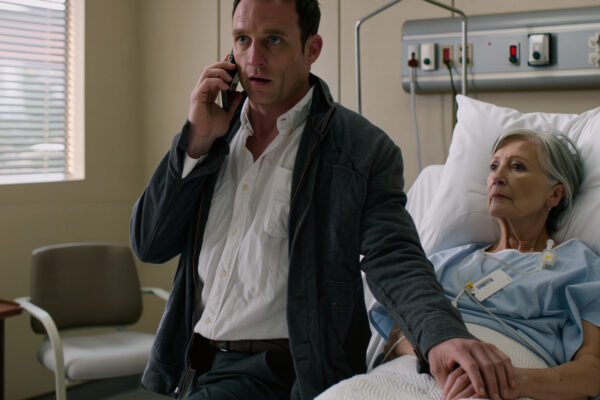
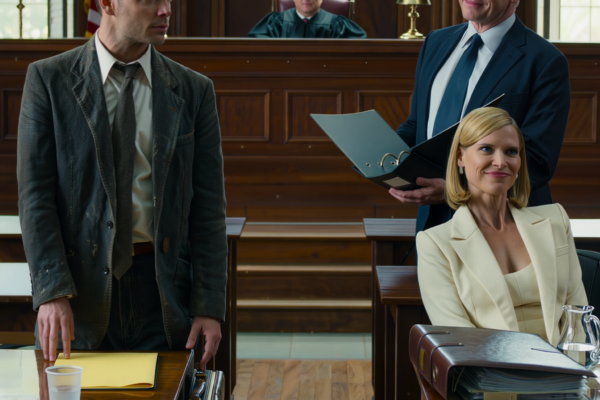
My husband left me for a younger woman and walked away from $30,000 in debt. I was still trying to understand what had happened when my 12-year-old son looked at me and said, “Don’t worry, Mom. I took care of it.” One week later, my husband called me in a panic.
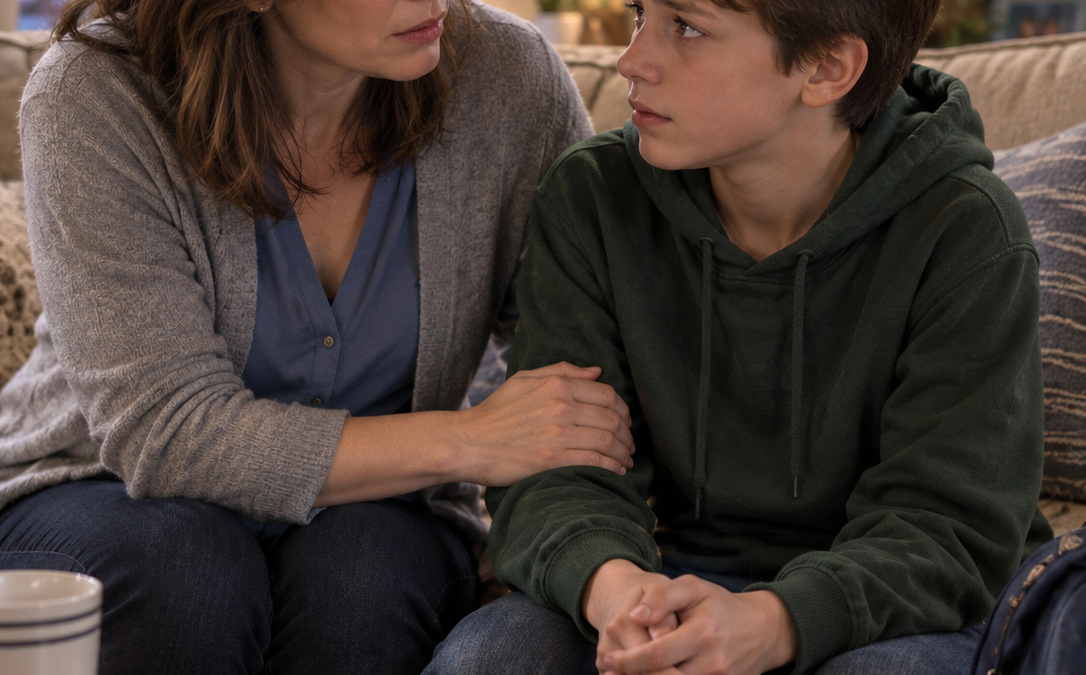
The Debt He Left in My Name
The email arrived while I was chopping onions.
My phone vibrated against the kitchen counter, slid half an inch, and stopped beside the cutting board.
I almost ignored it.
I had been at work since seven that morning, the pasta water was already boiling, and my twelve-year-old son, Noah, was upstairs pretending he did not have math homework.
Then the phone buzzed again.
I wiped my hands and looked.
Mark.
My husband of fourteen years had been coming home later and later for weeks, but seeing his name still made something in me relax automatically.
The subject line said:
I’m sorry.
I opened it.
Lisa,
I know this is sudden, but I’ve left.
I met someone else. She’s younger, and I feel alive again. I’m sorry, but I need to do this for me.
Also, the business loan is in your name, so you’ll need to handle it. I’m sure you’ll manage.
I won’t be reachable for a while.
I read the email twice.
Then a third time.
The onions blurred.
I put one hand against the counter because my knees had stopped feeling reliable.
The first thought that came into my head was not another woman.
It was the loan.
Thirty thousand dollars.
Two years earlier, Mark had decided he was finished working for contractors who, according to him, “made money off his ideas.”
He wanted his own renovation company.
He had experience.
He could install cabinets, frame walls, estimate jobs, manage subcontractors. What he did not have was good credit.
I did.
So when the bank rejected his application and approved mine, he sat beside me at our dining table, squeezed my hand, and said, “This is for us.”
I signed.
For us.
Now the man who said that was somewhere else with another woman, and the debt remained exactly where he had arranged for it to remain.
With me.
I left the burner on until the water boiled over.
The hiss finally pulled me out of the email.
I shut off the stove.
Then I opened our banking app.
The joint checking account had been almost emptied.
I stared at the balance.
One hundred eighty-six dollars and forty-two cents.
My paycheck had deposited three days earlier.
Mark had transferred most of it out that morning.
The business loan showed late.
Again.
I opened the statement.
Remaining balance: $27,438.75.
I had known we were behind.
I had not known how badly.
Mark had always handled the renovation company’s incoming money.
I handled the household bills because, in his words, I was “better with boring things.”
Apparently the loan had become boring enough to belong to me too.
“Mom?”
I locked my phone.
Noah stood in the kitchen doorway.
He had Mark’s brown eyes and my habit of noticing when a room felt wrong.
“You okay?”
“Yeah.”
“You look sick.”
“Long day.”
He looked at the stove.
“You burned the water.”
“I did not burn water.”
“You kind of did.”
That almost made me laugh.
Almost.
I started dinner again because I did not know what else to do.
Noah sat at the counter while I cooked.
He watched me longer than usual.
Finally he said, “Is Dad coming home?”
I kept stirring the sauce.
“No.”
“For dinner?”
“No.”
“For how long?”
I stopped.
I had spent the previous twenty minutes being abandoned as a wife.
I was not prepared to become the parent explaining abandonment to a child.
“He went away.”
Noah’s face changed.
Not surprise.
Recognition.
My hand tightened around the wooden spoon.
“What?”
He looked down.
“Nothing.”
“Noah.”
“I saw something.”
“When?”
“A few weeks ago.”
My heart sank.
He rubbed one thumb against the edge of the counter.
“His phone was charging in the kitchen. A message popped up.”
“From who?”
“I didn’t really read it. I just saw a woman’s contact with a heart next to it.”
I sat down across from him.
“Why didn’t you tell me?”
He looked miserable.
“I thought maybe it was nothing.”
I had thought the same thing about every late night.
Every new password.
Every shower Mark took immediately after getting home.
Every time he turned his screen facedown.
My twelve-year-old and I had apparently been protecting the same illusion from opposite sides.
“I’m sorry,” Noah said.
“No.”
I reached across the counter.
“This is not your fault.”
His eyes filled.
“I hate him.”
“Noah.”
“I do.”
“You’re allowed to be angry.”
“He left you.”
His voice cracked.
“He left me too.”
That was the sentence that finally made me cry.
Not Mark saying he had found somebody younger.
Not the empty bank account.
Not $27,438.75.
My son saying, He left me too.
I came around the counter and hugged him.
For fourteen years, Mark and I had built what I thought was an ordinary marriage.
We met in college.
We lived in a terrible apartment with a radiator that banged all winter.
We married at twenty-four.
Noah came two years later.
There had been financial stress.
Mark changed jobs often.
He had ideas that arrived with enormous enthusiasm and sometimes disappeared before the bills did.
But he was funny.
Generous in bursts.
The kind of father who could turn a hardware-store trip into an afternoon adventure.
The kind of husband who once drove across town at midnight because I mentioned I wanted pie while pregnant.
Human beings would be much easier to leave if betrayal erased every decent memory that came before it.
It does not.
That night, I slept maybe an hour.
The next morning, I called the lender.
The representative confirmed what I already knew.
The loan was legally mine.
I had signed it.
Whatever Mark had promised me privately did not change that.
Unless there were unauthorized transactions or separate fraud, the lender expected payment from the borrower listed on the agreement.
Me.
That distinction hurt, but I needed to hear it.
The business had been Mark’s dream.
The signature was mine.
The debt was not going to disappear because my husband had turned into a coward.
I tried calling him anyway.
Voicemail.
I emailed.
Nothing.
I contacted his brother.
“He mentioned needing space,” he said.
“Where?”
“No idea.”
“Is he with someone?”
A pause.
“I don’t want to get involved.”
Which meant yes.
By the fifth day, I was functioning through muscle memory.
Wake Noah.
Pack lunch.
Drive to work.
Answer emails.
Smile at coworkers.
Come home.
Check the account.
Lie awake.
Repeat.
I worked as an operations coordinator for a medical-supply company. It was not glamorous, but I liked order. Purchase orders. Delivery schedules. Things that could be checked and reconciled.
My home life had become the opposite.
One evening I passed Noah’s bedroom and heard him typing hard enough to sound angry.
I knocked.
“What are you doing?”
He shut the laptop halfway.
“Nothing.”
“Noah.”
“Homework.”
“You have never typed homework like you’re trying to break the keyboard.”
He looked at me.
There was guilt in his face.
“Just fixing something.”
I leaned against the doorframe.
“Fixing what?”
“You’ll see.”
I was too tired to push.
That was a mistake.
One week later, he called me at work.
His voice was shaking.
“Mom.”
I stood immediately.
“What happened?”
“I messed up.”
“What kind of messed up?”
“Can you come home?”
“Noah, tell me now.”
“I didn’t mean for it to get this far.”
I grabbed my bag.
“I’m leaving.”
The drive home took twenty minutes.
It felt like two hours.
Noah was standing on the porch when I pulled into the driveway.
He opened the passenger door before I turned off the engine.
“You came fast.”
“You sounded terrified.”
He looked toward the house.
“I’m sorry.”
My fear sharpened.
“Did someone threaten you?”
“No.”
“Are you hurt?”
“No.”
“Did you hurt somebody?”
“No.”
I got out.
“Then start talking.”
Inside, my laptop was open on the coffee table.
An email thread filled the screen.
Mark’s name appeared at the top.
I turned toward Noah.
“What did you do?”
His face crumpled.
“I used your email.”
“You did what?”
“I knew Dad wouldn’t answer me.”
“Noah.”
“I pretended to be you.”
I sat down slowly.
At twelve, my son had tried to repair an adult disaster by stepping directly inside it.
“What did you send?”
He pointed at the screen.
I read.
The message claimed the loan company was investigating the business loan and might refer suspected misuse to authorities.
Noah had written that if Mark had used money without my consent, it could become a fraud case.
My stomach tightened.
“Where did you get this?”
“Online.”
“Noah.”
“I wanted to scare him.”
“You cannot pretend to be me and make legal threats based on things you found on the internet.”
“I know.”
“Do you?”
His eyes filled.
“I thought he’d send the money.”
Mark had replied.
What are you talking about? You signed the loan. Don’t blame me for your decisions. Stop threatening me.
A second message appeared twenty minutes later.
From Selene.
So now I knew her name.
Lisa, you need to stop harassing Mark. He moved on. You should too.
There was more.
Cruel enough to hurt.
Not important enough to repeat.
I closed my eyes.
“Noah, this stops now.”
“But—”
“No.”
I pointed toward the computer.
“No more pretending to be me. No contacting your father. No contacting her. No threatening anyone. This is an adult problem.”
He looked down.
Then whispered, “He called.”
My eyes opened.
“When?”
“Today.”
“You answered?”
“I didn’t know it was him.”
“What happened?”
Noah swallowed.
“I didn’t speak at first.”
“And?”
“He said your name.”
His hands had started shaking again.
“Then I said something.”
Mark recognized his voice.
He told Noah he was getting involved in things he did not understand.
He called it dangerous.
He did not make a direct threat.
But my son had heard enough anger in his father’s voice to panic.
I moved beside him.
“You should have told me.”
“I know.”
“You are twelve.”
“I know.”
“You are not supposed to protect me.”
His face folded.
“But you looked like you were disappearing.”
That sentence stopped me.
“I saw you checking the bank every night,” he said. “You stopped eating dinner. You don’t sleep.”
I pulled him into my arms.
“I’m the parent.”
“I know.”
“My job is to make sure you’re safe.”
“But who makes sure you’re safe?”
I could not answer immediately.
We sat together on the couch.
Eventually I said, “From now on, we tell each other the truth. Even when the truth is that we don’t know how to fix something.”
He nodded.
Then the laptop chimed.
A new email from the lender.
FINAL NOTICE.
Payment due by the end of the week.
Balance: $27,438.75.
I read it.
Noah read my face.
“We’re in trouble, aren’t we?”
“Yes.”
I could have lied.
I was finished with lies.
The next morning, I changed passwords on every account Noah had accessed and removed him from anything financial.
Then I called the lender again.
I also scheduled a consultation with a consumer attorney.
Her name was Denise Harper.
She listened while I explained the signed loan, Mark’s disappearance, the joint account, and the business.
When I finished, she said, “We need to separate what feels wrong from what is legally unauthorized.”
It sounded cold.
It was exactly what I needed.
“You signed the original loan.”
“Yes.”
“So unless there is evidence your signature was forged on later documents, or the lender was given false information, you may remain responsible for that debt.”
My stomach dropped.
“What if Mark used the money for things unrelated to the business?”
“That may matter between you and Mark. It may matter in divorce or restitution. It does not automatically erase your obligation to the lender.”
I hated the answer.
Which meant I trusted it.
“What should I do?”
“Preserve records you already lawfully have. Bank statements. Loan documents. Emails. Do not access accounts that aren’t yours. Do not impersonate anyone. Do not let your son investigate.”
“I already had that conversation.”
“Good.”
Then she asked whether Mark still had access to any shared credit.
I checked.
He did.
We began locking down what I could legally control.
That evening, Noah sat beside me at the kitchen table.
“I’m sorry.”
“I know.”
“You’re really mad.”
“I’m scared.”
He looked at me.
“That’s different.”
“Yes.”
I showed him a blank notebook.
“If you want to help, here.”
“What is it?”
“We write down what happens. Dates. Calls. Letters that arrive. Nothing sneaky. Nothing fake.”
He opened it.
“You mean evidence?”
“I mean a record.”
“That sounds less cool.”
“That’s because real life is less cool.”
He almost smiled.
A few days later, Noah came into the kitchen holding his phone.
“Mom?”
“What?”
“Dad’s still on the family location.”
I looked up.
“What?”
“When we had the family-sharing thing. For my phone.”
I remembered setting it up years earlier so Mark and I could see Noah’s location when he started biking to friends’ houses.
Apparently Mark had never disabled sharing on his own device.
Noah showed me only the town.
Harborview.
A coastal place about two hours away.
“Turn it off,” I said.
“What?”
“Don’t track him.”
“But Mom—”
“We know where he is generally. That’s enough.”
Noah looked disappointed.
“We could go there.”
“No.”
“He’s there with her.”
“Probably.”
“And we’re just supposed to sit here?”
“We’re supposed to do this without becoming people who think rules only apply when they’re convenient.”
He closed the app.
That night, however, something else appeared.
A charge on a credit account in my name.
Harborview.
A bed-and-breakfast reservation.
My card.
My account.
I had not authorized it.
That changed the conversation.
I called Denise the next morning.
“Now we have a specific unauthorized charge.”
“Yes.”
“Dispute it through the issuer. Keep the documentation.”
“Can I confront him?”
“You can speak to your husband.”
“That sounded carefully worded.”
“It was.”
She paused.
“If you choose to see him, keep it public. Do not trespass. Do not involve your son in a confrontation.”
I looked through the glass door toward the living room, where Noah was pretending not to listen.
“I understand.”
The following Saturday, I drove to Harborview.
Noah knew where I was going.
He wanted to come.
“No.”
“Mom.”
“Noah.”
“He left me too.”
“I know.”
“Then why do you get to see him and I don’t?”
Because I was angry, my first instinct was to say, Because I’m the adult.
Instead, I sat beside him.
“What happened when you tried to fix this yourself?”
His eyes lowered.
“I made it worse.”
“You got scared.”
“Yes.”
“I’m not putting you in the middle again.”
He nodded, though he did not like it.
I left him with my sister for the afternoon.
Harborview looked offensively peaceful.
Bright storefronts.
A boardwalk.
Couples walking with paper cups of coffee.
The kind of town people visit to pretend their ordinary problems ended at the highway exit.
I parked across from the inn listed on my credit-card charge.
I did not enter.
I did not photograph through windows.
I waited in the car.
Twenty minutes later, Mark came outside.
He looked rested.
Tanned.
He was wearing sunglasses and carrying a beach bag.
Selene followed him.
She was younger than me.
Not dramatically.
Maybe ten years.
She laughed at something Mark said and touched his arm.
For fourteen years, that arm had reached across our bed.
Lifted Noah when he fell asleep in the car.
Wrapped around me in family photographs.
I thought seeing another woman touch him would make me furious.
Instead, I felt strangely distant.
Then Mark saw my car.
His smile disappeared.
He crossed the street.
I stepped out before he reached me.
“Lisa.”
“We need to talk.”
He looked around.
“Here?”
“You chose here.”
Selene stopped near the curb.
Mark lowered his voice.
“Are you following me?”
“No.”
“How did you find me?”
“I found a Harborview lodging charge on my credit account.”
His expression changed.
“That card was for business expenses.”
“Your renovation business ended months ago.”
“I was closing things out.”
“At a bed-and-breakfast?”
He folded his arms.
“What do you want?”
I handed him a copy of the loan notice.
“You left this.”
He glanced at it.
“You signed it.”
“I know.”
The answer seemed to surprise him.
I continued.
“I’m not pretending I didn’t. I’m responsible to the lender unless something else is established.”
“Then why are you here?”
“Because you told me the business loan was our future. Then you left me with the debt, emptied our joint checking account, disappeared from your son, and used my credit in Harborview.”
His jaw tightened.
“I didn’t empty anything. That money was partly mine.”
“Then we can account for it.”
“Lisa.”
“And the lodging charge is being disputed.”
Selene had moved closer.
“What lodging charge?”
Mark looked at her.
“Nothing.”
I almost laughed.
“Not nothing.”
She looked between us.
“You used her card?”
“It was a shared account.”
“No,” I said. “It is an account in my name.”
Selene’s face changed.
Mark snapped, “Don’t do this here.”
“You already did it here.”
He stepped closer.
Not threateningly.
Desperately.
“Lisa, we were married. Everything was shared.”
“That isn’t how authorization works.”
Selene looked at him.
“You told me the business was paying for this.”
Mark’s shoulders lowered.
For the first time, I saw uncertainty in him.
Not guilt.
Not remorse.
The realization that the version of his life he had told Selene did not match the paperwork.
I did not stay to win an argument.
I had not driven there for a public scene.
I wanted him to understand one thing.
“I’m documenting the financial damage,” I said. “The lender has already sent final notice. I’m getting legal advice. Any charge in my name that I did not authorize is being disputed.”
Mark’s voice became quiet.
“Are you threatening me?”
“No.”
I folded the notice and put it back in my bag.
“I’m telling you what I’m doing.”
Then I drove home.
Noah met me at the door.
“Well?”
“He was there.”
“With her?”
“Yes.”
His mouth tightened.
“Did you yell at him?”
“No.”
“Why not?”
“Because yelling doesn’t change an account balance.”
He considered that.
“That’s disappointing.”
I laughed for the first time in weeks.
Two days later, Mark called.
Unknown number.
I almost did not answer.
“Lisa.”
“What?”
His voice sounded frantic.
“Someone contacted the inn.”
“Who?”
“I don’t know. The card company. Maybe the lender. They were asking about charges.”
“I disputed transactions I didn’t authorize.”
“Selene left.”
I sat down.
“What?”
“She thinks I lied to her.”
“Did you?”
Silence.
Then:
“She took the car.”
“Whose car?”
“Mine.”
“And?”
“She took most of the cash.”
A flicker of pity moved through me.
It passed.
“I don’t know what you want me to do.”
“I need help.”
The words were almost funny.
“I need to figure out how to fix this.”
“Start by responding to the lender.”
“I don’t have twenty-seven thousand dollars.”
“Neither do I.”
“Lisa, please.”
I looked across the kitchen.
Noah was doing homework at the table.
He looked up.
I shook my head slightly so he knew not to ask.
Mark said, “I’m sorry.”
The words arrived late.
I still heard them.
“Are you sorry you left?”
“Yes.”
“Are you sorry you left Noah without saying goodbye?”
A longer silence.
“Yes.”
“Are you sorry you put the entire business loan in my hands?”
“You agreed to it.”
“That’s not an apology.”
He breathed out.
“I don’t know what you want from me.”
“Responsibility.”
“What does that mean?”
“Talk to the lender. Give accurate information. Account for the business money. Cooperate with the credit-card dispute. If you spent from our joint funds, disclose it.”
“That could ruin me.”
I looked at Noah.
“You already handed the ruin to us.”
Mark did contact the lender.
He also signed an agreement acknowledging responsibility to repay me for certain business expenses and unauthorized personal charges, subject to the legal process.
It was not magic.
The loan did not disappear.
My name was still on the original agreement.
Denise helped me understand which obligations could be challenged and which had to be handled through divorce, restitution, or settlement.
For the first time, I felt less afraid because the problem had shape.
Then Noah brought in the mail.
He held one envelope differently from the rest.
“Mom?”
“What?”
“This has your name.”
“So do most bills.”
He handed it over.
The return address was another lender.
I opened it.
Read the first page.
Then sat down.
Twenty-two thousand dollars.
A second loan.
Opened five months earlier.
In my name.
I had never applied for it.
I checked the account number.
Not the business loan.
Different lender.
Different obligation.
My hands started shaking.
“Noah.”
He sat beside me.
“What is it?”
“I didn’t sign this.”
For the first time since Mark left, the distinction between betrayal and fraud became painfully clear.
The first loan had been a bad decision I made with my husband.
This one was not mine at all.
I called Denise.
She told me not to contact Mark first.
We contacted the lender.
They reviewed the application.
There were electronic signatures attributed to me.
Personal information only someone close to me would know.
An email address I did not recognize.
A mailing address connected to Mark’s business.
That was when I filed a formal identity-theft report.
I brought the documents.
The unauthorized loan.
The disputed charges.
Mark’s emails.
The financial records I legally had.
The joint-account transfers.
The lender correspondence.
No dramatic speech.
No promise of instant justice.
Just information.
The investigation took weeks.
The deeper it went, the worse it became.
The second loan was not the only account opened without my permission.
There was a credit card.
Hotel charges.
Electronics.
Restaurant bills.
Transactions tied to Mark’s personal spending after the business was already collapsing.
Investigators also found electronic signatures submitted as mine.
Mark eventually admitted using my information.
He had assumed that because we were married—and because I had willingly signed one loan—I would never be able to separate what I had authorized from what he had done without me.
He was wrong.
Three weeks after the formal investigation began, he was arrested after attempting to access funds linked to one of the disputed accounts.
Noah and I were home when I received the call confirming charges would move forward.
After I hung up, Noah looked at me.
“Is Dad going to jail?”
“I don’t know.”
“But he got arrested.”
“Yes.”
Noah did not smile.
Neither did I.
He picked at the edge of his notebook.
“Is it bad that I’m not sad?”
“No.”
“Are you sad?”
“Yes.”
He looked surprised.
“Why?”
“Because he’s still your father.”
“That doesn’t make sense.”
“Most feelings don’t.”
The case did not erase fourteen years.
It did not erase what Mark had done either.
Eventually he entered a plea resolving the financial charges.
At sentencing, the judge ordered restitution.
The unauthorized second loan and fraudulent credit accounts were removed from my responsibility after the lenders completed their own investigations.
The original business loan was more complicated because my signature had been real.
Mark’s restitution obligation covered documented misuse, and a settlement with the lender allowed me to restructure what remained while repayment from him was applied against it.
His wages were subject to garnishment.
He received eighteen months of probation and sixty days in county custody as part of the sentence.
I was present in court.
Mark looked smaller than I remembered.
Not physically.
Something about the confidence that once filled every explanation had disappeared.
He looked at me once.
I looked back.
That was all.
I did not need him humiliated.
I needed the financial damage recognized for what it was.
Afterward, recovery was slow.
Credit reports do not repair themselves because a judge says you were wronged.
I wrote letters.
Submitted reports.
Called lenders.
Waited on hold.
Sent documents again when the first copy mysteriously disappeared inside a department.
Months passed.
The second loan was removed.
The fraudulent card disappeared from my liability.
The original business debt steadily came down under the settlement and restitution arrangement.
My credit score stopped falling.
Then it started climbing.
I got promoted at work.
Not because anyone knew what happened.
Because I had been doing the work for years and the opening finally came.
Noah and I moved.
The new apartment was smaller than the house Mark left.
Two bedrooms.
One bathroom.
A kitchen table that barely fit four chairs.
The first night, we ate pizza on the floor because the moving boxes had swallowed the plates.
Noah looked around.
“It’s tiny.”
“It is.”
“I like it.”
“Why?”
“Nothing here feels like Dad is about to walk in.”
I did not know whether that should comfort me.
It did.
Noah kept the notebook.
At first it had been our record of dates and bills.
Later he started using the empty pages to write little stories about people who got themselves out of unfair situations.
Some were obviously about us.
Others involved stolen bicycles, cheating classmates, and one very dramatic story about a corrupt soccer referee.
Eventually he started a small blog with my permission.
Not about his father.
About fairness.
What evidence means.
Why you tell an adult when something feels too big to carry alone.
His teacher told me he seemed more focused that year.
I was glad.
I also worried.
No twelve-year-old should become competent because the adults around him fail.
One night, months after the court case ended, we sat at our little kitchen table eating spaghetti.
Noah had grown enough that his jeans looked too short again.
He twirled pasta around his fork.
Then he asked, “Mom?”
“Yeah?”
“Are you happy?”
I almost answered automatically.
Of course.
Parents do that.
We lie because we think optimism is part of the job.
Instead, I thought about it.
“I’m getting there.”
He nodded.
“Me too.”
We kept eating.
The apartment was quiet.
No email waiting to destroy the evening.
No hidden account I knew of.
No GPS location glowing on a screen.
No husband expecting me to clean up a debt while he disappeared into somebody else’s life.
Just me.
My son.
A cheap table.
Dinner.
It was not the life I had planned.
But for the first time in a long while, it was a life built from things I had actually chosen.
Noah reached for the parmesan.
“Mom?”
“What?”
“You know you burned the water that night Dad left, right?”
I stared at him.
“You cannot burn water.”
“You absolutely did.”
I laughed.
He laughed too.
And somewhere between the tiny kitchen and the sound of my son making fun of me, I realized I had stopped waiting for the pieces of my old life to come back.
We had built something else instead.