My daughter-in-law told me, “We need to focus on our family.” My son just nodded and said nothing. I smiled, sold my house, and moved to the ocean alone. Then their business collapsed. When they finally called me, desperate for help, they were about to find out how much had changed since I left.
The Red Door I Chose for Myself
My son found out I had sold the house from a sign in the front yard.
Phoebe had warned me that once the sale became public, word would travel quickly through the neighborhood. I had lived there for thirty-one years. People noticed things.
Still, I had not expected my phone to ring less than an hour after the SOLD strip went across the bottom of the sign.
“Mom, what is happening?”
I was standing in the kitchen, looking at the red front door through the hallway.
“I sold the house.”
There was a pause.
“You sold it?”
“Yes.”
“When?”
“The offer was finalized this week.”
Another pause, longer this time.
“Why didn’t you tell us?”
I looked around the room where I had packed lunches for him as a child, helped with homework, argued with Raymond about paint colors, celebrated birthdays, hosted Christmases, and spent the first stunned winter of widowhood learning how quiet a refrigerator could sound at two in the morning.
“I’m telling you now.”
“Mom, that’s not what I mean.”
“I know.”
“Where are you going?”
“Maine.”
His breathing changed.
Not anger yet.
Something closer to alarm.
“Maine?”
“I bought a house in Harwick Point.”
“You bought another house?”
“Yes.”
“You can’t just—”
He stopped himself.
That unfinished sentence told me more than whatever would have followed.
I could.
I already had.
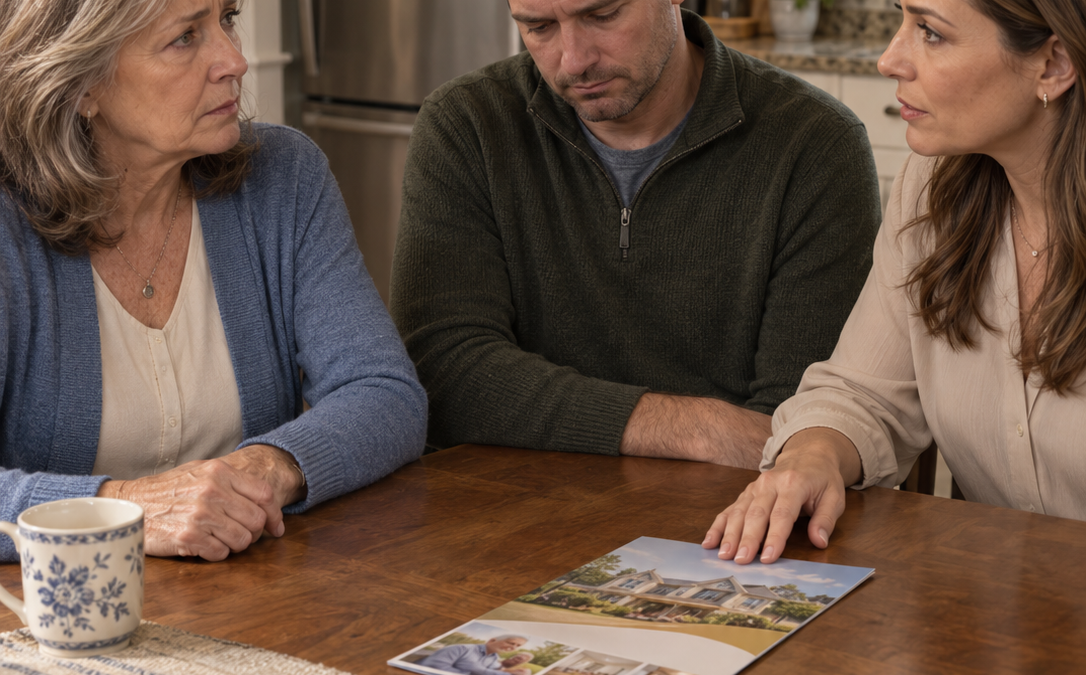
Six weeks earlier, my son and his wife, Ranata, had sat at this same kitchen table and explained that they had been thinking seriously about my future.
By the time they left that afternoon, I had begun thinking seriously about it too.
Just not in the way they intended.
It had started with a Tuesday phone call.
My son rarely called on Tuesdays because he worked late. When his name appeared on my screen shortly after four, I assumed something had happened with one of the children.
Instead, the first thing he said was, “Mom, Ranata and I have been talking.”
I was sitting at the kitchen table with a cup of tea beside me.
That sentence was enough to make me stop reaching for it.
“About what?”
“The house.”
I looked toward the living room.
“What about it?”
“And your situation.”
“My situation?”
He exhaled.
“I don’t want to do this over the phone.”
“Then perhaps you shouldn’t have started it over the phone.”
“We can come over Saturday.”
“Fine.”
“Mom.”
“What?”
“Don’t get defensive before we even talk.”
I almost laughed.
“I don’t know what we’re talking about.”
“That’s why I want us to sit down.”
After we hung up, I drank the tea anyway.
It had gone cold.
At sixty-four, I had learned not to assign too much meaning to small things, but I remember thinking later that the cold tea fit that entire conversation better than anything else could have.
My “situation,” as my son called it, was that I lived alone.
My husband Raymond had died three years earlier after thirty-one years of marriage.
The house was the one we had bought when our son was still young enough to leave muddy shoes in the hallway and think hiding a broken lamp behind the sofa qualified as a plan.
It had three bedrooms, a small backyard, a garage Raymond had always insisted was too narrow, and a front door painted a deep brick red.
Raymond had chosen the color.
“A red door says welcome home,” he told me when I complained that the paint looked too bold.
I had rolled my eyes and let him paint it.
Years later, after he died, the color faded slightly.
I could have repainted it.
I didn’t.
Some grief announces itself through photographs and anniversaries.
Some of it stays on a front door because you cannot bring yourself to cover the last color your husband chose.
The house was paid off. Raymond and I had finished the mortgage eight years before he died.
I had a pension from my years as a school librarian, modest savings, friends, a neighbor named Viv who knocked when she saw my porch light behaving strangely, and a book club that met twice a month and spent at least half its time discussing things other than books.
I drove.
I cooked.
I gardened badly but enthusiastically.
I handled my own finances.
I went to medical appointments by myself and came home afterward.
I had not fallen down a staircase, forgotten where I lived, or accidentally given my bank account to a stranger on the telephone.
Until that Tuesday, I had not known any of this amounted to a situation.
My son and Ranata arrived Saturday shortly after lunch.
Ranata was carrying her handbag and a thin folder.
That folder should have warned me.
She had a particular way of preparing for difficult conversations. She did not improvise. She arrived organized.
She sat at the kitchen table with her hands folded neatly in front of her.
My son sat beside her and studied the centerpiece as though I had recently acquired a fascinating bowl of artificial lemons.
“Coffee?” I asked.
“No, thank you,” Ranata said.
My son shook his head.
I poured myself tea anyway.
Ranata waited until I sat down.
Then she said, “Mom.”
She almost never called me that.
My name was Eleanor to her, which I had never minded. The first few times she called me Mom had been during moments when she wanted closeness quickly.
That day, I understood the pattern before she reached her second sentence.
“We’ve been thinking about your future.”
“So have I.”
Her smile was careful.
“Of course.”
My son rubbed a thumb along the edge of the table.
“We just want to make sure you’re secure.”
“I am secure.”
“You are,” he said quickly.
Ranata looked at him, then back at me.
“This house is a lot for one person.”
There it was.
One person.
Alone.
Words can be technically accurate and still carry a judgment.
“I manage it.”
“I know you do.”
“Then what exactly are we discussing?”
Ranata opened the folder.
She placed a glossy brochure between us.
On the cover was a smiling silver-haired woman sitting by an enormous window with a cup of tea in both hands.
Cedarbrook Senior Living.
The woman looked pleased about something.
Perhaps no one had recently shown her a brochure with herself on it.
“We visited,” my son said.
I turned to him.
“You visited?”
“It’s nice.”
Ranata slid the brochure closer.
“It’s in Dunore. About forty minutes from us.”
I did not touch it.
“They have private apartments,” she continued. “A dining room, activities, transportation, a garden. You’d have people around.”
“I have people around.”
“That’s not what I mean.”
“I have Viv next door. I have book club. I have friends.”
Ranata’s mouth tightened just enough for me to notice.
“We know.”
My son finally looked at me.
“This isn’t because we think you can’t take care of yourself.”
“Then why is it?”
Neither answered immediately.
That silence was the first honest thing in the room.
Ranata leaned forward.
“We want to be able to focus on our family and the kids without constantly worrying about you alone in this big house.”
I heard every word.
But the phrase that stayed was our family.
Their family.
The children.
The four of them.
And me somewhere outside the circle, requiring management.
I waited for my son to correct the language.
He didn’t.
Instead, he picked up the brochure and turned it over.
“They have a garden,” he said.
I looked at him.
He had Raymond’s eyebrows.
I noticed that ridiculous detail at exactly the wrong moment.
When he was nine, those same eyebrows had pulled together while he stood beside a broken bicycle and waited for Raymond to explain how chains worked.
When he was seventeen, they had done the same thing when he told us he had failed a chemistry exam.
When his first child was born, I had seen them over a hospital mask while he cried.
That face had belonged to my child for so long that it took effort to remember it now belonged to an adult capable of agreeing that my life should be reorganized for everyone else’s convenience.
“Did you think I was going to sell this house and move to Cedarbrook because you brought me a brochure?”
Ranata sat straighter.
“We hoped you would at least consider it.”
“Why?”
My son’s chair creaked.
“Mom.”
“No. I’m asking.”
He looked uncomfortable.
“We worry.”
“About what?”
“You being here alone.”
“Something specific.”
He had nothing.
Ranata stepped in.
“It’s not about one incident.”
“Then what is it about?”
“Planning ahead.”
“For whose comfort?”
Her expression changed.
It was brief, but I saw it.
Not cruelty.
Frustration.
She had come prepared to solve a problem.
I was refusing to be one.
“I don’t think that’s fair,” she said.
“Neither do I.”
My son said my name quietly.
I looked at him.
“What do you want?”
He glanced at Ranata before answering.
That hurt more than I expected.
“I want you safe.”
“I am safe.”
“I know.”
“And?”
He rubbed both palms over his knees.
“It would be easier.”
There.
At last.
I nodded.
“For you.”
“Mom, that isn’t what I meant.”
“It may not be what you meant to say.”
Ranata closed the folder.
“Nobody is trying to force you.”
“Good.”
“We’re just asking you to think realistically.”
“I will.”
My son looked relieved.
He should not have been.
I lifted the brochure.
“I’ll think about it.”
They left twenty minutes later.
I watched their car disappear from the front window.
Then I went back to the kitchen.
The brochure was still on the table.
I opened it.
There were photographs of bright common rooms, smiling residents, raised garden beds, fitness classes, card games, a woman painting watercolors.
It did not look terrible.
That mattered.
Had Cedarbrook looked frightening, it would have been easier to be angry.
But this was not a story about a horrible facility.
For someone who wanted that life, it might have been wonderful.
I simply did not want it.
What disturbed me was not the place.
It was the assumption that the next stage of my life should be designed around reducing everyone else’s concern.
I carried my tea into the hallway and stood near the red door.
Raymond and I had once talked about Maine.
Not often.
It was one of those retirement conversations married couples have while doing something completely unrelated.
We would be in the grocery store discussing cereal, and one of us would say, “When we finally move to Maine…”
Or we would see a program about coastal towns and Raymond would say, “That’s it. That’s where I’m going to become unbearable about seafood.”
We never made a serious plan.
Then he got sick.
Then he died.
And Maine became one more future tense I stopped using.
That Saturday, standing by the red door, I wondered for the first time whether losing Raymond meant I had also lost the plans we had made together.
The answer came faster than I expected.
No.
The following weeks were polite.
That was how I knew my son and Ranata had not let the subject go.
My son began texting more often.
How are you feeling?
Did you look through the Cedarbrook information?
Let us know if you want us to schedule a tour.
Ranata sent me a link.
Thought you might want to explore more.
I did not click it.
Instead, I called Georgina Marsh.
Georgina had handled the legal details after Raymond died. She had been practicing in our county for twenty-two years and possessed the rare ability to listen to emotional people without becoming emotional herself.
Her office smelled faintly of paper and peppermint tea.
She let me talk until I stopped.
Then she asked, “Do you believe your son is trying to take your property?”
“No.”
“Control your accounts?”
“No.”
“Has anyone pressured you to sign anything?”
“No.”
“Do you have any physical or cognitive issue that interferes with managing your own affairs?”
“Not that anyone has told me.”
One corner of her mouth moved.
“Good.”
I explained that the house was mine outright.
My accounts were mine.
My pension was stable.
My savings were not extravagant, but adequate.
Georgina folded her hands over a legal pad.
“Then are you here to understand your rights or because you’ve already decided something?”
“Both.”
She nodded as if that answer made perfect sense.
We spent the next hour reviewing matters I should probably have reviewed sooner.
The house.
My estate documents.
Beneficiaries.
Emergency contacts.
Powers of attorney.
I had made several decisions after Raymond’s death when I was still moving through days in a fog. Some no longer reflected what I wanted.
No one could compel me to move to Cedarbrook.
No one could sell my house.
No one had legal control over my life.
That was reassuring.
But the more important realization came on the drive home.
I did not want to spend the next decade proving my independence to my son.
I did not want every holiday to become a test.
I did not want to keep the house merely because leaving might look like surrender.
And I did not want to move to Cedarbrook merely because staying might worry them.
I wanted to know what I wanted when nobody else’s opinion was in the room.
So I began there.
Georgina helped me update my documents.
I changed beneficiary designations I had barely thought about after Raymond died.
I organized accounts.
I made copies.
I labeled folders.
None of this was dramatic.
No secret fortune appeared.
No one lost an inheritance overnight.
I simply took stock of a life that had continued moving while I was still thinking of myself as one half of a marriage.
Three weeks later, I called Phoebe Dell.
Phoebe had sold Raymond and me our first apartment in 1987, back when she was young enough to wear shoes no working real estate agent should ever attempt.
She was still working, still quick, and now successful enough that her face occasionally appeared beside columns about the local housing market.
She came on a Wednesday afternoon.
We walked through the house slowly.
She opened closets.
Looked at windows.
Asked about the roof.
Stood in the backyard and studied the fence.
When we returned to the kitchen, she sat where Ranata had sat and said, “You’ve kept it beautiful, Eleanor.”
“I don’t know that I’m selling.”
“You don’t have to.”
“I just want to know.”
Phoebe gave me an estimated value.
I asked her to repeat it.
She did.
The neighborhood had changed over thirty-one years. Houses that had once been considered ordinary family homes were now in demand.
I thought of Cedarbrook.
Then I thought of what the house represented if I sold it myself.
Not displacement.
Choice.
After Phoebe left, I opened my laptop.
I searched Gull Cove first.
That was the Maine town where I had spent much of my childhood.
My parents’ small place had been about twenty minutes from the water. Summer nights carried foghorns. My mother complained constantly about salt on the windows.
Gull Cove had become expensive.
So I widened the map.
I looked at smaller towns.
Places near enough to the ocean that the air changed, but far enough from tourist routes to remain ordinary.
One Saturday morning, I found Harwick Point.
The listing showed a white clapboard house with a front porch, two bedrooms, and an overgrown rose bed in the backyard.
Thirteen minutes to the ocean.
I stared at the second bedroom.
I imagined my grandchildren there.
That mattered immediately.
Whatever happened between their parents and me, I did not want distance to become disappearance.
I called Phoebe.
“I found something.”
That was the beginning.
Not of revenge.
Not of a secret plan to punish my son.
Of movement.
I visited Harwick Point.
I stood on the porch.
The house was smaller than mine.
The kitchen needed updating.
One upstairs window stuck when opened.
The rose bed was worse in person.
I loved it.
I made an offer in March.
The seller accepted the following week.
Three days later, I listed my own house.
Phoebe called the process a soft launch.
Eleven days after that, a young couple made an offer above asking.
They toured twice.
On the second visit, the wife stood in the living room with her hand over her mouth.
“I can see everything here,” she said.
I knew what she meant.
I had once seen everything there too.
Children.
Holidays.
Arguments.
Old age beside Raymond.
Life had given me most of those things and then changed the ending.
Before they left, she touched the red door.
“I love this color.”
“It’s lucky,” I told her.
I surprised myself by meaning it.
My son saw the sold sign before I told him.
Which is how I ended up standing in the kitchen listening to him say, “You can’t just—”
And stop.
He asked me to come for Sunday dinner.
I agreed.
Ranata made roast chicken.
My grandchildren were there, which was both painful and useful.
The nine-year-old told me about school.
His six-year-old sister corrected him repeatedly.
They argued over a movie.
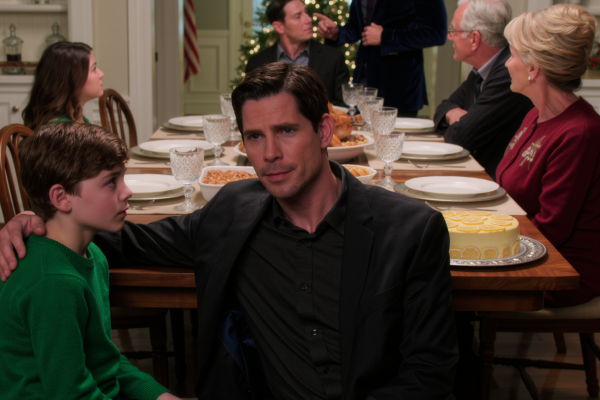
Normal family noise filled the table and prevented the adults from turning dinner into a tribunal.
My son watched me through most of the meal.
After the children went to watch television, Ranata placed her fork down.
“Eleanor.”
Not Mom.
Eleanor.
“We’re worried.”
“About what specifically?”
“This decision.”
“Which part?”
“Selling your house. Moving to Maine. Doing all of this without talking to us.”
“I talked to Georgina.”
My son made a strange sound.
“Your attorney?”
“And Phoebe.”
“The real estate agent.”
“Yes.”
“We’re your family.”
“I know.”
He leaned back.
“Then why were we the last people to know?”
I considered the question.
Because you tried to move me into senior living sounded satisfying.
It also would have changed nothing.
“I needed to know what I wanted before discussing it with people who already had an opinion.”
Ranata’s eyes narrowed slightly.
“That’s not fair.”
“It may not feel fair.”
“You made a major decision alone.”
“I live alone.”
“That’s exactly what we were worried about.”
I looked at her.
She realized what she had said and stopped.
My son rubbed his forehead.
“Mom, nobody was trying to control you.”
“I know.”
His hands dropped.
That answer seemed to surprise both of them.
“I don’t think you sat in my kitchen planning how to control me,” I continued. “I think you thought you were being practical.”
Ranata said nothing.
“But you decided what a good future for me looked like before asking what I wanted.”
“We were concerned.”
“I understand.”
“Then why does this feel like you’re punishing us?”
“I’m not.”
“What is it, then?”
“I’m sixty-four. I’m healthy. I’m financially stable. I have wanted to live near the ocean since before you knew me. I have the chance now.”
Ranata glanced toward the room where the children were watching television.
“What about them?”
That hurt.
Immediately.
My grandson had Raymond’s eyes.
My granddaughter had already developed an argumentative style that could exhaust a courtroom.
I would be hours away.
“I’ve thought about them every step of the way.”
“Have you?”
“Yes.”
The question irritated me because I knew it came from a real concern.
“The Harwick Point house has two bedrooms. They can stay with me.”
“They’re not going to just drive over for the afternoon.”
“No.”
“You’ll miss things.”
“I know.”
That was the hardest truth in the room.
Independence has costs.
So does staying.
I could move near the ocean and miss school events.
I could remain where I was and keep a proximity that was already beginning to feel conditional.
There was no life in which every loss could be avoided.
My son stared at his plate.
“We just think this is fast.”
“Raymond died three years ago.”
“I know.”
“I’ve been making every decision alone for three years.”
“That’s not what I meant.”
“I know. But it’s true.”
Ranata picked up her fork.
“I want it on record that we don’t think this is a good idea.”
I almost laughed.
Instead, I reached for my water.
“Thank you for the chicken. It was very good.”
My son closed his eyes briefly.
That ended the argument.
I moved to Harwick Point on a Tuesday in late May.
Two movers unloaded the truck while I stood on the front porch.
One was named Al.
The other was his nephew, whose name I missed twice and eventually became too embarrassed to ask again.
The morning fog was lifting above the trees.
The air smelled like pine with something sharper beneath it.
Salt, maybe.
The ocean was still thirteen minutes away, but close enough to change the air.
Around three that afternoon, a woman came across the neighboring yard carrying a pan.
She was seventy-one, compact, gray-haired, and introduced herself as Vita.
“I brought cornbread,” she said.
“That is an excellent way to introduce yourself.”
She looked past me toward the backyard.
“You’re going to need help with those roses.”
I laughed.
“You could at least pretend they’re salvageable.”
“They are salvageable. That’s why you’re going to need help.”
Vita was a retired nurse.
She knew almost everyone on the road and had strong opinions about everything from snow tires to tomatoes.
The climbing rose along my east fence, she told me, was a Don Juan and had been neglected badly.
“If we get to it before July, you might save it.”
We did.
That first week in Harwick Point was not magical.
That is something people rarely admit about good changes.
I could not find the can opener.
The grocery store arranged produce in a way that made no sense to me.
I woke one morning and briefly forgot which room I was in.
The kitchen drawers felt wrong.
The house made noises at night I had not learned yet.
I missed my son.
I missed the children.
I missed Raymond so sharply one evening that I sat on the bed and cried because I had no idea where his old reading lamp should go.
But on the second day, I drove to the ocean.
I parked.
Walked across a weathered path.
And sat.
The Atlantic was gray-green and restless.
Wind pulled at my coat.
For twenty minutes, I did absolutely nothing.
Something in my chest loosened.
Not grief.
Grief stayed.
What loosened was the feeling that grief had to determine the size of my life.
My son texted a few days later.
How’s the move?
Getting there, I wrote.
House is wonderful.
He answered the following day.
Glad to hear it.
Ranata did not contact me.
I let that be.
Summer came slowly.
Vita and I rescued the rose bed.
I found a library two towns over and became such a regular that the woman at the circulation desk began putting books aside for me.
I joined a Thursday dinner group.
It rotated through houses.
We ate.
Talked about books and local news.
Sometimes talked about politics until somebody wisely opened another bottle of wine and changed the subject.
I learned the evening fog rolled in around five and usually burned away by nine the following morning.
So I walked in the mornings and read in the evenings.
For the first time in years, my schedule belonged completely to me.
There is a particular difference between being lonely and being alone.
I had confused them after Raymond died.
Harwick Point taught me they were not the same.
Eight months after I moved, my son called on a Thursday evening.
I was washing a plate.
I nearly let the call go to voicemail.
Then I answered.
“Hi.”
“Mom.”
His voice was different.
Tight.
“Is everything all right?”
“I need to talk to you.”
I dried my hands.
“I’m listening.”
The problem came out in pieces.
Ranata’s boutique retail business had been struggling.
Not recently.
Longer than they had admitted.
There had been supplier problems.
A dispute involving the business lease.
Legal expenses they had not expected.
They had reserves, but not enough to cover the business problems while also keeping up comfortably with the mortgage and the children’s expenses.
“How much?” I asked.
He told me.
I sat down.
Outside the kitchen window, the rose bed was dark against the last light.
“Have you talked to a financial adviser?”
“We’ve talked to people.”
“What about Ranata’s parents?”
“They’re helping some.”
“But?”
He hesitated.
“Mom, we need help.”
I closed my eyes.
Eight months earlier, I might have heard only the irony.
The woman who wanted me in senior living now needed money.
The son who questioned my ability to make decisions now wanted me to solve a financial problem.
I wish I could say I felt nothing.
I felt everything.
Anger.
Love.
Vindication.
Fear.
And, underneath all of it, the old maternal instinct to fix the problem before he had to finish asking.
“I know what you need,” I said.
“Can you—”
“Give me a week.”
The next morning, I called Georgina.
She listened.
Then asked the same kind of question she had asked months before.
“What do you want to do?”
“I want to help my son.”
“All right.”
“But not the old way.”
“What does that mean?”
“I want paperwork.”
Georgina was silent.
“A loan,” I said. “Terms. Repayment schedule. Both of them sign it. Everything clear.”
“That’s sensible.”
“I don’t want a gift that becomes something nobody can talk about later.”
“Good.”
“I also don’t want them to think I’m using the situation to punish Ranata.”
“Then don’t.”
“I’m not.”
“I know.”
Four days later, Georgina had the documents prepared.
I called my son.
“I can help.”
He exhaled so hard I heard it through the phone.
“Thank you.”
“There are conditions.”
The relief disappeared from his voice.
“What conditions?”
“It’s a loan.”
“A loan.”
“Yes.”
“With repayment terms we agree to.”
Silence.
“Mom.”
“That is how I’m willing to do it.”
“What about Ranata?”
“She signs too.”
He hesitated.
“Is that necessary?”
“Yes.”
“She’s going to take that badly.”
“That’s unfortunate.”
“She may feel like you don’t trust her.”
“This isn’t about trust.”
“It’s going to feel like it.”
“I understand.”
He was quiet.
Then he said, “I’ll talk to her.”
He called the next day.
“She thinks the paperwork is insulting.”
I was pruning dead stems from the roses when the phone rang.
I sat on the porch step.
“All right.”
“That’s all you’re going to say?”
“What do you want me to say?”
“We’re family.”
“Yes.”
“She thinks if you’re going to help family, there shouldn’t be contracts.”
I looked toward Vita’s yard.
A wind chime moved lightly under her porch roof.
“The offer is available exactly as I made it.”
“So you won’t help otherwise?”
“No.”
“Mom.”
“I’m not angry.”
“It sounds like you are.”
“I’m not.”
That was mostly true.
“I simply know what I can offer without resenting you later.”
He did not have an answer for that.
Two more calls came over the next week.
The same conversation.
The same answer.
I never increased the pressure.
I did not tell him time was running out.
I did not call Ranata.
The offer existed.
They could take it or leave it.
Three weeks later, on a Thursday, Ranata called me herself.
Not texted.
Called.
It was the first time she had done that in more than a year.
“Eleanor.”
“Hello, Ranata.”
There was a pause.
“I wanted to apologize.”
I sat down at the kitchen table.
Outside, fog was beginning to move through the trees.
“For what?”
“A lot of things.”
I waited.
Her breathing was audible.
“The business has been bad longer than I told anyone.”
“I’m sorry.”
“I was embarrassed.”
She stopped.
Then started again.
“I kept thinking if I controlled everything else, I could keep that part from falling apart.”
I did not interrupt.
“My house. The kids’ schedules. Your situation.”
My situation.
She heard herself say it.
“I know how that sounds.”
“I remember.”
“I think I was trying to solve problems everywhere because I couldn’t solve the one that was actually mine.”
That sentence landed differently from everything else she had ever said to me.
No defense.
No careful framing.
Just recognition.
“The Cedarbrook conversation was wrong.”
I looked toward the hallway.
My new front door was still white then.
“I appreciate you saying that.”
“I know you didn’t need us to manage you.”
“No.”
“I know.”
Another pause.
“I also know you don’t have to help us now.”
“That’s true.”
“I’m sorry.”
This time, I believed her.
Not because it erased what happened.
Because it did not ask me to erase it.
“I’m willing to help,” I said.
She breathed in.
“The paperwork?”
“The terms are the same.”
Silence.
Then:
“All right.”
“You should read everything before signing.”
“I will.”
“Have someone else review it if you want.”
“I will.”
She signed four days later.
My son signed the same day.
Georgina completed the filing.
The following Tuesday, I wired the money.
I stood at the kitchen window afterward with coffee and looked at the rose bed.
There was no rush of triumph.
No sense that balance had finally been restored.
Only relief that I had found a way to love my son without returning to the old arrangement.
Five months later, I drove down to visit them.
It took two days.
I stopped overnight in New Hampshire and ate dinner alone at a restaurant overlooking a river.
Years earlier, that would have embarrassed me.
Now I ordered dessert.
The children had changed in the months since I had seen them.
My grandson had lost two teeth.
My granddaughter met me at the door holding a drawing.
A white house.
Blue water.
And a bright red door.
“That’s your house, Grandma.”
“My door isn’t red.”
She frowned.
“It should be.”
I laughed.
“Would you like to come see it?”
“I already told my teacher we’re going to Maine.”
“You did?”
“Yes.”
“When?”
She shrugged.
“Christmas.”
I looked at my son.
He laughed.
“We were going to ask.”
“That would probably be wise.”
Ranata made dinner that evening.
The atmosphere was careful at first.
Then less careful.
Children have a way of disrupting adult tension simply by needing ketchup.
After they went to bed, my son left the kitchen to find something.
Ranata and I sat at the table with wine.
She looked at me.
“How is it really?”
“What?”
“Maine.”
I considered giving her an easy answer.
Instead, I thought about it.
Vita.
The roses.
The library.
Thursday dinners.
Fog lifting over the trees.
The gray-green water.
The first morning I had sat on my porch and realized nobody needed anything from me.
“I’m happy.”
Ranata studied my face.
“Really?”
“Yes.”
She nodded.
“I’m glad.”
Then she looked down at her glass.
“I’m glad you didn’t go to Cedarbrook.”
I looked at her.
She looked back.
“Me too.”
That was enough.
The loan repayments arrived on the first of each month.
On time.
Every month.
My grandchildren planned their Christmas visit with the seriousness of military strategists.
The second bedroom would be theirs.
The smaller one would need an extra mattress.
Vita promised the roses would survive winter.
She also told me the Don Juan should peak spectacularly in June if I stopped “fussing at it.”
In August, I painted the front door.
I had not planned to.
I went to the hardware store for something else and saw red paint on sale.
Standing in the aisle, I remembered Raymond with a brush in one hand and a streak of red across his wrist.
A red door says welcome home.
I bought the paint.
It took two coats.
When I finished, I stood at the end of the walkway with coffee and looked at the white clapboard house, the imperfect roses, and that ridiculous beautiful red door.
For three years after Raymond died, I thought moving forward meant leaving pieces of him behind.
I had been wrong.
Sometimes you carry love forward by repeating something small.
A color.
A sentence.
A door.
Christmas would bring my grandchildren.
June would bring roses.
The first of the month would bring another loan payment.
Thursday would bring dinner with friends.
And whenever I came home from the library or the ocean or Vita’s porch, I saw that red door waiting.
Raymond had been right.
It did say welcome home.