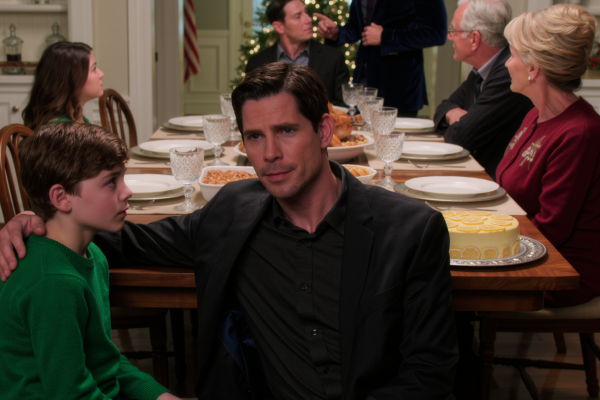
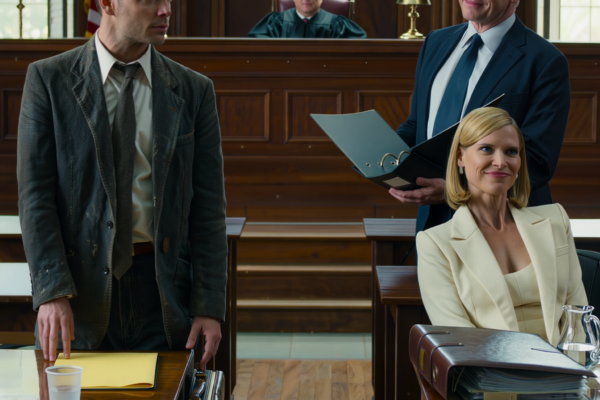
“Cleaned out his pathetic savings,” Mom told the family. “Teaching him responsibility.” My stepdad actually high-fived her. I didn’t argue. I sent one text: “Activate Operation Blindside.” Not long after, the Treasury Department started calling—and suddenly, neither of them was celebrating anymore.
The Money She Thought Was Mine
The last time my mother asked whether I was happy, she was sitting behind thick glass with a black telephone pressed to her ear.
She looked smaller than I remembered.
Not physically smaller, exactly. Margaret Coleman had always been a compact woman. But all the things that once made her seem larger than the room—perfect hair, expensive clothes, the certainty that everybody would eventually do what she wanted—were gone.
Gray had grown through her hair. The correctional uniform hung loosely at her shoulders.
“Are you happy, Evan?” she asked.
There was no accusation in her voice this time.
That was new.
I looked through the scratched plexiglass at the woman who had spent most of my childhood telling me that family meant sharing burdens, especially when the burden belonged to somebody else.
“I’m peaceful,” I said.
Her fingers tightened around the receiver.
“That isn’t what I asked.”
“It’s the answer I have.”
She lowered her eyes.
For a while, neither of us spoke.
The visiting room around us held the low murmur of other conversations, each one separated by glass, rules and the knowledge that time belonged to someone standing by the door.
Finally she said, “I had no right to take that money.”
I waited.
“Even if it had been yours.”
There it was.
The sentence I had once imagined needing more than anything.
I expected vindication.
Instead, I felt tired.
“You were my mother,” I said quietly. “That should have been enough.”
She looked at me then.
Really looked.
The guard called five minutes.
Two years earlier, if she had said those words, I might have spent those five minutes trying to repair us.
By then, I understood that forgiveness and access were not the same thing.
I had learned that lesson on a Tuesday afternoon when my phone showed me an account balance of zero.
At the time, I was twenty-eight and working as a victim services coordinator at the county courthouse.
My desk was wedged into an office that had once been a storage room. The carpet was permanently flattened near the filing cabinets, the fluorescent lights buzzed whenever the air conditioner kicked on, and I owned three ties that I rotated often enough that one of the public defenders had started joking about naming them.
I loved the work anyway.
Most of my days were spent with people who had already had something taken from them.
Savings.
Homes.
Identity.
Trust.
I helped explain forms, connected people with services and sometimes simply sat with them while they tried to understand how somebody they trusted had emptied an account or signed their name to something they had never seen.
The irony of what happened to me was not lost on anyone later.
That Tuesday, I was halfway through a stale turkey sandwich when the banking alert appeared on my cracked phone.
Balance: $0.
I read it once.
Then again.
I did not panic.
That bothered me more than panic would have.
The account had contained $247,350.82 that morning.
Now it held nothing.
I carried my coffee and phone out of the cafeteria, took the elevator down, and walked across the parking lot to my ten-year-old sedan.
Summer heat had turned the interior into an oven.
I started the engine, blasted the air conditioner and opened the banking application.
One transfer.
The entire balance.
Moved shortly before ten that morning into an account at a local credit union.
I sat with both hands on the steering wheel.
“She actually did it,” I said.
No one heard me.
I already knew who “she” was.
Three weeks earlier, my mother had been sitting on the worn sofa in my apartment demanding that I help my half-brother Tyler finance a luxury car.
Tyler was twenty-two.
He had no steady job.
He lived in my mother and stepfather’s basement and had recently decided he wanted to build a career around luxury real estate and social media.
His business plan, as far as I could tell, consisted mostly of owning things he could not afford and photographing himself beside them.
He wanted a Porsche.
I had laughed the first time I heard it because I assumed it was a joke.
Then Mom came over.
She looked around my one-bedroom apartment as if the furniture personally offended her.
“You still have this couch?”
“It still functions.”
“It looks terrible.”
“So don’t sit on it.”
She sat anyway.
Then she put her purse beside her and said, “Tyler needs a co-signer.”
“No.”
I answered before she explained anything else.
Her eyebrows rose.
“You haven’t heard the details.”
“I don’t need the details.”
“It’s important for his career.”
“He doesn’t have a career.”
“Evan.”
“He wants a sports car without income. That’s not a career problem.”
Her mouth tightened.
Then she said something that changed the conversation.
“Stop pretending you’re broke.”
I watched her carefully.
“What?”
“Justin saw the account.”
My cousin Justin worked in information security at First National Bank.
The bank where I still had an old account I opened when I was seventeen.
An account my mother’s name had never been removed from.
“What account?”
“Don’t insult me.”
She leaned toward me.
“Hundreds of thousands of dollars are moving through an account you’ve told everyone you barely use.”
My chest tightened.
“How does Justin know that?”
“That isn’t the point.”
“It is absolutely the point.”
She waved the question away.
“You have money sitting there while Arthur is worried about bills and your brother is trying to build a future.”
“You don’t know what that money is.”
“I know it’s in an account with your name on it.”
“That doesn’t make it mine to spend.”
Her expression changed from suspicion to anger.
“You expect me to believe that?”
“Yes.”
“Whose is it?”
“I cannot discuss that.”
She laughed.
“You always do this.”
“Do what?”
“Act like you’re better than us because you work at that courthouse and spend your days saving strangers.”
I kept my voice low.
“Mom, listen to me carefully. Do not touch that account.”
She stared at me.
“I mean it.”
“You’re threatening your mother?”
“I’m warning you.”
“About your own money?”
“It is not mine to give you.”
She stood.
“You owe this family more than you seem to remember.”
Then she picked up her purse and walked out.
I stood in my apartment listening to her shoes disappear down the hallway.
I knew she might do something.
I did not know exactly what.
There was also a reason I could not simply close the account or explain the truth.
Fourteen months earlier, I had become a cooperating witness in a federal financial investigation involving my former employer, Prestige Financial Group.
I had joined Prestige after college.
At twenty-two, the salary felt enormous to me.
The offices were glass and polished stone. Everyone wore good suits. Young analysts competed to see who could stay latest, answer emails fastest and make exhaustion look ambitious.
For almost two years, I was proud to be there.
Then numbers stopped making sense.
I worked in financial analysis, which meant I spent my days staring at patterns other people usually ignored.
Payments were being routed through shell companies that seemed to exist only on paper.
Transactions were broken into strange amounts.
Internal documents used one set of descriptions while outside reports used another.
At first I assumed I was missing context.
Then I found transfers tied to accounts holding retirement assets.
Teachers.
Union workers.
Ordinary people.
The further I looked, the less accidental it seemed.
I copied nothing I was not permitted to access and did not start playing detective by myself.
I documented what came through my work and eventually reported what I had seen through proper channels.
That decision ended my career at Prestige.
It also began an investigation much larger than I expected.
Patrick Donovan was one of the federal agents assigned to it.
He never treated the case like television.
No secret code names whispered in alleys.
No dramatic promises.
Mostly meetings.
Documents.
Long stretches of waiting.
Questions asked twice in slightly different ways.
I became a cooperating witness because I understood the systems and because certain transactions had passed through accounts tied to my work.
One legacy account in my name became useful to investigators because Prestige’s network had already interacted with it before I left.
That happened to be the account I opened at seventeen.
The account with my mother still listed.
When I disclosed that risk, investigators were concerned.
By then, however, the account was already part of a monitored financial trail.
Closing or suddenly restructuring it at the wrong moment could have alerted people who were being watched.
The plan was to keep the account stable until the final tracing cycle was complete, then shut it down.
It should have lasted only a few more weeks.
Patrick had warned me.
“If your mother still has access, she is a vulnerability.”
“I know.”
“Does she know the balance?”
“She shouldn’t.”
That was before Justin looked where he had no business looking.
After Mom confronted me, I told Patrick immediately.
He rubbed both hands over his face.
“How much does she know?”
“Only that money is moving.”
“Does she know why?”
“No.”
“Did you tell her anything?”
“Only not to touch it.”
He stared at me.
“That might make her more curious.”
“You haven’t met her.”
“I feel like I have.”
We talked about whether the account could be changed immediately.
The answer was no—not without risking disruption to the larger case while investigators were already preparing the next steps.
Patrick made one thing clear.
“We are not asking you to bait your mother.”
“I understand.”
“If she calls, do not encourage her. Do not discuss the money. Do not create a test.”
“I won’t.”
“If she does something on her own, call me.”
Three weeks later, I was sitting in my car staring at zero.
I did not text a dramatic phrase.
I called Patrick directly.
He answered immediately.
“It happened.”
“What happened?”
“The account is empty.”
Silence.
“All of it?”
“Two hundred forty-seven thousand, three hundred fifty dollars and eighty-two cents.”
“Do not contact your mother.”
“I wasn’t planning to.”
“Where are you?”
“Courthouse parking lot.”
“Stay at work. We’ll handle the next steps.”
I hung up.
Then I sat there another minute and remembered being sixteen years old, kneeling beside my bed, pulling rolled bills from an old sneaker.
That was not the first time my mother had taken money meant for me.
My biological father died when I was young.
He left a modest life insurance benefit that was supposed to help with my education.
I did not know much about it as a child.
At sixteen, I discovered almost all of it was gone.
Mom had remarried when I was ten.
Arthur Coleman came into our lives with perfect teeth, polished shoes and an endless supply of plans that would supposedly make him rich.
Property flips.
Online ventures.
Small business ideas.
None lasted.
After Tyler was born, money began flowing toward whatever he needed.
Sports camps.
Equipment.
Trips.
Then Arthur had business emergencies.
Household emergencies.
Car emergencies.
The college money disappeared slowly enough that I did not understand until it was mostly gone.
When I confronted Mom, she stood in the kitchen slicing an apple.
“Where did Dad’s money go?”
She stopped cutting.
“What money?”
“The insurance.”
Her face told me she knew exactly what I meant.
“That money helped this family.”
“It was for college.”
“You are part of this family.”
“So was Dad.”
Her expression hardened.
“Do not speak to me like that.”
I was sixteen and furious enough to cry.
“You spent it.”
“We had needs.”
“Tyler had sports camps.”
“Your brother deserved opportunities.”
“What about me?”
“You are capable.”
The answer made no sense until years later.
Because I was capable, I was expected to need less.
Because Tyler needed more, taking from me could be called kindness.
Mom returned to the apple.
“Family shares the burden, Evan.”
Burden.
She loved that word.
At seventeen, when I began working weekends at a hardware store, she insisted on opening my bank account with me.
“To teach you responsibility.”
What it taught me was surveillance.
If the balance grew, somebody needed something.
Groceries.
A repair.
Tyler’s equipment.
I eventually learned to keep most of my money outside the account.
I hid twenties inside an old pair of sneakers in my closet.
It sounds ridiculous now.
At seventeen, hiding cash in shoes felt safer than a bank account with my mother on it.
I moved out at eighteen.
Scholarships, loans and part-time jobs got me through college.
I left a small balance in the old First National account because closing it would have triggered another family war I was too exhausted to fight.
Years passed.
I almost forgot about it.
Then Prestige happened.
Then the investigation.
Then Justin.
Then Mom.
At three-thirty that afternoon, my phone began vibrating during a meeting.
Family group chat.
I ignored it until I returned to my office.
Tyler had posted a photograph from a luxury dealership.
He was sitting behind the wheel of a black Porsche.
Thanks for the early inheritance, bro.
Another message appeared.
Mom secured the bag.
I read it twice.
Then Arthur posted.
We took what you owed this family. It was a joint account. Don’t bother starting trouble.
Several relatives reacted with laughing faces.
Others said nothing.
The detail that hurt most was not the car.
It was how normal the cruelty was to them.
They believed I had just lost a quarter million dollars.
Their first instinct was celebration.
David Mercer, one of my coworkers, stepped into my doorway.
He was among the very few people at the courthouse who knew I was cooperating with investigators.
“You okay?”
I turned the phone toward him.
He read the messages.
“Oh.”
“Yeah.”
“They really think it was yours?”
“Completely.”
He handed the phone back.
“What happens now?”
“I don’t know.”
That was the truth.
I was not controlling the response.
The money was tied to a federal investigation, but my mother’s access to the account complicated everything.
The bank records would have to be preserved.
Her representations to the teller reviewed.
Investigators would have to determine what charges, if any, were supported by what she actually knew and did.
One thing happened immediately.
The Prestige timeline accelerated.
The funds could no longer remain quietly where investigators expected them.
By evening, Patrick had a room full of financial analysts tracing what Margaret had done after the withdrawal.
I met him at a federal office building after work.
He looked exhausted.
“She moved most of it to a credit union account she holds with Arthur.”
“And the Porsche?”
“Fifty thousand went to the dealership.”
I sat down.
“Of course.”
“There was also fifteen thousand taken in cash.”
“What happened to that?”
“We’re tracing it.”
Patrick pushed a paper cup of coffee toward me.
“You do understand this is a problem for the case.”
“I know.”
“I’m not saying it’s your fault.”
“I know.”
“We also may recover much of the money quickly.”
I stared at the cup.
“They were celebrating.”
“Who?”
“My family.”
I showed him the group messages.
He read them without expression.
When he reached Arthur’s line about what I owed the family, he set the phone down.
“Save all of this.”
“I will.”
“Do not reply.”
“I wasn’t going to.”
That evening, investigators also learned what had happened at First National.
Scott Bradley, the teller, had known my family for years.
Mom arrived shortly after the branch opened.
Scott later explained that he questioned the size of the transfer because the account’s historical behavior looked nothing like the current balance.
Margaret told him I was under severe personal stress and she was moving the funds for my protection.
Because her name was still legitimately on the account, the bank system allowed her to authorize the transfer.
That fact became legally important later.
So did what happened next.
Mom did not move the money into an account solely for safekeeping.
She immediately redirected portions for family spending.
The dealership.
Cash.
The joint credit union account.
Investigators obtained records rather than relying on family accusations.
By the next morning, the Porsche transaction had been flagged.
The larger credit union transfer was frozen before most of it could move again.
The cash was harder.
Arthur had taken part of it to a casino.
Another portion had gone toward a private debt he had hidden from Mom.
That discovery rearranged one part of the story I thought I understood.
For years, Arthur had complained about medical expenses.
Heart tests.
Medication.
Procedures.
He used those complaints every time he wanted money.
Investigators found no mountain of medical debt.
They found gambling losses.
Loans.
Cash withdrawals.
A pattern that had existed for years.
Mom had spent much of her life controlling my money while Arthur quietly burned through hers.
I did not feel sorry for her.
Not exactly.
But it made her desperation less cartoonish.
She had not walked into the bank thinking, I want to become a criminal.
She believed I had secretly accumulated wealth.
She believed Arthur was in financial danger.
She believed Tyler deserved help.
Most of all, she believed she was entitled to solve those problems with something she thought belonged to me.
That belief was the problem.
Federal agents served search and seizure warrants at her house the next day.
No armored convoy crashed through the neighborhood.
No tactical team smashed the door.
Margaret opened it herself.
Arthur was home.
Tyler was there too.
The new Porsche sat in the driveway.
Investigators seized records and secured the vehicle because investigators had traced the dealership payment to the transferred funds.
Mom was taken in for questioning and later charged.
Arthur and Tyler were not treated as automatically guilty merely because they lived there.
Their involvement had to be established separately.
That distinction mattered to me.
I had spent my days helping victims of fraud.
I did not want justice replaced by family revenge.
Patrick called after they brought Mom in.
“She wants to talk to you.”
“No.”
“She’s asking whether you can explain the account.”
I rubbed my forehead.
“What does she think it was?”
“She thinks this is still a dispute between the two of you.”
I almost laughed.
Almost.
“Can I tell her?”
“Not yet. Her lawyer will handle what she needs to know.”
I waited.
Then Patrick added, “She keeps saying her name was legally on the account.”
“It was.”
“That does not resolve the questions about the false statements, beneficial ownership or what happened after the transfer.”
“I understand.”
I thought about Mom in a holding room, still believing she could explain everything as family business.
For once, I did not feel responsible for making the situation easier.
The investigation into Prestige moved quickly after that.
The account disruption forced agents to secure evidence earlier than originally planned.
Search warrants were executed at company offices.
More records were seized.
Executives were questioned.
Richard Preston, the head of Prestige, was eventually indicted with several senior employees.
My role became public only when prosecutors needed my testimony.
That was the part I dreaded.
For fourteen months I had been two people.
At the courthouse, I was the man in the cheap tie helping fraud victims.
To federal investigators, I was the former analyst who knew where certain numbers came from and why some spreadsheets did not match.
My family thought the first version was a failure.
They knew nothing about the second.
During the Prestige proceedings, I testified about what I had observed while working there and how investigators had followed the transactions.
Defense lawyers attacked my credibility.
That was their job.
They brought up my mother.
Asked whether I had personal reasons to resent people accused of financial misconduct.
Asked whether the chaos surrounding the joint account affected my judgment.
I answered carefully.
“Yes, I resented what my mother did.”
“Then you admit bias.”
“I admit being human. The records do not depend on whether I like anyone involved.”
The trial lasted far longer than the dramatic versions people later told about it.
There were accountants.
Documents.
Expert witnesses.
Electronic records.
My testimony was one part.
Eventually Preston was convicted on numerous fraud and embezzlement-related counts.
He received a lengthy federal sentence.
Millions recovered through the broader case were directed toward restitution processes for victims.
That mattered to me more than the headlines.
People whose retirement savings had disappeared might recover something.
Not everything.
But something.
Meanwhile, First National conducted its own internal review.
Justin’s name appeared repeatedly in the access logs to my account.
He had no legitimate business reason to be opening my records.
He had looked because he was curious.
Then he told my mother.
He was fired.
The bank referred the privacy breach for further review.
Justin sent me a message.
You ruined my career.
I stared at it for a long time.
Then I typed:
You opened my file.
I deleted the sentence before sending it.
He already knew.
My mother’s case was slower and messier than the family gossip made it sound.
Her lawyer, Wesley Turner, initially tried to frame everything as a misunderstanding created by an old joint account.
There was some truth in the complication.
Margaret had been listed on the account since I was seventeen.
The bank had allowed the transfer.
She had not known the federal investigation existed.
What prosecutors focused on instead was what she knew she did not have.
I had explicitly told her the money was not mine to give her.
She had never deposited it.
She misrepresented my condition to the bank.
She moved the full balance without telling me.
Then she immediately distributed the proceeds for purposes unrelated to the protective explanation she had given the teller.
The group messages did not help.
Neither did Tyler’s dealership photograph.
Neither did Arthur’s written statement that they had “taken what was owed.”
Mom was offered a resolution before trial.
She refused.
That decision surprised even Arthur.
He called me for the first time in months.
“Talk to her.”
“No.”
“She thinks she can win.”
“That is between her and her lawyer.”
“She could go away for years.”
“Yes.”
“You don’t care?”
I closed my eyes.
The honest answer was complicated.
“I care that she’s my mother.”
“Then help.”
“That doesn’t mean making what she did disappear.”
Arthur became quiet.
Then he said, “Families used to solve these things privately.”
“This stopped being private when she moved monitored funds and lied to a bank.”
“You set her up.”
“No.”
“You knew she might take it.”
“I warned her not to.”
“You could have closed the account.”
“I couldn’t do that without interfering with an investigation she knew nothing about.”
“You chose strangers over family.”
That sentence was so familiar I almost missed its meaning.
The “strangers” were retirees who had lost savings.
The “family” were people who had just celebrated taking money they believed was mine.
“I’m not choosing between you,” I said.
“I’m telling the truth about what happened.”
Then I ended the call.
Mom went to trial.
I attended only when required.
The courtroom version of Margaret was almost identical to the mother I grew up with.
Composed.
Certain.
Offended by the suggestion that her judgment could be questioned.
Her attorney argued that she believed she was protecting family assets.
The prosecution showed what happened immediately after the transfer.
The sports car.
The cash.
The credit union account.
They showed the messages.
They used the bank footage to establish what Mom told Scott.
The prosecutor asked a simple question.
“If your purpose was to protect your son’s money, why did you immediately use fifty thousand dollars to purchase a luxury vehicle for another adult child?”
Mom gripped the witness stand.
“Tyler needed transportation.”
“A Porsche?”
“He was building a professional image.”
“Did Evan agree to fund that image?”
Mom hesitated.
“No.”
“Did Evan tell you not to touch the account?”
Another hesitation.
“He was being irrational.”
“That was not the question.”
Her composure began to fracture.
“He should have told me what was happening.”
“What was happening was confidential.”
“He is my son.”
The prosecutor waited.
Mom continued.
“I had a right to know why he was hiding that kind of money from us.”
There it was.
Not because the prosecutor tricked her.
Because Margaret genuinely believed motherhood created a financial right that continued long after childhood.
The jury convicted her on the core financial counts prosecutors had pursued.
The sentencing happened several weeks later.
The judge considered her age, lack of prior criminal history, the size of the transfer, the false statements, the movement of funds after withdrawal and the disruption to an active federal investigation.
She received eight years in federal custody followed by supervised release, along with restitution obligations tied to the losses.
I felt nothing triumphant when the sentence was announced.
Mom turned around before deputies took her away.
Our eyes met.
For one second, I saw the woman who took me to the library when I was seven.
The woman who once stayed awake all night when I had pneumonia.
The woman I loved before money became the language through which she tried to control everything.
That was the hardest truth.
People who hurt you are rarely made entirely of the parts that hurt you.
I went home and sat in my kitchen until midnight.
The next morning, I went to work.
Arthur’s life changed too.
The frozen funds and restitution process exposed how fragile their finances actually were.
His gambling debts had consumed far more than Mom knew.
They eventually sold the suburban house.
Some legitimate medical problems surfaced later, mixed among all the years he had exaggerated illness to hide gambling losses.
I paid none of his gambling debt.
When his health declined, I did eventually arrange for a small amount of legitimate medical care to be covered anonymously.
Not because I believed I owed him.
I needed to know I had not become someone who enjoyed watching another human being suffer.
That was for me.
Not him.
Tyler lost the Porsche.
He also lost the lifestyle Mom had maintained around him.
For the first time, he had to find steady work.
He blamed me initially.
Then the messages became less frequent.
Finally they stopped.
I did not chase him.
About a year after the Prestige case ended, I received formal notice that I qualified for a substantial whistleblower award connected to recoveries resulting from the investigation.
The amount stunned me.
After taxes and legal processing, it changed my financial life.
I did not post about it.
Did not buy a sports car.
Did not move into a mansion.
I bought a modest house in a quiet neighborhood with a small backyard and a kitchen that had too many cabinets for one person.
I replaced my old sedan with a reliable truck.
Then I left the rest alone while I decided what money was supposed to mean when it was finally mine.
The answer came from work.
Every week, I still met people who could not afford to fight financial exploitation.
Older couples.
Widows.
Workers whose identities had been used by relatives.
People embarrassed to admit they trusted someone who betrayed them.
I used part of the award to help establish a legal assistance fund for victims of financial fraud who could not otherwise afford representation.
I kept my courthouse job.
My family had spent years laughing at it.
I had never loved it more.
The first year Mom was incarcerated, I visited on her birthday.
I told myself it was because I wanted closure.
That was only partly true.
Some part of me still wanted my mother.
She cried through most of the visit.
Asked whether I could help appeal.
Asked whether I knew people.
Asked whether Patrick could speak to prosecutors.
I told her no.
The second year, she was angry.
Arthur had lost the house.
Tyler was working nights at a shipping warehouse.
Justin’s banking career was gone.
Mom blamed me for all of it.
“You destroyed this family.”
I looked at her through the glass.
“You walked into the bank.”
She stopped.
“You moved the money.”
Her jaw tightened.
“You bought Tyler’s car.”
“You knew what would happen.”
“No. I knew you might try to take something you believed belonged to me. I did not make you do it.”
“You should have protected me.”
That sentence stayed with me.
A mother asking the son she had robbed why he had not protected her from the consequences of robbing him.
I left before the hour ended.
The third visit was different.
That was the day she asked whether I was happy.
After I told her I was peaceful, she sat for a long time looking at her hands.
Then she said, “I thought if you didn’t need me anymore, I wasn’t important.”
I did not expect that.
“What?”
“After you left home, you stopped asking me for anything.”
I thought about the cash hidden in my shoes.
The scholarships.
The apartment.
All the years I had spent making myself independent precisely because asking her for anything came with a price.
“You taught me not to need you.”
She nodded slowly.
“I know.”
“You took Dad’s insurance money.”
“I know.”
“You monitored every paycheck.”
“I know.”
“You treated Tyler needing something as proof I should give something up.”
Her eyes filled.
“I know.”
The guard announced five minutes.
Mom pressed the receiver tighter to her ear.
“I kept thinking if I controlled the money, I controlled whether everyone stayed close.”
I looked at her.
“How did that work out?”
She gave a small, sad laugh.
Not bitter.
Just tired.
“It didn’t.”
“No.”
“I had no right to take that account.”
I waited.
“Even if the money had been yours.”
The visiting room suddenly felt very quiet.
For years, I had imagined hearing an apology.
The fantasy usually ended with me feeling whole.
Real apologies do not work that way.
They do not restore childhood.
They do not refill college accounts.
They do not erase a prison sentence.
They do not turn a mother back into who you needed her to be.
But sometimes they tell you the other person has finally stopped lying.
That can matter.
“You were important,” I told her.
She looked at me.
“You were my mother. That should have been enough.”
The guard called time.
Mom nodded.
“I know.”
I placed the receiver back on its hook.
So did she.
We stood on opposite sides of the glass.
I did not promise to come more often.
I did not promise forgiveness.
I did not tell her everything was okay.
It was not.
I walked through security, returned my visitor badge and stepped outside.
The afternoon was warm.
For a moment, I stood beneath the open sky and took a full breath.
Then I looked down at my shoes.
Ordinary brown shoes.
The kind I wore to work.
When I was seventeen, shoes had been where I hid money because the bank did not feel safe.
I almost laughed at the memory.
Not because it was funny.
Because I finally understood how far away that boy was.
I drove home.
The next morning I was back at the courthouse.
A woman in her seventies sat across from my desk clutching a folder against her chest.
Her nephew had convinced her to sign papers she did not understand.
Money was missing.
She was ashamed.
“I should have known better,” she said.
I had heard that sentence hundreds of times.
I slid a box of tissues toward her.
“Trusting someone is not the same as giving them permission to betray you.”
She looked at me.
“You really believe that?”
“Yes.”
For once, the answer came easily.
Outside my office, phones rang and courthouse doors opened and closed.
My own phone sat face down beside the keyboard.
No family group chat.
No account alerts.
No one monitoring my balance.
No cash hidden in shoes.
Just work.
My work.
My money.
My choices.
And a life quiet enough that nobody had to lose for me to know it belonged to me.