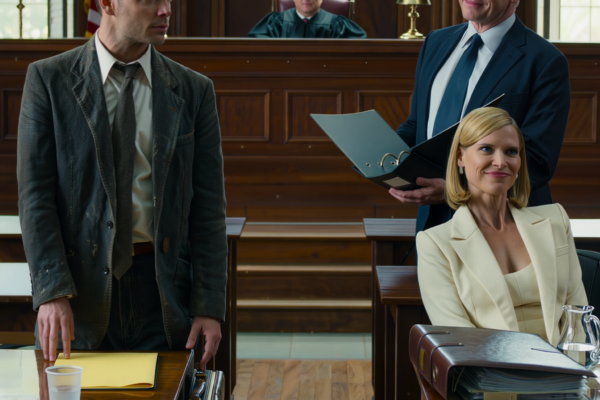
At 28, I was diagnosed with stage 3 cancer. I called my parents crying, but Mom said, “We can’t deal with this right now. Your sister is planning her wedding.” I went through chemotherapy alone. Two years later, I was cancer-free. Then last week, Mom called me in tears because she needed a caregiver. My answer was exactly four words.
The Empty Chair Beside Me
My mother found me in a parking garage two years after I stopped speaking to her.
She stepped out from behind a concrete pillar just as I was reaching for my car keys, and for one disorienting second I thought my mind had manufactured her from memory.
Then Khloe appeared behind her.
My sister looked nothing like the woman from the photographs I had spent two years trying not to remember. Her hair was pulled back without much care. The oversized coat she wore swallowed the shape of her body. Her face carried the exhausted panic of someone who had spent too many nights waiting for a solution that never came.
Mom looked older too.
Not old.
Just worn at the edges.
“Marcus.”
She said my name with relief, as though I had been the one they had been waiting for.
I stopped ten feet away.
Neither of them seemed to understand why I didn’t move closer.
Mom opened her arms.
I took two steps backward.
That was when her face changed.
Not much.
Just enough for me to recognize the old reflex in her—the moment affection failed to produce the response she expected and irritation began filling the space behind it.
“How did you find me?”
Khloe answered.
“A cousin saw your company profile.”
I looked at her.
She swallowed.
“We drove six hours.”
My hand remained inside my coat pocket, wrapped around my keys.
“You changed your number,” Mom said.
“I know.”
“For two years.”
“I know that too.”
The parking garage smelled like damp concrete and motor oil. Somewhere above us, tires squealed through another level.
Mom glanced toward the elevator as though she wanted to continue this conversation somewhere more comfortable.
“We don’t have time to argue about old grievances.”
That sentence told me why they were there before they said another word.
Not because they missed me.
Not because they had spent two years wondering whether I was healthy.
Not because either of them had finally decided to ask what happened after the day they chose a vineyard party over my chemotherapy.
They needed something.
Khloe stepped forward.
“Marcus, I’m in trouble.”
I stared at her hand when she reached toward me.
Two years earlier, I might have let her touch my sleeve.
That evening, I moved before she could.
“How much?”
Khloe’s hand dropped.
Mom looked offended.
“You don’t even know what happened.”
“No. But you drove six hours to find someone who made it very clear he didn’t want contact. So how much?”
Khloe looked at Mom.
Mom looked at the floor.
“One hundred and ten thousand dollars.”
The number echoed strangely in the garage.
I felt almost nothing.
That frightened me more than anger would have.
I had once believed family indifference was something a person experienced as a wound.
I knew better now.
Sometimes, if the wound is ignored long enough, scar tissue forms where expectation used to be.
Two years earlier, there had been an empty plastic chair beside me in an infusion room.
That chair was where my family ended.
I just hadn’t known it yet.
The chemotherapy pump made a small mechanical click every few seconds.
I had started counting the sound because counting gave my brain something to do besides think about what was moving through the IV line.
Click.
Wait.
Click.
The infusion room was colder than usual that day.
Or maybe I was.
A nurse brought me another blanket and tucked the edge over my knees.
“You comfortable?”
“As much as possible.”
She smiled.
Then her eyes moved toward the empty chair beside me.
“Anyone coming later?”
I hated that question.
Not because she was wrong to ask.
Because I had spent the entire morning pretending the answer did not matter.
“No.”
She paused.
“Do you have a ride afterward?”
“I’ll figure it out.”
The nurse watched me for half a second longer than I wanted her to.
“Let us know if you need help arranging something.”
“I will.”
She adjusted the line and moved on to another patient.
I leaned my head back.
It was my fourth round.
The hardest one yet.
My oncologist had warned me that this particular session could be rough. I had tolerated earlier treatments reasonably well, but the cumulative fatigue had begun catching up with me, and the team had been especially cautious because of the possibility of an acute reaction.
For most of my illness, I had followed one rule.
Do not ask my family for anything.
That rule had existed long before cancer.
Khloe was the child who received help before she learned she needed it.
I was the child who learned to solve the problem first and mention it later.
If Khloe was worried about a test, Mom contacted tutors.
If I struggled, Dad told me I was smart enough to figure it out.
When Khloe wanted a different car after college, there were long family conversations about what would be safest and most reliable.
When my transmission failed during school, I took extra shifts and learned the bus schedule.
My parents did not hate me.
That would make this story easier.
They loved me.
They simply loved me as the child who required less.
After enough years, “He can handle it” becomes a convenient excuse not to show up.
Khloe, meanwhile, became the center of gravity in our family without ever formally asking for the role.
She was emotional where I was contained.
She called Mom when she was upset.
She called Dad when she needed advice.
She brought people home and filled rooms.
I worked, saved, paid my own bills, and rarely brought problems to the dinner table.
Our parents interpreted those differences in the simplest possible way.
Khloe needed them.
Marcus did not.
Then I got cancer.
Stage 2 Hodgkin lymphoma.
The diagnosis came in a room that was somehow too bright for the sentence being spoken.
I remember nodding while the oncologist explained treatment.
I remember focusing on the pattern in the tile floor because I knew if I looked directly at anyone I would lose control.
I remember driving home and sitting in my car for almost forty minutes because going upstairs to my apartment would make the diagnosis real.
For the first few days, I told almost no one.
Then treatment planning began.
Appointments multiplied.
Words I had never needed became part of my normal vocabulary.
Infusion.
Cycle.
Counts.
Scan.
Response.
I called Mom.
My voice shook despite how carefully I had practiced what I wanted to say.
She cried.
Dad got on the phone and told me modern treatment for Hodgkin lymphoma was very effective.
That was his version of comfort—find the encouraging statistic.
They said they would help.
For a few weeks, I almost believed cancer might finally interrupt the family pattern.
Then Khloe announced her wedding.
The venue was a California winery she had fallen in love with online.
The budget grew quickly.
Flowers became imported flowers.
Dinner became a tasting menu.
The guest list expanded.
The dress came from a designer whose name Mom repeated as if it were a family achievement.
My parents borrowed against the equity in their home to help make it happen.
Approximately eighty thousand dollars.
Dad explained it to me once over the phone.
“It’s her wedding.”
“I know.”
“She only gets one.”
“I know.”
“She’s been dreaming about this since she was a girl.”
I nearly said, I’m trying to stay alive.
I didn’t.
I had become very good at not saying the sentence beneath the sentence.
The treatment schedule existed before Khloe finalized the celebration weekend.
Everyone knew that.
Two months before the infusion that eventually broke whatever loyalty I still had, Khloe chose the date for her winery rehearsal events.
There was room to move it.
Not indefinitely.
Just a few weeks.
She refused because the seasonal look of the vineyard mattered to her.
Mom repeated the explanation when I asked.
“The vines will be different later.”
I thought she was joking.
She wasn’t.
“Mom, that infusion is one of the sessions they’re concerned about.”
“I know.”
“I may not be safe to drive afterward.”
“We’ll figure something out.”
There it was.
We.
Meaning me.
A week before the appointment, I called again.
This time I was direct.
“I need somebody to drive me home.”
Mom sighed.
The sound hurt more than I expected.
Not because it was cruel.
Because it was tired.
Like my illness had become an administrative problem.
“Honey, that’s Khloe’s rehearsal weekend.”
“I know.”
“You know how much has gone into this.”
“I’m not asking you to cancel the wedding.”
“We’re already committed to being there.”
“I’m asking if you or Dad can come back long enough to drive me home.”
“We’ll be three hundred miles away.”
“I know how far away it is.”
There was silence.
Then Mom said, “Can’t you use a ride service?”
“The clinic doesn’t want me leaving alone if I react badly.”
“What about a volunteer?”
“I don’t know.”
She exhaled.
“Marcus, I’m not trying to be insensitive, but this is a routine treatment day.”
Routine.
I stared at my kitchen wall.
“It isn’t routine to me.”
“I didn’t mean it like that.”
“How did you mean it?”
Another silence.
I could hear movement behind her.
Then Khloe’s voice in the distance asking something about table linens.
Mom covered the phone for a second.
When she came back, her tone had changed.
“We’ll call you after.”
Dad called later.
I assumed he was going to say he would drive back.
Instead he told me family meant supporting Khloe during a major milestone.
I laughed once.
Not because anything was funny.
“Am I family?”
“Don’t do that.”
“Do what?”
“Turn this into some competition with your sister.”
“I’m asking for a ride after chemotherapy.”
“And I’m telling you we’re committed elsewhere.”
I closed my eyes.
“All right.”
“Marcus—”
“It’s fine.”
It wasn’t.
But I had given them the answer that ended the conversation.
That day in the infusion room, my phone buzzed while the medication continued dripping.
I almost ignored it.
Then I saw the notification.
Khloe had posted photographs.
In the first one, my parents stood beneath bright vineyard light holding crystal glasses.
Mom wore a pale dress and oversized sunglasses.
Dad had one arm around Khloe.
My sister stood between them in a designer gown, laughing toward someone outside the frame.
They looked happy.
That mattered.
I did not hate them for being happy.
I hated that I was sick enough to need help for perhaps the first time in my adult life, and my absence from that photograph had cost them nothing.
I swiped.
More pictures.
Tables being arranged beneath strings of lights.
Wine barrels.
Flowers.
Khloe posing with friends.
Mom helping adjust the back of her dress.
Dad holding a glass.
I lowered the phone.
The empty chair beside me remained empty.
The pump clicked.
The nurse passed again.
“You doing okay?”
I looked at her.
“No.”
She immediately moved toward the machine.
“Physically?”
I understood what she meant.
“I mean… yes. Physically I’m okay.”
She studied me.
“All right.”
I looked down at my hands.
Then I did something I had never done before.
I stopped protecting my parents from the consequences of disappointing me.
I turned off location sharing.
I removed the family group from my favorites.
Later, when I got home, I deleted their contact cards.
I did not block them that night.
I wanted to know whether they would call.
They did not.
A neighbor across the hall drove me home after that infusion.
She barely knew me.
I had spoken to her perhaps six times before cancer.
She saw me sitting in the lobby waiting for transportation and asked if I was all right.
When I explained, she went downstairs, pulled her car around, and drove me home.
She stopped once so I could be sick without making a mess of her passenger seat.
Then she walked me to my apartment.
“Do you need anything?”
“No.”
“You sure?”
I looked at this woman whose last name I did not know.
“No,” I said again.
She came back thirty minutes later with electrolyte drinks, crackers, and soup.
My parents sent me a photograph from the winery that night.
I never answered.
Treatment continued.
Cancer does not care whether your family has failed you.
The appointments remain.
The bloodwork remains.
The fatigue remains.
The bills remain.
For six months, my world became smaller than I had believed life could become.
Apartment.
Clinic.
Pharmacy.
Bathroom floor.
Bed.
On better days, I worked remotely.
I was a risk analyst, a career built around finding weaknesses in systems before they became disasters.
There was something almost insulting about being professionally trained to identify risk while spending years refusing to examine the most obvious risk in my personal life.
I had built emotional contingency plans around my family.
Don’t ask too much.
Don’t expect equal attention.
Don’t mention what they spend on Khloe.
Don’t make Mom choose.
Don’t put Dad in the middle.
Cancer erased my ability to maintain all those accommodations.
When treatment left me too exhausted to shop, a local charity delivered groceries.
When I needed a ride, volunteers helped.
My neighbor checked on me.
Coworkers brought meals without demanding details.
One colleague simply left a bag outside my door and texted, No need to answer.
I learned something uncomfortable during those months.
Sometimes strangers help more easily than relatives because strangers are not invested in the role you have always played.
My family needed me to be the capable one.
The easy one.
The son who understood.
Cancer made me inconvenient.
So they stayed with the version of me they preferred.
Mom contacted me twice during the first months.
Both messages were superficial.
Thinking of you.
Hope treatment is going smoothly.
No question about what I needed.
No offer to come.
Dad sent a birthday message.
Khloe sent nothing.
Eventually, even those stopped.
At first, that hurt.
Later, the silence became clean.
Fourteen months after the winery photographs were taken, I sat across from my oncologist.
I had learned not to read expressions before results.
Doctors sometimes look serious because they are thinking, not because they have bad news.
So I waited.
He reviewed the chart.
Then he looked at me.
“Your scans are clean.”
I did not respond.
He smiled.
“You’re in complete remission.”
The room became strangely quiet.
I had imagined that moment through treatment.
I thought I would shout.
Cry.
Call somebody.
Instead I put both hands over my face.
For several seconds I could only breathe.
When I finally walked out of the hospital, my legs shook so badly I had to stop near the entrance.
Cars moved through the pickup lane.
People entered holding coffee.
Someone laughed into a phone.
The world had not noticed what had happened.
I was alive.
The thought came without drama.
Just fact.
I was alive.
I opened my contacts.
For one reflexive second, I thought about calling Mom.
Then I closed the phone.
Not to punish her.
Because she was no longer the person I reached for when my life changed.
Recovery happened gradually.
Hair returned.
Strength returned.
Food tasted normal again.
I stopped calculating how far every restroom was from wherever I happened to be.
I returned fully to work.
The discipline cancer had forced on me followed me there.
I became better at saying no.
Better at recognizing unnecessary risk.
Better at making decisions before a crisis forced them.
Within a year, my firm offered me a promotion.
Senior risk analyst.
The role required relocation two states away.
I accepted before anyone could tell me I was being impulsive.
The company handled part of the move.
I bought a townhouse with tall windows and more sunlight than I knew what to do with.
It was not enormous.
I did not need enormous.
What I loved was the quiet.
No family group chat.
No emergency about Khloe’s plans.
No requests to understand why something important to me had to wait.
I built a small circle of friends.
People who came when they said they would.
People who noticed if I disappeared.
Two years passed.
I did not think of the vineyard every day anymore.
That felt like progress.
Then Mom and Khloe stepped out from behind that parking garage pillar.
“One hundred and ten thousand?” I repeated.
Khloe nodded.
Her voice cracked.
“My husband left.”
I knew very little about her marriage.
From what distant relatives had occasionally mentioned, her husband had cultivated an image of success.
Investment deals.
Expensive cars.
Vacations.
The kind of life my parents had admired immediately.
Now Khloe explained that the appearance had been financed by debt and worse.
Shared accounts drained.
Liabilities in her name.
Private lenders demanding payment.
Her husband gone while facing serious fraud allegations.
My mother stepped in.
“We tried to help.”
Of course they had.
“How?”
She looked down.
“Your father and I co-signed a loan.”
I already knew the next part would be bad.
“What did you use as collateral?”
Mom’s eyes filled.
“The house.”
I inhaled slowly.
Khloe spoke quickly.
“We thought it was temporary. He said an investment was closing.”
“How much do you owe?”
“Almost one hundred and ten thousand.”
“And the forty-eight hours?”
“The lender gave them a deadline,” Khloe said. “If we can’t cure the default, they start moving against the house.”
I looked at Mom.
“You borrowed against the house again?”
Her mouth tightened.
“This is not the time to judge us.”
I almost smiled.
Not because I was amused.
Because the sentence was so familiar.
My family had always wanted decisions without judgment, assistance without questions, loyalty without memory.
Khloe stepped closer.
“You’re a senior analyst now.”
I said nothing.
“You make good money. You have equity. You understand finance.”
There it was.
My career, once an achievement they barely asked about, had finally become relevant.
“You can help us structure something,” she continued. “A bridge loan. Anything.”
“I’m not a lender.”
“You have money.”
“I have my money.”
“Marcus, please.”
Her fingers caught my sleeve.
Instinctively, I looked down at her hand.
Perfect nails.
Even now.
For a second, I remembered another hand.
A nurse tucking a thin blanket around my knees.
I removed Khloe’s fingers gently.
“Don’t.”
She stared at me.
Mom stepped forward.
“This isn’t the time for you to be cold.”
“Cold?”
“Your father and I could lose the house where we raised you.”
“I understand.”
“Khloe could lose everything.”
“I understand that too.”
“Then how can you stand there like this?”
I studied my mother.
Two years of imagined conversations disappeared from my mind.
I had once prepared speeches for the possibility that they returned.
I had imagined rage.
Apologies.
Explanations.
None of it mattered now.
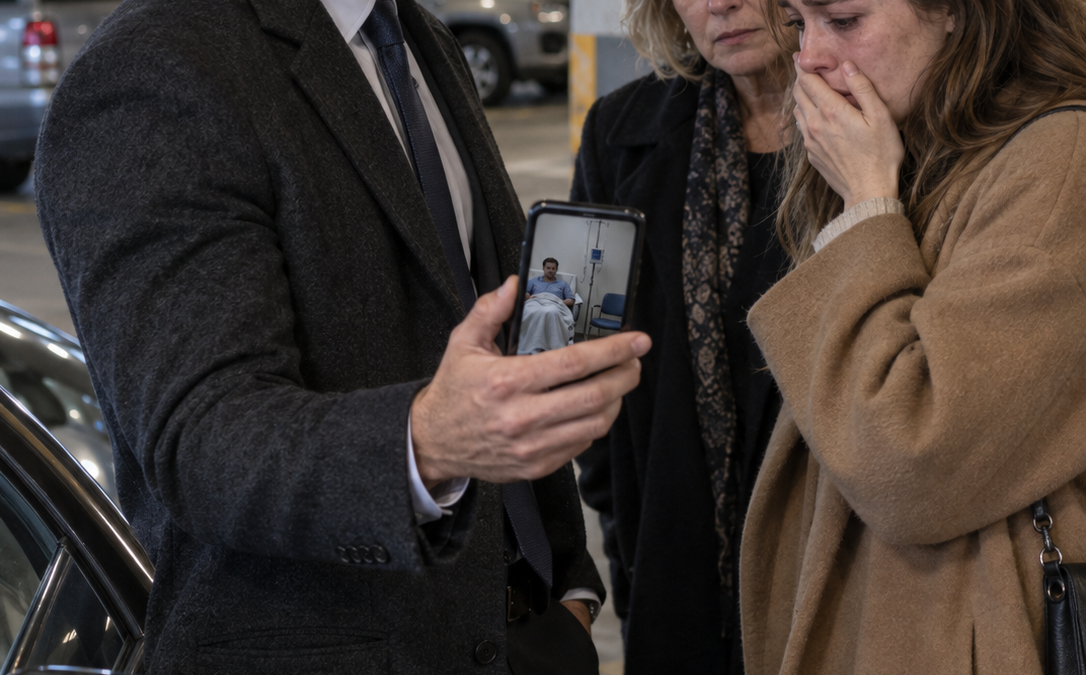
I took out my phone.
Not to call the bank.
Not to check an account.
I opened an album I had kept without knowing why.
The date was from two years earlier.
I held the screen between us.
The first image was Khloe’s vineyard photograph.
Mom recognized it instantly.
Her expression shifted.
I swiped.
The next photograph had been taken in the infusion room by a nurse after I asked her to help me document my treatment for my own medical timeline.
I was sitting beneath a hospital blanket.
Bald.
Pale.
An IV line beside me.
The plastic chair next to me was empty.
Khloe looked away.
Mom did not.
“Do you remember that day?”
“Marcus—”
“Do you?”
“That was years ago.”
“Two.”
“We’ve already been through this.”
“No. We haven’t.”
Mom’s voice hardened.
“We knew you were having treatment.”
“You called it routine.”
“I was trying to reassure you.”
“You were trying to justify staying at the winery.”
“That is not fair.”
I swiped back to the vineyard picture.
“You were three hundred miles away.”
“Khloe was getting married.”
“I had cancer.”
Khloe flinched.
Mom shook her head.
“Don’t do this here.”
“Where would you prefer?”
“Your father and I thought you had transportation.”
“You knew I didn’t.”
“We thought the clinic could arrange something.”
“I asked my mother to drive me home.”
Her eyes dropped.
I continued.
“The doctor had warned me that particular infusion carried increased risk. I called you because I was scared.”
“You never said you were scared.”
The words came out before she could stop them.
I stared at her.
Then I nodded.
“There it is.”
“What?”
“The rule.”
Mom frowned.
“I had to perform enough fear for you to believe I needed you.”
“That’s not what I meant.”
“I told you I needed a ride home from chemotherapy. That should have been enough.”
Khloe’s voice broke in.
“I didn’t know how bad it was.”
“You knew my schedule.”
“I knew you were getting treatment.”
“And you picked the date anyway.”
“My venue—”
“Had an aesthetic.”
Her face tightened.
I had never said the word to her before.
Mom looked between us.
“This is pointless. We cannot change that day.”
“No.”
I put my phone away.
“We can’t.”
She heard the decision in my voice.
Her expression changed.
“Marcus.”
“No.”
“You haven’t even heard what we’re asking.”
“Yes, I have.”
“We can pay you back.”
“With what?”
She said nothing.
Khloe began crying.
Actual crying.
Not theatrical.
That almost made it harder.
“I’m going to lose my apartment too,” she said. “My car is already being taken. I don’t have access to anything.”
I believed her.
I also remembered the woman in the vineyard picture.
Not because she deserved suffering for being happy then.
Because the entire family had organized itself around protecting her from inconvenience while asking me to endure danger quietly.
“I’m sorry you’re going through this.”
Her eyes widened.
“Then help me.”
“No.”
Mom’s face tightened.
“Your father emptied part of his retirement savings trying to fix this.”
“That was his choice.”
“We are your parents.”
“I know.”
“We raised you.”
“I know.”
“We took care of you.”
“Until taking care of me conflicted with taking care of Khloe.”
“That is not true.”
I looked at her.
Neither of us moved.
Then I said, “The neighbor across the hall drove me home.”
Mom blinked.
“What?”
“The day of that photograph. A woman who barely knew me drove me home from chemotherapy because my parents were at a winery.”
Her mouth opened.
I continued.
“A local charity brought groceries. Coworkers left food outside my apartment. Clinic volunteers checked on me.”
Khloe wiped her face.
“Marcus, stop.”
“No. You came here.”
She looked at me.
“You drove six hours to find me because you need money. You don’t get to ask me to forget why you lost access to me.”
Mom’s eyes filled.
“This is revenge.”
“No.”
The answer came easily.
“That’s the part you still don’t understand.”
I moved toward my car.
Mom followed.
“If it isn’t revenge, what is it?”
I turned.
“It’s a boundary.”
She shook her head.
“People throw that word around whenever they want permission to be selfish.”
“Maybe.”
The old Marcus would have argued.
The old Marcus would have tried to make her understand.
I no longer needed her agreement.
“My answer is no.”
I unlocked the car.
Khloe stood several feet away, crying silently now.
Mom remained beside me.
“What are we supposed to do?”
I looked at her.
For a moment, the question hurt.
Because she sounded like my mother again.
Not the woman demanding money.
The woman who used to make pancakes on Saturdays.
The woman who sat beside my bed when I had pneumonia in middle school.
People do not become strangers all at once.
That is what makes boundaries painful.
“I don’t know,” I said.
Her voice dropped.
“We could lose the house.”
“I know.”
“You grew up there.”
“I know.”
“Doesn’t that mean anything to you?”
“Yes.”
That answer surprised her.
“It means a lot.”
I opened my car door.
“But it doesn’t mean I owe you one hundred and ten thousand dollars.”
Khloe suddenly spoke from behind her.
“You’re heartless.”
I looked toward her.
Maybe she needed me to become cruel in her story.
It would make my refusal easier to hate.
“I hope you get through this, Khloe.”
She stared at me.
“I mean that.”
“Then help.”
“I’m not going to.”
I got into the car.
Mom placed one hand against the window before I closed the door.
I lowered it a few inches.
“Marcus, please.”
I looked at her.
Two years earlier, I had said the same word.
Please.
Drive me home.
For a second, both moments existed at once.
Then I said, “I’m sorry.”
I raised the window.
I drove away without checking the mirror.
The house was sold within the next few months.
My parents moved into a smaller rental outside their old neighborhood.
A significant portion of their retirement savings disappeared into settling debt.
Khloe filed for bankruptcy.
Her husband remained gone.
She found a retail job.
The life they had all spent so much money maintaining collapsed not in one dramatic explosion but through paperwork, notices, payments, and smaller rooms.
Relatives contacted me.
Some were angry.
A few asked only whether I was sure.
One aunt said, “They’re still your family.”
I told her I knew.
That was never the question.
I did not celebrate their losses.
I did not drive past the old house.
I did not ask for updates.
Refusing to rescue them did not require me to enjoy watching them struggle.
It only required me to stop confusing love with financial surrender.
My next oncology scan was clean.
I went alone.
Not because nobody would have come.
Three friends offered.
My neighbor from the old apartment, the woman who had once driven me home, still sent a message every year on the anniversary of my remission.
I had people now.
Real people.
When the appointment ended, I walked outside into bright afternoon light and sat for a moment on a bench near the hospital entrance.
Through the glass doors, I could see the infusion lobby farther down the corridor.
For a second, I remembered the plastic chair.
Empty beside me.
At the time, that chair had felt like proof that I was alone.
Years later, I understood it differently.
It had been evidence.
Not that I was unlovable.
Not that I was less important than my sister.
Only that I had been waiting for the wrong people to sit down.
I stood and went home.
My townhouse was quiet when I opened the door.
Late sunlight stretched across the floor.
There was no crisis waiting in my kitchen.
No demand on my phone.
No message requiring me to shrink my life so someone else could keep theirs unchanged.
I poured myself a glass of water and carried it to the window.
For years, I had believed surviving meant enduring whatever family asked of me.
Cancer taught me something harsher and more useful.
Survival sometimes means noticing the empty chair.
And deciding you will never again beg the same people to fill it.