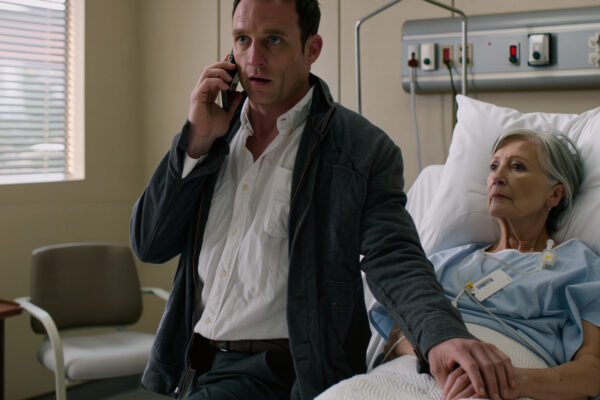
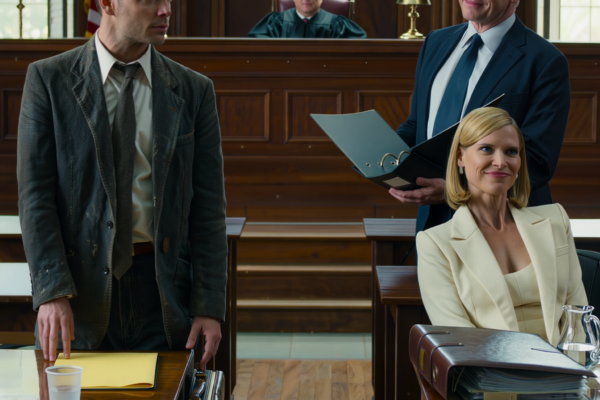
When my boss told me I wasn’t ready for a promotion, I simply smiled, stopped doing all the extra work I had quietly been carrying, worked exactly from 8 to 5, and went home on time—three days later, I looked at my phone and saw 52 missed calls waiting for me.
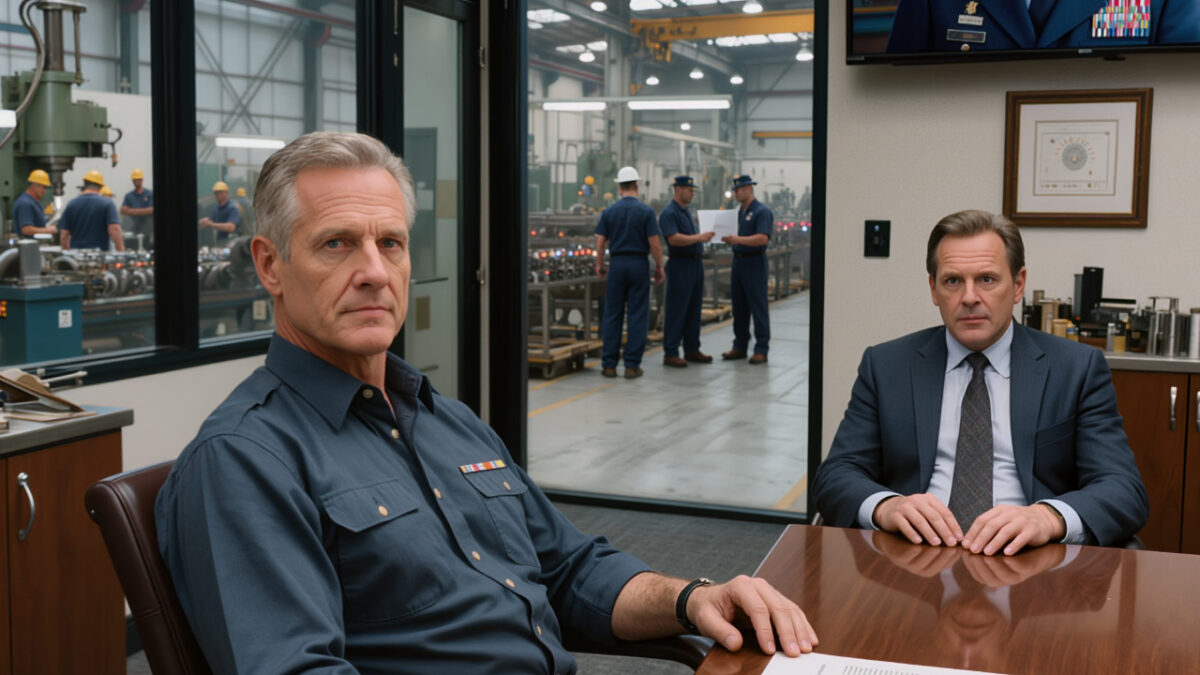
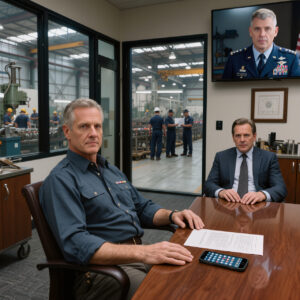
The rain was hitting the windows of Bradford Cole’s corner office when he slid my promotion application across his mahogany desk like it was contaminated. Eight years of 60-hour weeks, missed family dinners, and weekend shifts reduced to a 15-page portfolio that he’d barely glanced at before dismissing it entirely.
“I appreciate your dedication, Preston,” Bradford said, straightening his Harvard MBA diploma on the wall behind him. But after careful consideration, I don’t believe you’re ready for senior management. Perhaps we can revisit this in another year or two when you’ve developed more modern leadership perspectives.
Modern perspectives. The guy was 34 years old and had been here 18 months. I’d been running operations at Titan Manufacturing since before he graduated college. I kept my face neutral the way they taught us in the Navy.
20 years of military service teaches you to control your reactions, especially when some fresh-faced officer thinks he knows better than the guy who’s actually done the work. Same principle applied here. I understand.
Thank you for the feedback. Glad we’re on the same page, Bradford replied, already checking his phone. The Patterson contract needs your attention today. The colonel’s been asking for updated specifications on the hydraulic systems.
I gathered my papers and walked out of that office knowing something had fundamentally changed. Not in him, in me. My name is Preston Hayes. I’m 48 years old and until that meeting, I was the most reliable operations manager Titan Manufacturing had ever seen.
Not the most visible, not the highest paid, but the guy who kept $18 million worth of defense contracts running smooth as silk while others got the credit. See, I’d come to Titan 8 years ago after my Navy service ended and my world fell apart. Linda, my wife of 15 years, had just lost her battle with cancer.
Connor was 9 years old and asking why mama wasn’t coming home. I needed a stable job with good benefits and a predictable schedule so I could be there for my boy. The Navy had trained me as a hydraulics engineer on nuclear submarines.
You learn real quick that attention to detail isn’t just about efficiency. It’s about keeping everyone alive. When systems fail 400 feet underwater, there’s no calling for backup. You fix it right the first time or people die.
That mindset served me well in civilian manufacturing, even if the stakes weren’t quite as dramatic. Titan was a mess when I started. The previous operations manager had quit without notice after a blowup with management, taking all the institutional knowledge with him.
No documentation, no procedures, not even passwords to critical systems. The defense contracts were in jeopardy. Clients were threatening to leave. And nobody knew how to fix anything. I spent my first 6 months working 14-hour days reverse engineering every workflow and rebuilding the entire operational structure from scratch.
Stayed until midnight decoding spreadsheets and reconstructing client histories. created detailed guides for every process, color-coded manuals, safety protocols, maintenance schedules, everything organized the way we did it in the Navy, where lives depended on following procedures. Exactly.
The Patterson contract was our bread and butter. Hydraulic systems for military transport vehicles. I’d built that relationship from nothing, learning every specification by heart, accommodating their crazy deadlines, even flying out to their Virginia facility on my own time to troubleshoot problems when their engineers got stuck.
Colonel Patterson specifically requested me for technical discussions because, in his words, Hayes understands military requirements, not just engineering theory. Bradford’s father, CEO William Cole, barely knew these systems existed. Why would he when everything ran so smoothly under my watch?
Bradford had attended maybe three meetings with Patterson’s team total, mostly to smile for photos and take credit during quarterly board presentations. Every morning I arrived at the plant at 6:30, an hour before my official start time, to walk the production floor and catch problems before they became crisis.
My supervisor from submarine duty used to say, “Pros don’t wait for convenient hours.” And he was right. A bearing starting to wear, a hydraulic line showing stress fractures, temperature reading slightly off normal.
Catch these early and you prevent shutdowns. miss them and you’re explaining to angry colonels why their equipment isn’t ready. Every evening I sent detailed reports to Bradford about production status, quality metrics, potential issues on the horizon.
In between, I put out fires that could have shut down entire production lines. The other guys on the floor knew they could bring me anything. Wesley Martinez, our lead machinist, used to joke that I had the only desk where actual problems got solved instead of just talked about.
Connor was getting older, asking more questions about college, about money, about why dad was never home for dinner anymore. At 17, he was looking at engineering programs, probably influenced by watching me work on technical drawings at the kitchen table when I thought he was asleep. The boy was smart, honor roll student, varsity baseball, the kind of kid who made you proud just by being himself.
But college was expensive, and my current salary as operations manager wasn’t going to cut it. The promotion to senior management would have meant a $30,000 bump, plus better benefits, enough to handle Connor
The morning after Bradford’s rejection, I sat in my truck in the Titan parking lot, staring at the building where I’d given 8 years of my life. The rain had stopped, but gray clouds still hung overhead like a warning. I made a decision that would change everything.
I was done being invisible. I showed up the next morning at exactly 8:00 a.m. Not 6:30, not 7:45, exactly 8. For the first time in 8 years, I walked straight to my desk without doing the floor inspection, no checking the hydraulic pressures, no reviewing overnight production reports, no early problem solving that kept everything running smooth.
I answered emails directly addressed to me and ignored the rest. When a hydraulic press on line two started making that grinding noise that meant the bearings were going bad, I didn’t grab my tools and fix it like usual. Instead, I filled out a maintenance request and sent it to the proper department.
The Navy taught me about chain of command, about following procedures exactly as written. Time to apply those lessons. By 10:30, the first confused colleague appeared at my desk. Hey Preston, the line two press is acting up again, said Wesley Martinez, my buddy from the floor.
Wesley had worked at Titan for 12 years. Started as a junior machinist and worked his way up to lead operator. Good man, reliable, the kind of guy who’d cover for you when family emergencies came up.
You going to take a look? Already submitted a work order to maintenance, I replied, not looking up from my computer screen where I was updating safety compliance documents. My actual assigned responsibility.
He waited for more, shifting from foot to foot. Wesley knew that press like I did. We’d rebuilt it together 3 years ago when the company was too cheap to buy new equipment.
When nothing more came, his confusion was obvious. But you always handle the hydraulic stuff yourself. That press has your custom modifications on it. I’ve been advised to focus more on my assigned responsibilities, I said, looking up with a small smile, trying to demonstrate that I understand my proper role in the organization.
Wesley’s eyebrows shot up. In 8 years, he’d never heard me talk like that. Everything okay, man? Everything’s fine. Just following proper procedures. He nodded slowly and walked away, but I could see him glancing back with a puzzled expression.
The maintenance request sat in the system all morning. Jerry from maintenance finally showed up around 2 p.m. took one look at the press and came straight to my desk. Preston, this bearing assembly is way beyond my skill level.
Can you walk me through it? I’d be happy to help, I said, but I have the quarterly safety compliance review due to the Department of Defense by end of business. Perhaps you could check the technical manual.
Jerry’s face went pale. What technical manual? I pulled up the shared drive on my screen under equipment documentation, hydraulic systems, subsection press maintenance. It’s the 47page guide I wrote after we rebuilt that unit.
He stared at my screen like I was showing him hieroglyphics. Jerry was a good electrician, but hydraulic systems weren’t his strong suit. Can’t you just show me real quick?
It’ll take 5 minutes. I understand the urgency, but I really can’t miss the DoD deadline. The manual has step-by-step photos and troubleshooting guides. Everything you need is documented. The press stayed broken all afternoon.
By 5:00 p.m., I packed up my things and left. No overtime, no staying late to fix tomorrow’s problems today. On my drive home, I called my sister Janet to cancel the spring break trip we’d planned for Connor.
Something wrong? She asked. You’ve been looking forward to that cabin rental for months. Just might need the vacation time for something else, I said. Work situation’s changing. That evening, Connor was at the kitchen table working on his college application essays when I walked in at 5:45, earliest I’d been home on a weekday in years.
Dad? He looked up from his laptop, genuine surprise on his face. Everything okay at work? I paused, considering how to explain corporate politics to a 17-year-old who was already stressed about college applications and scholarship deadlines.
Just decided my time was more valuable than I’d been treating it, son. Connor grinned. The first real smile I’d seen from him in weeks. Between baseball practice, senior year pressure, and watching his old man work himself to death, the kid had been carrying too much weight.
Does this mean you might actually make it to my game Friday? Wouldn’t miss it, I promised. What position you playing this week? Coach moved me to shortstop. Says my reflexes are getting better.
We talked baseball for 20 minutes. Longest conversation we’d had in months. When my workphone started buzzing around 700 p.m., I turned it off and kept listening to Connor describe his team’s chances for the district championship.
“Mom would have been proud,” Connor said quietly, gathering up his homework.
“You being here? I mean, Linda always said the best gift you could give your kids was your attention.”
“Took me 8 years to remember that lesson.”
The phone buzzed 17 times before I silenced it completely. By morning, the cracks were showing at Titan. I arrived at precisely 8:00 again and found the plant in subtle chaos.
Three people were clustered around the broken press, and I could see Bradford through his office window, gesturing frantically during what looked like a heated phone call. The Patterson contract team had sent urgent changes to their hydraulic specifications overnight, modifications that required understanding not just what to change, but why the original design worked the way it did.
Bradford had tried to lead the response meeting at 7:00 a.m., but quickly found himself drowning without my usual prep work and technical briefings.
“Where are the technical specifications for the Patterson modifications?”
he demanded, appearing at my workstation around 11:00 a.m. His usual polished appearance was slightly frayed, tie loosened, hair disheveled from running his hands through it.
“They’re in the shared drive,” I replied pleasantly. under defense contracts subsection Patterson Industries. I mentioned it in last month’s department meeting. There are hundreds of files in there. Which one specifically?
I pulled up the folder on my screen, aware that several nearby colleagues were listening. Main document is Patterson Hydraulic Systems complete technical documentation. It’s organized by component type with cross reference troubleshooting guides and modification protocols.
Bradford stared at the 200page document like I just handed him a nuclear physics textbook. Pages of technical drawings, pressure calculations, safety override sequences, all the knowledge I’d accumulated over 6 years of working directly with military engineers. Can you just handle this directly?
Colonel Patterson’s team is waiting for answers. I’d be happy to, I said, checking my computer calendar. But I have the quarterly safety compliance review this afternoon. It’s due to the Department of Defense by end of business today.
His face went red. This was a man who’d never had to choose between two critical deadlines because I’d always made sure he never had to. This can’t wait until tomorrow.
I understand completely, I replied with genuine helpfulness. Would you like me to reschedule the safety compliance deadline with the DoD? The question hung in the air. Bradford knew he couldn’t ask me to blow off a federal deadline, but he also knew he was completely lost without my technical expertise.
He stomped away without answering, his expensive shoes clicking aggressively against the concrete floor. That evening, I took Connor to his baseball practice and actually stayed to watch instead of working on my laptop in the car. For the first time in years, I was fully present, watching him field ground balls, seeing how he’d grown into his lanky frame, noticing the confidence he’d developed at shortstop.
“Nice form, Connor,” I called out when he made a diving catch that would have made his mother beam with pride. He grinned and waved from the field. After practice, as we loaded his gear into the truck, he said, “Thanks for staying, Dad.
Feels good having you here. I should have been doing this all along, son.” When we got home, I checked my workphone for the first time since 5:00 p.m. 52 missed calls from various company numbers.
Voicemails ranged from confused to desperate to downright panicked. The Patterson hydraulic system had developed serious problems during afternoon testing. Two other production lines were experiencing issues, all clearly documented in procedures that nobody had bothered to read.
The quarterly compliance report for the Department of Defense was still incomplete. And according to Wesley’s voicemail, someone from the DoD had called asking about our submission status. I set the phone down and slept better than I had in months.
The next morning, I arrived at precisely Adonquac again. The atmosphere in the plant had transformed overnight. Harried colleagues rushed between meeting rooms, their usual calm efficiency replaced by barely controlled panic.
Bradford was visible through his office window, gesturing frantically on what appeared to be a video call with his father. Even the CEO’s assistant was pacing by the elevator banks, which in 8 years I’d never seen her do. I settled at my desk and methodically organized my tasks for the day.
First priority, finish the DoD compliance report. Second, review the Patterson technical specifications. Everything else could wait. Preston, where the hell have you been? Wesley hissed, appearing beside my desk with wild eyes and grease stained coveralls.
Everything’s falling apart. Bradford’s been trying to reach you since yesterday afternoon. I left at 5:00, I replied calmly, pulling up the compliance database. My contract specifies standard business hours as 8:00 to 5:00.
Wesley stared at me like I’d started speaking Chinese, but the Patterson crisis. Their whole hydraulic assembly failed during stress testing. The colonels threatening to walk.
“What specifically failed?”
I asked, genuinely curious, but not moving from my desk. something about pressure differentials and safety override protocols. Nobody can make sense of your documentation without you explaining it. I nodded thoughtfully.
That’s chapter 7 in the technical manual, emergency pressure relief systems. It requires understanding the cascade failure sequence I designed to prevent catastrophic hydraulic ruptures. Right. Exactly. Wesley almost shouted.
So, you’ll handle it? Before I could respond, Bradford’s assistant appeared at my desk, looking harried. Preston, emergency meeting in conference room A. Now I gathered a notebook and pen, walking unhurriedly to the conference room where Bradford sat with his father, CEO William Cole, and Colonel Patterson himself on a video screen.
Their faces looked like they’d aged 5 years overnight. Colonel Patterson was a man I’d worked with for 6 years, starting when he was a major responsible for vehicle procurement. We developed a mutual respect.
He understood that I spoke his language, military precision applied to civilian manufacturing. Seeing his stern expression on the monitor told me everything I needed to know about how serious this situation had become. Preston, William Cole said, relief flooding his voice.
Thank God. We need your help with this Patterson situation immediately. I sat down and placed my notebook on the table. Of course, sir. How can I assist? Colonel Patterson leaned forward on the screen.
Hayes, we’ve got hydraulic systems failing stress tests across three vehicle prototypes. My engineers are telling me it’s a fundamental design flaw, but Bradford here insists your documentation shows everything should work perfectly. The documentation is comprehensive, I replied.
What specific failure mode are you seeing? Pressure spikes during emergency braking scenarios. The safety overrides aren’t engaging properly. I nodded. That’s a calibration issue with the pressure relief valves.
The system has multiple fail safes, but they need to be adjusted for your specific operating parameters. It’s detailed in section 7.3 of the technical manual. Bradford’s jaw was clenched tight with controlled fury.
Let’s cut to the chase. Preston, what will it take for you to fix this immediately? The room went silent. William’s eyes widened slightly while Colonel Patterson watched with professional interest.
That’s generous of you to ask, I said. But I should mention I’ve been contacted by Loheed Martin’s defense division. They’ve offered me a senior engineering position with a substantial salary increase.
Apparently, they believe my experience qualifies me for leadership responsibilities. You could have heard a pin drop. Bradford’s face went pale while William leaned forward sharply. You’re leaving? William asked.
When? I haven’t accepted their offer yet, I replied. I was taking time to consider my options. Colonel Patterson’s voice came through the speakers with military directness. Hayes, you’re the only contractor who’s ever understood our requirements from day one.
If Titan can’t keep their best people, we’ll need to reconsider our partnership. That was the nuclear option. The Patterson contract wasn’t just $18 million annually. It was the foundation that allowed Titan to bid on other defense contracts.
Lose Patterson and the company would lose its security clearance and its entire defense portfolio. William Cole looked like someone had just told him his building was on fire. Preston, name your price.
Whatever lock he’s offering, we’ll match it. It’s not just about compensation, I said. It’s about recognition, respect, and the authority to implement the systems this company needs instead of just maintaining broken ones.
Bradford found his voice. The Ellison client specifically asked for you by name last month. You can’t possibly leave now. Interesting, I said. So, have four other clients in the past 6 months.
I’ve been building relationships and solving problems while being told I’m not qualified for senior management. I reached into my folder and placed a resignation letter on the table. Here’s my two weeks notice.
I’ll help with the transition as my contract requires. William grabbed the letter before Bradford could react. He opened it, scanned the contents, then closed it decisively.
“This won’t be necessary,” he said firmly, meeting my eyes.
“Preston, I’d like to speak with you privately. Colonel Patterson will call you back within the hour with a resolution.” The video call ended, and Bradford remained seated as his father and I stood to leave.
For the first time since I’d known him, Bradford Cole looked genuinely scared. I followed William Cole to his corner office, bigger than Bradford’s, with windows overlooking the entire production floor, where I’d spent 8 years keeping everything running. He gestured for me to sit in the leather chair across from his mahogany desk, then close the door behind us.
“I’ve been watching your contributions for some time,” William said, settling into his chair.
“Though apparently not closely enough. This situation with Bradford concerns me deeply. I remained silent, letting him continue. In the Navy, we learned that sometimes the best strategy is to let the other person fill the silence.
Tell me honestly, Preston, what would it take to keep you here? I considered my words carefully. Recognition of my actual contributions, compensation that reflects my value to this company and the authority to implement improvements instead of just maintaining broken systems.
William studied me for a long moment. I’m creating a new position, director of technical operations, reporting directly to me. $140,000 base salary plus performance bonuses, full remote flexibility 2 days a week, and complete authority over production protocols and safety systems.
The job is yours if you want it. The number hit me like a punch. That was nearly double my current salary, enough to cover Connor
But I didn’t respond immediately, which seemed to surprise him.
“Is that not sufficient?”
he asked.
“It’s very generous,” I acknowledged.
“But I need to be clear about something. I’m not using the lock he’d offer as leverage. They really are waiting for my decision.” William leaned back in his chair.
“What can they offer that we can’t match or exceed?”
“A fresh start,” I said honestly.
“No history of being overlooked. No colleagues who see me as the maintenance guy instead of leadership material. No son of the CEO who thinks military experience is outdated. He winced slightly at that last part.
Fair points, all of them. But consider this. You’ve built something here that you understand intimately. You’ve cultivated relationships with clients who trust you personally. Starting over means rebuilding all of that from scratch.
He was right. Of course, 8 years of institutional knowledge wasn’t easily replaced, but neither was the feeling of being consistently undervalued.
“I’ll need some time to consider,” I said finally.
“Of course, take the weekend, but I need an answer by Monday morning,” he stood, signaling the end of our meeting.
“And Preston, I’d appreciate if you could help stabilize the Patterson situation before you make any final decisions for the good of everyone here.”
I nodded. I’ll handle Patterson personally this afternoon. When I returned to my desk, an email from William was already waiting with the job offer in writing. The salary figure looked even more impressive in black and white.
I was gathering materials for the Patterson call when Bradford appeared beside my desk. His usual corporate swagger had evaporated, replaced by something that looked almost like vulnerability.
“We need to talk,” he said quietly.
“Not here.”
“Lunch. I have the Patterson call at noon. After that, then my office at 2:00, I spent an hour on the video call with Colonel Patterson’s team, walking them through the hydraulic calibration sequences step by step.
Their engineers were sharp. They picked up the concepts quickly once I explained the reasoning behind each safety protocol. This is exactly why we work with Titan, Colonel Patterson said at the end of the call.
Hayes, you understand military requirements, not just engineering theory. We’ll implement these modifications and rerun the tests Monday. After documenting the solution and sending clear instructions to our production team, I knocked on Bradford’s door at exactly 2:00.
“Close the door,” he said, gesturing to the chair across from his desk.
“He looked different, smaller somehow, with dark circles under his eyes, suggesting a sleepless night. I understand my father offered you a new position.”
“He did.”
Bradford nodded slowly.
“I won’t pretend to be happy about it, but I understand why he did it. You’re valuable to the company.” I waited, sensing there was more. I owe you an apology, he continued, the words clearly difficult for him.
I’ve relied on your competence without appropriately acknowledging it or compensating you for it. Can I ask you something? I said, when you said I wasn’t qualified for senior management, what specifically did you think I was lacking?
Bradford shifted uncomfortably in his expensive chair. You’ve always been more technical, behind the scenes. I thought senior management required more visibility, corporate presence, political awareness. You mean I do the work while others take the spotlight?
He had the grace to look embarrassed. That’s oversimplifying it. Is it? I asked. The Patterson contract. Who developed the winning technical proposal? You did, but I presented it to the executive team.
the safety initiative last year that passed DoD inspection with flying colors. Who created those protocols? You designed them, but they were implemented as a departmentwide effort. I leaned forward slightly.
I’m not lacking qualifications, Bradford. I’ve simply allowed others to stand on my shoulders while remaining invisible. The silence between us stretched uncomfortably. If you stay, he said carefully, things will be different between us.
Yes, I agreed. They will be. That weekend, Connor and I went fishing at the lake we used to visit with Linda. Sitting on the dock, watching him cast his line with the patience I’d taught him, I thought about what really mattered.
Dad, Connor said, “You seem different lately. Happier. I figured out my worth, son. Took me long enough. Are you going to take that promotion?” I smiled, watching the sun reflect off the water.
What do you think I should do? He considered it seriously, the way he always did. take it, but make sure they know they’re lucky to have you. Monday morning, I arrived early.
7:00 a.m. my choice this time. I went straight to William’s office. I accept your offer, I told him. With one condition, his eyebrows rose. I’m listening. Bradford keeps his position.
Replacing him doesn’t fix the structural problems in how this company operates, and I don’t want my first act as a leader to be seen as revenge. William studied me with new interest. That’s unexpected and wise.
3 months later, the transformation was remarkable. My new team included a brilliant production engineer who’d been wasted in quality control and a veteran supervisor who understood workflow better than anyone. Together, we’d streamlined operations across all four production lines, cutting overtime costs by 35% while increasing output quality.
The Patterson contract had expanded to include hydraulic systems for three additional vehicle types. Colonel Patterson personally called William to commend our operational excellence. Bradford and I developed a working relationship based on mutual respect.
He handled client presentations and corporate strategy while I managed technical operations. It turned out he was actually good at the business side once freed from trying to manage systems he’d never understood. 6 months later, I walked out of Titan at exactly 5:00 p.m. on a Friday, my new routine.
Connor was waiting when I got home, college acceptance letters spread across the kitchen table.
“How’d it go, Dad?”
he asked, looking up from his scholarship applications.
“Good,” I replied, setting down my laptop case.
“The apprenticeship program launches next month. 15 experienced workers will get clear paths to supervisory roles.” Connor smiled. like you should have had. Exactly like that. Sometimes the most powerful response to being underestimated isn’t proving people wrong.
It’s creating a world where talent and experience can’t be ignored anymore.