“Sign the prenup or walk,” my fiancé said, certain his success as a CEO meant he had more to protect—I nodded and replied, “Smart decision,” then hired my own lawyer to safeguard everything I had built; his attorney called as soon as he reviewed my assets and realized my net worth was ten times his client’s.
Three weeks before our wedding, Daniel set a leather folder on the dining table and leaned back with an unapologetic smirk. Sign it, Rebecca. I worked too hard building my company to risk my future on anyone.
He thought he was putting a humble, middle-aged woman in her place, guaranteeing I couldn’t touch a single dime of his perceived wealth. His family spent days whispering that I was after his money, warning him not to let sentimentality cloud his judgment. I didn’t flinch, and I didn’t argue.
I simply looked him dead in the eye and said, “Smart decision.” But when his high-priced corporate attorney opened the financial disclosure forms my legal team sent over, his face drained of all color. He realized Daniel hadn’t just protected himself, he had accidentally locked himself out of a fortune 10 times larger than his own.
My name is Rebecca. I am in my mid-50s today, though when this happened, I was 52 and preparing to marry Daniel. I’m glad you’re here to hear this. Before we go any further, take a second to comment below with the city you’re watching from.
I always love seeing just how far my story travels. To the outside world, I was just a quiet woman who kept to herself, drove a reliable 5-year-old sedan, and wore understated cashmere sweaters. People rarely look beneath the surface, especially men like Daniel.
He was 48, the founder of a mid-size logistics software firm, and intoxicated by a recent round of local funding. That modest regional success had inflated his ego to dangerous proportions. He truly believed he was the prize, a modern corporate king whose hard-earned kingdom needed guarding against any woman who who want a piece of it.
What he never bothered to learn was that I had spent nearly three decades in private equity and quantitative investment before retiring from the front lines. Through my firm, Lawson Capital Partners, I quietly managed portfolios and institutional investments that made his annual revenue look like pocket change. I never flaunted it because real wealth whispers, while insecurity screams.
I had met Daniel at a benefit for a neighborhood literacy program. He was carrying a box of donated books, his sleeves rolled up, laughing because the bottom had nearly given way. He helped me sort paperbacks until the room emptied. That was the man I had agreed to marry: someone who seemed willing to do an ordinary task without needing an audience.
For a while, our life had been full of those small kindnesses. He brought soup when I caught a cold. He remembered how I took my coffee. Once, during a rainstorm, he drove across town to check whether my patio drain was blocked. I did not imagine every good moment. That made what followed harder to accept.
The change came gradually. After the funding announcement, conversations became presentations. Dinner guests became potential contacts. When I offered an opinion about cash flow, Daniel smiled and told me he would explain the complicated parts later. I let the first few remarks pass, mistaking condescension for exhaustion.
Then he stopped asking questions altogether. He knew what I drove, what I wore, and where I bought groceries. He decided those details told him everything else.
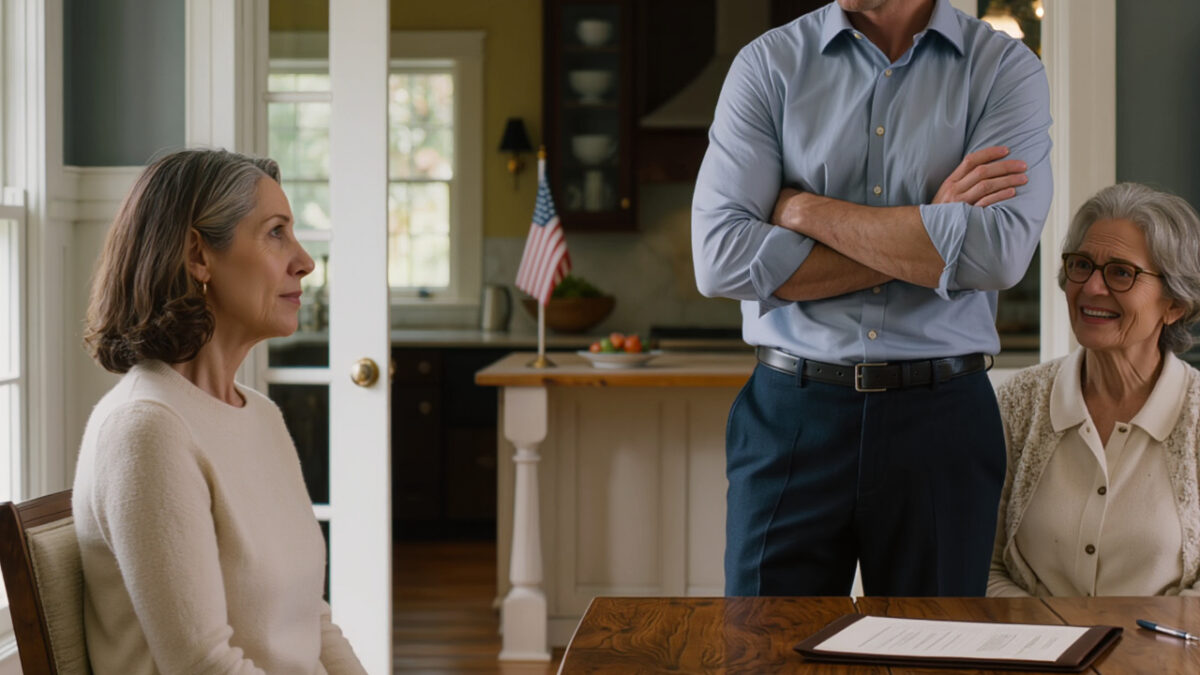
The screaming started that Sunday afternoon. Daniel tossed a thick manila folder onto my dining table, crossing his arms with a smug dismissive grin. His mother, Evelyn, sat right beside him, nodding like a general backing her troops.
“It’s a prenuptial agreement, Rebecca,” Daniel declared, his voice dripping with condescension.
“I’m not risking my future for anyone. In this day and age, a man has to protect what he built.” They genuinely believed they were cornering a desperate middle-aged woman with nowhere else to go.
I didn’t cry. I didn’t raise my voice, slam a door, or plead with him. Daniel leaned back against the kitchen counter, watching me closely, clearly expecting a flood of tears, panic, or a wounded plea about how love ought to conquer financial technicalities.
His mother watched with that cold predatory satisfaction of a woman convinced she has successfully put an outsider in her place. Instead, I slowly picked up the document, turned it over in my hands, and met his gaze with absolute calm.
“Of course,” I said smoothly, “I’ll have my attorney look it over immediately.”
A flicker of confusion crossed Daniel’s face. He wasn’t accustomed to targets who smiled when backed into a corner, but his arrogance rushed in to fill the void, convincing him that my compliance was just defeat. Before they left, Evelyn picked up one of the wedding invitations from the counter.
“Such simple stationery,” she said. “Well, Daniel has always preferred substance over appearances.”
I watched her set it down beside the folder. I had chosen that paper because its cream color reminded me of the letters my mother used to write. Daniel knew that. He had been sitting beside me when I told the stationer.
He said nothing.
Afterward, I stood at the sink with my hands resting against the edge. The garden outside was bright, and the dishwasher hummed behind me. Everything in the room looked exactly as it had an hour earlier. Yet I could no longer picture myself standing here as his wife.
Protecting separate assets did not offend me. I had spent my career encouraging people to understand what they signed. What unsettled me was the pleasure he took in presenting the agreement, and the way he had brought his mother to witness my supposed surrender.
I set the invitations in a drawer before I made the call. For the first time, I did not count how many still needed stamps.
The moment their car pulled out of my driveway, I dialed Richard Croft.
Richard had been my chief legal counsel for nearly 20 years, handling every acquisition, restructuring, and trust agreement under Lawson Capital Partners. When I told him Daniel’s demand, his deep baritone erupted into genuine laughter on the other end of the line.
“He wants a unilateral waiver of claims against his company?”
Richard asked, amused disbelief coloring every word.
“Rebecca, does this young man possess even the faintest idea of who he is speaking to?”
“Not a clue.”
I replied, staring out at the manicured garden beyond my patio.
“He thinks I was an ordinary desk worker living off modest savings. Draft the strongest, most impenetrable mutual separation agreement you can muster. Every single asset held by Lawson Capital Partners, every holding company, trust, and commercial lease remains untouchable.
Let’s make sure his future is completely protected from mine.” Richard stopped laughing when I described Evelyn’s presence.
“Do you want me to review a contract,” he asked, “or help you get out of a wedding?”
“Review the contract first.”
“All right. But you don’t have to prove anything to these people.”
“I know.”
Still, I wanted the document completed. I wanted Daniel to read the same kind of boundary he had been so eager to impose. With both of us properly advised and our disclosures on the table, there would be no room for the story he might later tell about a woman who refused reasonable precautions.
Richard asked his team to prepare the schedules and supporting records. I spent the next morning supplying statements and confirming which holdings belonged to which entities. These were familiar tasks, steadying in their precision.
At noon, Daniel texted to ask whether my lawyer was making trouble.
I answered, “He is making sure we both understand the agreement.”
Daniel sent a thumbs-up. Then he asked me to remind the florist that his mother preferred white roses.
I stared at that second message for a long time before setting down the phone.
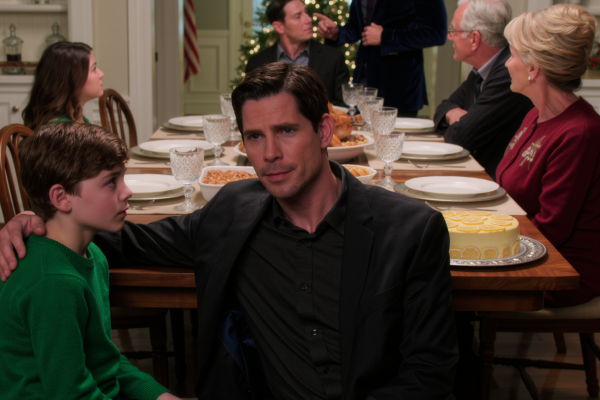
Two nights later, Daniel insisted we celebrate at an upscale steakhouse in downtown. He called it an early rehearsal dinner, but the moment I stepped into the private dining room, it was obvious what was actually taking place.
It was a victory banquet. Daniel’s sister, Clara, sat beside their mother, sipping dry champagne and appraising me like an uninvited guest.
“You’re surprisingly composed, Rebecca.”
Clara murmured, eyeing my modest silver watch and tailored beige blouse.
“Most women in their 50s would feel a bit insecure marrying a man on the rise, especially when you drive that sensible little sedan. But I suppose knowing your place is a virtue, isn’t it?” Evelyn patted Clara’s hand, offering me a tight synthetic smile.
“It’s practical, darling. Daniel has worked tirelessly for his software venture. It’s only natural he’d want boundaries so nobody takes advantage of him.” Daniel basked in every word, raising his glass of vintage cabernet like a conquering monarch.
“A real businessman protects his empire before anything else,” he declared, his chest puffed out with unearned authority.
“Sentiment is fine for Hallmark cards, but real life runs on leverage. You understand, don’t you, Rebecca? It’s not personal. It’s just prudent leadership.” I took a slow sip of ice water, watching the three of them trade knowing smirks across the white linen.
They genuinely believed they had outmaneuvered me, patting themselves on the back for putting a supposedly dependent woman in her place. Little did they know, I wasn’t intimidated in the least. I was simply enjoying the quiet view from 20 steps ahead.
The waiter returned to refill our water just as Daniel announced that I would not need to bother with business decisions once we married.
“You’ve done your share of working,” he said. “Let me handle the serious things.”
I set my glass down.
“What do you think I did before I retired?”
He blinked, irritated by the interruption. “Finance. Analysis. Something along those lines.”
“For almost thirty years.”
“Yes, Rebecca. Nobody is saying you didn’t have a career.”
Clara looked toward the waiter, embarrassed that he was still within hearing distance. Daniel waited for me to smile and rescue the conversation.
Instead, I asked, “And have you ever wanted to know anything about it?”
The silence lasted only a few seconds, but it changed the table. Evelyn began talking about the wedding seating chart. Daniel joined her immediately. Neither answered me.
When the check came, he placed his card on the tray with a flourish. I thanked him for dinner. Outside, while he waited for the valet, he told me I had been unusually sensitive.
I looked at the restaurant windows and caught our reflection: two people dressed for a celebration, standing farther apart than either had noticed.
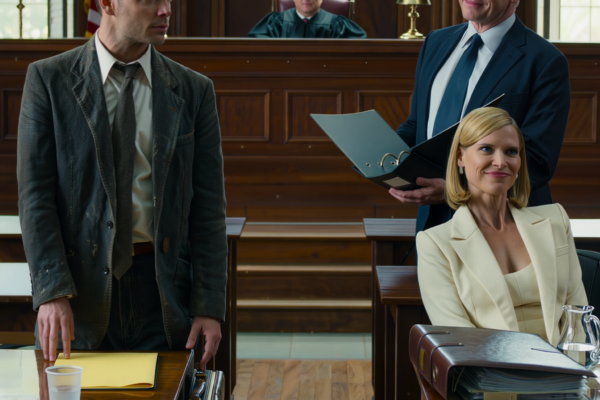
On Friday morning, we gathered in the 24th floor conference room of Robert Henderson’s downtown law firm. The space was an elaborate shrine to corporate intimidation. Polished Brazilian mahogany, leather executive chairs, and floor-to-ceiling glass overlooking the sprawling city skyline.
Daniel sat beside his attorney, radiating smug satisfaction. He wore his finest custom tailored suit, tapping his fingers rhythmically on the table as if counting down the seconds until his total legal dominance was formalized. Henderson, an imposing man with silver hair and an aura of relentless litigation, cleared his throat and slid Daniel’s disclosure packet toward me.
“Mrs. Lawson,” Henderson began, his tone dripping with patronizing formality.
“Under California community property laws, a surviving spouse can complicate corporate valuation. My client’s firm, Apex Logistics Solutions, carries an estimated net valuation of $2.4 million. This agreement ensures Daniel’s operational independence remains pristine.
We’ve allocated a standard $60,000 transition settlement in the event of dissolution. Frankly, given your modest earnings, it is extraordinarily generous. Richard Croft didn’t blink. He sat beside me like a granite mountain, listening to Henderson’s lecture without a trace of irritation.
When Henderson finished speaking and pushed a gold Montblanc pen forward, Richard calmly reached into his monogrammed leather briefcase.
“Fascinating,” Richard said mildly, placing a thick navy-bound dossier on the mahogany table.
“However, before we sign, statutory disclosure requires a reciprocal audit of my client’s current portfolio.”
Before handing over my disclosure, Richard asked Henderson to identify the provisions Daniel considered essential.
Separate ownership. No automatic interest in premarital business holdings. Clear treatment of future income and liabilities. Henderson listed them briskly, and Daniel nodded at each one.
“Those protections should apply to both parties,” Richard said.
“Certainly,” Henderson replied.
Daniel looked pleased. He thought reciprocity was a courtesy that would cost him nothing.
I leaned forward. “Daniel, are those still the terms you want?”
“Of course.”
“Even if my circumstances are different from what you assumed?”
He gave a short laugh. “Rebecca, everyone has savings. That’s why we’re doing this properly.”
Richard looked at me. I nodded.
There it was, spoken plainly, with his attorney beside him. He had been given another chance to ask a question. Another chance to consider that I might have a life he had failed to understand. He reached instead for the pen, eager to bring the meeting to an end.
I folded my hands beneath the table so he would not see how tightly I was holding them. Calm did not mean this cost me nothing.
Richard slid the file across the table. Henderson smiled condescendingly, adjusted his spectacles, and flipped open the first tab. Then, the room seemed to lose all air. Henderson’s eyes locked onto the audited balance sheets.
Page one detailed eight prime commercial properties held debt-free in downtown San Francisco. Page two listed institutional index funds and direct tech venture investments. The certified summary figure at the bottom totaled $28.4 million, all under Lawson Capital Partners, with Rebecca Lawson as sole beneficiary.
Henderson stopped turning pages at the certified summary. Then he returned to the beginning and read my full name again.
“Lawson,” he said quietly.
Daniel glanced from him to me. “Yes. That’s her name.”
Henderson checked the ownership schedules against the summary, tracing one entry with his finger. He was no longer performing confidence for the room. He was trying to understand the size of an assumption he had accepted without examination.
Richard let him read.
I looked at the figure on the page, but I was thinking about a different number: the years it had taken to build it. Years of early trains, late calls, deals that failed, and decisions I had spent weekends checking because other people’s livelihoods depended on getting them right.
Daniel had described me as fortunate to receive sixty thousand dollars if our marriage ended. He had never asked what I had already earned, or what I had already survived.
The disclosure did not make me a different woman. My clothes, my car, and my voice were unchanged. Yet Henderson’s next question was addressed directly to me, without the indulgent smile he had worn when we entered.
Henderson’s jaw went slack. The gold pen slipped from his fingers, rolling noiselessly across the wood. The high-powered lawyer turned ash white, staring at me as if looking at a ghost.
Robert Henderson abruptly pushed his chair back, the legs screeching sharply against the hardwood floor. His hands trembled as he gripped the edges of the navy folder, flipping back and forth between the bank statements, trust deeds, and state filings. He leaned hard toward Daniel, his voice dropping to a harsh, panicked whisper.
Daniel, step outside with me. Right now. Daniel blinked, utterly baffled by his lawyer’s breakdown. What? Bob? What are you doing? Just get her to sign the documents so we can wrap this up.
Shut up and look at this, Henderson hissed, violently rotating the ledger toward his client. Daniel looked down, expecting to see a joke, but his eyes locked onto the cold, inescapable numbers. $28.4 million, fully audited, liquid, and unencumbered.
A strangled, choking sound tore from his throat. The color drained from his face until he was as pale as a bedsheet. This This has to be a mistake, he stammered, his confident posture collapsing in an instant.
Who did you hire to fake these? Lawson Capital? You’re just a retired analyst. Richard Croft leaned forward, resting his hands flat on the mahogany table with the chilling precision of a predator.
There is no mistake, Mr. Whittaker. Every line item is verified by the Securities and Exchange Commission and federally chartered depositories. In fact, if you turn to exhibit four, you’ll discover that Lawson Capital Partners owns the majority voting stake in Cloud Root Systems, the primary infrastructure provider your company relies upon to operate every single morning.
The air left Daniel’s lungs. The pre-nup he had weaponized to trap me had just slammed shut on his own fingers, permanently walling him off from the fortune sitting directly in front of him. Daniel turned to me after reading the infrastructure holding.
“You knew about Cloud Root?”
“I knew we held an investment in it.”
“And you didn’t tell me?”
“You told me you didn’t want to bore me with operational details.”
He opened his mouth, then shut it.
Richard closed that exhibit and returned to the agreement. My investment was not an invitation to threaten Daniel’s company, and I had no intention of interfering with its service. The people working there had done nothing to me. Their contracts and their daily operations belonged on a different table.
That distinction seemed to unsettle Daniel almost as much as the money. He wanted either reassurance or an accusation he could defend himself against. I offered neither.
“I came here to discuss the agreement you requested,” I said.
He looked down at the clauses he had praised minutes earlier. For the first time, he read them slowly.
Henderson asked for a private discussion with his client. Richard and I stepped into the hallway. I stood beside the window, breathing carefully, while the coffee in my hand went cold.
A strange breathless laugh escaped Daniel’s lips as he reached out and shoved the paperwork toward the center of the table.
Look, Rebecca, sweetheart, this is all gotten completely out of hand, he pleaded, forcing a nervous sweating grin. Lawyers just complicate things, don’t they? We got caught up in business talk and let our egos get the best of us.
Two people who truly love each other don’t need sterile legal documents separating their lives. Let’s tear these up and head home. The arrogance that had defined him for months vanished into thin air, replaced by a desperate fawning scramble.
When we returned, Daniel moved his chair closer to mine.
“Why didn’t you trust me enough to tell me?” he asked.
It was the question I had expected, and still it hurt.
“You knew I worked in investment. You knew I was comfortable. You knew I owned my home. We were supposed to exchange full disclosures before signing anything, and now we have.”
“But twenty-eight million—”
“What amount would have made you listen to me at dinner?”
He looked toward Henderson.
“No,” I said. “I’m asking you.”
Daniel rubbed his forehead. “That’s unfair.”
“So was deciding who I was without asking.”
He promised that his mother had only been worried about him. He said Clara’s jokes were harmless. Then he said the pressure of running a company had affected his judgment.
I waited for him to mention the words he had spoken himself. He kept finding other explanations.
We agreed to recess and reconvene later that afternoon so our counsel could finish reviewing the reciprocal terms. Daniel offered to drive me home. I told him I had brought my own car.
In the elevator, Richard said nothing. When the doors opened, he simply held them until I was ready to step out.
By that afternoon, the shockwaves had rippled through his entire family. My phone began buzzing relentlessly on the kitchen counter. It was Evelyn calling not with her usual icy contempt, but with a voice practically dripping with syrupy warmth.
Rebecca, darling, she gushed, acting as if the insults over steak dinner had never occurred. I always knew you possessed extraordinary grace and quiet dignity. Daniel was foolish to let business talk cloud his judgment.
You two are meant to build a real dynasty together. A matriarch like you is exactly what our family needs. Evelyn asked whether I could arrange a smaller, more exclusive wedding reception. She knew a wonderful place, she said, if I wanted something worthy of the occasion.
Three days earlier, my stationery had been too simple. Now she wanted to know what else I could afford.
“Did Daniel tell you what happened at the meeting?” I asked.
“He said there was a misunderstanding.”
“About my finances?”
“Well, yes.”
“And about the way you spoke to me?”
A pause followed. I could hear a television somewhere behind her.
“Oh, Rebecca. Surely we can put one awkward dinner behind us.”
I looked at the invitation drawer.
“It wasn’t awkward for you that night.”
She began another explanation, but I thanked her for calling and ended the conversation. I did not need to hear her become kinder each time she remembered the number.
For a few minutes afterward, I sat on the kitchen floor with my back against a cabinet. Nobody saw that part. Nobody applauded it. I had loved Daniel, and losing the future I had imagined with him still hurt, even after I understood why I could not keep it.
Next came a breathless text from Clara, apologizing for her misguided humor, and asking if we could go shopping together sometime soon.
It was sickening. These people hadn’t suddenly discovered love or respect for me. They had merely smelled money. Daniel had never wanted a true life partner to cherish in my mid-50s.
He had wanted an inferior, someone quiet, submissive, and financially dependent whom he could patronize and discard at will. Now that the tables had turned, his devotion was as fake as his pride. Back in the conference room, the revised agreement lay between us. Our lawyers had reviewed it, and I understood what I was signing. Daniel kept watching my face as if the right expression might make the disclosure disappear.
“Let’s leave the money out of this,” he said.
“You brought it into this room.”
“I made a mistake.”
“Yes.”
“We can fix a mistake.”
I almost wished that were enough. An apology would have mattered before he knew my assets. Respect would have mattered at the restaurant. Curiosity would have mattered months earlier, when I tried to tell him about work I had once loved.
Now every promise arrived after a calculation.
I asked him one final question. “If that file had shown forty thousand dollars instead, would you be asking me to tear up the agreement?”
He stared at me.
Henderson lowered his eyes to the document. Richard remained still beside me.
Daniel said my name softly, using the voice he once used when bringing soup to my door. But he did not answer the question.
That was when I stopped waiting for the man I remembered to walk back into the room.
I picked up my pen, looked Daniel straight in the eye, and signed the agreement.
Then I slid the folder toward him. Sign it, Daniel. You wanted your future protected, and now it is. Every single dollar. He signed with trembling fingers, but when he reached for my hand to celebrate, I pulled back and set my engagement ring on the mahogany table.
I slipped the ring off slowly. There was a pale indentation beneath it, a small mark left by something I had expected to wear for years. Daniel watched my hand rather than my face. Perhaps he understood that movement more clearly than anything I had said.
I remembered choosing the ring together, how he had asked whether I liked it, how carefully he had listened to my answer. I wanted that kind of attention in a marriage. I wanted it on ordinary days, when there was nothing to gain and no audience to impress. I could not sign a document that would give us that.
The agreement is signed, but the wedding is off. I would never spend the rest of my days with a man whose affection depends entirely on a balance sheet. I walked out of that high-rise with my head held high, leaving Daniel and his frantic attorney sitting in stunned silence.
Over the next year, an industry downturn hit the tech sector hard. Without the backing or credit lines that Lawson Capital Partners quietly offered other rising firms, Daniel was forced to downsize his operations and sell off his assets just to stay afloat. As for me, I continued expanding my investments, using a portion of my returns to fund business grants for women starting over later in life.
Standing on my own two feet, free from manipulation and vanity, proved sweeter than any relationship built on false pretenses. Now, I want to ask you, what would you have done if you were in my place? Would you have walked away like I did, or handled it differently?
Drop your thoughts in the comments below, and don’t forget to check out the two videos on your screen right now. They’re community favorites and will definitely surprise you. Thank you for listening.