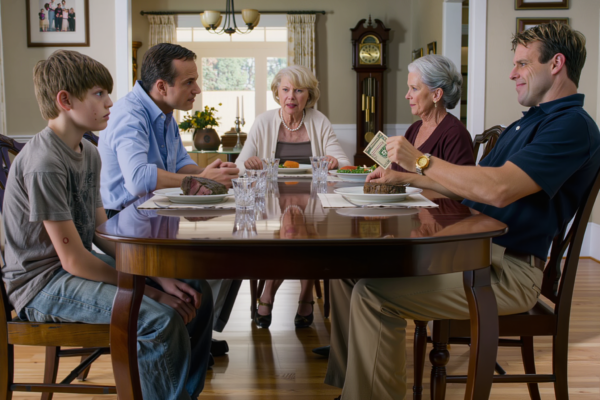
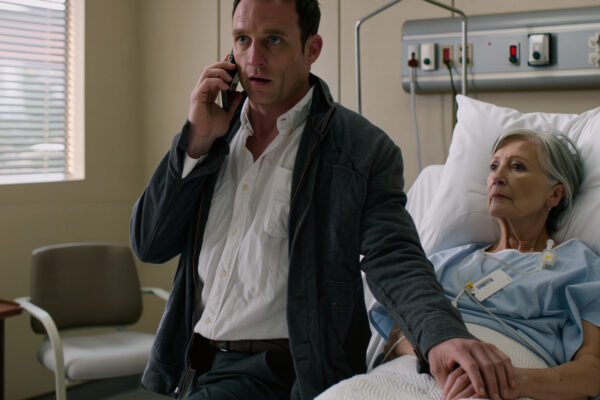
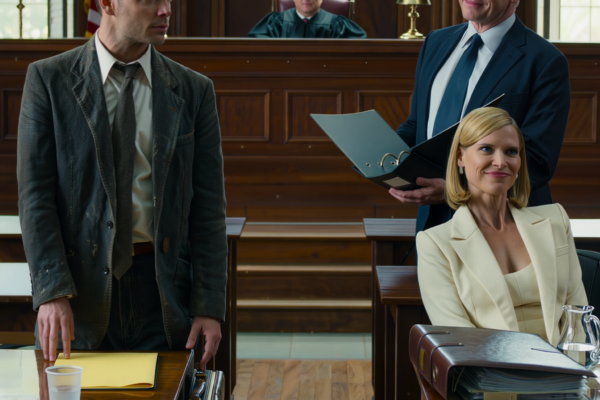
My stepson shaved my head while I was asleep and left a note meant to humiliate me, but when I looked in the mirror, I simply smiled because he had no idea I was supposed to authorize his $2.5 million trust that very day—and later, at the birthday party thrown in his honor, I took the microphone and said one sentence that made the entire room go silent.
Picture a room full of 30some people holding champagne glasses and a man in a navy suit standing at the center of it with a shaved scratched up head and a microphone in his hand. That man was me. Across the room, my stepson was smiling, certain he was about to be handed the biggest check of his life.
I looked him in the eye and told him the money was exactly where it had been yesterday. The whole room stopped reading. But before I tell you what happened at that party, you need to know what I found on my pillow that morning.
I woke up cold. Not the kind of cold that comes from a kicked off blanket, but a strange specific chill that started at the top of my skull and spread down the back of my neck. The ceiling fan was turning slowly above me the way it does every August night in our house in Columbus, Ohio, and the clock on the nightstand read 612.
I reached up to rub my face and my palm landed on skin where hair should have been. I lay there for a few seconds doing the math a man does when his body tells him something his mind refuses to accept. Then I sat up.
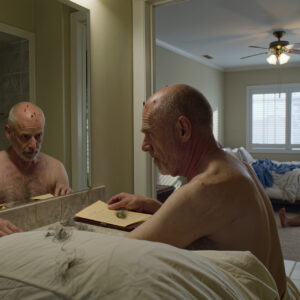
My scalp stung in thin scattered lines and there were short gray bristles on the pillowcase on my shoulders on the sheet near my knees. I swung my legs off the bed and walked to the bathroom without turning on the halllight as if the dark might still change the answer.
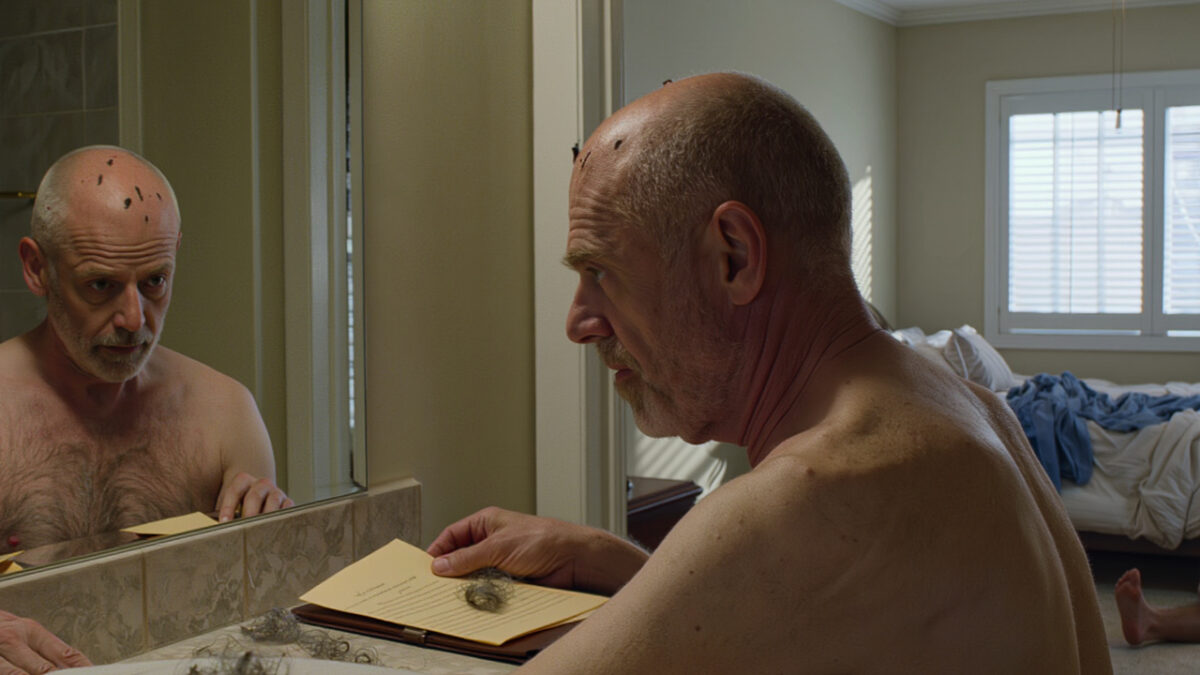
It didn’t. The vanity bulbs flickered on and a 59year-old stranger looked back at me from the mirror. My head had been taken down almost to the skin, uneven in places, patchy over my left ear with a few small nicks beaded with dried blood along the crown.
The man in the mirror had my eyes and my jaw and my crooked eyebrow, and he looked like someone who had been dragged out of a hospital in a movie. I turned my head slowly from side to side. I counted the nicks.
Seven. I remembered then. Not the haircut itself because I hadn’t felt a thing. But the night before, Ryan and I had argued in the kitchen until almost 11 over something that sounded small and wasn’t.
And afterward, I’d poured two fingers of bourbon and taken half of the sleeping pill my doctor keeps prescribing and I keep ignoring. Linda had gone to sleep in the guest room with the fan running because she couldn’t stand to listen to us. I’d gone to bed alone.
Ryan had a key to the main house. He lived in the apartment over our garage, a fact that had seemed generous 6 years ago. When I walked back into the bedroom and turned on the lamp, I saw it.
A sheet of yellow legal paper lay in the dent my head had left in the pillow, folded once with a pinch of my own hair resting on top of it. I recognized the handwriting before I read a word. The same blocky print that had once labeled his science fair posters.
This time it said, “Now you look as pathetic as you are.” I read it twice. People imagine that a moment like that fills a man with rage. And maybe it would have filled a younger version of me.
What I felt first was a kind of stillness, the way a house goes quiet right after a glass breaks. I sat down on the edge of the bed with the paper in my hand and looked at the clock. 6:31.
Then I looked at the leather folder on the dresser, the one I’d packed the night before, and something rose in my chest that I did not expect. I laughed. It came out low and dry and it went on longer than it should have.
And when it stopped, I had to wipe my eyes with the back of my wrist. It wasn’t funny. Nothing about it was funny. I laughed because Ryan, in all his planning, had no idea what day he’d picked.
At 10:00 that morning, I was due in Tom Bennett’s office downtown to sign the final paperwork on the first distribution from a trust I had built for him over 5 years. A trust he had never been told the full size of. In that leather folder sat a document with his name on every page.
My stepson had spent the night before sneaking into my bedroom with a pair of clippers to prove how little he respected me on the one morning I’d planned to prove how much I believed in him. I thought about the first time I met him. He was 10 small for his age, standing behind his mother’s leg at a Cracker Barrel off I71 with a Red’s cap pulled down to his eyebrows.
When Linda told him my name, he looked me up and down and said, “Hi, Mike.” Not Mr. Carter, not anything warmer. Mike. I never corrected him and I never asked for more.
I just kept showing up at ball games, at the ER the night he broke his wrist at the burser’s window with a checkbook. Somewhere along the way, he stopped seeing those things as gifts and started filing them under what he was owed. I didn’t call the police.
I picked up my phone and called the guest room. It rang four times before Linda answered, thick with sleep, and I said, “Can you come to the bedroom? Please don’t scream.”
She came in wearing her gray cardigan, one hand already at her mouth. She looked at my head and then at the paper I held out, and I watched her read it. The color left her face from the top down.
“Oh, Michael,” she whispered.
“Oh, no.”
Ryan appeared in the doorway 10 minutes later in basketball shorts, a coffee in his hand, wearing the loose, unbothered face of a man who’d rehearsed it. He glanced at my scalp, and one corner of his mouth lifted.
“It was just a joke,” he said. You shaved my head while I was unconscious,” I said. He shrugged.
“You’ll grow it back.”
Linda said his name like a plea. I looked at him for a long moment at the broad shoulders I’d paid for with protein shakes and travel baseball. And for the first time in 20 years, I didn’t argue.
“You’re right,” I said. Hair grows back. I picked up the leather folder and tucked it under my arm.
“Trust money doesn’t.”
Ryan frowned, waiting for the rest of the sentence. It never came. I walked past him down the stairs and out into the morning air. On the walk from the parking garage, a woman at the crosswalk glanced at my scalp, then at my face, then quickly away, the way you look away from a man who has clearly had a bad year.
I caught myself lifting my chin. Somewhere between the garage and the lobby, I had decided that if I was going to be looked at, I’d be looked at standing up straight. Tom Bennett’s office sits on the ninth floor of a brick building on Broad Street above a bank in a coffee shop that has changed hands three times.
I took the stairs out of habit and by the time I reached his door, my scalp was prickling under the air conditioning. His assistant, Denise, looked up with a greeting already forming and it died halfway out.
“He’s ready for you, Mr. Carter,” she said, and nothing more. Tom stood when I came in. He is 61, silver-haired, built like a retired linebacker with reading glasses on a cord because he’s lost too many pairs.
We met in 1988 when I was pouring foundations and he was a young attorney who took my side in a payment dispute nobody else wanted. He studied my head, then the Knicks, and did not smile. Sit down, Mike.
Tell me. I told him everything. The argument, the bourbon, the half a pill, the yellow paper. He read the note with his glasses pushed up on his forehead. then laid it on the blott as carefully as something that might still be warm.
“That’s assault,” he said.
“A prosecutor would take the call.”
“I know.”
He tapped the leather folder in front of me.
“Do you still want to sign the distribution documents today?”
I didn’t answer. I watched the sliver of the Sciota visible between two parking garages and let the question sit. The trust began 5 years earlier on a night I couldn’t sleep.
Ryan was 24, three jobs into a career that kept reinventing itself, and he had just called his mother for car repair money again. Linda cried afterward in the laundry room where she thought I couldn’t hear. I lay awake doing arithmetic.
I had sold most of my share of the company that spring, and I could leave Ryan a pile of cash and watch it evaporate, or I could leave him a structure. So Tom and I built a discretionary trust, $2.5 million, with me deciding when and how much went out.
A down payment on a house, seed money for a business with a real plan behind it. Medical bills, tuition, the unglamorous things that actually hold a life up. Not a check, a ladder.
Ryan would turn 30 in 9 days, and I had circled that date in my head, $350,000 out of the trust, enough for a first home and some working capital. with the rest staying put until he showed me what he did with it. You were proud of that plan, Tom said.
I still am. That’s not what I asked. He took off his glasses. Mike, I’ll say this once as your lawyer and your friend. Don’t make a trust decision because you’re angry.
I’m not angry about my hair. He waited. Hair is hair. I’ll buy a hat. What I can’t get past is that I spent 20 years believing I was raising a man.
And this morning, I met a 10-year-old who happens to be 6 ft tall. He stood over me with a blade, Tom, and felt nothing but clever. My voice stayed level, which surprised me.
I don’t know what he does with $350,000 if that’s who he is. Tom nodded slowly. Then here’s the rule. If you change a distribution, you document why in writing.
You’re not punishing him. You’re protecting the trust. Those sound alike, but a judge will hear the difference. and I leave the principal untouched, he added. Nothing about the full $2.5 million changes.
You’re deciding about one distribution, not the whole trust. That’s the only decision I’m making. I had spent 30 years watching men in my business use money as a leash, and I’d sworn I would never be one of them.
Yanking the trust out from under Ryan would be a leash. Pausing one distribution with conditions he could actually meet was something else. the difference between slamming a door and declining to hold it open forever.
I turned that over until it felt solid in my hands. I picked up his pen, clicked it once, and set it down without signing. The line at the bottom of page 11 stayed blank.
My phone buzzed against the desk. Linda. I almost let it ring, then thought of her face in that doorway and answered. Michael, her voice was raw. I’m so sorry.
I told him he has to apologize and he just she breathed. He’s not a bad kid. He didn’t mean to hurt you. If you give him a day, Linda, if I had shaved Ryan’s head while he slept, would you call that a joke?
The line went quiet. Not a bad connection. The quiet of a woman opening a door in her own house and finding a room she has walked past for years.
A refrigerator hummed behind her.
“No,” she said very small.
“I wouldn’t. I know you love him. So do I. That’s the problem I’m trying to solve. I’ll see you tonight.” When I hung up, Tom was watching me with the face he wears in court right before he stands.
I zipped the unsigned packet back into the folder.
“Not today,” I said.
“Not the 350.”
“And Ryan.”
I looked at my reflection in the dark glass of his bookcase, the bare skull, the tired eyes that were somehow still mine.
“Not yet. Let him keep believing his birthday is going to be the best day of his life.” I didn’t drive home. I took High Street north with the windows down, then wandered east until I found myself in the gravel lot of the ball fields off Cleveland Avenue where Ryan’s travel team practiced for six summers.
I parked facing the third diamond and shut off the engine. The smell of cut grass came through the vents and for a second I was 43 again, holding a bucket of balls. A mower drone somewhere past the outfield fence.
I sat with my hands on the wheel and let Tom’s questions stop being about paperwork. Ryan was 15 when his father remarried and moved the new family to Scottsdale. The news came by text on a Tuesday and the summer visit he’d been counting down to was gone by Thursday.
I remember him standing in our kitchen, thumbs working his phone as if the right reply might undo it, saying, “It’s fine. I don’t care.” He cared so much he ate nothing at dinner.
The next morning, I was in the driveway with the engine running at 6:40 and I drove him to school every day for the next three years because it was the only 40 minutes in which he would talk to me. That’s where I learned who he was underneath. A kid named Dustin Puit had been shoving him into lockers and Ryan wanted to settle it behind the gym with his fists.
I told him what my own father told me across a hardware store counter in 1974. You don’t have to win every fight, you just have to know which ones matter. He chewed on that for two blocks.
The next day, he walked past Dustin without breaking stride, and Dustin never touched him again. At his graduation, Ryan slipped a card into my jacket pocket. Inside, in that blocky print, he had copied the line out and added one word beneath it.
Thanks. I still keep it in my desk drawer. I can’t point to the day it turned. Somewhere around 19, when I asked why he dropped two classes without telling anyone, he said, “You’re not my father.”
and I felt it land square in the chest. I didn’t argue because it was true and because I’d promised myself years earlier never to pretend otherwise. That was my mistake.
He noticed I wouldn’t fight the line and he began using it like a hall pass. Don’t like my choices? Not my father. Don’t like how I talked to my mother.
Not my father. Yet the same man was somehow supposed to cover the difference when the bills came. And I covered it. I’ll own that part. I paid off $11,000 in credit card debt the year he turned 23.
I wrote a check for a transmission, then another for a different car. I lent him $40,000 for a fitness app that lasted 9 months. And I picked up half his rent so the apartment over my garage could keep passing as independence.
He never asked for a fortune, only for the next thing in front of them, which is how a hundred small rescues add up to one big dependence. Every time he looked at the floor and promised it was the last. Every time there was a reason, the next problem was different.
I said yes because yes was quieter than watching Linda cry in the laundry room. And somewhere in all that quiet, I stopped noticing I was buying relief for myself, not help for him. Sarah saw it before I did.
She’s 28, a pediatric nurse with steady hands and a habit of drying every dish before she puts it away. On the 4th of July, she found me alone on the back deck while the neighborhood fireworks popped over the treeine and she stood beside me a full minute before speaking.
“Ryan doesn’t hate you,” she said.
“He’s embarrassed that he needs you. Those two things look exactly alike from the outside. She wasn’t asking for anything.” She set it down on the rail between us and went back inside to help Linda with the pie plates.
I stayed out there long after the last rocket and I think that was the night I stopped asking whether I should help him and started asking how. I should have caught the sign 3 weeks ago. I was in the garage sorting paint cans when Ryan wandered in with his phone scrolling, not looking at me.
So, when do I get access to dad’s money? He asked. I noticed the word. He hadn’t called me dad out loud since he was 15. And here it was brought out like good china for a conversation about a check.
It’s not your money yet, I said. He glanced up and grinned easy and bright, the grin of a kid who has already spent it. It will be. I laughed because he was smiling and went back to my paint cans.
That’s the part I keep returning to. He gave me the answer in plain English and I fouled it under humor. The mower had stopped. In the quiet, I could hear the chain link rattling in the wind along the third baseline.
I understood then that I’d been treating this as a question about money, and it never was. I wasn’t deciding whether Ryan deserved $350,000. I was deciding whether I would keep standing between him and the consequences of his own hands the way I’d stood in that driveway at 6:40 every morning and whether that was love or just a very expensive habit.
I started the car 9 days. I had 9 days to figure out which fight mattered. 9 days is a long time to wear a bearhead in public. On the second morning, I went to a barber on Livingston Avenue named Sa who studied me in the mirror and asked, “Rough weekend?”
I said something like that. He evened me out with a number one guard and wouldn’t take my money. The nicks scabbed over and faded, and by the night of the party, I had a quarter inch of gray stubble and had stopped flinching at my reflection in store windows.
What I couldn’t get used to was the quiet from the garage apartment. Ryan did not apologize. Not on day one, not on day nine. He came and went by the side stairs with his earbuds in, and when we crossed in the driveway, he gave me the nod you give a coworker you don’t dislike enough to confront.
Linda tried three times that I know of, and each time I heard the same flat sentence through the kitchen wall. I said it was a joke. She moved back into our bed after the third attempt, but she stayed on the very edge of the mattress, as though it had become a border she wasn’t sure she was allowed to cross.
The party went on anyway. Linda and Sarah had been planning it for two months. A private room at Marquetis in the Short North, 36 guests, string lights, a sheet cake with a little blue house piped in frosting.
Nobody had told me what the house meant. They didn’t have to. Linda’s sister had mentioned a big surprise from Michael at church. And by now, half the guest list believed I’d hand Ryan an envelope on Saturday night.
Sarah was the only one who didn’t look thrilled. She watched me the way she watches a monitor at the hospital. That afternoon, I was in the garage hunting for a tape measure when Ryan’s voice drifted down through the open window above the workbench.
He was in the driveway with two friends loading a cooler into a Jeep. Once the trust releases, I’m finally getting out of that apartment, he said. First thing Monday, I’m looking at houses in Upper Arlington.
One of them whistled. Ryan laughed easy and loud. I stood very still with a rusted tape measure in my fist and listened to my stepson spend money he hadn’t earned.
He wasn’t being cruel, and that was what bothered me. He was being happy, and he had no idea the man who built his ladder was standing 20 ft away. At 4, Linda cornered him in the kitchen while he built a sandwich.
“You should apologize to Mike,” she said.
“Tonight, before anyone arrives.”
He didn’t look up from the mustard.
“Mom, I said it was a joke.”
“A joke is something both people laugh at.”
He shrugged, took a bite, and carried the plate out the back door. Linda stood with her palm flat against the granite. I was in the hallway and she knew it and neither of us said a word.
I met Tom one last time at 5:30 in a back booth of a diner two blocks from his office. Saturday was the only day his building was locked. He laid two packets on the formica between the ketchup and the sugar.
The first was a distribution $350,000 with page 11 still waiting for my name. The second was thinner, a deferral with conditions. Ryan would work with an independent financial planner.
He would pay off his personal debts, the ones I’d quietly covered for years. He would sign an agreement that the trust was never to be used as spending money, and he would present a real plan for his work. Tom had worded the last line as acknowledgement of an accountability for conduct.
I had crossed it out and written in plain English, “Answer for what you did.” Tom pushed his glasses up.
“You understand you can still give him the money later. That’s the point. Most men in your position want a scene, Mike. I don’t want him humiliated. I want him to stop being able to look away.
I turned it over for nine days, and it always landed in the same place. The trust was never meant as punishment, and I wouldn’t let it become one. It had to be something Ryan could walk toward on his own legs.
If he chose not to walk, that would be his answer, not mine. I signed the deferral, not the distribution. and the waitress witnessed it, which made Tom laugh for the first time in over a week.
Linda was waiting in the bedroom when I got home, sitting on the end of the bed in a green dress with her earrings in her hand. I took the navy suit from the closet, the one I’d worn the day we sold the company, and she watched me kn the tie without a word.
Are you really going? It’s his birthday. After everything, that’s exactly when it counts. She stood and straightened my collar, though it didn’t need it, and I felt her finger shaking against my neck.
I didn’t wear a hat. She noticed and didn’t ask. The private room at Marquetis glowed gold when we arrived at 10 7. 36 faces turned toward the door and the conversation thinned out like a radio under an overpass.
A woman from Linda’s church looked at my head, then very carefully at the floor. Two of Ryan’s friends traded a glance and hid grins in their drinks. I filed away the grins more than the stairs.
Ryan crossed the room, fast bourbon in hand, already arranging something on his face. He stopped an arms length from me. For half a second, he looked the way he had at 15 in our kitchen, thumbs frozen over his phone.
Then it was gone.
“Dad,” he started the word coming easily now, the way it always did when there was a party and a prize.
“Don’t call me that tonight,” I said. Dinner was familystyle platters of rieton and braised short rib passed down two long tables. For the first hour, I did what I do best at gatherings, which is almost nothing.
I ate and nodded. A man from Ryan’s gym asked whether I lost a bet, and I said I’d lost an argument. He laughed and stopped when nobody joined him.
Linda sat on my left with her hand on my forearm under the tablecloth, as if I might drift off the earth. Across the room, Sarah barely touched her plate. Twice her eyes met mine, and twice she looked down at her napkin.
Ryan worked the room like a candidate. He refilled glasses, clapped shoulders, and told the story about the Jeep and the flooded boat ramp that he always told. He drank faster than usual and laughed a half beat too loud.
I had seen that before at 15 in the weeks after Scottsdale. A boy performing a mood he didn’t have. I wanted to dislike him cleanly and I couldn’t. That was the hardest part of the evening.
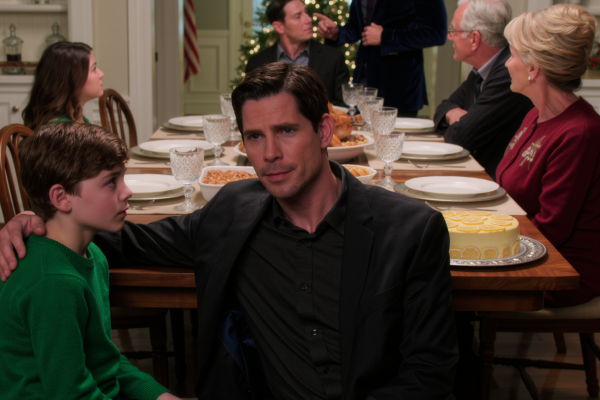
The cake came out around 8:30, blue frosting house and all, and 36 people sang. Ryan stood over the candles with his eyes shut longer than a man wishes for a parking spot. Then he blew them out in one breath and the room applauded.
Linda’s cousin Greg, who sells commercial insurance and has never met a microphone he didn’t like, tapped a glass with a spoon. Ladies and gentlemen, the birthday boy has a few words. Brian took the mic with a grin.
He thanked his mother first, which earned an aw, then Sarah, who manages a small smile. He thanked his buddies for keeping him young. Then he rocked back on his heels and got philosophical the way people do on their second bourbon.
You know what I figured out? 30 is the age when you finally stop depending on other people. Someone whooped and glasses went up. Beside me, Linda’s fingers tightened until her ring bit into my arm and she lowered her head so her hair fell across her face.
A few of the older guests, the ones who knew whose garage he lived over, found a sudden interest in their dessert forks. I didn’t move. I watched my stepson, flushed and shining under the string lights, say that sentence with total sincerity.
He believed it, and that was the whole tragedy. Greg took the mic back, beaming. And now I think we all know Michael probably has something special to say. I stood in my chair, scraped loud enough to carry.
Greg pressed the microphone into my hand with a wink, and it was still warm from his palm. I didn’t tap it or clear my throat. I waited until the last cough in the room died out.
Thank you all for coming, I said. Linda and Sarah put a lot of love into tonight and I want that said first. Ryan raised his glass to me. A small salute that was almost generous.
He thought this was the part where the envelope came out. Ryan, 9 days ago I was planning to give you $350,000 tonight. A room doesn’t go silent all at once.
It withdraws in pieces. Ice settling a fork set down a chair leg. Somebody’s phone lit up on a table and was quickly turned face down. Ryan’s smile stayed where it was, but his eyes went to work and I watched them calculate.
Not because you’d earned it, I said. Because I believed you were finally ready for it. He gave a thin laugh. What are you talking about? Planning to 5 years ago, Tom Bennett and I set up a trust in your name.
$2.5 million. I never told you the number because I didn’t want it to be the first thing you thought about each morning. It was meant to be a foundation, not a payday.
A house, a business with a real plan behind it, the things that hold a life up. Tonight was supposed to be the first step. Somebody at the back whispered the figure and somebody else shushed them.
Sarah had put her fork down. Linda was breathing through her nose carefully like a woman standing at the top of a ladder. Ryan’s face did something I will not forget.
It opened completely unguarded the face of the 10-year-old behind his mother’s leg at the Cracker Barrel. Then it shut, and the man who came back was someone I knew less well. So, where’s the money?
Still where it was yesterday. I let that sit. I could have said more. I could have laid out the conditions right then, but I wanted him to feel the shape of it first.
The way you let a man feel the weight of a door before you tell him it isn’t locked. His jaw worked. You’re doing this to humiliate me. He swept a hand at the room, the string lights, the cake with its little frosting house in front of everybody.
That’s what this is. No, I said, and my voice stayed level, which I was grateful for. You did that 9 days ago. A ripple went through the tables. The woman from Linda’s church looked at my head and then slowly at Ryan, and I saw her work it out.
Two of his friends stopped smiling into their drinks. I didn’t tell the story. I didn’t need to, and I had no interest in turning the evening into a trial.
“You shaved the head of a sleeping man,” I said, and called her a joke. Nobody laughed. Nobody coughed. Greg had gone gray around the mouth. a man realizing too late that he’d handed the microphone to the wrong evening.
Ryan’s chin came up. I knew that look. It was the one he wore when he couldn’t win and refused to lose. He deserved it, he said to the room, to his mother, to no one.
For what? He opened his mouth. I gave him the whole room to answer in every second of it. The ceiling fans turned. Out on the street, a bus side at the curb.
Somewhere behind me, a glass touched the table very gently. Ryan looked at his friends and none of them looked back. He looked at Sarah and she held his eyes without helping.
He looked at his mother and Linda, my Linda, who had spent 20 years standing between her son in every hard sentence, stared at her hands. He had nothing. I think that was the first honest moment he’d had in 9 days, and it cost him everything he’d walked in with.
I set the microphone on the table beside the cake. Then I picked up the leather folder I’d carried in under my arm, the same one I tucked there nine mornings ago, and laid it in front of him. I opened it to the first page, and turned it so he could read.
This is what I was going to sign. He looked down, his name stood at the top in black type. Ryan Thomas Miller, beneficiary. I watched his eyes move down the page, past the figures, past the signature block to the blank line on page 11.
His hand, the one that had held the clippers, came up and hovered over the paper without touching it. I closed the folder gently, the way you close a door on a sleeping child. I’m not taking it away, Ryan.
Let me say that plainly so nobody in this room leaves thinking I did. He looked up. The anger had drained out of his face and left something raw. You are still the beneficiary.
Every dollar stays in that trust. What I’m not doing is signing the 350,000 tonight. I kept my voice low, so the back tables had to lean in. I’ve put the distribution on hold, and there are conditions.
You work with an independent financial planner, not me and not anyone who owes me a favor. You pay off the debts I’ve been quietly covering for 6 years. You sign an agreement that this trust is never spending money.
You bring me a real plan for your work. On paper one, that could survive a stranger’s questions, and you answer for what you did to me. Answer how. That’s yours to figure out.
He laughed short and ugly. So, you do think you’re better than me? No. I put my hand on the folder. I think you can be better than what you did nine days ago.
The trust was never supposed to buy your respect, and it can’t. It can only get out of the way when you’ve earned the right to hold it. Nobody moved.
The string lights hummed. Ryan stared at the blank line on page 11 for a long moment, and when he spoke again, it wasn’t for the room. His voice dropped to something small in horse and I understood he was talking to me.
You want to know what it was about? I’d like that very much. He dragged a hand over his face. The night before I asked you for 15 grand. Danny’s brother had a shot at a franchise, a gym, and I wanted in.
You said no. You said you wanted to see numbers. His mouth twisted. You didn’t say it mean. You said it like a guy reading a menu. And I stood there in your kitchen thinking he’s never once looked at me and just believed.
He always wants the spreadsheet first. I said I wanted to see a plan because I had one for you. I said, I couldn’t tell you that. It was 9 days from your birthday.
I know that now. He swallowed. I went back up to the apartment and I couldn’t sleep. I kept hearing you. Then I thought, he takes a pill. He sleeps like a rock.
And I just his hand opened and closed at his side. I wanted you to feel small for once. I wanted to be the one who knew something. Sarah told me that week that if I kept treating you like the help, you’d stop bailing me out.
I got scared and I did the dumbest thing I could do with it. Sarah told you that a hundred times. His eyes found her across the room. She didn’t look away and she didn’t smile.
I didn’t think it had turn into this. I thought you’d yell, we’d fight, I’d feel better. I never thought you just He gestured at my head. then the room, then himself.
“Take it. I didn’t take anything,” I said.
“I just stopped catching you.”
For a moment, I thought he might cry. His shoulders hitched once, and he fixed his gaze on the ceiling until the moment passed. Then he turned with the last of his pride toward the one person in the room who had always been on his side.
“Mom.”
Linda stood slowly, steadying herself on the table. She had been quiet for so long that her voice came out scraped. I had spent 20 years watching her go soft at that exact moment.
The moment he said, “Mom,” in that tone, I braced for it.
“You crossed a line, Ryan.”
He flinched as if she’d slapped him.
“You went into our bedroom,” she said.
“You stood over my husband while he slept. You put a blade near his head, and then you wrote him a note about how pathetic he was.” Her voice cracked and she pushed through it.
And I told myself for 9 days that it was a prank, that you were hurting, that you didn’t mean it. I kept looking for the version where I didn’t have to say this. She pressed her fingertips to her mouth, then lowered them.
I love you. I will always love you, but what you did was wrong, and I’m not going to stand here and tell this room otherwise. Ryan didn’t answer. He looked at her like a man whose chair had been pulled out from under him mid-sentence.
I have thought about that look more than I’ve thought about the Clippers. It wasn’t the money. In nine seconds, he’d lost the idea that there was always one door he could lean on, and I knew precisely what that felt like because I’d spent 20 years being the other door.
Sarah came around the table. Then she didn’t touch him. She stopped a foot away and said quietly, “I’m still here, but I’m not going to lie for you.” He nodded without looking at her.
The room had begun to breathe again, shifting and murmuring, people discovering their phones and their coat sleeves. Greg was working very hard at examining a bread stick. I picked the folder up and held it in front of me and I made myself say the next part slowly.
Ryan, you’ve got two roads. You can hate me, keep the trust, and spend the next 10 years telling people about the mean old man who held your money hostage. That’s allowed.
You can even be right about a few things. I paused. Or you can grow up and someday you’ll understand why I stopped the money. I won’t ask you to call me dad.
I never have. I only ask that you own what you do. He stood very still. The blue frosting house had slumped sideways in the heat of the room. When he finally spoke, he sounded about 15.
Are you really not giving me anything? I thought about the driveway at 6:40 in the morning. The card in my desk drawer with one word underneath a sentence. I thought about all the yeses I’d handed out to avoid a single honest no.
Not tonight, I said. The party ended the way a tag goes out without anyone announcing it. Guests found their coats. Greg apologized to me twice by the coat check and I told him the microphone had been his to hand me and mine to use.
Somebody boxed up the cake. Ryan left through the kitchen with Sarah a step behind him and I didn’t stop him. There was no victory in it. I had spent nine days preparing for that room.
And when it was over, I felt like a man who carried a piano up four flights of stairs and now had to decide where to set it down. Linda was already in the passenger seat when I got to the car, her shoes in her lap, the green dress pulled around her knees.
I started the engine and didn’t put it in gear. The dashboard clock said 9:48. Neither of us spoke until we’d passed the last of the short north bars and the road went dark and residential.
I made him like this, she said. Linda, no, let me say it. She kept her eyes on the windshield. Every time he did something wrong, I found a reason.
His father left. He was 15. He was stressed. And every time you drew a line, I asked you to move it. I told myself I was keeping the piece.
I was really keeping myself from feeling like I’d failed him the first time around. Her voice thinned. You were the one person who never let me off the hook, and I resented you for it.
I drove another block before I answered. I’ve been doing the same thing, honey. Different costume. The street lights slid across the glass. I wasn’t protecting Ryan all those years.
I was protecting myself from feeling like I’d failed him. Every check I wrote bought me a little relief. He didn’t need another rescue. I needed to stop rescuing. She reached over and laid her hand on mine on the gear shift and we drove home like that.
A long marriage lets you do that. Sit in the same silence without it meaning anything is wrong. The next morning, I stood at the same bathroom mirror under the same vanity bulbs.
a quarter inch of gray stubble and seven faint pink lines on my scalp where the nicks had healed. Tom had told me a prosecutor would take the call, and I turned over every option I had. I could press charges.
I could change the locks and set Ryan’s boxes on the lawn. I could cut him off completely and let the family sort out the wreckage. I looked at each one and set it down.
None of them would make him a better man. They would only make me a harder one. So, I did none of it. I didn’t sue him. I didn’t evict him that week.
And I didn’t ban him from Thanksgiving. I did something far less dramatic and much harder, which was to hold the line day after day without raising my voice. When he needed gas money in the second week, I said no pleasantly and didn’t explain.
When Linda’s eyes asked me to soften, I squeezed her hand and stayed where I was. Three months later, Sarah mentioned over dinner that Ryan had started meeting with a financial planner named Miss Okafor, a woman I’d never met and was careful never to call. He took a job as an operations manager at a regional logistics company less glamorous than the fitness app with a paycheck that arrived every other Friday.
He taped a debt schedule inside his kitchen cabinet and crossed off a line each month. In December, he moved out of the garage apartment into a one-bedroom he paid for himself, and he never once asked about the trust. Something smaller changed, too.
One Sunday morning, he stopped me in a driveway and said, “Morning, Michael.” Not Mike. Tossed over his shoulder like a coin. Michael with a beat of weight on it.
I said, “Good morning back.” And kept walking to the mailbox because I didn’t trust what my face might do. 6 months after the party, on a gray Saturday in March, someone knocked on our front door.
Ryan hadn’t knocked on that door since he was a boy. He stood on the mat, holding a small gift bag, rain beating on his jacket. Inside was a charcoal wool cap, the tag still attached.
My hair had grown back to a respectable inch by then, gray and a little thicker at the sides than before. I know this doesn’t fix what I did, he said. No, I said it doesn’t.
He nodded the way a man nods at a fair price. His eyes were wet, but he held them on mine. I’m sorry. Not because it blew up. Because I stood over you in the dark and thought I was the one with the power and I was just scared of how much I needed you.
He swallowed. I’m sorry, Michael. I believed him. It sounded like something that caused him to say. But I didn’t pull him into a hug. Not yet, because I had learned what cheap forgiveness does to a person.
Then prove it with what you do next, I said. I put the cap on. It fit. A corner of his mouth lifted and I saw for just a second the 10-year-old at the Cracker Barrel.
By July, Miss Okaffor’s office sent Tom a packet of budget, a debt schedule with every line paid, and a one-page plan to buy a duplex in Clintonville and rent out half. Tom called me with his reading glasses, I could tell, pushed up on his forehead. Page 11’s ready for you, Mike.
I signed it that afternoon with the same pen. $350,000 exactly as planned. Not a dollar more. The rest of the $2.5 million stayed where it was still his, still waiting for whatever he built next.
When Ryan heard, he sat very still, then asked if he could buy me lunch. Over sandwiches, I told him what I’d come to believe. Money should follow responsibility, not replace it.
He wrote it on a napkin and folded it into his wallet. I never asked why. This morning, I stood at that mirror again. The hair is nearly all back.
I thought about the yellow legal paper I’d kept folded in the desk drawer beside a graduation card with one word on it. Now you look as pathetic as you are. I’d carried those eight words around for months like a stone in my pocket.
And somewhere along the way, they had turned into just paper. Ryan thought he had shaved away my dy that morning. He hadn’t. He had only shown me exactly what I needed to see.
And here is what I understand now at 60 that I didn’t at 59. Sometimes loving a child doesn’t mean giving them everything they ask for. Sometimes it means having the courage to say no before your help turns into the very thing that keeps them from growing up.
If this story stayed with you, I’d like to hear from you. Have you ever had to draw a line with someone you love even though it hurt? Leave a comment below and tell me where you’re watching from and what you would have done in my place.
We share stories like this every day. Stories about family forgiveness and the hard choices that come with both. So, please subscribe so you never miss one.