My father sold our family home while I was at work, my mother told me my inheritance was gone, and by the time I arrived home the locks had already been changed and official papers were waiting at the door, so while my family stood there convinced they had won, I stayed calm—because they had no idea I had already taken one step that could unravel everything they had just done.
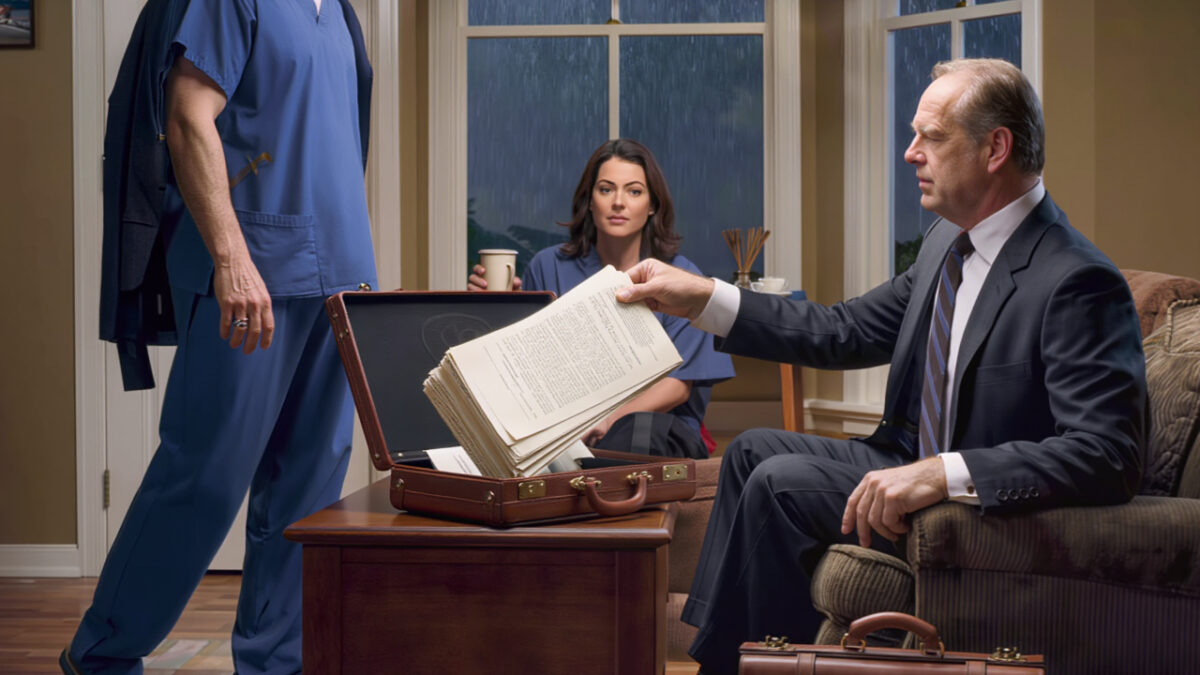
My stepson shoved me hard against the chest at the Christmas dinner table.
“This seat belongs to my dad.”
He sneered, his breath reeking of the expensive scotch I had paid for.
“Get out, old man.”
I fell backward hitting the hardwood floor in front of the entire family. My hip burned with a sharp pain, but the silence from my wife was what truly broke my ribs. They thought I was just a defeated 70-year-old man who would crawl away and hide.
But what Connor didn’t know was that as I lay on that floor, I wasn’t just hurt. I was calculating. By the time he woke up the next morning, he would have 23 missed calls, a frozen bank account, and he would realize that the man he pushed wasn’t just a stepfather.
I was the owner of the very name he used to build his fake empire. Before I tell you how I dismantled his life in less than 12 hours, please hit the like button and subscribe to the channel. It really helps this old man share his story.
And tell me in the comments, where are you watching from tonight? It was Christmas Eve in Boston, and the snow was falling thick over Beacon Hill. I parked my 10-year-old sedan down the street because the driveway was already full.
A gleaming Porsche 911 and a brand new Range Rover took up the prime spots. Both leased by my company, Blackwood Logistics. Both driven by people who hadn’t worked a real day in their lives.
I walked up the cobblestone path to the townhouse I had purchased 5 years ago for $8 million. It was a masterpiece of red brick and black shutters, the kind of home I dreamed of when I was sleeping in my truck during the early days of building my business.
Now I felt like a guest in my own castle. When I opened the heavy oak door, the heat and the noise of the party hit me. My wife, Patricia, had invited her entire extended family.
Cousins, nieces, nephews, people whose college tuitions I had quietly paid, people whose mortgages I had cleared when they got into trouble. They were all there drinking my wine, eating the catering I had ordered. Not a single person looked up to greet me.
I hung my own coat in the closet, brushing the snow off my shoulders.
“Harrison, you are late.”
Patricia said, breezing past me with a tray of crystal flutes. She didn’t kiss me. She didn’t ask how my doctor’s appointment went. She just pointed toward the back.
“We are starting dinner. Try not to bring up business tonight, okay? Connor is very stressed.” I swallowed the lump in my throat and nodded. I walked into the dining room.
It was magnificent. The chandelier sparkled above a table set for 20. At the far end, at the head of the table, stood the high-backed leather chair. My chair. The chair I had sat in for 35 years, long before I met Patricia, long before I adopted her 8-year-old son Connor, and gave him my name because his biological father had abandoned them.
I walked toward the head of the table, my joints stiff from the cold. Suddenly, a hand slammed down on the back of the leather chair. It was Connor. He was 38 now, wearing a tailored Italian suit that cost more than my first car.
His face was flushed, his eyes glassy.
“Where do you think you are going, Harrison?”
he slurred, dropping the title of Dad he used when he needed a check.
“I’m going to sit down for dinner, Connor.”
I said calmly, reaching for the chair. He stepped in front of me, blocking my path. His chest puffed out.
“No. Not tonight. Tonight we are honoring real men. This seat is reserved for my father. For Richard.” The room went deadly silent. The clinking of silverware stopped. Richard. The man who Patricia claimed had died in a tragic accident.
The man Connor worshipped as a martyr. The man who in reality I knew was nothing more than a criminal who had sold his own family for a fix. But I had promised Patricia I would never destroy the boy’s image of his father.
Connor. I said, my voice low. I raised you. I gave you this house. Please move aside. He laughed, a cruel barking sound. You gave me nothing. You just paid for things because you were lonely.
Richard was a king. You are just the bank. And the bank is closed today. Then he did it. He placed both hands on my chest and shoved. It wasn’t a playful push.
It was violent. I stumbled back, my dress shoes slipping on the polished floor. I crashed down hard on my right hip. The pain shot up my spine like a lightning bolt.
I gasped, lying there on the expensive Persian rug, looking up at the ceiling. For a few seconds, nobody moved. I looked around at the guests. I saw their shoes, Gucci loafers, Jimmy Choo heels, leather boots.
I looked at the ankles of the people whose deaths I had paid. Not one of them moved to help me up. They looked away. They took sips of their drinks.
They were embarrassed, not for me, but by me. Then Patricia came rushing over. Finally, I thought. My wife. She knelt beside me, her perfume overwhelming. But she didn’t help me stand.
She leaned close to my ear, her voice a harsh whisper. Harrison, stop it. You are making a scene. You know how emotional Connor gets about his dad on Christmas.
Just go sit in the living room. Let him have the chair. I looked at her, really looked at her. For 30 years, I had ignored the red flags because I loved her.
I had ignored the disrespect because I wanted a family. But as I lay on the floor of my $8 million home looking at the woman who was telling me to hide in my own living room like a naughty dog, something inside me finally snapped. It wasn’t a loud snap.
It was the quiet click of a vault door closing. I didn’t say a word. I gritted my teeth against the pain in my hip and pushed myself up. I dusted off my trousers.
I looked at Connor, who was now sitting in my chair raising a glass to a room full of cowards. I looked at Patricia, who was smiling nervously at her guests pretending everything was fine. I turned around and walked to the front door.
“Harrison, where are you going?”
Patricia called out half-heartedly.
“You haven’t eaten.”
I didn’t answer. I put on my coat. I walked out into the snow, and as the heavy door clicked shut behind me, I felt the cold air fill my lungs.
It was the freshest air I had breathed in years. I got into my old sedan and started the engine. I didn’t go to the hospital even though my hip was throbbing.
I drove straight to the Four Seasons Hotel downtown. I checked into a suite using my personal black card. The receptionist looked at my disheveled clothes, but the credit limit on the card commanded respect.
I sat on the edge of the hotel bed and opened my laptop. The pain in my body was being replaced by a cold, sharp clarity. They thought I was a senile old man who would come back tomorrow with an apology and a check.
They thought the Blackwood fortune was a bottomless well that belonged to them by right. I logged into the secure server of the Blackwood family trust. What Connor and Patricia had conveniently forgotten, or perhaps never bothered to read in the fine print, was that the trust was revocable.
I was the sole grantor. They were merely beneficiaries, and their access was entirely at my discretion. I saw the recent charges on Connor’s corporate card. $50,000 at a nightclub last week.
$12,000 for a wa- watch. All categorized as business expenses. I didn’t get angry. I just got to work. My fingers flew across the keyboard. Action one. Status change. Connor Blackwood.
Card status suspended. Reason internal audit. Action two. Patricia Blackwood. Emergency fund access revoked. Joint checking account frozen. Action three. I picked up my phone and dialed a number I hadn’t called in years.
It was Mike, my old head of security, a man who had taken a bullet for me once in the ’90s. He answered on the second ring.
“Merry Christmas, boss,” Mike said.
“It’s not merry, Mike,” I said.
“I need you to do something for me tonight. I need you to take a tow truck to Beacon Hill. I want the Porsche and the Range Rover removed from the driveway.”
“On Christmas Eve, boss?”
Mike asked, surprised.
“Right now,” I said.
“Impound them at the company lot. If they ask, tell them the vehicles are being recalled for violating the company image policy.” I hung up the phone. I poured myself a glass of water from the mini bar.
I watched the snow fall outside the hotel window, covering the city in white. I imagined Connor sitting in my chair, laughing, drinking my scotch, feeling like a king. He had no idea that the crown he was wearing was made of paper, and I had just lit a match.
I turned off the light and laid my head on the pillow. My hips still hurt, but my mind was peaceful. I closed my eyes, waiting for the sun to rise.
I knew exactly what would happen when they woke up. The hangover would be bad, but the reality check would be fatal. The first notification popped up on my phone screen at 7:00 in the morning.
Then another. Then another. By the time I finished my coffee, I had 23 missed calls. The game had officially begun. The windshield wipers of my 10-year-old sedan struggled against the heavy snow as I navigated the winding streets of Beacon Hill.
The heater rattled, blowing lukewarm air that did little to combat the chill seeping into my bones. Every time I pressed the brake pedal, a sharp searing pain shot from my right hip all the way up to my shoulder. I gritted my teeth, refusing to let out a sound, even though I was alone in the car.
That pain was a necessary reminder. It was the physical evidence of exactly where I stood in the hierarchy of the family I had built with my own hands. As I drove toward downtown Boston, the city lights blurred through the wet glass, and my mind began to drift back, rewinding 30 years of memories that I had clearly romanticized.
I thought about the day I officially adopted Connor. He was 8 years old, a skinny, terrified boy with bruised knees and eyes that were constantly scanning the room for danger. His biological father, Richard, had abandoned them months prior, leaving Patricia with a mountain of debt and a broken spirit.
I remembered sitting on the floor with Connor in their small, drafty apartment, showing him how to build a model airplane. I remembered the way he looked at me then. It wasn’t with contempt.
It was with a desperate, hungry adoration. I remembered the day the judge banged the gavel finalizing the adoption. Connor had grabbed my hand so tight his knuckles turned white.
He looked up at me and said, “Thank you for being my dad, Harrison. I promise I will make you proud.” That voice echoed in my head now mocking me.
I had given him my name. I had given him the Blackwood legacy, a name that opened doors in this city that Richard Miller could never have even knocked on. I tried to pinpoint exactly when the shift happened.
It wasn’t overnight. It was gradual like a slow-acting poison. It started when I bought him his first car at 16. It wasn’t the Porsche he drives now, but a sensible, safe SUV.
He had looked at it with disappointment and muttered that his real dad would have bought him something faster. I let it slide. I told myself he was just a teenager grieving a man he never truly knew.
Then came college. I paid the tuition in full. Then the MBA. Then the entry-level position at Blackwood Logistics. I remembered the day I handed him the keys to the vice president’s office.
I thought I was empowering him. I thought I was building a successor, but I wasn’t. I was feeding a monster. I was teaching him that he didn’t need to earn respect, he just needed to wait for me to give it to him.
I realize now driving through the slush that my generosity had been his weapon. Every check I wrote stripped away a layer of his gratitude and replaced it with entitlement. He didn’t see me as a father anymore.
He saw me as a resource. And tonight he decided that the resource had expired. I pulled up to the entrance of the Four Seasons. The valet, a young man bundled in a thick coat, hesitated when he saw my car.
It was a stark contrast to the line of limousines and luxury SUVs idling near the entrance. I stepped out, flinching as my weight landed on my injured hip. The pain was throbbing now, a dull constant ache.
I walked into the lobby. The marble floors reflected the warm golden light of the chandeliers. The air smelled of expensive perfume and fresh pine. I caught my reflection in a large gilded mirror near the elevators.
I looked like a wreck. My coat was wet and hanging off one shoulder. There was a smudge of dirt on my trousers from where I had hit the floor at the house.
My face was pale lines of exhaustion etched deep around my mouth. The young woman at the reception desk looked up with a polite professional smile that faltered for a fraction of a second when she took in my appearance. She scanned my clothes, likely wondering if I had wandered in from the cold to ask for spare change.
“Can I help you, sir?”
she asked, her tone guarded.
“I need a suite,” I said, my voice raspy.
“For the week.”
She hesitated, her fingers hovering over the keyboard.
“Sir, we are quite booked for the holidays and our rates are premium at this time of year.”
I didn’t have the energy to argue or to feel embarrassed. I simply reached into my wallet and pulled out my black card. It was the heavy metal kind that made a distinct sound when it hit the marble counter.
I slid it toward her.
“The suite,” I repeated. Her eyes widened slightly as she recognized the card. The hesitation vanished instantly.
“Of course, Mr. Blackwood. My apologies. We have the executive suite available immediately. I will have someone assist you with your luggage.”
“I have no luggage,” I said, taking the key card.
“Just the room. I took the elevator up to the 30th floor. The silence in the hallway was heavy. I opened the door to the suite and walked in. It was luxurious, impersonal, and cold.
Exactly what I needed. I sat on the edge of the king-sized bed and stared at the phone on the nightstand. My hand hovered over the receiver. The instinct was overwhelming.
I wanted to call Patricia. I wanted to scream at her. I wanted to ask her how she could stand there and watch her son humiliate me. I wanted to ask her why she chose the memory of a dead criminal over the living husband who had given her everything.
I imagined her voice, the excuses she would make. She would tell me I was overreacting. She would tell me to come home and sleep it off. She would gaslight me just as she had done for years.
I picked up the handset, my fingers trembling with rage. But then the image of her flashed in my mind. Not the woman I married, but the woman who whispered in my ear while I was on the floor.
Don’t make a scene. That was the moment the marriage ended. She didn’t check if I was injured. She checked if the guests were watching. I slammed the phone back into the cradle.
No. Words were useless now. Arguments were for people who still hoped for a resolution. I didn’t want a resolution. I wanted a reckoning. I stood up, ignoring the fire in my hip, and walked over to the desk by the window.
I pulled my laptop out of my briefcase. It was an old habit, carrying my work computer everywhere, even to Christmas dinner. Connor used to mock me for it, calling me obsessed.
Tonight, that obsession was going to be his undoing. I sat down and opened the lid. The screen flickered to life casting a harsh blue glow across my face. I saw my reflection in the dark glass before the operating system loaded.
I looked old. I looked tired. But for the first time in a long time, I didn’t look weak. I wasn’t Harrison the stepfather anymore. I wasn’t the wallet. I wasn’t the doormat.
I was Harrison Blackwood, the man who had built a logistics empire from a single delivery truck in 1985. I knew how to move things. I knew how to build supply chains.
And more importantly, I knew how to cut them off. The Wi-Fi connected. I opened the browser and navigated to the banking portal for the Blackwood family trust. My fingers hovered over the keyboard.
I took a deep breath inhaling the sterile air of the hotel room. Let’s see how much of a big man you are without my credit card. Connor, I whispered to the empty room.
I typed in my password and hit enter. The war had begun. The blue light of the laptop screen was the only illumination in the hotel suite casting long sharp shadows across the unmade bed.
My hip was throbbing with a dull rhythmic ache, a constant reminder of the hardwood floor and the humiliation I had just swallowed. But as the banking portal for the Blackwood family trust finally loaded, the physical pain receded replaced by a cold surgical focus. I stared at the dashboard.
The numbers were stark black figures against a white background. $42,650,000 It was a fortune I had built box by box, mile by mile over four decades of sweating in warehouses and negotiating with unions. It was the safety net that allowed Connor to play businessman and Patricia to play the grand dame of Beacon Hill.
I clicked on the governance tab, my eyes scanning the legal text until I found the clause I was looking for. It was right there in plain English, a paragraph that neither my wife nor my stepson had probably read in 20 years. Sole discretionary authority, Harrison Blackwood, lifetime appointment, revocable at will.
I leaned back, a dry, humorless chuckle escaping my throat. They had forgotten. In their arrogance, in their assumption that I was just a senile old fixture in the house, they had forgotten that they didn’t own a single dime of this money.
They were beneficiaries, guests at the table, and the host had just decided to clear the plates. I navigated to the credit card management section. The list of authorized users appeared.
Connor’s name was at the top. Connor Blackwood. Even the name on the card was a gift I had given him, a shield he used to deflect the failures of his biological father.
Next to his name was the status bar, active, platinum level, monthly limit $50,000. I clicked on the transaction history. It was a road map of excess. $5,000 at a steakhouse on Tuesday, $12,000 at a boutique in the Prudential Center on Wednesday, and there pending from tonight, a hold for $2,000 at a liquor store.
He was buying the booze for the party where he would push me down. He was using my money to fuel the courage he needed to disrespect me. My finger hovered over the trackpad.
I didn’t feel guilt. I didn’t feel hesitation. I felt like a surgeon cutting out gangrene. I clicked the button marked suspend account. A dialog box popped up asking for a reason code.
I typed two words, internal audit. I hit enter. The screen refreshed. The green dot next to his name turned red. Status: suspended. Contact administrator.
“Good luck paying the tab at the club tonight, son.”
I whispered to the empty room. Next was Patricia. I found her profile linked to the joint checking account and the emergency liquidity fund. This was the account she used for her spa weekends, her charity luncheons, the endless stream of gifts she bought to buy the affection of her relatives.
I remembered the way she had looked at me on the floor, the hiss of her voice telling me not to make a scene. She wanted peace. She was about to get a lot of quiet time to think.
I went to the access permission settings. I unchecked the box marked full withdrawal authority. I unchecked the box marked emergency overdraft. I downgraded her status to view only. She could look at the fortune.
She could see the millions sitting there safe and secure. But she couldn’t touch a single cent without my digital fingerprint approval. I closed the browser tab, the finality of the action settling over me.
The financial artery had been severed. Now I needed to take back the symbols of their status. I reached for my phone and dialed Mike. It was late, almost midnight on Christmas Eve, but Mike was the kind of man who slept with his phone on his chest.
He answered on the second ring, his voice gruff but alert. I’m here, boss. What do you need? I need you to go to the Beacon Hill house, Mike. I said, keeping my voice steady.
Right now? There was a pause on the other end. Is everything okay, Harrison? Do you need an extraction? No. I’m safe. I’m at the Four Seasons. But I need you to extract some property.
You have the master keys for the company fleet at the office, don’t you? I do. I want you to take a tow crew. Go to my driveway. I want the Porsche 911 and the Range Rover removed tonight.
Mike hesitated. Harrison, it’s Christmas Eve. The driveway is probably full of guests. If I show up with a tow truck, it’s going to be a scene. It’s going to be loud.
Good, I said the word tasting like iron. Let it be loud. Let the neighbors see. Let her cousins and her nieces see. Those cars are registered to Blackwood Logistics.
They are company assets. The drivers are no longer authorized to operate them. I could hear Mike shifting on the other end. He didn’t ask why. He knew me. He knew I didn’t make rash decisions.
He knew that if I was ordering a repossession on Christmas Eve, a line had been crossed that could never be uncrossed. Copy that, boss, Mike said his tone shifting from friend to head of security. We will be there in 30 minutes.
What do I tell them if they come out? Tell them the vehicles are being recalled for unauthorized use, I said. Tell them to call the CEO if they have a complaint.
I hung up the phone and set it on the nightstand. I stood up and walked to the window looking out at the city covered in white. Somewhere out there in the warmth of my townhouse, Connor was probably laughing, holding court in my chair, telling stories about a father who never gave a damn about him.
He was probably pouring another glass of my wine feeling invincible. He didn’t know that the Porsche in the driveway was about to vanish. He didn’t know that the credit card in his wallet was now just a piece of useless plastic.
He didn’t know that the safety net he had bounced on for 30 years had just been set on fire. I wasn’t the bank anymore. I wasn’t the doormat. I was the repo man.
And I was coming for everything I was owed. I went into the bathroom and splashed cold water on my face. I looked at the old man in the mirror.
He looked tired, yes, but the eyes were sharp. They were the eyes of the man who had stared down union strikes and hostile takeovers in the ’80s. I went back to the bed and lay down careful of my hip.
I didn’t expect to sleep, but a strange sense of calm washed over me. I had pulled the trigger. The bullet was in the air. All I had to do now was wait for the impact.
The silence of the hotel room was heavy, but it was a clean silence. It wasn’t filled with the fake laughter of ungrateful relatives or the condescending whispers of my wife. It was the silence of a battlefield before the dawn.
I closed my eyes and visualized the morning. I visualized Connor waking up hungover and entitled reaching for his phone to order breakfast or a ride and seeing the notification. Declined.
I visualized Patricia trying to transfer money to cover the catering bill she had undoubtedly racked up. Access denied. I visualized them walking out the front door expecting to see their status symbols shining in the winter sun only to find empty patches of asphalt where the Porsche and the Range Rover used to be.
They would panic. They would scream. They would call me. And I would let it ring. One time. Two times. 23 times. I pulled the duvet up to my chin.
For the first time in years, I wasn’t just existing in their world. I was dictating the terms of it. The war had begun, and I had just won the first battle without even firing a shot.
I woke up at 6:00 in the morning, a habit ingrained from 40 years of opening warehouse doors before the sun came up. But for the first time in decades, I didn’t wake up with a heavy chest. The pain in my hip was still there, a stiff throbbing reminder of the night before, but the crushing weight of obligation was gone.
I ordered a pot of black coffee and a basket of fruit from room service. I sat by the window of the suite watching the city of Boston wake up under a fresh blanket of white snow. It was peaceful, quiet.
Across town, however, I knew the morning was breaking in a very different way. I didn’t need to be there to see it. I knew the players, I knew the stage, and I had written the script.
Connor woke up in the VIP suite of the Obsidian, a private club in the Seaport District, where he liked to pretend he was a titan of industry. He would have woken up with a pounding headache, the taste of stale champagne in his mouth, and the false confidence of a man who believes his credit limit is infinite.
I imagined him stretching, reaching for his phone, probably expecting a text from me apologizing for ruining his Christmas Eve. Instead, he found a bill. A server likely tired and wanting to go home to her own family on Christmas morning would have presented him with the tablet.
$5,000 for the night. Vintage Dom Perignon bottle service tips for the staff he liked to impress. Connor wouldn’t have even looked at the total. He would have casually tossed his platinum Blackwood corporate card onto the tray, barely acknowledging the woman’s presence.
“Run it,” he would have mumbled closing his eyes against the light. I took a sip of my coffee savoring the bitterness. I could picture the exact moment the server came back.
The polite smile would be gone, replaced by a tight professional mask.
“Mr. Blackwood,” she would say, her voice loud enough for the people at the next table to hear.
“The card was declined.”
Connor would laugh, that arrogant dismissive bark I had heard so many times.
“Don’t be ridiculous. It’s a Blackwood card. Run it again. The chip is probably dirty.”
“I tried it three times, sir. The system says the account has been suspended by the administrator.”
“Do you have another form of payment?”
That was the moment the hangover would truly hit him. The realization that the plastic rectangle in his hand was now just a piece of trash. He would fumble for his wallet, his hands shaking slightly.
He would pull out the backup card, I had given him for personal emergencies.
“Try this one.”
He would snap, the panic starting to bleed into his voice. The server would swipe it. The little machine would buzz.
“Authorization denied. Account frozen.” I watched a snowplow clear the street below my window. I checked my phone. 7:33 a.m. The first call came in. Connor. I let it ring.
I watched the screen light up with his face, a photo taken on a yacht rented for his birthday last year. I silenced the ringer and placed the phone face down on the marble table. Back at the club, the situation would be deteriorating.
The manager, a man who tolerated Connor only because of my money, would step in. The bouncers, large men with crossed arms and earpieces, would move a little closer, blocking the exit. The respect Connor thought he commanded would evaporate instantly.
He wasn’t a VIP anymore. He was just a deadbeat trying to skip out on a tab. I imagined him sweating in his designer suit, frantically dialing his mother.
“Mom, pick up, pick up.”
He needed a rescue. He needed Patricia to transfer funds to fix it, to make the bad feelings go away, like she always did. But Patricia was having a morning of of own.
At the Beacon Hill townhouse, my wife would be preparing for her Boxing Day tradition, a spa day at the Mandarin Oriental followed by a brunch with her sisters. She would be dressed in her silk robe reaching for her purse to call an Uber Black. She would open the banking app on her phone to move some money around, perhaps to cover the cost of the extra catering staff she had hired without asking me.
Access denied. Contact account holder. She would frown tapping the screen with a manicured fingernail. Surely it was a glitch. She would try the joint checking account. Zero balance available.
She would try the emergency line of credit. Revoked. The panic would start in her chest, a cold tight knot. She would call the bank demanding to speak to a manager using her I am Mrs. Harrison Blackwood voice.
And the poor customer service representative on the other end would read the notes on the screen. I am sorry, Mrs. Blackwood. The primary account holder has restricted all access.
You have been removed as an authorized signatory effective midnight last night. Primary account holder. Me. The man she told to go sit in the living room like a child.
Then the doorbell would ring. I took another sip of coffee. Mike was punctual. He wouldn’t be late. Patricia would open the door expecting a late gift delivery or perhaps a neighbor coming to compliment the party.
Instead, she would find Mike standing there on the front step flanked by two men in jumpsuits. Behind them, a large flatbed tow truck would be idling in the street, its yellow hazard lights flashing against the gray morning sky. Merry Christmas, Mrs. Blackwood, Mike would say his face impassive.
Mike, what is going on? She would ask clutching her robe tight against the cold. Why is there a tow truck? I am here for the company vehicles, ma’am. The Porsche and the Range Rover.
We have orders to return them to the fleet depot for immediate audit.”
“You can’t take them.”
She would shriek, the veneer of sophistication cracking.
“Those are our cars. Connor needs the Porsche.”
“They are leased by Blackwood Logistics, ma’am.”
Mike would correct her calmly.
“And since Mr. Blackwood has flagged them for unauthorized usage, I have to take them. I have the spare keys, so we won’t need to disturb you further.” She would stand there helpless, watching as the neighbors’ curtains twitched.
The neighbors she tried so hard to impress. The people she wanted to believe were her peers. They would see the tow truck. They would see the repo men hooking chains to the bumper of Connor’s precious sports car.
They would see the illusion of the Blackwood lifestyle being dragged away on a flatbed. My phone vibrated against the table again. And again. And again. A relentless buzzing that sounded like music to me.
I picked it up and looked at the notifications. 8:15 a.m. Missed call from Connor. 8:16 a.m. Missed call from Patricia. 8:20 a.m. Missed call from Connor. 8:22 a.m. Text from Connor, “Dad, there is a mistake with the cards.
Call me ASAP. I am stuck at the club.” I swiped the notification away. 8:30 a.m. Text from Patricia Harrison.
“Mike is here taking the cars. Tell him to stop. You are humiliating us.” I didn’t reply. Humiliating them? They had humiliated me in front of our entire family 12 hours ago.
This wasn’t humiliation. This was correction. 8:45 a.m. Missed call from Patricia’s sister. 8:50 a.m. missed call from Connor. The tone of the messages began to shift. The arrogance was bleeding out replaced by a frantic desperate fear.
9:00 a.m. text from Connor. Dad, seriously, they won’t let me leave. The manager is threatening to call the police. I don’t have cash. Please. 9:15 a.m. text from Patricia Harrison.
Please pick up. I can’t access the accounts. I can’t buy groceries. The cars are gone. What is happening? Where are you? I sat there scrolling through the list. 23 missed calls.
23 attempts to reach the man they had shoved to the floor. Yesterday my voice didn’t matter. Yesterday I was just an old man taking up space in a chair that didn’t belong to him.
Today I was the only person in the world who mattered. I imagined Connor sitting in the back office of the club stripped of his bravado realizing that without my name he was just a guy with a bar tab he couldn’t pay. I imagined Patricia standing in the empty driveway staring at the oil spots where the luxury cars used to be realizing that her status was a loan she had defaulted on.
I finished my coffee and stood up. My hip groaned but I straightened my back. I wasn’t going to call them back. Not yet. Let them sit in the mess they had made.
Let them feel the cold. Let them understand for the first time in 30 years that the heat in their lives came from my fire and I had just closed the damper. I walked into the bathroom to shower.
I had a busy day ahead. I needed to meet with my lawyer. I needed to finalize the paperwork and I needed to prepare for the next phase because taking the cars and the credit cards was just the opening move.
They thought this was about money. They thought I was just punishing them for a night of disrespect. They had no idea that I wasn’t just teaching them a lesson.
I was erasing their unauthorized access to my life. As I stepped into the hot water letting it wash away the stiffness of the night, I heard the phone start buzzing again on the nightstand. A long, desperate vibration.
I didn’t even look. I grabbed the bar of soap and began to scrub. The war was on and for the first time in a long time I felt clean.
It was just after 10:00 in the morning when the heavy knock came at the door of my suite. I didn’t need to look through the peephole to know who it was. The front desk had called up 5 minutes ago to tell me that Mrs. Blackwood was in the lobby demanding to see me and that she was causing quite a disturbance.
I had told them to send her up. I wasn’t hiding. I was waiting. I opened the door and there she stood. Patricia. My wife of 30 years. She was wearing her mink coat, the one I bought her for our 25th anniversary, but her face was a mask of ruined mascara and frantic indignation.
She didn’t hug me. She didn’t ask if I was hurt. She pushed past me into the room bringing a gust of cold hallway air and the scent of desperation with her.
Harrison.
“Have you lost your mind?”
she shrieked throwing her purse onto the sofa.
“I had to take a taxi here. A taxi. Do you have any idea how humiliating that is? The neighbors saw the tow truck. They saw everything. My sister called me asking if we were bankrupt.
You have to fix this immediately. Call the bank. Call Mike. Give Connor his car back.” I closed the door gently and locked it. I leaned against the wood watching her pace around the room like a trapped animal.
She wasn’t worried about me. She wasn’t worried about our marriage. She was worried about the optics. She was worried about the disruption to her comfort. I am not fixing anything, Patricia.
I said, my voice calm and level. I am simply managing my assets. Managing you are destroying us, she cried, tears streaming down her face. And for what? Because Connor had a little too much to drink, because he was emotional on Christmas Eve.
You are being cruel, Harrison. You are being a tyrant. He is just a boy who misses his father. He is 38 years old, Patricia, I said, walking slowly toward the desk by the window.
And he didn’t just have too much to drink. He assaulted me in my own home. And you stood there and told me to be quiet. He didn’t mean it, she sobbed, ringing her hands.
He is under so much stress. The company is putting so much pressure on him. He is working himself to the bone for you, trying to keep Blackwood Logistics running, and this is how you repay him, by cutting him off, by humiliating him at his club.
How is he supposed to do business if his card is declined? You are sabotaging the company, Harrison. Stopped at the desk, I looked down at the Manila envelope sitting there.
It was thick, sealed with a red string. I had received it 3 days ago from the private investigator I had hired a month prior. I hadn’t opened it until last night after the incident.
My gut had told me something was wrong for a long time, but I had been too afraid to look. Last night, I looked. I picked up the envelope and turned to face her.
So, Connor is stressed about the company, I asked. He is working hard for Blackwood Logistics. Is that the story? Of course, that is the story, she snapped wiping her eyes.
He is in the office every day. He is meeting clients. He is trying to build your legacy. I threw the envelope onto the coffee table. It landed with a heavy thud, sliding across the glass surface until it stopped right in front of her.
Open it, I said. Patricia looked at the envelope, then at me. Her expression faltered. Fear flickered in her eyes, replacing the indignation. What is this? It is a report, I said.
From a forensic accountant and a private investigator. I hired them last month because I noticed some irregularities in the quarterly reports. Small things. Discrepancies that a stressed executive might make.
But what they found wasn’t stress, Patricia. It was theft. She stared at the envelope as if it were a bomb. She didn’t move to touch it. I will tell you what is in there since you seem hesitant.
I continued, my voice hardening. Connor isn’t stressed about Blackwood Logistics. He hasn’t signed a new client for my company in 6 months. Do you know what he has been doing?
He has been diverting our existing clients. Our premium contracts. He is moving them to a new entity he registered in Delaware 6 months ago. Patricia shook her head, backing away slightly.
No. That is not true. Connor wouldn’t do that. He is doing it, I said. He is offering them rates that undercut us by 10% using my infrastructure, my trucks, and my fuel to service them.
He is bleeding Blackwood dry to feed his own startup. And do you know what he named this new company? I waited. The silence in the room was suffocating. Patricia looked pale, her hands trembling.
He called it Richard’s Legacy Holdings. I said the words tasting like ash in my mouth. Patricia gasped, her hand flying to her mouth. Richard’s Legacy, I repeated. He is stealing the empire I built.
The empire I gave him the keys to, and he is rebranding it in the name of the man who left him to rot. He is using my money to build a shrine to a dead junkie. That is what your son is doing with his stress, Patricia.
It is a mistake, she whispered, tears falling faster now. He probably just wanted to branch out. He wanted to make something of his own. He didn’t mean to hurt the business.
Stop lying, I roared. The sudden volume made her jump. My patience snapped. Stop lying to me and stop lying to yourself. It is not a mistake. It is corporate espionage.
It is embezzlement. And it is betrayal of the highest order. But that is not even the worst part, is it? I walked around the coffee table and closed the distance between us.
She shrank back, hitting the edge of the sofa. The worst part, Patricia, is that he couldn’t have done it alone. To move that kind of capital, to authorize the initial transfers, to set up the shell company, he needed a second signature.
He needed access to the family reserve accounts. The accounts that only you and I have access to. I reached into the envelope and pulled out a single sheet of paper.
It was a photocopy of a withdrawal slip from 3 months ago. $300,000 transferred to an account labeled RLH startup capital. I held the paper up to her face. My hand was shaking, not from age, but from the sheer force of my anger.
That is your signature, Patricia, I said, my voice dropping to a whisper that was more terrifying than my shout. Right next to his. You signed it. You authorized the withdrawal.
You gave him the money to start the company that is stealing from your husband. Patricia stared at the paper. She couldn’t deny it. The signature was unmistakable with the little loop on the P that she always made.
Her face crumbled. She collapsed onto the sofa burying her face in her hands.
“I didn’t know what it was for.”
She wailed.
“He told me he needed it for an investment. He said he wanted to surprise you. He said he was building something for the family. He is my son, Harrison.
He asked me for help.”
“What was I supposed to do?”
“You were supposed to be my wife.”
I said.
“You were supposed to protect our future. Instead, you handed him the knife to stab me in the back.”
“I didn’t know.”
She pleaded looking up at me with mascara running down her cheeks.
“I swear, Harrison. I didn’t know he was stealing clients. I just thought he wanted to be independent. I wanted him to feel like a man. He always felt so small in your shadow.
I just wanted to help him shine.”
“In my shadow.”
I laughed, a bitter, broken sound.
“I put him on a pedestal. I gave him a life most men only dream of. And you helped him steal it because you couldn’t say no to him. You have never been able to say no to him.
That is why he pushed me yesterday. Because he knew that no matter what he did, his mother would be there to sign the check and clean up the mess.
“Harrison, please.”
She begged reaching for my hand.
“I am sorry. I will talk to him. We can fix this. Just don’t cut us off. Don’t leave us. We are a family.” I pulled my hand away as if she burned me.
“We aren’t a family, Patricia. We are a host and two parasites, and the host is tired. I walked back to the window, unable to look at her anymore. The sight of her crying used to tear me apart.
Now it just looked like another performance.
“You signed the withdrawal,” I said, looking out at the snow.
“That makes you an accomplice. Legally, I could go to the police right now. I could show them this report. I could have you both arrested for fraud and embezzlement.”
“No,” she gasped.
“You wouldn’t.”
I turned back to her. My face was stone.
“I haven’t decided yet. But right now, you need to leave.”
“Harrison, please.”
“Get out,” I said.
“Go back to your son. Go help him figure out how to pay his tab at the club. Go tell him that Richard’s legacy is about to face a hostile all takeover from reality.”
She stood up, shaky and frail. She grabbed her purse, clutching it to her chest. She looked at me one last time, her eyes searching for the man who had always forgiven her.
But that man wasn’t in the room.
“You are making a mistake,” she whispered.
“You are going to die alone, Harrison.”
I looked her dead in the eye.
“Better to die alone than to live with thieves.”
She turned and fled the room, the door clicking shut behind her. The silence returned, but the air was heavy with the truth I had just spoken. I looked at the report on the table.
Richard’s Legacy Holdings. The audacity of it was breathtaking. He wanted to be his father so bad he was willing to become a criminal to do it. I sat down in the chair she had vacated.
I felt old. I felt tired. But underneath the exhaustion, the fire was burning hotter. They thought they had tricked me. They thought they had siphoned off my life’s work while I wasn’t looking.
But, they had made a fatal error. They assumed I wouldn’t fight back. I picked up my phone. I had one more call to make. It was time to bring in the heavy artillery.
It was time to call Sarah Jenkins. If Connor wanted a war over the company, I wasn’t going to send a negotiator. I was going to send a shark, and I was going to take back a lot more than just my money.
I was going to take back my name. She stopped. Her hand was on the brass doorknob, her knuckles white, but she didn’t turn it. The silence I had tried to impose was broken, not by the sound of her leaving, but by a sound I hadn’t heard from her in years.
A low, venomous laugh. It was a sound of pure, defensive spite. She turned around slowly, her mascara-streaked face now twisted into a sneer that looked completely alien on the woman I had protected for three decades.
“You are enjoying this, aren’t you?”
she said, her voice shaking with a mix of rage and humiliation.
“You are sitting there in your expensive suite, tearing down my son, tearing down his dreams, and you are loving every second of it.”
I didn’t answer. I just watched her, waiting for the venom to run its course.
“You know what this is really about, Harrison?”
she spat, stepping back into the room, abandoning her retreat.
“It isn’t about the money. It isn’t about the company. It isn’t even about the push. It is about Richard.” I stiffened. There it was. The ghost in the room.
The third person in our marriage who had been dead for 30 years, but never truly left.
“You have always been jealous of him,” she continued, her voice rising, gaining confidence from her own delusion.
“You hate that Connor worships him. You hate that no matter how much money you throw at us, no matter how many cars you buy or tuitions you pay, you will never be him. Richard was a man.
He was strong. He was dangerous. He had a fire in him that you never had. He was a hero who died too young, and you are just the boring safe checkbook that came after.
The words hung in the air, toxic and heavy. She was rewriting history just as she always had. She was building the shrine again brick by brick right in front of my face.
For 30 years I had let her. I had nodded. I had paid for the therapy sessions where Connor cried about his lost warrior father. I had swallowed my pride when Connor toasted Richard at every birthday ignoring the man who actually put the cake on the table.
But the contract was broken now. The confidentiality agreement I had made with my own conscience was null and void. I looked at her and for the first time I didn’t see my wife.
I saw a woman who had lied to herself for so long she couldn’t distinguish the fantasy from the reality. And I felt a strange cold urge to shatter the mirror. A hero, I repeated the word rolling off my tongue like gravel.
Is that what you tell yourself at night, Patricia? Is that the bedtime story you told Connor all these years? That Richard was a hero? That he died in a tragic construction accident saving a co-worker?
A steel beam, wasn’t it? That was the story.
“It is the truth.”
She shrieked, her hands balling into fists.
“He was working double shifts to support us. He died building this city.” I stood up. My hip flared with pain, but I ignored it. I walked over to the safe in the closet of the hotel suite.
I punched in the code. Beep beep beep click. The door swung open. Inside next to my passport and some cash was a small leather-bound notebook. It wasn’t the forensic report on Connor.
It was something much older. Something I had carried with me since 1995. I took out a folded yellowed piece of paper from the notebook. It was fragile, the edges fraying.
I walked back to Patricia and held it out. She looked at it confused. What is this? It is the police report, I said softly. From the Suffolk County facility.
Dated November 14th, 1995. She froze. Her face went gray, the color draining away instantly. Read it, I said. She shook her head backing away. No. I don’t want to see it.
Read it, Patricia. I commanded, my voice booming in the small room. You want to talk about heroes? You want to talk about strong men? Read about how your hero really died.
I unfolded the paper. She wouldn’t take it, so I read it to her. Inmate Richard Miller. Cause of death, exsanguination due to multiple stab wounds. Location, cell block D.
Incident report, inmate. Miller was attacked by two other inmates during a dispute over contraband narcotics distribution within the facility. I lowered the paper. The silence in the room was absolute.
Patricia was trembling. Her hands covering her mouth. Her eyes wide with the horror she had spent half a lifetime trying to repress. He didn’t die on a construction site, Patricia.
I said, my voice relentless. He died in prison. He was serving 5 to 10 for distribution of heroin. He wasn’t building the city. He was poisoning it. And he didn’t die saving a co-worker.
He died because he tried to cheat his supplier on the inside. He got shanked in the shower for $300 worth of dope. Stop it. She whispered tears leaking through her fingers.
Please, stop. No, I said. We are done with the lies. You called me boring. You called me safe. You said I was just the checkbook. Let me tell you about the first check I ever wrote for you.
I walked back to the desk and picked up a photocopy I had kept in the same file. It was a copy of a cashier’s check. $50,000, I said. Do you remember this amount, Patricia?
She looked at the floor sobbing quietly. 1995. I continued. You told Connor that the insurance money from the accident paid for your debts. You told him the union took care of you because his dad was such a beloved member.
But there was no insurance, was there? Because criminals don’t get life insurance. And there was no union. There were loan sharks, I said the memory making my blood run cold even after all these years.
Two men who came to your door 3 days after Richard was buried. They said Richard owed them 50 grand. They said if they didn’t get it, they were going to take it out on the boy.
On Connor. Patricia let out a low moan, her knees giving way. She sank onto the ottoman at the foot of the bed. I was just dating you then, I said.
I had known you for 6 months. I was building my company. Every dollar I had was tied up in trucks and inventory. But when you called me that night terrified telling me that men were threatening to hurt your 8-year-old son, I didn’t call the police.
I didn’t run away. I sold a third of my fleet, I said. I liquidated my savings. I scraped together $50,000 in cash. I met those men in a parking lot in Southie at 2:00 in the morning.
I didn’t have a weapon. I didn’t have backup. I just had the money and the will to keep you safe. I threw the photocopy of the check onto her lap.
That is the receipt, Patricia. That is the $50,000 I paid to buy your safety. To buy Connor’s life. That is the price I paid to clean up Richard’s mess.
I leaned down bringing my face level with hers. I bought the peace in this family with my own sweat and my own money. I bought the silence. I promised you I would never tell Connor the truth because you wanted him to have a father figure to look up to.
You wanted him to have a hero. So, I let him worship a ghost. I let him treat me like a spare part while I carried the weight of the truth on my back every single day.
I straightened up feeling the burden lift a weight I hadn’t realized was so heavy until I finally threw it down. And yesterday, that boy, the boy whose life I saved, looked me in the eye and told me the seat at the head of the table belonged to Richard.
And you let him. You let him honor the man who almost got him killed, and you let him humiliate the man who saved him. Patricia looked up at me.
Her face was a ruin. The arrogance was gone. The defensive spite was gone. There was only the hollow terrified look of a woman who had been stripped naked in the middle of winter.
“I did it for him,” she whispered, her voice cracking.
“I just wanted him to be happy. I didn’t want him to know his father was a monster.”
“So, you made me the villain,” I said.
“You sacrificed my dignity to protect a lie. And now the lie is over.” I walked to the door and opened it wide.
“Go home, Patricia. Tell your son about his hero. Tell him about the prison. Tell him about the loan sharks. Tell him who really paid for the suit he is wearing and the air he is breathing.
She stood up her legs shaking. She clutched the papers I had thrown at her, the evidence of her life’s deception. She didn’t look at me as she walked to the door.
She looked like a ghost herself fading into the hallway light. Harrison, she said pausing at the threshold. If you tell him it will destroy him. It is time he was destroyed, I said coldly.
You can’t build a man on a foundation of rot. He needs to fall apart so he can finally see what the ground actually looks like. I closed the door on her.
I locked it. I leaned my forehead against the cool wood and closed my eyes. The room was quiet again, but the air felt charged electric. I had detonated the nuclear option.
I had exposed the secret that had held our family together and kept us apart at the same time. Connor was about to find out that his god was a devil. And when that happened, the rage he felt toward me would be nothing compared to the rage he would feel toward the lie itself.
I walked back to the window. The snow had stopped. The city was crisp and clear. I felt a strange sense of anticipation. The first phase of the war was over.
I had cut off their resources. I had exposed their history. Now it was time for the final blow. It was time to take back the one thing that Richard had never given him and the one thing I had given too freely.
It was time to take back my name. I picked up my phone and dialed Sara Jenkins. It was a holiday, but sharks don’t take holidays. She answered on the first ring.
Harrison? She said her voice sharp and alert. I have the papers drafted. When do you want to file? Tomorrow morning, I said. First thing. We are going to court.
Good, she said. I love a good eviction. It is not just an eviction, Sarah, I said, looking at my reflection in the glass. It is a revocation. I want the adoption annulled.
I want him stripped of the Blackwood name. There was a pause on the line, a moment of surprised silence from a woman who was rarely surprised. That is extreme, Harrison.
That is nuclear. I know, I said. But he kicked me out of my chair. Now I am kicking him out of my lineage. I hung up the phone. The game was entering the end game.
And I was playing for keeps. The silence in my hotel suite did not last long. I knew that cornering a rat does not make it surrender. It makes it bite.
Connor was broke. He was humiliated. And now, thanks to his mother, he knew that I was aware of his secret company. He knew the walls were closing in. A smart man would have fled.
A smart man would have packed a bag and disappeared before the law caught up with him. But Connor wasn’t smart. He was arrogant. And arrogance always doubles down when it is threatened.
I sat by the window watching the city traffic below, waiting for the notification I knew was coming. It arrived at 2:00 in the afternoon on my secure company tablet. A priority alert from the corporate secretary.
Notice of emergency board meeting. Agenda article 24. Leadership competency review and immediate succession protocol. I smiled. It was exactly the move I had anticipated. Article 24 was the nuclear option in the Blackwood Logistics bylaws.
It was a clause I had written myself 15 years ago, designed to protect the company in case I had a stroke or developed dementia. It allowed the board to vote for the immediate removal of the chairman if he was deemed mentally unfit or if his actions posed an imminent catastrophic threat to the organization.
Connor was trying to declare me insane. He wasn’t acting alone. I knew who was whispering in his ear. It wasn’t Sarah Jenkins. It was a man named Marcus Sterling, a bottom-feeding corporate lawyer who specialized in hostile takeovers and family disputes.
He was the kind of lawyer who wore suits that were too shiny and smiled with too many teeth. I had refused to hire him 5 years ago. Now it seemed Connor had scraped together whatever change he had left to hire him to kill the king.
I didn’t rush to the office. I took a shower. I shaved. I put on my best charcoal suit, the one I wore when I closed the deal to acquire the port distribution center in 2010.
I tied my tie with steady hands. I looked like a chairman. I looked like a man who owned the building, not a man who was about to be evicted from it.
I ordered a car. Not a flashy limousine, but a black town car. I arrived at the Blackwood Logistics headquarters at 3:30. The meeting was scheduled for 4:00. I didn’t go up to the boardroom.
Instead, I went to the security control center in the basement. Mike was waiting for me. He looked grim. He had the monitors set up.
“They are already upstairs, boss.”
Mike said. Connor, Sterling, and three of the board members. The others are dialing in via video conference. I nodded.
“Put it on the main screen, Mike. I want to hear everything.” I sat in the dark room, the glow of the monitors illuminating my face. On the screen, I saw the boardroom.
It was a long glass-walled room with a view of the harbor. At the head of the table sat Connor. He was wearing a navy suit that fit him perfectly, one of the many I had paid for.
He looked tired, his eyes darting around the room, but he was projecting a manic energy. He was trying to look presidential. He was trying to look like me. Beside him sat Marcus Sterling, tapping a gold pen on a legal pad.
The board members looked uncomfortable. They were men and women I had known for decades. George, the CFO, Linda, the head of operations. They looked nervous. They knew that invoking Article 24 was dangerous.
At 4:00 sharp, Connor stood up. He buttoned his jacket. He cleared his throat.
“Thank you all for coming on such short notice,” Connor began. His voice was steady, rehearsed.
“I know this is highly irregular, especially during the holidays, but we are facing a crisis that cannot wait until the new year.”
He paused for effect, looking each board member in the eye.
“It brings me no joy to convene this meeting,” he continued.
“In fact, it breaks my heart. You all know how much I love Harrison. He has been a father to me for 30 years. He built this company. He is a legend.”
I watched from the darkness, feeling a cold fire in my gut. The audacity. He was using my legacy to bury me.
“But,” Connor said, his voice dropping to a somber whisper, “we have to face reality. Harrison is not the man he used to be. Over the last few months, and especially in the last 48 hours, his behavior has become erratic, paranoid, vindictive.”
He began to pace, gesturing with his hands. Yesterday on Christmas Eve, Harrison suffered a severe mental episode. He became convinced that his family was conspiring against him. He abandoned us at dinner.
He checked into a hotel, and then in a fit of rage, he began to dismantle the company’s assets. He repossessed company vehicles without cause, creating a public spectacle in front of our neighbors and potential clients. He froze accounts that are critical for our daily operations.
He is lashing out, attacking the people who love him most. George, the CFO, raised a hand. Connor. These are personal matters. The cars, the family accounts. How does this affect the solvency of Blackwood Logistics?
It affects everything, George Connor snapped, then quickly softened his tone. Because it shows a lack of judgment. It shows cognitive decline. If he is doing this to his family, what will he do to our clients?
What happens when he decides a supplier is conspiring against him? What happens when he cancels a contract because of a delusion? We cannot risk the stability of this firm on the whims of a man who is clearly losing his grip on reality.
Sterling, the lawyer, chimed in. Under Article 24, specifically Section B, the board has a fiduciary duty to remove any executive officer whose personal conduct poses a material risk to the brand’s reputation. Mr. Blackwood’s actions over the last 24 hours fit that definition perfectly.
We have reports of him wandering the streets in disheveled clothing. We have witness testimony from his wife regarding his aggressive outbursts. Patricia, I thought. Of course. She was part of this, too.
She had provided the ammunition. Connor leaned forward, placing his hands on the table. He looked like a predator sensing a kill. I am asking you to do the hard thing, he said.
I am asking you to vote to trigger the succession protocol immediately. I am asking you to place Harrison on mandatory medical leave and transfer full executive authority to me. Not because I want the power, but because I am m the only one who can save his legacy from himself.
He paused, letting the weight of his lie settle over the room. I have a vision for Blackwood, he said, his voice rising with false passion. A vision that honors what Harrison built, but takes us into the future.
I have been working tirelessly on new strategies. I have new clients lined up. Richard’s legacy. Holdings, a partner I have been cultivating, is ready to sign a massive distribution deal with us, but they won’t sign with Harrison.
They think he is a dinosaur. They want modern leadership. They want me. I almost laughed out loud in the security room. He was pitching his own shell company as a savior.
He was selling them the poison as the cure. Linda spoke up. Connor Harrison has led us through three recessions. He is the majority shareholder. Removing him is it is a coup.
It is a rescue mission, Connor corrected her sharply. And as for the shares, once he is declared incompetent, his voting rights are suspended and transferred to his next of kin. To my mother.
And she has already granted me her proxy. He pulled a document from his folder and slid it across the table. It was a proxy statement signed by Patricia. She had signed away my voice.
She had signed away my life’s work to the boy who pushed me down. We have the votes, Connor said, with touching the corners of his mouth. With mom’s proxy and my own position, I only need two of you to agree.
Just two votes to save this company. Two votes to usher in a new era. The Blackwood era led by a true Blackwood. He stood tall, adjusting his cuffs. He looked powerful.
He looked convincing. To anyone who didn’t know the truth, he looked like a grieving son stepping up to do a difficult duty.
“I am ready to lead.”
he said.
“I was born for this. This chair belongs to me now.” He walked to the head of the boardroom table. The chair there was identical to the one in my dining room.
High-backed, leather. The chairman’s seat. He placed his hand on it, caressing the leather.
“I am asking for a vote.”
he said.
“All in favor of invoking Article 24 and appointing Connor Blackwood as interim CEO, raise your hands.”
The room was tense. Sterling raised his hand immediately. George hesitated looking at the proxy statement. He looked at Connor. He looked at the empty chair. Slowly, reluctantly, George’s hand began to rise.
That was it. That was the moment. He thought he had won. He thought he had outsmarted the old man. He thought he was sitting on the throne. I stood up in the security room.
“Mike.”
I said.
“Unlock the executive elevator.”
“It is unlocked, boss.”
Mike said a grim smile on his face.
“Give them hell.”
I walked out of the security room. I didn’t run. I walked with a steady, rhythmic gait. My hip hurt, but I used the pain as fuel. I walked to the elevator and pressed the button for the top floor.
As the numbers ticked up, I adjusted my tie in the reflection of the steel doors. I wasn’t just Harrison Blackwood, the founder. I was the man who had paid $50,000 to save Connor’s life when he was a boy.
I was the man who had paid for his education, his cars, his suits. I was the man who had given him a name. And now I was going to take it back.
The elevator chimed. The doors slid open. I stepped into the hallway leading to the boardroom. The glass walls were soundproof, but I could see them. I saw George’s hand halfway up.
I saw the triumphant look on Connor’s face. I didn’t knock. I didn’t swipe a key card. I pushed the heavy double doors open with both hands. They swung wide hitting the stops with a loud boom that shook the room.
Every head turned. George’s hand dropped. Sterling’s pen fell to the table. And Connor. Connor looked at me and for a second he looked like that 8-year-old boy again. Terrified.
Small. Caught. I walked into the room. I didn’t stop until I was standing at the opposite end of the table facing him directly. You want to take a vote, Connor?
I said, my voice filling the room calm and cold as the winter outside. By all means. Let’s vote. But before you raise your hands, there are a few documents you need to see.
And a few people you need to meet. I stepped aside. Sarah Jenkins walked in behind me. She was carrying a thick leather briefcase and she was smiling the smile of a shark that smells blood in the water.
Please sit down, Connor, I said. We have a lot to discuss. And get out of my chair. The silence in the boardroom was absolute, a heavy suffocating blanket that settled over the polished mahogany table.
Connor stood at the head of the table, his hand still resting on the leather chair that he had claimed was his. But his knuckles were white gripping the leather as if it were the only thing keeping him upright. His face, which moments ago had been flushed with the triumph of a coup, was now drained of color.
He looked like a child caught wearing his father’s suit, realizing suddenly that the sleeves were too long and the shoulders were too wide. I stepped fully into the room, the heavy doors closing behind me with a decisive click. I didn’t look at the board members yet.
I kept my eyes locked on Connor. Beside me, Sarah Jenkins walked with the precision of a predator. She didn’t look around. She didn’t smile. She was known in legal circles as the shark, not because she was loud, but because she was efficient.
When Sarah showed up, it meant the negotiation was over and the demolition was about to begin. Harrison Connor stammered, his voice cracking on the first syllable. You can’t be here.
This is a closed session of the board. We are discussing sensitive personnel matters. I am the personnel, Connor. I said, my voice calm, contrasting sharply with his panic. And I am also the chairman.
And unless I missed a memo, I still own 51% of the voting stock in this room. So I suggest you sit down before you fall down. Marcus Sterling. Connor’s cut-rate lawyer stood up.
He smoothed his cheap trying to muster some authority. Mr. Blackwood, this is highly irregular. We have a motion on the floor regarding your mental competency. Your presence here could be construed as intimidation.
Sarah Jenkins didn’t even look at him. She simply placed her heavy leather briefcase on the table. The sound echoed like a gunshot. Sit down, Mr. Sterling, Sarah said. Her voice was low, smooth, and terrified him instantly.
“Unless you want me to file a motion with the bar association regarding your involvement in a conspiracy to defraud a public company. I have the paperwork right here.” Sterling sat down so fast the chair squeaked.
Connor looked at his lawyer then at me. He realized, perhaps for the first time, that he was outgunned. He sank into the chair shrinking into himself. I walked to the side of the table.
I looked at George, my CFO. I looked at Linda. I looked at the men and women I had worked with for 20 years. They looked down ashamed. They had been ready to vote me out because they believed the lie.
“I don’t blame you.”
I said to the room.
“He tells a good story. He always has. He told you I was senile. He told you I was dangerous. He told you he was the only one who could save the company.”
I paused letting the words hang in the air.
“But before you hand him the keys to the kingdom, before you decide that I am unfit to lead the company I built from a single garage, I think you should know exactly who you are voting for.”
Sarah opened her briefcase. She took out a stack of black folders thick and heavy. She slid one to each board member. They landed with a soft thud on the polished wood.
“What is this?”
George asked his hand hovering over the cover.
“That, George, is the reason our profit margins have been slipping for the last three quarters.”
I said.
“That is the internal audit you didn’t know you needed to run. Open them.” Sarah commanded. The board members opened the folders. The sound of turning pages filled the room.
I watched their faces. Confusion turned to shock. Shock turned to disgust.
“On page three,” I said, knowing the contents by heart, You will find an invoice for $120,000 classified as client relations and business development. George adjusted his glasses squinting at the page. This is for the Las Vegas summit last month.
The strategic partnership meeting. There was no summit, George, I said. There was no partnership meeting. That invoice is from a private concierge service at the Venetian Hotel. Connor stood up, his face turning red.
That is a lie. I met with potential investors. You have to spend money to make money. Sit down, Connor, I snapped. I looked back at George. Read the itemized list, George.
What did the company buy for these investors? George read, his voice trembling. Presidential suite, four nights. Premium beverage package. Entertainment services. Entertainment services, I repeated. That is a polite way of saying he hired three women from an agency to stay in the suite with him for the weekend.
You are looking at the receipts for their hourly rates. The boardroom was dead silent. Linda looked like she was going to be sick. Turn to page 10, Sarah said, her voice cutting through the tension.
Company vehicle maintenance, Linda read. $78,000. That is for the fleet, Connor said quickly, desperation creeping into his voice. For the trucks. We needed new parts. It is for a matte black wrap, custom rims, and a performance exhaust system for a Lamborghini Urus, I corrected him.
A car that Blackwood Logistics does not own. A car that is registered to Connor personally, but paid for by the company credit card under the guise of fleet maintenance. I walked toward Connor.
He couldn’t meet my eyes. You stole from this company, Connor. You didn’t just launder money for criminals. You treated the corporate treasury like your personal piggy bank. You bought watches.
You bought vacations. You bought women. And you listed it all as business expenses because you thought I was too old to check the line items. You thought I was a clueless old man.
I turned back to the board. This is the man who wants to save the company from me. This is the modern leadership he promised you. Theft, debauchery, and fraud.
Sterling, the lawyer tried one last time. Mr. Blackwood, while these allegations are serious, they are matters for a financial review, not grounds for immediate dismissal without a hearing. Connor is still the heir apparent.
He carries the Blackwood name. He is family. I smiled. It was a cold, hard smile. Ah, yes. The name. I signaled to Sarah. She reached into her briefcase again.
This time she didn’t bring out a stack of folders. She brought out a single thin document. It wasn’t bound in black leather. It was simple white paper stapled at the corner.
“This is the part that hurts the most,” I said, my voice dropping to a whisper.
“Because the money I can replace. The cars I can sell. But the name, the name is something you have to earn.” I walked over to the large monitor at the end of the room.
I connected my tablet. The screen flickered to life projecting the document Sarah was holding for everyone to see. It was an old document. Dated 30 years ago. A decree of adoption.
“You all know Connor as Connor Blackwood,” I said looking at the faces around the table, “You know him as my son. You know him as the heir. You think that because he carries my name, he carries my values.
You think that blood, or at least the law, makes him one of us.” Connor looked at the screen. His eyes went wide. He knew what was coming. He started to shake his head.
“No. Don’t do this. Harrison, please.”
“You wanted to invoke Article 24,” I said, ignoring him.
“You wanted to use the law to remove me. So, let’s talk about the law.” I pointed to the screen.
“When I adopted Connor, I gave him a gift. I gave him a clean slate. I gave him a legacy he didn’t inherit by birth. I let him use the name Blackwood because I believed he would honor it.
I turned to Connor. But, you didn’t honor it. You used it as a mask. You used it to open doors so you could rob the people inside. You used it to gain trust so you could betray it.”
I looked back at the board.
“Gentlemen, ladies, you are being asked to vote for Connor Blackwood. You are being asked to hand the company to a man you think you know.” I paused. The room was so quiet I could hear the hum of the projector fan.
“But, I have a problem with that. Because the man sitting in that chair, the man asking for your votes, the man who claims to be the future of this company, that man is a fiction. I leaned both hands on the table, leaning in until I was staring straight into the camera lens of the video conference, straight into the souls of the people in the room.
You are listening to Connor Blackwood speak. You are looking at Connor Blackwood. But, I have news for you.” Sarah handed a new document to the board secretary. I have just filed a petition with the superior court, I said.
Connor stood up knocking his chair over. Harrison not up, I raised my voice drowning him out. I have filed a petition for the revocation of adult adoption. Based on fraud, elder abuse and gross ingratitude.
As of this morning, the legal entity known as Connor Blackwood is under review for dissolution. I looked Connor dead in the eye. That person does not exist, Connor. He is a ghost.
You aren’t a Blackwood. You never were. You are just a man who borrowed a suit that didn’t fit. And today I am taking the suit back. You can’t do that.
Connor whispered his voice trembling so violently that the words barely carried across the table. You can’t take back an adoption. I am 38 years old. I have been a Blackwood for 30 years.
It is my legal name. It is on my driver’s license. It is on my passport. It is on your passport for now, I corrected him. My voice cutting through his panic like a scalpel.
But the legal system has provisions for everything. Connor, even for mistakes as old as this one. We aren’t just dissolving a business partnership. We are correcting a vital record.
Sarah Jenkins stepped forward sliding a copy of the petition toward Marcus Sterling. Sterling picked it up, his hands shaking. He scanned the legal arguments his face paling with every line he read.
The grounds are solid, Sarah said, addressing the room but looking directly at Connor. Fraud, elder abuse, gross ingratitude, and the commission of a felony against the adoptive parent. You forged Harrison’s signature to embezzle millions.
In the eyes of the court, that voids the implicit contract of the parent-child relationship. You broke the bond, Connor. We are just filing the paperwork to acknowledge it. Connor looked around the room searching for an ally, for someone to tell him this was a nightmare.
But the board members were staring at the table unable to witness the dissection of a man’s identity.
“You are stripping me of my name,” Connor said, tears welling in his eyes.
“This is cruel. This is beyond business.”
“It is entirely business,” I said.
“In this town, in this industry, the name Blackwood is currency. It means integrity. It means a handshake is a contract. It means bills get paid and promises get kept.
You spent the last year printing counterfeit currency with my face on it. You used the name Blackwood to lie to investors. You used it to steal. You used it to abuse the very man who gave it to you.”
I walked closer to him, stopping just out of arm’s reach.
“You don’t get to keep the badge after you dirty the uniform, Connor. You are going back to the name you were born with. You are going back to the legacy you truly worship.
From this moment on, as far as this company is concerned, you are Connor Miller.” The name hung in the air like a curse. Connor Miller. The son of a convict.
The son of a man who died owing money to dealers. It was a name with no credit score, no reputation, and no power. Sterling finally spoke up, his voice weak.
“Mr. Blackwood, even if this petition is successful, it will take months to process through the courts. Until then, Connor is still legally your son and legally an executive of this company. You cannot simply wish him away today.”
I looked at Sarah. She smiled a cold, sharp expression that signaled the final blow was coming.
“Actually, Mr. Sterling,” Sarah said, opening the corporate bylaws binder that had been sitting on the table.
“We don’t need to wait for the family court judge. We only need to look at the Blackwood Logistics corporate charter. Specifically, the brand protection clause article 4 section 1.”
She turned the book around and pointed to a paragraph highlighted in yellow.
“Would you like to read it to the board, Mr. Sterling, or shall I?”
Sarah asked. Sterling leaned in, reading the text. His shoulders slumped. He closed his eyes for a second, defeated.
“Read it,” I commanded. Sterling sighed, his voice defeated.
“It says, ‘The position of chief executive officer and any position with unilateral spending authority over $100,000 must be held by a direct descendant or a legally recognized member of the Blackwood family in good standing who bears the Blackwood surname.'” He stopped reading. The room was silent.
“And there is the problem,” I said.
“You see, Connor, the moment I filed that petition this morning, your standing as a family member became contested. But more importantly, the fraud investigation we just unveiled proves you are not in good standing. You have violated the morality clause of the executive contract.”
I looked at the board members.
“But let’s be very clear about the future. If you vote for him, you are voting for a man who is about to lose his name. You are voting for Connor Miller.
And Connor Miller is not eligible to sit in that chair. Not by law and not by the rules of this company.” Connor slumped into his seat. He looked like a puppet whose strings had been cut.
He realized, finally, the trap he had walked into. He had tried to use the company’s rules to oust me, but I had written the rules. I had built the walls he was trying to climb, and I knew exactly where the trap doors were.
So, I continued, my voice steady and final. We have a situation. The man sitting at the head of the table is an embezzler. He is currently under investigation for corporate fraud, and he is legally ineligible to hold the off- office he is demanding.
I turned to George, the CFO.
“George,” I said, “as the majority shareholder, I am making a motion. I move for the immediate termination of Connor Miller for cause, effective immediately. He is to be removed from the premises.
His security clearance is to be revoked, and his personal effects will be boxed and shipped to his residence.” George didn’t hesitate this time. He didn’t look at Connor. He looked at the evidence in the black folder.
He looked at the wreckage of the company’s finances.
“I second the motion,” George said quietly.
“All in favor?”
I asked. Every hand in the room went up. Even the board members who had dialed in via video raised their hands on the screen. It was unanimous. It was a purge.
Connor sat there watching his empire evaporate. He didn’t scream. He didn’t fight. He just looked at me with a mixture of hatred and shock. He couldn’t believe that the old man, the checkbook, the doormat, had just fired him from his own life.
“Mike,” I said into the intercom on the table. The doors opened. Mike walked in flanked by two uniformed security guards. They weren’t smiling. They were doing a job.
“Please escort Mr. Miller out of the building,” I said.
“Take his access badge. Take his company phone, and make sure he doesn’t touch a computer on the way out.” Connor stood up slowly. He tried to muster some dignity, tried to straighten his jacket, but his hands were shaking too much.
He looked at the board members, but they wouldn’t meet his eyes. He looked at Sterling, but his lawyer was busy packing his briefcase, already distancing himself from the losing side. Finally, Connor looked at me.
“You are ruining me,” he whispered.
“You are taking everything.”
“I didn’t take anything, Connor,” I said.
“I am just stopping you from taking what isn’t yours. You wanted to be a self-made man. You wanted to be independent. Well, congratulations. You are starting from zero, just like I did.”
He stared at me for a long moment, searching for a trace of the father who used to catch him when he fell, but that father was gone. That father had been pushed down on Christmas Eve.
“I am going to fight this,” Connor hissed.
“I will tell everyone what an addictive old bastard you are.”
“You can tell them whatever you want,” I said.
“But you will tell them as Connor Miller, and nobody takes calls from Connor Miller.”
Mike stepped forward, placing a firm hand on Connor’s elbow.
“Let’s go, son. Don’t make it worse.” Connor ripped his arm away, but he started walking. He walked past the board members, past Sarah Jenkins, past the empty chair at the head of the table.
He walked out of the heavy double doors, and for the first time in 30 years, he walked out not as a prince, but as a trespasser. The doors closed behind him with a heavy thud. The silence that followed was different.
It wasn’t the silence of tension. It was the silence of a fever breaking. I looked at the empty chair. It was just a chair, leather and wood, but it was my chair.
I walked over to it. I placed my hands on the backrest. I looked at the board members.
“I apologize for the disruption.”
I said calmly. We have a lot of work to do to clean up this mess. I expect full audits from every department on my desk by Monday morning. We are going to find every cent he stole.
And we are going to rebuild this company the way it was meant to be. Honest, reliable, and Blackwood. I sat down. The leather creaked, a familiar comforting sound. I was back in my seat.
But the war wasn’t over. I had stripped him of his money. I had stripped him of his job. I had stripped him of his name. But there was one last thing he was holding on to.
One last lie that kept him standing. The myth of his father. I looked at the safe in the corner of my office concealed behind a panel. The letter was in there.
The final nail in the coffin.
“Meeting adjourned.”
I said. As the board members filed out, shaken and silent, I stayed in my chair. I needed a moment. Because what I had to do next wasn’t business. It was an execution of the soul.
And I needed to be ready.
“You think you have won?”
Connor screamed, his voice echoing off the glass walls of the corridor outside the boardroom.
“You think stripping my name changes who I am? You can take the title. You can take the money. But you will never be him. You will never be half the man Richard was.
He was a visionary. He had raw talent. You are just a vulture who swooped in and bought his family when he was down.” I stopped walking. My hand was on the door handle of my private office.
Mike and the security guards had a firm grip on Connor’s arms, restraining him as he thrashed, his face twisted into a mask of pure unadulterated hatred. He wasn’t fighting for his job anymore. He was fighting for his identity.
He was fighting for the mythology he had built his entire life around.
“Let him go, Mike.”
I said quietly. Mike hesitated, looking at Connors’ clenched fists.
“Boss, he is unstable.”
“Let him go.”
I repeated, opening my office door.
“Let him come in. He has one last thing to say, and I have one last thing to show him.” Mike released his grip. Connor stumbled forward, straightening his jacket with a jerky aggressive motion.
He followed me into the office, the sanctuary where I had spent more hours than I had spent in my own home. He stood in the center of the room, breathing heavily, his eyes darting around the space he had so desperately wanted to occupy.
“You are a thief, Harrison.”
Connor spat, the venom in his voice thick.
“You stole my mother. You stole my childhood, and now you are stealing my future because you are jealous. You are jealous that even from the grave Richard commands more respect than you do with all your millions.
He was a builder. He was a king. You are just the guy who pays the bills.” I walked behind my desk. I didn’t sit down. I turned my back to him and faced the wall paneling.
I pressed the hidden release catch. The wood panel slid aside with a soft hiss, revealing the steel safe embedded in the wall.
“You have spent 30 years building a temple to a man you never knew.”
I said, my voice calm, almost conversational.
“You have built your entire self-worth on the idea that you are the son of a tragic hero. A man who was too good for this world. A man who loved you so much that his absence was a cosmic injustice.”
I spun the dial. Left. Right. Left. The tumblers clicked into place.
“You blame me for erased him,” I continued.
“You think I bought your mother’s loyalty and forced her to forget him. You think I tried to replace him. But the truth, Connor, is that I didn’t have to replace him because he was never there.”
“You are a liar,” Connor shouted stepping toward the desk.
“He loved me. Mom told me. He wrote letters. He sent gifts. You hid them. You destroyed them because you couldn’t stand the competition.” I opened the heavy steel door.
I reached into the dark recess past the stack of bonds, past the emergency cash. My fingers closed around a single sealed plastic sleeve. Inside was a piece of paper folded into thirds, yellowed with age and brittle to the touch.
I turned around and placed the plastic sleeve on the desk. I smoothed it out.
“He did write a letter,” I said.
“Just one. In 1990. A few months before you turned four.” Connor stopped. His eyes fixed on the paper. He recognized the handwriting. It was jagged, erratic, the scrawl of a man whose hands couldn’t stop shaking.
He had seen samples of it in the few old birthday cards Patricia had forged over the years. But this this looked different. This looked raw.
“Read it,” I said. He didn’t move. He stood there paralyzed by a sudden instinctive fear. The same fear a child feels before opening a door to a dark room.
“Read it, Connor,” I commanded.
“You wanted to know the man. You wanted to claim his legacy. Here it is. This is his legacy. This is the only thing he ever gave you.” Connor reached out his hand trembling uncontrollably.
He picked up the plastic sleeve. He brought it close to his face. I saw his eyes scanning the lines. I saw his breath hitch. I saw the blood drain from his face until he looked like a corpse standing upright.
“I know the words by heart.”
I said softly.
“I don’t need to look at it.”
I began to recite the text, my voice filling the silence of the room, matching the rhythm of his reading.
“To Harrison, I know you are sniffing around Patricia. If you want her and the baggage, you can have them. But I know you have cash. I need $10,000. Bring it to the motel on Route 1 tonight.
If you bring the cash, I will sign the papers. I will sign over full custody. I will waive my rights. I don’t want to see them again.” I paused.
Connor lowered the paper slightly, looking at me with wide, horrified eyes. He looked like he had been shot in the gut.
“Keep reading.”
I said.
“Read the last line.”
Connor’s lips moved, but no sound came out. He forced the words out a whisper that shattered his soul.
“I need the fix more than I need that annoying brat. He is just a mouth to feed. Give me the money and he is yours.” He stared at the signature at the bottom.
Richard Miller. It was a messy, hurried scrawl. But right next to it in neat blue ink was another signature. A signature he had seen on permission slips, on birthday cards, on the checks that funded his lifestyle.
Witnessed by Patricia Miller. His mother.
“She knew.”
Connor whispered. The paper slipped from his fingers and fluttered to the desk.
“She was there.”
“She was there.”
I confirmed. She stood right next to him in that filthy motel room. She watched him trade his only son for $10,000 worth of heroin and cash. She watched him sign you away like a used car he couldn’t afford to gas up anymore.
Connor swayed. He grabbed the edge of the desk to keep from falling. His entire world, the entire architecture of his identity was collapsing in real time. The hero, the martyr, the construction accident, the insurance money, all of it was dust.
He sold me Connor said, his voice breaking into a sob. He sold me for drugs.
“He didn’t just sell you,” I said, leaning forward, my voice hard and unforgiving.
“He called you an annoying brat, a mouth to feed. That was his assessment of your value. That was the love you have been chasing for 30 years. That was the ghost you put at the head of my table.”
I walked around the desk and stood in front of him.
“I paid that $10,000, Connor. I handed him the envelope. I watched him count it. I watched him smile. And then I watched him walk out the door and never look back, not once.
He didn’t ask for a picture. He didn’t ask to say goodbye. He just took the money and left you.” I pointed a finger at his chest.
“I picked you up. I took you home. I fed you. I clothed you. I educated you. I gave you a name that meant something. I spent 30 years trying to fill the hole he left, trying to make you feel like you mattered.
And how did you repay me? You pushed me down. You stole from me. And you told me to get out of the chair that I bought with the blood and sweat that Richard Miller was too weak to give.”
Connor looked at me. His eyes were red, filled with a pain so deep it looked bottomless. The arrogance was gone. The entitlement was gone. There was only a boy who had just realized he was an orphan.
Mom knew, he repeated as if his brain couldn’t process anything else. She let me believe. She let me hate you. She wanted to protect you, I said. She wanted you to have a hero.
And she was too weak to tell you the truth. She let me take the blame. She let me be the boring strict stepfather so Richard could remain the saint.
And I let her. Because I loved you enough to let you hate me as long as it meant you didn’t have to feel the pain of being sold. I stepped back.
But you are a man now, Connor. Or at least you play one in the boardroom. And men deal with the truth. You worshipped a monster. And in your effort to be like him, you became one.
You stole. You lied. You betrayed the only father who ever actually gave a damn about you. Connor fell to his knees. He didn’t try to stop himself. He collapsed onto the carpet, burying his face in his hands sobbing.
It was a guttural ugly sound. The sound of an idol shattering. I I didn’t know, he choked out. I swear. I didn’t know. Now you do, I said coldly.
I walked back to the door and opened it. Mike was waiting in the hallway, looking away, giving us a moment of privacy amidst the destruction. Get up, Connor, I said.
He looked up at me, tears streaming down his face, snot running from his nose. He looked pathetic. He looked broken. Please, Dad, he whispered. Please help me. I don’t have anyone.
I looked at him. I looked at the man who had tried to declare me insane an hour ago. I looked at the man who had stolen millions, and then I looked at the letter on the desk.
“You have your name,” I said.
“You have the name Richard left you.”
“Miller.”
“Go be a Miller because you are done being a Blackwood.”
I signaled Mike.
“Get him out of here.”
Mike walked in and hauled Connor to his feet. Connor didn’t fight. He didn’t argue. He was a shell. He let himself be dragged out of the office, his eyes unfocused, muttering to himself.
“He sold me. He sold me.” I watched him disappear down the hallway. I listened until the elevator doors chimed and closed. Then I was alone. I walked back to the desk.
I picked up the plastic sleeve. I looked at the jagged handwriting one last time. $10,000. A cheap price for a human soul. I put the letter back in the safe and closed the heavy steel door.
I spun the dial. Locked it away. The secret was out. The poison had been drawn. I walked over to my chair. The leather was still warm from where Connor had sat earlier pretending to be a king.
I sat down. I swiveled to look out the window at the harbor. The sun was setting casting long shadows over the water. It was over. I had won. But as I sat there in the silence of my victory, I didn’t feel triumphant.
I felt heavy. I felt the weight of 30 years of silence. I felt the grief of a father who had saved a boy’s life, but couldn’t save his soul.
I took a deep breath. Then I picked up the phone. I had a company to rebuild. I had a life to reclaim. And for the first time in a long time, the only name I had to worry about was my own.
I stood by the floor-to-ceiling glass wall of my office looking down at the street 30 floors below. From this height, the people looked like ants scurrying about their lives oblivious to the empires rising and falling above their heads. I watched as the revolving doors of the lobby spun and three figures emerged onto the sidewalk.
Two were uniformed security guards walking with the brisk professional gait of men who had a job to do. The third figure was stumbling, resisting, his arms flailing in a futile attempt to regain control. It was Connor.
He didn’t look like a CEO anymore. He didn’t look like the heir to a logistics dynasty. He looked like a man who had just been evicted from his own life.
I saw him shout something at the guards, pointing a shaking finger back at the building, back at me. They didn’t engage. They simply released him at the curb, turned their backs, and walked away.
Connor stood there for a moment alone on the pavement surrounded by the bustling city he thought he owned. He reached into his pocket for his phone, probably to call the partners of his secret shell company, Richards Legacy Holdings. He didn’t know yet that those calls would go unanswered.
Sarah Jenkins was efficient. While I was conducting the board meeting, her team had already sent legal notices to every vendor, every client, and every bank associated with Connor’s side business. The notices were polite but lethal, informing them that Blackwood Logistics was initiating a fraud investigation and that any entity doing business with Richards Legacy Holdings would be considered complicit in the embezzlement of corporate funds.
I imagined the scene on the other end of those phone lines. Panic. Shredders turning on. Hasty emails canceling contracts. Connor Miller was radioactive. By the time the sun set today, his secret company would be nothing more than a pile of debt and a cautionary tale.
He had built his castle on sand and I had just summoned the tide. I turned away from the window. The office felt quiet cleaner somehow. But there was one piece of business left.
The hardest piece, Mom. My assistant buzzed in.
“Mrs. Blackwood is here, Harrison. She says it is an emergency.”
“Send her in,” I said. I didn’t sit behind my desk this time. I stood in the middle of the room waiting. When Patricia entered, she looked nothing like the socialite who had hosted the Christmas party just 48 hours ago.
Her hair was pulled back in a severe messy bun. Her face was devoid of makeup revealing the lines of age and stress she usually fought so hard to hide. She looked small.
She closed the door and leaned against it as if she needed the support to stay upright. She looked at me, her eyes red and swollen.
“They took him,” she whispered.
“I saw it on the news. They said he was escorted out by security.”
“Harrison, he is your son.”
“He is not my son,” I said, my voice flat.
“He is Richard Miller’s son. And today he joined the family business of losing everything.” She pushed off the door and walked toward me, her hands clasped in a pleading gesture.
“Please, Harrison. I know he made mistakes. I know I made mistakes. But you can’t destroy him. He has nothing without you. He has no money. He has no job.
He doesn’t even have a car. How is he supposed to live?”
“He can get a job,” I suggested.
“I hear the warehouse is hiring forklift drivers. It is honest work. It pays better than what his father did. She flinched as if I had slapped her. Don’t be cruel.
That is not who you are. You are a good man, Harrison. You are a generous man. That is why I married you. Is it? I asked. Is that why you married me?
Or did you marry me because I was the only one willing to pay the $50,000 to keep the sharks away from your door? She stopped biting her lip. I am sorry, she said her voice trembling.
I am so sorry for lying about the money. I just wanted to help him get started. I thought if he had his own success, he would finally stop being so angry.
I did it for peace, Harrison. I did it for us. For us? I repeated shaking my head. You stole $300,000 from me for us. You signed a withdrawal slip that funded the theft of my clients for us.
You watched him push me down and told me to be quiet for us. I walked over to my desk and picked up a blue folder. It wasn’t the forensic audit.
It was something Sarah had prepared an hour ago. There is no us anymore, Patricia. I held out the folder. She didn’t take it. She stared at it with dread.
What is that? She asked her voice barely audible. It is a petition for divorce, I said. Irreconcilable differences and fraud. No. She gasped, tears spilling over again. You can’t.
After 30 years. Harrison, we have a life. We have a home. You can’t just throw me away because of one mistake. It wasn’t one mistake, I said. It was a lifetime of choosing him over me.
It was 30 years of letting a ghost sit at the head of my table. She fell to her knees. It was a dramatic, desperate move, the kind she used to pull when she wanted a new vacation home or a piece of jewelry.
“I won’t sign it.”
she sobbed clutching at my pant leg.
“I will fight you. I will take half. I am entitled to half. I was your wife for 30 years. I helped you build this. I deserve my share.” I looked down at her.
I didn’t feel anger anymore. I felt pity. She really didn’t remember. She had rewritten history so many times she had forgotten the prologue.
“Stand up, Patricia.”
I said coldly. She looked up, hope flickering in her eyes.
“Stand up and listen to me.”
I said.
“You aren’t entitled to half. You aren’t entitled to a third. You aren’t even entitled to the mink coat you are wearing technically.” I opened the blue folder and pulled out a photocopy of an old legal-size document.
The paper looked dense, covered in fine print.
“Do you remember 1989, Patricia?”
I asked. She blinked, confused, pulling herself up to sit on the edge of the sofa.
“I was driving a truck.”
I reminded her.
“I had just started the company. I was in debt up to my eyeballs. I had leveraged everything to buy the first warehouse. And you you were a dental hygienist with a steady paycheck and a son to feed.
I handed her the document.
“You were terrified of my debt.”
I continued.
“You thought I was going to crash and burn. You thought the creditors would come after your small savings account. So the week before we got married, you insisted on this.”
She looked at the document. Her eyes scanned the header.
“Prenuptial agreement.”
“You insisted on it.”
I said.
“You wanted to protect your assets from my risks. You made your lawyer draft it. It states very clearly that what is mine is mine, and what is yours is yours.
It states that in the event of a divorce, neither party has a claim on the assets acquired by the other, regardless of the duration of the marriage.” I pointed to a clause on the second page.
“And this clause, the one your lawyer was so proud of. It says that in lieu of asset division, the lower earning spouse will receive a fixed one-time payout of $50,000, adjusted for inflation.” Patricia stared at the paper.
Her mouth opened, but no sound came out. She remembered now. She remembered the fear she had of marrying a dreamer. She remembered trying to protect her tiny nest egg from my ambition.
“You bet against me, Patricia,” I said softly.
“30 years ago, you bet that I would fail. And you signed a contract to make sure you wouldn’t go down with the ship.”
“But that was a long time ago,” she stammered.
“We we changed.”
“The contract didn’t change,” I said.
“It is valid. It is binding. And Sarah tells me it is ironclad.” I walked back to the window.
“You want half of my company,” I said to the glass.
“You want half of the $40 million in the trust. But you signed away that right because you didn’t believe in me. You believed in safety.” I turned back to face her.
She looked like a statue frozen in the realization of her own greed.
“You will get your payout,” I said.
“Adjusted for inflation, it comes to about $115,000. That is what you leave this marriage with. That and your son, Harrison.”
“Please,” she whispered, the fight draining out of her.
“I am 65 years old. I can’t start over. I can’t live on that. You should have thought about that before you signed the withdrawal slip, I said. You should have thought about that before you chose Richard’s legacy over mine.
I pressed the intercom button. Mike, Mrs. Blackwood is leaving. Please escort her out. Patricia stood up. She dropped the pre-nup on the floor. She looked at me with a mixture of hatred and heartbreak.
“You are a monster,” she said.
“No,” I replied. I am just a man who finally checked the ledger. You chose a side, Patricia, and you chose wrong. Mike opened the door. He didn’t look at her.
He just held it open. Patricia walked out. She didn’t look back. She walked out of the office, out of the life of luxury, and back into the cold reality she had tried so hard to escape.
I was alone again. The office was silent. I looked at the pre-nup lying on the floor. It was a piece of paper from a different lifetime, a testament to a young man’s foolish love, and a young woman’s calculating fear.
I picked it up and put it in the shredder. I didn’t need the copy. Sarah had the original. I sat down in my chair. My hip ached, but it was a dull ache now fading.
I had stripped them of everything. The money, the name, the future. I had done what had to be done, but as the sun began to set over the city, I didn’t feel like celebrating.
I felt the deep hollow quiet of a house that has been cleaned out. I had won the war, but I had burned the village to do it. I needed a drink, but not here.
Not in this tower of glass and steel. I needed to go somewhere real. Somewhere where the name Blackwood meant something simple. I grabbed my coat. It was time to find out what was left of Harrison Blackwood when the checkbook was closed.
It was a Tuesday evening in late April and the snow that had blanketed Boston during the worst winter of my life had finally melted away revealing the green grass of the common. I sat in a booth at the back of Mario’s, a small dimly lit Italian restaurant in the North End.
It wasn’t the kind of place Patricia would have ever set foot in. There were no white tablecloths, no sommeliers sniffing corks, and no socialites looking over your shoulder to see who you were dining with. It smelled of garlic, roasted tomatoes, and honest work.
I was eating alone, a plate of osso bucco in front of me and a glass of house red wine in my hand. For 30 years eating alone was my greatest fear. It was the reason I had tolerated the disrespect, the noise, and the emptiness of my marriage.
But tonight the solitude didn’t feel heavy. It felt luxurious. It felt like peace. My phone sat on the table silent. No frantic texts from Connor asking for money. No guilt-tripping voicemails from Patricia.
The divorce was finalized last week. The settlement was exactly what the pre-nup dictated down to the cent. Patricia had moved into a small condo in Quincy and Connor Well, the last I heard Connor was working the night shift at a fulfillment center for a competitor scanning packages under a manager half his age.
He was finally learning the logistics business from the bottom up. Excuse me, sir. Can I get you anything else? I looked up. The waiter was young, maybe 25 with messy hair and a uniform that was clean but frayed at the cuffs.
He looked exhausted, the kind of bone-deep tired that comes from working two jobs to keep a dream alive. I looked at his face, really looked at him, and a memory sparked in the back of my mind. It was a hazy memory from the worst night of my life.
Christmas Eve. The entrance of the Four Seasons Hotel. I had been stumbling, my hip on fire, looking like a vagrant in my own city. The doorman had ignored me.
The guests had stepped around me. But a young man bundling up in a coat on his way out had stopped. He had held the heavy glass door open for me.
He had asked with genuine concern if I needed a hand. I had brushed him off, then too proud and too angry to accept help, but I remembered his eyes. They were kind.
You I said, pointing a fork at him. You aren’t usually a waiter here, are you? The young man blinked, surprised. No, sir. I pick up shifts here on Tuesdays and Thursdays.
I usually work valet downtown or construction when I can get it. You were at the Four Seasons on Christmas Eve, I said. You held the door for an old man who looked like he had been kicked down a flight of stairs.
Recognition dawned on his face. He smiled a shy, crooked thing. That was you, I remember. You looked You looked like you were having a rough night, sir. I hope things got better.
Things got much better, I said. What is your name, son? Liam, he said. Liam Sullivan. Sit down, Liam, I said, gesturing to the empty seat across from me. I can’t, sir.
The manager I own the building, I lied. I didn’t, but I knew the owner well enough. Sit down for a minute. I want to ask you something. Liam hesitated, glancing at the kitchen, then slid into the booth.
He sat on the edge of the seat, respectful, nervous.
“What do you do when you aren’t working three jobs, Liam?”
I asked.
“I study,” he said, his eyes lighting up just a fraction.
“I am finishing my master’s in architecture at Northeastern. Or I am trying to. It is taking a while because of the tuition. I have to take semesters off to save up.”
“Architecture,” I mused.
“You like building things.”
“I love it,” he said. And for the first time I saw a passion that I had never seen in Connor’s eyes. Connor loved spending money. Liam loved creating value.
“I love how a building can change the way people feel. How a structure can stand for a hundred years if the foundation is right.
“If the foundation is right,” I repeated.
“That That is a lesson it took me 70 years to learn.”
I reached into my jacket pocket and pulled out a small sketchbook I had seen sticking out of his apron pocket earlier. I pulled it out and placed it on the table.
“May I?”
I asked. Liam blushed.
“It is just ideas. Sketches. Nothing professional.” I opened the book. The drawings were rough charcoal and pencil, but they were brilliant. There were designs for sustainable housing, for community centers that utilized natural light, for warehouses that didn’t look like prisons.
There was talent here. Raw, unrefined, hungry talent. I looked at Liam. I saw his frayed cuffs. I saw the dark circles under his eyes. I saw a young man who was fighting for his future with every ounce of his strength, without a safety net, without a famous name to open doors for him.
He was everything Connor was not. He was the son I should have had. I closed the book and slid it back to him. Liam, I said, I have a proposition for you.
Sir, I am not looking for charity, he said quickly, his chin going up. I can pay my own way. I know you can, I said. That is why I am talking to you.
If you were looking for charity, I would have paid your bill and left. I am looking for an architect. He stared at me. You are? I own a company called Blackwood Logistics, I said.
We are expanding. We are building a new distribution hub in the west. I have the land. I have the capital. But I don’t have a vision for it yet.
I need someone who understands foundations. Liam’s mouth fell open slightly. Blackwood Logistics? I know that name. That is That is a huge company. It is, I agreed. And it needs fresh blood.
I am not offering you the job of lead architect. You aren’t ready for that. But I am offering you an internship. Paid. Well paid. And I am offering to pay your tuition so you can finish your degree this year instead of in 5 years.
He shook his head stunned. Why? You don’t even know me. I know enough, I said. I know you hold doors for old men when there is no profit in it.
I know you work three jobs to chase a dream. And I know you have an eye for structure. I reached into my pocket and pulled out a business card.
It was a new card. It didn’t have a long list of titles. It just said, Harrison Blackwood, chairman. I don’t want a father, Liam said, suddenly looking me in the eye.
My dad passed away 10 years ago. I am not looking to be adopted. I smiled. It was the first genuine smile I had felt in a long time.
“Good.”
I said.
“Because I am not looking for a son. I had a son. It didn’t work out. I am looking for a successor. Someone who earns his seat at the table.”
Liam took the card. He looked at it as if it were made of gold.
“Be at my office Monday morning at 9:00.”
I said.
“Don’t be late. And Liam, “Yes, sir.”
“wear a better suit. You represent Blackwood now.” I stood up leaving a $100 bill on the table for the pasta. I walked out of the restaurant into the cool night air.
I walked to my car. It wasn’t the old sedan anymore. It was a new Aston Martin, sleek and silver, a retirement gift to myself. I got in and started the engine.
The roar of the motor was a deep satisfying growl. I pulled out onto the street heading toward the highway. I adjusted the rearview mirror. I saw the city of Boston receding behind me.
I saw the skyline where I had made my fortune. I saw the ghost of the life I used to live. The parties, the lies, the betrayal. It was all behind me now.
The image of Connor’s shocked face, Patricia’s tears, the empty chair at the Christmas table. They were fading, getting smaller and smaller until they were just specs in the distance. I wasn’t the stepfather who got pushed around.
I wasn’t the bank. I wasn’t the old man in the way. I was Harrison Blackwood. I had built an empire once from nothing. And now with a little luck and the right people by my side, I was going to do it again.
I pressed the accelerator. The car surged forward into the night. The road ahead was dark, but my headlights cut a clear, bright path through the shadows. I was driving fast.
I was driving free. And for the first time in 30 years, I knew exactly where I was going. This story teaches us a brutal, but necessary truth. Family is defined by respect, not just blood or financial dependency.
For 30 years, I thought love meant giving without condition. But I learned that enabling entitlement is just a slow form of self-destruction. True generosity should empower people, not their character.
We must remember that our dignity has no price tag, and setting boundaries is not an act of cruelty, but an act of survival. It is never too late to reclaim your name, cut the anchors dragging you down, and build a legacy with people who value your soul, not just your checkbook.
If Harrison’s journey of taking back his life resonated with you, please hit the like button and subscribe to the channel. It really helps us bring you more stories of justice and redemption. Have you ever had to cut off a toxic family member to save your own peace, too?
Tell me your story in the comments below. I read every single one. See you in the next story.