My father demanded a DNA test before discussing the family estate and accused me of not truly belonging, so I calmly submitted my own results along with tests from the sons he had always treated as untouchable favorites—and when the reports came back, the entire conversation changed.
My name is Rachel Cole Bennett. I’m 39 years old, and the 13-year-old girl I pulled unconscious from my swimming pool is my daughter, Maya. Three days ago, I thought the worst sound I had ever heard was the crack of her head against the stone edge.
I was wrong. The worst sound was the silence afterward. One second, Maya was standing beside the pool, furious with my younger brother, Derek. The next she was under the water, her hair spreading around her face while everybody at our barbecue screamed her name.
I jumped in before I remember deciding to move. When I dragged her onto the patio, she wasn’t responding normally, and all I could think was that 5 minutes earlier, I had been worried about keeping a family gathering peaceful. Then the paramedic leaned toward me after examining her and said something that made the whole backyard disappear around me.
And while I was still trying to understand how a plate of food and one simple word, no, had brought us there, my brother was already telling people it had been an accident. Before I tell you what the paramedic said and what happened after that, subscribe to the channel, turn on the notification bell, and like the video if stories about family, boundaries, and the consequences of our choices matter to you.
Because I learned too late that sometimes the person everyone asks to keep the peace is really the person being asked to keep quiet. To understand how we got to that pool, I need to take you back to that afternoon. The barbecue started like dozens of family gatherings before it.
Daniel was at the grill turning burgers while pretending the smoke wasn’t following him everywhere. I carried bowls between the kitchen and patio, checking ice, plates, drinks, and all the tiny things that somehow multiply when relatives come over. Maya helped without being asked twice.
She brought out napkins, stacked cups beside the cooler, and carried a bowl of salad outside while talking to me about something one of her friends had posted. She was halfway through the story when Derek arrived and dropped into a patio chair like the gathering had been arranged around him.
Hey, Maya,” he said.
“Grab me a soda.”
She glanced at the cooler less than six feet from his chair. Then she looked at me. It was such a small look that I almost missed what it meant.
I gave her the smile I had used around my brother for years, the one that meant, “Please just make this easy.” Maya opened the cooler, handed him a can, and went back to helping me. 10 minutes later, Derek wanted a plate, then mustard, then another napkin because the first one had blown onto the grass.
None of those requests was terrible by itself. That was how Dererick operated. Every individual moment was small enough that objecting to it could make you look unreasonable. But I noticed Maya getting quieter.
Daniel noticed, too. When Derek called her again, Daniel looked over from the grill. Maya,” Derek said, holding up his empty plate.
“Bring me another burger.”
Maya was sitting now. She had finally made herself a plate after helping everyone else.
“The burgers are right there,” she said. Derek smiled, but there was no humor in it.
“I know where they are. I asked you to get me one.” Maya stared at him. I felt the old tension rise in my chest before either of them said another word.
Maya,” I said softly. Her eyes moved to mine. That look was different from the first one. This time she knew exactly what I was asking her to do. Give in.
Not because Derek was right. Because giving in was easier than dealing with Derek when somebody told him no. She put down her fork. For one second, I thought she was going to stand.
Instead, she said, “I’ve been helping all afternoon. Uncle Derek can get his own food. Conversation around the patio thinned into silence. Derek leaned back. Excuse me? I said, you can get it yourself.
Maya, I warned, though even as her name left my mouth, something inside me knew I was warning the wrong person. Derek set his plate down. You don’t speak to adults like that.
I wasn’t rude. You were told to do something. No, you asked me. Daniel stepped away from the grill. Derek, just his name, a warning. Derek ignored him. He looked at me instead.
You let her talk to people like this. There it was. The familiar invitation. Correct. Somebody else so Derek would not have to examine himself. I opened my mouth. Maya beat me to it.
Mom didn’t do anything. Dererick’s face changed. Not dramatically. That was what frightened me later when I replayed it. His smile disappeared, his jaw tightened, and something embarrassed and angry settled behind his eyes.
“Maya,” he said.
“Go get the burger.”
She stood, but not to obey him. No. One word. Quiet. Clear. Then she picked up her plate and started walking toward the house. The path from the patio doors curved beside the pool.
Derek stood. Don’t walk away from me. Maya kept going. I put down the bowl in my hands. Derek, leave her alone. He moved after her. Daniel came around the grill.
Everything that happened next took only seconds, but those seconds have never stopped expanding in my memory. Maya reached the pool. Derek closed the distance behind her. She turned halfway around and I saw his hand come up.
It landed against her upper arm and shoulder with enough force to spin her backward. Maya’s plate slipped from her fingers. I heard plastic strike concrete, then the heel of her sandal scraped uselessly against the wet stone.
Her eyes widened. There was no time for her to catch herself. The side of her head struck the coping with a hard, flat crack. Then she disappeared into the water.
For half a second, nobody moved because our minds had not caught up with what our eyes had seen. I did not think. I ran. I hit the water fully dressed, went under, and opened my eyes into chlorine blur.
Maya was sinking crookedly, one arm floating above her as if it belonged to someone else. I hooked my arm beneath hers and kicked toward the surface. When I broke through, people were shouting from every direction.
“Call 911!”
Daniel yelled. I dragged Maya to the edge. Daniel dropped to his knees and helped lift her onto the patio. Water streamed from her hair and clothes. Her face looked wrong, not injured in some dramatic way, just absent, too still.
Maya, baby, open your eyes. Nothing. I touched her cheek with a shaking hand. Maya, can you hear me? She coughed suddenly, a wet, violent sound that made everybody gasp.
She drew a breath, but her eyes only fluttered. I almost collapsed from relief. She’s breathing, someone said. I clung to those words as if they were a diagnosis. Breathing meant alive.
Alive meant okay. That was the equation my terrified mind made because I needed it to be true. Daniel knelt beside us, speaking to the emergency dispatcher on speaker. He answered questions about the fall, the water, how long she had been submerged.
His voice was controlled, but his hands were trembling. Derek stood several feet away. His face had gone pale. I didn’t, he started. I looked at him, and whatever he saw in my expression stopped him.
Elaine had both hands over her mouth. One of my cousins was crying. Someone moved the broken plate out of the walkway as though cleaning that tiny piece of the scene could make anything less terrible.
Maya made another sound. Mom, I’m here. I bent so close my forehead almost touched hers. I’m right here. Her eyes opened, but they did not settle on me properly.
What happened? You fell in the pool. Her brow tightened. My head hurts. I know. She tried to lift herself. No, sweetheart. Stay still. I’m cold. Daniel brought towels and covered her without moving her more than necessary.
The sirens reached us a few minutes later, but I remember them as if they came from another world. Paramedics took over the patio. One stabilized Maya’s neck while another asked her questions.
What’s your name? Maya, do you know where you are? She stared at him. At home. What day is it? She hesitated too long. The paramedic glanced at his partner.
My stomach dropped. He asked Maya to follow his finger with her eyes. He checked her pupils, asked about nausea, pain, and what she remembered. Maya answered some questions and struggled with others.
Then he stood and pulled me just far enough aside that Maya could not easily hear. This was the moment I had told you about. She had a significant head strike, he said.
Her level of responsiveness and confusion are concerning. The fact that she’s breathing and talking is good, but it does not mean the danger has passed. We need to move.
She needs urgent evaluation for a serious head injury. The backyard seemed to tilt beneath me, but she woke up. I know that’s encouraging. It’s not enough for us to clear her here.
Until that moment, I had been thinking about the water, about how long she had been under, about whether she had inhaled any of it. Now I understood the sound of her skull against the stone had created another danger entirely. They placed her on a stretcher.
As they rolled her toward the side gate, Dererick stepped forward. Rachel, I swear I barely touched her. She slipped. Daniel turned so sharply I thought for one terrible second I was about to have two emergencies.
I caught his wrist. Go with Maya, I said. His eyes stayed on Derek. Daniel. Uh. He looked at me, then nodded. Dererick tried again. I didn’t mean for her to hit her head.
That sentence followed me all the way to the hospital. Not because it was false, because it was incomplete. He had not meant for Maya to hit her head, but he had meant to put his hands on her.
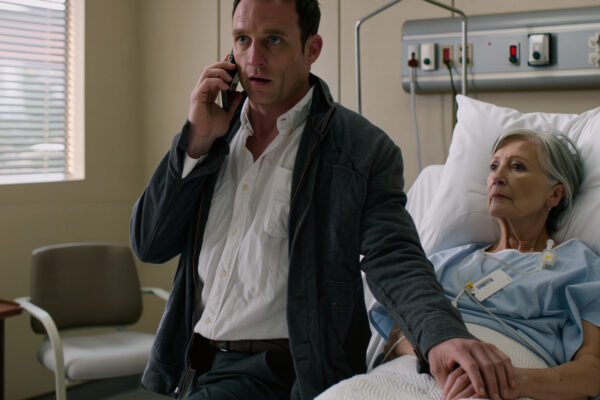
At the hospital, everything became fluorescent lights, forms, questions, and waiting. They took Maya for scans and evaluation while Daniel and I sat in clothes that still smelled faintly of chlorine. Someone gave me a blanket.
I could not remember who. On the chair beside me was a clear plastic bag containing the things they had removed from Maya before testing. Her earrings, a hair tie, and the blue and white friendship bracelet she had been wearing all summer.
I stared at that bracelet until the colors blurred. That morning, Maya had been annoyed because I told her to put sunscreen on twice. That afternoon, she had complained that we bought the wrong lemonade.
Normal 13-year-old problems. I wanted them back so badly. It hurt. Daniel sat beside me with his elbows on his knees. I should have stopped him sooner, he said. I looked at him.
No, I saw where it was going. So did I. He turned toward me. That was the sentence that broke something open inside me. So did I. Not the shove.
I had not known Derek would shove her. If I had believed for one second he would put Maya in physical danger, I would never have let him near her. But I had known where the argument was going.
I knew Dererick hated being challenged. I knew Maya hated the way he spoke to her. And I had still looked at my daughter and silently asked her to make it easy.
My phone had been vibrating for several minutes before I checked it. There were messages from relatives who had been at the barbecue and others who had already heard about it. Then my mother called.
I almost ignored it. Daniel said, “You don’t have to answer, but I did.”
“Rachel,” Elaine sounded breathless.
“How is she?”
“We don’t know yet.”
“Oh, God.”
Her voice cracked, and for a moment, she was simply Maya’s terrified grandmother. Then she said, “Derek is beside himself.” I closed my eyes.
“Mom, I’m not defending him. I’m not. I just want you to know he keeps saying he never meant for her to fall. They’re evaluating my daughter for a brain injury.
I know. I know, honey. Then right now I don’t care what Derek needs me to know. Silence. He says she stepped backward when he reached for her. My eyes opened.
That was already different at the pool. He had said he barely touched her. Now he had reached for her. Mom, I saw him shove her. I’m only telling you what he said.
No, you’re telling me because you want there to be a version where this becomes less awful. Elaine started crying. I hated hearing it. My entire life, my mother’s distress had been a signal that I needed to fix something.
But there was nothing I could fix for her without abandoning what had happened to Maya. I have to go. Please call me when you know something. I will. When the doctor finally came to us, I stood so fast the blanket fell to the floor.
Maya had sustained a concussion and needed continued observation. The evaluation had not shown the catastrophic injury I had spent the previous hours imagining, but the doctor was careful with his reassurance. Maya had lost consciousness, remained confused afterward, and would need rest, monitoring, followup, and a gradual return to normal activity.
Relief hit me so hard I cried before he finished speaking. Daniel wrapped an arm around me.
“She’s going to be okay,” I asked.
“We expect her to recover,” the doctor said.
“But recovery from a concussion can take time. Headaches, fatigue, difficulty concentrating, sensitivity to light. Those can happen. If anything worsens, you bring her back immediately.” It was the first good news we had received.
It did not make what happened small. When Maya was alert enough for us to sit with her, she looked exhausted. Her voice was soft and the lights bothered her, so the room stayed dim.
She looked at Daniel first, then me. Is Uncle Derek here? No, I said, her shoulders relaxed. That tiny movement told me more than any speech could have. I sat beside her.
What do you remember? She frowned. The barbecue. He kept asking me to get things. You remember walking toward the house? Yes. Her fingers tightened around the blanket. He followed me.
Then she shook her head after that. It’s weird. I remember him being mad. Then I remember you saying my name. I don’t remember falling in. That’s okay. Did I slip?
My chest tightened. No. She watched me. Did he push me? I could have softened it. I could have said there was confusion. I could have protected her from the fact for another day.
But she had already spent enough time around adults who made reality softer for Derek. Yes, I said. He pushed you. Her eyes filled. I told him no. I know.
Maybe I shouldn’t have said it like that. I felt something inside me turn cold and clear. Maya, look at me. She did. You were allowed to say no. But he got mad because he was allowed to be mad.
He was not allowed to put his hands on you. A tear moved down the side of her face. I wiped it away carefully. I should have stopped it earlier, I said.
She frowned. You jumped in. I don’t mean the pool. She was quiet. I was not ready to explain everything I was beginning to understand, but I knew I could not make her carry my guilt either.
You told me before that you didn’t like the way he talked to you, I said. Sometimes I told you to ignore him because I wanted everyone to get along. That wasn’t fair to you.
Maya looked down at the blanket. He always says I’m dramatic. I know. And mouthy. I know. You used to tell me he was joking. There are moments when apologizing properly means resisting every urge to explain yourself.
So, I did not tell her I had been trying to protect the family. I did not tell her Derek had always been difficult. I did not tell her I had never imagined this.
I said I was wrong to dismiss it. She nodded once. That hurt more than if she had rushed to forgive me, and it should have. Later that evening, one of my cousins called Daniel.
Another relative had spoken with the police who responded after the ambulance left. Different people had seen different pieces of the confrontation. One had heard Dererick order Maya to get the burger and heard her refuse.
Another saw him follow her toward the pool. A third saw his hands make forceful contact with her shoulder just before she went backward. Nobody had a perfect view of every second.
They did not need one. The accounts overlapped where it mattered. Derek had not tripped into Maya. Maya had not simply wandered backward into the pool. He had followed a 13-year-old who refused him, put his hands on her in anger, and shoved her.
The consequence had been worse than he intended. That did not transform the choice into an accident. Sometime after midnight, while Mia slept, I remembered a dinner from the previous winter.
Derek had teased Maya about a school presentation until she told him to stop. He called her sensitive. When she left the table, I followed her into the kitchen and told her, “You know how your uncle is.
Don’t let him get to you.” At the time, I thought I was teaching resilience. Now, I heard the real lesson hidden inside my words. His behavior is fixed. Yours must adjust.
Then, I remembered a birthday when Derek told Maya to move out of his chair at my house. She refused because she had been sitting there first. He made such a production of it that my mother finally whispered, “Maya, sweetheart, just let him have it.”
She did. Everyone relaxed. We called that piece. I remembered Derek calling her mouthy when she corrected him about something. I remembered Maya asking me afterward why adults could say rude things and then call kids disrespectful for answering.
I had laughed because the question was sharp and funny. I had not answered it. None of those moments meant I should have predicted the pool. I refused to rewrite myself into someone who knowingly placed Maya in danger.
That would have been another kind of dishonesty. But I could finally admit something else. The shove came from a pattern I had spent years helping everyone tolerate. Derek became unpleasant when challenged.
My mother became anxious when Derek was unpleasant. I became accommodating when my mother became anxious. Then Derek learned that enough discomfort could move everyone else out of his way.
By morning, my guilt had changed shape. It was no longer asking me to punish myself. It was asking me to stop repeating the pattern. Maya came home after the doctors were satisfied that she was stable enough to recover there with close supervision and follow-up care.
For the first few days, our house became quiet in a way it had never been before. Curtains stayed partly closed because bright light bothered her. She slept more. She complained that reading made her head ache.
Daniel kept a written schedule of medication instructions and follow-up information because neither of us trusted our exhausted brains. The barbecue remained outside like a scene abandoned in the middle of a sentence. Daniel cleaned most of it the next morning.
He left Derrick’s patio chair where it was. I did not ask why. Derek called me 12 times in three days. I answered none of them. Then he sent a message.
I know you’re angry. I am sorry Maya got hurt. I would never hurt her on purpose. I just need you to hear my side before everyone turns me into some monster.
I read it twice. The sentence that mattered most was not the apology. It was his side. Even now, Derek believed the emergency was partly about controlling how he was perceived.
My mother came over that afternoon. She brought soup Mia had always liked and left it in the kitchen before asking if she could see her.
“I asked Mia first.”
“Grandma,” she said.
“Yes.”
“Is Uncle Derek with her?”
“No.”
“Then okay.”
Elaine sat beside Maya for 20 minutes. She did not mention Derek. She stroked Mia’s hair, told her she loved her, and cried only after she came back downstairs. I made tea.
Neither of us drank. For a while, we sat at the kitchen table without speaking. Then she said, “He wants to apologize to her.”
“No, Rachel, I didn’t say today.”
“No,” she looked wounded.
“Can we at least talk about it? We are talking about it. He’s your brother.” There it was. The sentence I had heard in different forms my entire life. You only have one brother.
Family is family. Don’t let one fight ruin everything. I put both hands around my untouched mug. And Maya is my daughter. I know that. Then stop saying he’s my brother.
As if that settles something. Elaine’s eyes filled again. He did something terrible. I know he did. But Rachel, he didn’t mean for her to crack her head on the pool.
He didn’t mean for her to be unconscious. He’s sick over it. I believe he didn’t mean for that to happen. She blinked, surprised by my agreement then. But he did mean to shove her.
My mother went still. That is the part everyone keeps trying to step around. He followed a child because she wouldn’t fetch him food. He put his hands on her because she told him no.
The fact that he didn’t calculate exactly where she would fall does not erase the thing he chose. He lost his temper. Yes. One terrible second. No, Mom. The shove was one terrible second.
Everything that taught him he could demand obedience and make everyone else responsible for his temper took years. She stared at me. I could see the argument she wanted to make and the memory stopping her from making it.
All those birthdays, holidays, dinners, all the times she had asked me to be reasonable because Derek would not be. I love both of you, she whispered. I know. I can’t choose between my children.
I’m not asking you to. Then what are you asking? Stop asking me to choose Derek’s comfort over Maya’s safety. The room went silent. From upstairs came the faint sound of Maya moving around in her room.
My mother looked toward the ceiling. What happens now? Derek does not come here. He does not see Maya. He does not call her. He does not send messages through you.
If authorities ask me what happened, I tell the truth. If relatives ask, I tell the truth. I am not changing my account to make this easier for him. Elaine pressed her lips together.
You’re talking like this is permanent. I am talking about what is permanent right now. He has no access to my daughter. And if he changes, then changing will be good for him.
It will not create an obligation for Maya. My mother cried quietly. I wanted to move around the table and hold her. Eventually, I did, but I did not change my answer.
That was new for me. A week later, Derek came to the house anyway. Daniel saw him through the front window and asked me if I wanted him to handle it.
For years, I might have said yes. Daniel had always seen my brother more clearly than I did. This time, I said, “Stay close, but I need to do this.”
I stepped onto the porch and closed the door behind me. Derek looked exhausted. There were dark circles under his eyes. For one dangerous second, he looked like my little brother again, the boy who used to follow me to school because he was afraid of crossing the busy road alone.
Then he spoke. Are you seriously not going to let me see her? The feeling passed. You shouldn’t be here. I’ve apologized a hundred times. You’ve apologized that she got hurt because I’m sorry she got hurt.
Are you sorry you shoved her? He rubbed both hands over his face. Rachel, come on. You were there. She was mouththing off. I reached for her. She jerked away.
No. What do you mean no? I mean, stop changing the sentence. His jaw tightened. I barely pushed her. You pushed her. I didn’t know she was going to hit the edge.
I know. I would never do that to a kid intentionally. You intentionally shoved a kid. He stared at me. The distinction made him furious because it left him nowhere comfortable to stand.
He wanted intent to be one single thing. If he had not intended the worst outcome, he wanted that to mean he had intended no harm at all. But human responsibility does not work that way.
I lost my temper, he said finally. Yes, for one second. Yes. So I’m supposed to lose my family forever. There it was again. His consequence centered in the story, his loss, his fear, his reputation.
Maya asked me if saying no made this happen, I said. Derek looked away. She thinks maybe if she’d just gotten you the burger, she wouldn’t have ended up in the hospital.
I never said that. You didn’t have to. You taught her that her refusal was something you were entitled to punish. His face hardened. That’s not fair. No, it isn’t.
For once, I let the words sit there without rescuing him from them. He glanced toward the front window. Can I at least tell her I’m sorry? No, Rachel. She does not owe you the chance to feel forgiven.
He stepped back as if I had slapped him. I felt grief then. Real grief. Not because I doubted the boundary, because boundaries do not erase love on command. Derek was still my brother.
I still remembered Christmas mornings and childhood jokes and the summer he broke his arm and insisted only I could sign his cast first. Those memories were true. So was the pool.
Loving the person he had been to me did not require giving the person he was now access to my child. You need to leave. I said he did. There were consequences beyond our family.
Statements were taken. The witnesses told what they had seen. Medical records documented Mia’s injury. I cooperated honestly and refused to speculate beyond what I knew. I did not ask anyone to exaggerate.
I did not need them to. The truth was enough. Some relatives thought I was too harsh. One told me Derek had already learned his lesson. Another said families survived worse things than this.
For the first time in my life, I did not treat disagreement as an assignment. I stopped explaining after I had said the truth once. Other relatives surprised me. A cousin admitted she had spent years avoiding arguments with Derek because it was easier to let him win.
An aunt said she had watched all of us rearrange ourselves around his temper and never questioned what that was teaching him. None of those admissions changed what happened. They did change the story I told myself about it.
This had not happened because Maya was uniquely disrespectful. It had happened because Dererick met a boundary he could not bully out of existence. Mia’s recovery was slower than she wanted.
That frustrated her more than anything. She hated being told to rest. She hated that screens sometimes made her headache worse. She hated missing activities and having adults ask whether she was feeling normal yet.
One afternoon, I found her sitting on the edge of her bed with the clear hospital bag beside her. She had taken out the friendship bracelet.
“Thought I lost this,” she said.
“I kept it.”
She turned it between her fingers. For several seconds, I thought she might hand it to me. Instead, she slid it over her wrist herself. The gesture was so ordinary that I had to look away before I cried.
A few weeks later, she returned to school on a fuller schedule. The headaches became less frequent. Her energy came back in pieces, then in longer stretches. She laughed more.
The first time I heard her arguing with Daniel about cleaning her room, I stood in the hallway smiling like an idiot. Normal problems were returning. My mother changed more slowly.
At first, she still tried to tell me how badly Dererick was doing. I stopped her every time. Mom, you can love him. You can support him, but you cannot use his pain to pressure Maya.
And eventually she stopped bringing messages. She never stopped loving Derek. I never asked her to. What changed was that she finally stopped treating reconciliation as something Maya owed the family.
One evening she said, “I keep thinking about all the times I told you to keep the peace.” I waited. I thought I was keeping my family together. So did I.
She looked down at her hands. Maybe I was just teaching everyone who had to bend. It was not a perfect apology. It was enough truth to begin somewhere. There was another change inside our house that took me longer to notice.
Daniel and I stopped treating extended family conflict as something I had to manage alone. For years, he had stepped carefully around Derek because he believed respecting meant letting me decide how to handle my brother. After the pool, we finally talked about the difference between respecting someone’s family ties and staying silent when those ties begin hurting your child.
I should have said more before, Daniel told me one night after Maya had gone to bed. So should I. I’m not saying that to blame you. I know. He looked toward the stairs.
I kept thinking if I pushed too hard about Derek, you’d feel like I was making you choose between me and your family. I understood because I had been afraid of exactly that choice. But we were already choosing, I said.
Daniel nodded. Every time we stayed quiet, every time I asked Maya to ignore a comment, every time we let a gathering continue because confronting Derek felt too disruptive, we had made a choice. It just had not felt like one because it preserved the familiar arrangement.
We agreed that our home needed rules that did not depend on whether enforcing them made relatives uncomfortable. No adult would demand obedience from Maya simply because of age or family title. If she said someone’s behavior made her uncomfortable, we would listen before explaining, and nobody would regain access to her through guilt, pressure, or someone else’s forgiveness.
Those rules sounded obvious when we said them aloud. That was what embarrassed me most. Sometimes the truths you fail to live by are not complicated truths. They are simple ones you keep making exceptions to for people you love.
Months after the barbecue, warm weather returned. The backyard had been used again by then, but the pool remained complicated. Maya would sit on the patio sometimes, never very close to the edge.
Derek’s old chair was still there for a while. At first, I hated looking at it. It seemed to announce his absence every time I stepped outside. Then one Saturday, Daniel moved it against the fence while cleaning, and nobody moved it back.
The empty place at the table stopped looking like damage. It began to look like room. One afternoon, I carried lemonade outside and found Maya standing barefoot beside the pool.
My entire body tightened before my mind could stop it. She noticed, “Mom, I’m okay. You’re doing the face. What face? The face where you’re pretending you’re not worried so hard that you look more worried.
I laughed despite myself. She looked down at the water. I wanted to tell her she did not have to go near it. I wanted to tell her she was safe.
I wanted to offer my hand. Instead, I stayed where I was. This choice belonged to her. Maya sat on the edge. For a moment, she simply watched the sunlight move across the surface.
Then she lowered one foot into the water, then the other. She inhaled sharply. I did not move. After a while, she kicked gently, sending little circles across the pool.
“It’s cold,” she said.
“It always is,” she smiled.
“Not because everything was fixed, not because she had forgotten, not because our family had returned to what it was before. It never would. That was the lesson I had resisted for most of my life.
Keeping a family intact is not the same thing as keeping a family safe. For years, I thought peace meant nobody leaving the table angry. I thought maturity meant being the person who gave in first.
I thought love meant making room for people even when they repeatedly made everyone else smaller. Now I knew better. Sometimes peace is an empty chair. Sometimes love is a locked door.
Sometimes protecting your child means accepting that another adult will call you unforgiving because you finally stopped asking the child to forgive what the adult refuses to fully own. Maya sat beside the water wearing the same blue and white bracelet she had worn that day. She was still healing, but she was laughing again.
She was still cautious, but the caution belonged to her now. So did the distance she kept. So did every step closer. I watched her without telling her what to do.
And when she slipped off the edge into the shallow end, it was because she chose to. She surfaced immediately and pushed wet hair from her face.
“Mom, seriously,” she said, laughing.
“You can breathe.”
So I did. Behind us, Derek’s chair remained empty. For the first time, it did not look like a broken family. It looked like space. And for the first time in my life, space felt peaceful.