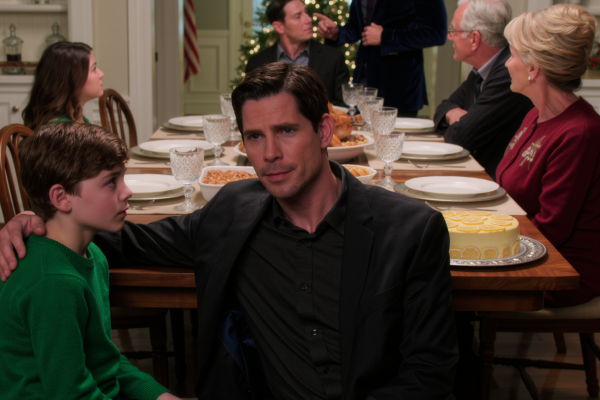
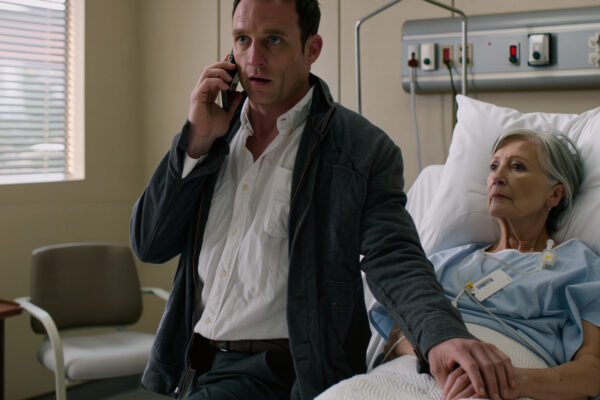
I resigned eight minutes after seeing my salary cut, and when the chairman hurried over and said, “It was just an act,” I calmly handed him my badge and replied that eight minutes had already been more than enough to show me exactly where I stood.
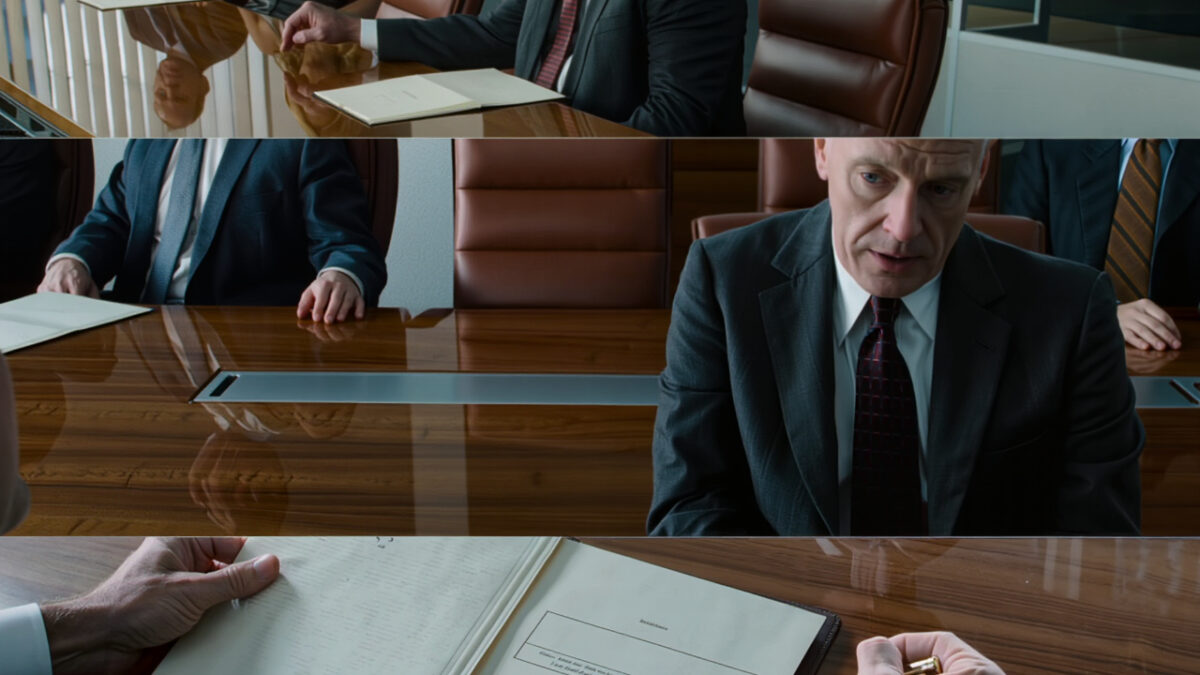
The compensation plan landed in front of me at 7 minutes past 3:00 on a cold Thursday afternoon. My annual salary would be cut by 45%. My performance bonus would vanish completely.
My title would change from principal machine learning architect to senior technical adviser, a position stripped of direct reports and stripped of authority over the medical imaging platform. I had spent six years building from scratch. Then I reached the final page of the document.
The company wanted me to sign a patent declaration naming the chairman’s daughter as the primary inventor of our flagship model release system. Across the conference table, Khloe Thorne smiled as though she had already won the war. She suggested I view this as an opportunity, adding that not everyone gets to help launch the next generation of corporate leadership.
I looked at her, then turned my gaze to her father. Grant Thorne sat at the head of the polished walnut table in a tailored charcoal suit, one finger rhythmically tapping the mahogany wood. At 61 years old, he had spent three decades expanding Voxalare Health from a regional radiology software vendor into an enterprise valued at nearly $2 billion.
He was famous for making ruthless decisions rapidly and demanding that everyone else mislabel that impulsiveness as executive decisiveness. Khloe had joined the company 12 weeks earlier. Her background was strictly in venture capital marketing and brand strategy.
She had never shipped a regulated medical product, had never sat through a complex federal compliance audit, and had never spent a single night in a hospital server room while emergency physicians waited for a stroke triage model to come back online. Yet, the formal legal document in front of me described Khloe as the principal architect and strategic inventor of Vanguard, our real-time emergency radiology platform.
I had written the original model architecture on a whiteboard in a windowless laboratory 6 years earlier. I had personally directed the clinical validation trials, designed the automated rollback mechanism, constructed the audit trail architecture, and executed every controlled release that entered an active hospital environment. My signature was on every laboratory notebook, every version control commit, every provisional patent filing, and every regulatory compliance record.
Khloe had merely attended two marketing demonstrations for prospective investors, sitting in the back of the auditorium, taking notes for social media posts. Lyall Preston, our chief financial officer, folded his hands neatly over his leather folder. He declared that my current compensation structure was out of line with our restructured corporate hierarchy.
He asserted that Voxalare Health had provided me with the institutional platform to do exceptional work and therefore the board believed the corporate entity should receive appropriate inventorship recognition while holding all commercial rights. I responded calmly that commercial rights were already ass signed under my existing employment agreement, but inventorship under federal patent law was entirely different.
Khloe leaned back in her chair and remarked condescendingly that an obsession with whose name appears first on paper is precisely why senior engineers struggle to transition into executive roles. Several vice presidents around the table lowered their eyes, remaining completely silent. Grant Thorne finally spoke, his tone heavy with manufactured authority.
He urged me not to make the situation emotional, claiming that Khloe was stepping in to lead the next phase of corporate growth. He added that because I understood the underlying technology better than anyone else, management expected me to support her transition, accept the revised compensation package, and help her succeed so everyone could win.
I turned to Nolan Briggs, our chief people officer, and asked directly if the formal separation option remained active under my contract. Nolan’s eyes shifted uneasily toward the chairman. The revised packet contained two explicit options.
I could accept the reduced compensation and demoted authority or I could elect immediate execution of the company’s prepared separation package. The second option existed solely because Voxil Care’s corporate legal team recognized that a 45% salary reduction and a material loss of authority would legally trigger the good reason clause in my executive contract.
Management had foolishly assumed I would never possess the courage to exercise it. Nolan cleared his throat and acknowledged nervously that technically the option was valid. I stated simply that I was choosing the separation option.
From my leather folder, I removed a document I had prepared the previous evening. It was not the salary reduction agreement. It was my executed election of separation for good reason.
my signed return of company property checklist and formal notice that my de delegated model release authority would terminate simultaneously with my employment. I had also attached a preservation request demanding that the legal department archive all patent notebooks, source code logs, board communications, and internal emails regarding the proposed change in inventorship.
Lyall stared at the first page in disbelief. Khloe’s confident smile vanished. Grant stopped tapping his finger against the table. I explained that I had received the proposed draft package 24 hours earlier and had my personal attorney review it that night.
Under the terms of my agreement, the separation option became legally binding the moment management acknowledged receipt. Nolan’s digital signature was already a fix to the base offer. Nolan looked as though the floor had given way beneath his feet.
He reached out to touch the paper, asking if I was truly resigning on the spot. Khloe leaned forward, her voice rising in frustration. She asserted that I could not simply walk out in the middle of a regulated hospital deployment.
I reminded her that over the past 18 months, I had submitted three separate succession plans to the board. Two had been rejected as unnecessary administrative overhead, and the third had been postponed until after our upcoming financing round. Voxalare Health had chosen deliberately not to train or qualify a secondary release authority.
Grant’s expression hardened into anger. He declared that Vanguard belonged to Voxalare Health. I replied that the proprietary code, the hospital contracts, and the server infrastructure belonged to the company, but my personal regulatory credential and professional engineering license did not.
Lyall frowned, repeating the word credential with evident confusion. That single word confirmed that executive leadership had never understood the regulatory framework holding their business together. For the past three years, Vanguard had operated under a strict controlled model change protocol mandated by federal health authorities.
Every clinical model update required two separate cryptographic signoffs. one from Voxalare’s internal quality assurance group and one from a named model release authority whose credentials had been vetted and accepted by our partner hospitals. I was Voxalare’s sole qualified release authority.
That authority was not a secret password. It was a personal professional credential tied to documented competency, clinical training, and an encrypted hardware token. When my employment terminated, Voxalare’s own automated security protocols mandated the immediate revocation of that hardware token.
The company could eventually nominate another engineer, but that individual would need to complete a comprehensive competency review, undergo quality board approval, and receive formal acceptance from every hospital partner before issuing a single controlled release. I had warned Grant and the board about that single point of failure six separate times in writing.
Grant waved his hand dismissively, asserting that the company could easily process a credential transfer within a few hours. I informed him that doing so would require significant time depending entirely on whether management chose to follow the transition framework I had submitted 8 months ago. Ky demanded that Nolan reject the separation papers.
Nolan looked down at his laptop screen and explained quietly that the company had issued the binding offer. My election was legally valid and the offboarding workflow had already been triggered automatically by the system. Electronic notifications began chiming across the conference table.
My formal notice had activated the automated offboarding system. Information security had received the termination timestamp. Quality Assurance had received the authority revocation notice. Harbor Medical Center, our largest clinical partner, had received the mandatory change control alert required under our service contract.
No files had been deleted, no code had been sabotaged, and no servers had crashed. The system was executing the exact safety protocols Voxal Care’s lawyers had designed. Kloe scanned her tablet in panic, demanding to know why Harbor Medical Center had received an automated notification.
I answered that under our clinical agreement, the hospital was legally entitled to immediate notice whenever the designated release authority was no longer employed by the vendor. Grant demanded to know if the termination was truly effective. Nolan opened his administration portal and confirmed that the election was logged at 11 minutes past 3:00 and the offboarding process was active.
Grant ordered him to reverse the process immediately. Nolan responded that while he could cancel pending administrative steps, he could not retroactively invalidate an executed legal separation without my written consent. Grant stood up abruptly, his commanding presence attempting to regain control of the room.
He ordered me to sit down, stating that the meeting was not finished. I looked at him and replied that for me it was completely finished. I handed my corporate laptop, encrypted smartphone, security badge, hardware release token, and laboratory keys to Nolan.
Each item was verified against the property return form. At 15 minutes past 3:00, Nolan signed the final property receipt. Exactly 8 minutes had elapsed since Lyall placed the salary reduction proposal in front of me.
My six years of building Voxalare Health were over. I picked up my personal briefcase containing my notebook reading glasses and a photograph of my wife Sarah and our 11-year-old son Toby Klo blocked the doorway as I walked toward the exit. She sneered that I was making a career-ending mistake.
I replied that if so, she would no longer have to worry about my presence. She claimed I was delusional if I believed hospital leadership would follow me, asserting that all institutional relationships belonged exclusively to Voxal Care. I noted that I had not asked anyone to follow me anywhere.
She snapped that I would crawl back within weeks once I realized how small the medical software industry truly was. I looked at her with complete calm. She had anticipated anger, an outburst or threats that she could weaponize against me.
Instead, I advised her to ensure the quality team froze the pending deployment of our version 4.8 as it had not completed its required clinical drift review. I then stepped around her into the hallway. By the time the elevator reached the ground lobby, my corporate accounts had been disabled.
At the security desk, I signed the final exit log and received a printed separation certificate. The glass doors opened onto a cold afternoon. I had taken three steps onto the sidewalk when Grant called my name.
He rushed out of the lobby accompanied by Lyall and Nolan while Khloe followed at a distance. Grant lowered his voice and claimed that the compensation reduction had merely been theater. He explained that Voxilare had a critical venture financing meeting scheduled for the following morning and the board needed Khloe to appear fully empowered as the leader of the product line.
He claimed the pay cut was an aggressive opening negotiating position never intended to be permanent and that Lyall could have restored the difference through a performance retention bonus. I asked if the false patent declaration was also intended as theater. Grant’s jaw tightened as he replied that it was strategic corporate positioning, claiming no one expected me to treat every draft line as a permanent ultimatum.
I held up my printed separation certificate and stated that this document was entirely final. Grant stared at the corporate seal and Nolan’s official signature. For the first time in 30 years, the chairman looked completely powerless.
He asked me to return upstairs so we could unwind the paperwork. I replied that he could not pretend I had never been terminated simply because the real world consequences had arrived faster than his executive board anticipated. My authority was revoked.
My access was closed. And if Voxilare required transition services, their legal counsel could contact my lawyer. Khloe stepped beside her father and accused me of planning the entire outcome.
I told her I had simply prepared for the choice management presented to me. Grant accused me of wanting the hospital pilot to fail. I responded that I wanted patient safety protected, which was precisely why I had warned them not to push version 4.8 without validation.
Grant stepped closer and asserted that I owed the company after everything Vxulcare had done for my career. His words carried six years of corporate entitlement. I thought of the countless nights I had slept on a cot outside the server room and how my wife Sarah had brought me clean clothes while our son Toby grew up expecting me to miss his Saturday soccer games.
Voxilare had paid my salary, but it had also received every hour it purchased, plus thousands of uncompensated hours it had learned to extract for free. I stated that my legal obligations were complete and walked toward a waiting sedan. As the car pulled away from Voxil Care’s glass tower, my personal cell phone rang from an unfamiliar local number.
I answered and spoke to a man who identified himself as Gavin Cross, chief executive officer of Apex Health Systems. I recognized the company immediately. Apex was a respected competitor known for building robust physician trusted clinical software rather than flashy investor demonstrations.
Gavin stated that news of my sudden departure had already spread across the city technology network. I clarified that I would not discuss Voxalare’s confidential trade secrets. Gavin laughed softly, stating he was calling about my engineering reputation, not Voxare’s secrets.
He mentioned that patent attorneys had already spread word of Voxal Care’s attempt to alter inventorship records and invited me to meet at his Cambridge office that evening to discuss an executive role building a transparent model governance framework. When I arrived home at 4:00, my wife Sarah was sitting at the kitchen island helping Toby construct a model bridge out of wooden sticks for a school project.
Sarah took one look at the leather briefcase in my hand and immediately recognized the shift in my posture. She looked into my eyes and said quietly that I had finally done it. I confirmed that I had left Voxalare Health.
Toby set down his glue bottle and asked if my departure meant I would be home for his soccer game on Saturday. His innocent question hit me harder than any insult from the board meeting. I smiled, pulled him into a brief hug, and promised him that I would be on the sidelines this Saturday.
He grinned with genuine relief and returned to his wooden bridge, perfectly satisfied with the trade. Once Toby went upstairs to finish his homework, Sarah asked for the complete story. I walked her through the entire afternoon.
the 45% salary reduction, the attempted seizure of my patent rights, the 8-minute separation execution, and Grant Thorne chasing me into the street to claim the entire betrayal was merely corporate theater. Sarah listened intently without interrupting. When I finished, she went to the refrigerator, pulled out a bottle of sparkling water we typically saved for celebrations, and poured two glasses.
She raised her glass and toasted to refusing to sign a lie. We touched glasses and I confessed that while I felt angry about their disrespect, I was also relieved to be free of their toxic environment. I informed Sarah about my upcoming 9:00 meeting with Gavin Cross at Apex Health Systems.
She raised an eyebrow, surprised by how rapidly industry competitors had responded to my exit. She admitted that while we had mortgage payments and college savings to consider, our financial reserves could sustain us while I evaluated legitimate opportunities. She reminded me that Voxilare had spent years conditioning me to translate personal exhaustion into technical solutions and urged me not to decide my entire future in a single night.
Her steady support grounded me completely as I prepared for my evening discussion in Cambridge. At 9:00, I entered the headquarters of Apex Health Systems. Unlike Voxalare’s opulent glass tower, Apex occupied a renovated brick building with exposed wooden beams, quiet working areas, and an operational dashboard displaying real-time hospital validation metrics.
Gavin Cross met me personally in the lobby without an administrative entourage. At 46 years old, broad-shouldered and dressed in a comfortable sweater, he exuded practical technical leadership. He led me directly into an engineering laboratory where six software developers were analyzing realtime stroke imaging workflows.
Gavin handed me a tablet displaying their Aegis platform architecture, explaining that while Apex possessed brilliant research models, their primary growth bottleneck was model governance and regulatory compliance at scale. Gavin acknowledged that Voxil Care Health had built its entire operation around a single indispensable architect which created an unacceptable operational risk for hospital clients.
He stated explicitly that he was not seeking to hire me as a single point of failure, but rather to design an enterprise release framework that eliminated single points of failure entirely. He then handed me a formal term sheet. The proposed base salary was nearly three times the reduced compensation Voxilare had offered me.
It included a significant signing bonus, equity options, full executive authority over a new model governance division, and a six-page intellectual property agreement guaranteeing that inventorship would strictly reflect actual technical contribution under federal law. As I reviewed the agreement, my phone vibrated with a series of urgent text messages from Mason Ramsay, my former engineering manager at Voxalare.
Mason reported that Voxil Care’s pending release of version 4.8 had just failed automated hospital validation checks. In a desperate attempt to meet their financing deadline, Khloe Thorne had ordered the engineering team to bypass the failure and push the update using her newly created executive credential. However, Voxilare’s automated compliance system had rejected her signature because executive status did not constitute technical qualification.
In response, Dr. Evelyn Miller, chief digital health officer at Harbor Medical Center, had formally suspended all new Voxilare model deployments until the regulatory governance gap was resolved. Mason asked if I could provide an emergency override password or troubleshooting instructions to unblock their deployment. I set the phone face down on the table.
Gavin watched me quietly without prying. I explained to Mason via text that I no longer possessed legal authority or system access, and advised him strictly to maintain stable operations, preserve all audit logs, and refused to sign any fraudulent reclassification documents. Returning to my discussion with Gavin, I requested that my contract include a formal clean room conflict protocol to ensure I would never handle Voxalare code or trade secrets.
Gavin agreed without hesitation, stating that ethical governance was the foundational requirement of Apex’s corporate philosophy. On my first official morning at Apex Health Systems, I completed standard security onboarding and signed a binding declaration confirming I had brought no proprietary files or intellectual property from my former employer. General counsel placed a formal conflict wall folder on my desk outlining strict boundaries regarding Voxalare Health.
Shortly thereafter, Gavin introduced me to the Aegis platform engineering team. Among them was Paige Ellis, a senior security architect known for her uncompromising scrutiny of system vulnerabilities. During our initial architecture review, Paige challenged my proposed emergency override protocol, demonstrating that concentrating final approval in the governance lead could allow an individual to bypass peer review during crisis situations.
Rather than becoming defensive, I thanked Paige for identifying the flaw and worked with her to restructure the process around four distinct independent roles. Model owner, validation lead, security custodian, and release authority. Under this new architecture, no single executive or engineer could approve a model deployment independently, and every emergency action created an immutable auditable log visible to hospital oversight committees.
Paige’s skeptical expression softened into professional respect. By midafternoon, Voxalare Health sent an urgent request for emergency recovery consulting to Apex, offering a massive daily rate for my personal intervention to resolve their suspended hospital deployment. Gavin and I reviewed the request and responded with a strict questionnaire demanding full disclosure regarding who had attempted the un unauthorized deployment of version 4.8.
At 4:00 on Wednesday, Dr. Evelyn Miller convened a joint video conference between Harbor Medical Center, Voxalare Health, and Apex Health Systems. Grant Thorne and Kloe appeared on screen alongside their legal counsel, attempting to frame the deployment failure as a temporary administrative glitch caused by my sudden exit.
Dr. Evelyn Miller cut through their excuses with surgical precision, asking Voxalare’s quality team directly who had authorized the attempted deployment of an unvalidated model and who had ordered its improper reclassification as a minor patch. Voxilare’s quality director admitted on the record that the reclassification had been ordered by executive leadership over formal technical objections.
Dr. Miller noted the admission for the hospital’s legal record and turned her attention to Apex Health Systems. She asked if Apex could construct a controlled demonstration of the Aegis platform within 48 hours in Harbor Medical’s simulation environment operating strictly without Voxalare trade secrets. I confirmed that our team could deliver a complete auditable simulation demonstrating real-time stroke triage, automated rollback protocols, and multi- signature governance.
Immediately after the call ended, Khloe Thorne phoned my personal number, demanding to know why I had allowed Dr. Miller to interrogate her. I informed her that hospital safety protocols were design constraints, not personal attacks, and ended the call to focus on our upcoming demonstration. For the next 48 hours, our engineering team worked tirelessly to prepare the Eegis simulation.
Paige Ellis led the security validation. Junior engineer Carlos Ortega refined the real-time alert routing and former Voxalare quality manager Mayanire verified compliance protocols. We subjected the platform to extreme stress testing, simulating network latency, data corruption, and hardware failures.
When our team presented the live demonstration at Harbor Medical Center on Friday afternoon, the Eegis platform performed flawlessly. When Paige introduced a simulated threshold corruption, the system automatically quarantined the update and maintained stable clinical operations without human intervention. Impressed by the systems resilience and transparent governance, Dr. Miller awarded Apex a 60-day trial validation contract.
Following the successful demonstration, Voxilare’s board of directors realized they could no longer conceal the operational crisis from their investors. to salvage their impending financing round. The board retained an independent forensic auditing firm to conduct a thorough investigation into the failure of version 4.8 and the inventorship dispute surrounding Vanguard.
Over nine painstaking days, forensic investigators reviewed system logs, server backups, legal correspondence, and internal emails. The final forensic report completely exonerated me of any wrongdoing, confirming that I had deleted no code, altered no settings, and executed my separation in strict accordance with company policy and legal contracts. Furthermore, the forensic audit exposed severe executive misconduct within Voxalare leadership.
System logs revealed that after my departure, Khloe Thorne had instructed a system administrator to reset a quality engineer’s credentials, allowing her to override automated safety blocks and force the unvalidated release of version 4.8 into the hospital network. Additionally, internal email records prove that Grant Thorne and Lyall Preston had knowingly disregarded written warnings from their own patent council, attempting to force the falsification of inventorship records to inflate Khloe’s executive profile for venture capital investors.
Confronted with the damning forensic findings, Voxil Care’s board of directors took swift corrective action. Khloe Thorne was placed on indefinite administrative leave and stripped of all operational authority over medical software products. Lyall Preston was removed from oversight of regulatory compliance and quality budgets.
Nolan Briggs was ordered to report directly to an independent board committee. Realizing they lacked the technical capability to remediate the platform internally, Voxil Care’s board agreed to pay Apex Health Systems $1,800,000 for enterprise recovery and governance transition services. Meanwhile, the Massachusetts Digital Health Collaborative announced a prestigious statewide grant competition worth $180 million to deploy an integrated emergency radiology coordination platform across regional hospital networks.
Voxilare had spent over a year positioning Vanguard as the sole candidate for the contract, relying heavily on architectural proposals I had authored prior to my departure. However, Grant Thorne had previously stripped out essential governance safeguards to reduce short-term development costs. Apex Health Systems submitted a competing proposal based on our Aegis platform featuring multi-ter governance, full clinical auditability, and robust patient data protection.
The final evaluation for the statewide digital health contract took place in a crowded auditorium before a panel of state health officials, hospital chiefs, and medical technology experts. Grant Thorne represented Voxil Care Health, delivering a polished marketing presentation that emphasized corporate history and financial valuation. However, when technical committee members questioned him regarding model governance, failsafe protocols, and clinical drift review mechanisms, Grant stammered and attempted to deflect the questions with vague executive rhetoric.
His inability to answer basic technical questions exposed the fundamental emptiness of Voxalare’s leadership. Gavin Cross and I then presented the Apex Health Systems proposal. I walked the evaluation panel through the Eegis architecture, demonstrating how our transparent governance model distributed release authority across qualified technical professionals prevented executive overrides and guaranteed continuous clinical safety.
Paige Ellis demonstrated our automated compliance logging while Mayanire explained our rigorous clinical validation standards. The evaluation committee was impressed by our emphasis on system integrity over executive convenience. Following a brief deliberation, the state panel unanimously awarded the $180 million contract to Apex Health Systems.
The loss of the state contract shattered Grant Thorne’s remaining influence at Voxal Care Health. Within 48 hours, the board of directors forced Grant to resign as chairman and chief executive officer, replacing him with an independent healthcare leader dedicated to restoring corporate integrity. Under new management, Voxilare formally corrected its patent filings, recognizing my rightful inventorship on all Vanguard platform patents.
Mayanire was appointed as Voxalare’s new official release authority, having completed rigorous compliance training under our transition framework. 3 weeks later, on a bright Saturday morning, I sat on the wooden bleachers of a local community park, watching my son Toby score his first goal of the soccer season. Sarah sat beside me holding a warm cup of coffee as we cheered together from the sidelines.
My cell phone buzzed in my pocket with a notification from Gavin Cross regarding our upcoming hospital deployment schedule. I smiled, slid the phone back into my pocket, and turned my full attention back to the game. I had built a career on technical excellence, defended my integrity against corporate coercion, and proven that real leadership requires no executive theater.
Looking back on those tumultuous weeks, I realized that true professional success is not defined by corporate titles or compliance with unreasonable executive demands. When senior executives attempt to manipulate legal agreements and reduce technical rigor for short-term gain, standing firm on ethical principles and safety protocols is the only viable path forward.
By refusing to sign a dishonest patent declaration and walking away from a toxic environment in eight minutes, I preserved my professional integrity, protected patient safety, and helped build a safer foundation for the entire medical AI industry.