I covered my classmate’s school lunches for two years when neither of us had much, and sixteen years later she had become a billionaire CEO, so when I quietly applied for a job at her company, I never expected her to stop the hiring process, look at my name, and say, “I’ll interview him myself.”
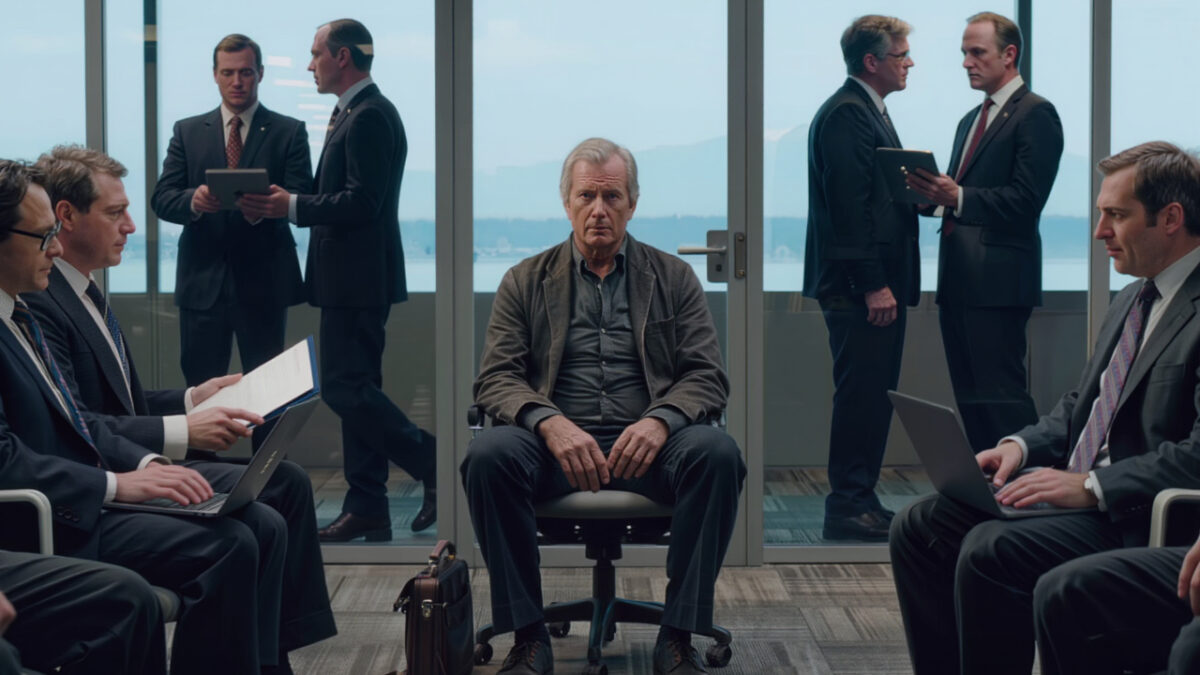
16 years ago, I spent $60 every month keeping a struggling classmate from going hungry in the campus dining hall. I never left a note, and I never attached my name. Now, at 48 years old, I stood in the soaring steel and glass atrium of Strata Core Systems in downtown Seattle with a faded charcoal colored shirt, a scuffed leather briefcase, and an employment record that read like an industrial hazard warning.
Six years of sporadic contract labor. No university pedigree, just an associate credential from an evening polytechnic institute followed by two decades of self-directed distributed systems engineering. And beside my name, in the quiet back channels of the Pacific Northwest technology sector, lingered the toxic residue of Nexus Route Systems, an enterprise freight routing startup where I had once been technical co-founder until allegations of proprietary code theft and unlawful data exfiltration blew my life apart.
The security officer at the front turnstile scanned my guest badge, glanced at the worn seams of my jacket, and pointed toward the north elevators.
“31st floor for systems architecture,” he muttered. I offered a quiet word of thanks and stepped inside. Strata Core Systems was the reigning titan of municipal and logistical grid infrastructure.
Its distributed platform orchestrated container freight yards, regional rail interchanges, critical hospital networks, and automated shipping terminals across 30 states. A decade earlier, it had been a mid-sized regional software vendor. Under its current chief executive, Claudia Thorn, the company had transformed into a public infrastructure giant valued at more than $40 billion.
I knew the operational I knew the operational architecture intimately because I had spent the past 3 weeks dissecting every public patent filing and white paper the firm had ever released. What I did not know, as the elevator glided silently upward, was that Claudia Thorne and I had already shared a history.
On the recruiting floor, 30 candidates waited in tailored suits. Their laps occupied by pristine laptops emblazoned with elite university insignias. A man near the window spoke loudly about his recent tenure as a principal engineer at an international cloud conglomerate.
When my name was called, a human resources business partner named Nadine Ross led me to a small glass intake cubicle. She flipped through my dossier twice. Her pen hovered above my employment chronology.
“Mr. Vance,” she said, her voice clipped and professional, “you are interviewing for a senior systems integration position. Most applicants at this tier bring doctoral degrees or advanced to tenure from tier-one cloud providers. You show an independent consulting gap covering the last 6 years preceded by an abrupt departure from Nexus Route Systems.”
I met her gaze evenly.
“That is accurate.”
Nadine lowered her voice, leaning slightly forward.
“That Nexus Route, the dispute involving proprietary routing algorithms.”
“Yes,” I replied. A heavy silence settled across the table. Six years earlier, Nexus Route had been hailed as a revolutionary logistics pioneer. Then came the devastating claim from my co-founder, Roland Briggs, alleging that an encrypted archive of our core dispatch framework had been transferred from my administrative account to a direct market competitor.
I was never indicted in a criminal court, but in the corporate world, an accusation delivered with sufficient public relations force functions as an execution. Trapped beneath crippling legal expenses while my father, Donald, lay in intensive care battling severe pulmonary complications, I had accepted a confidential civil settlement. I surrendered my 22% equity, signed a strict non-disparagement covenant, and watched Roland Steer Nexus route toward a lucrative buyout while my professional reputation was reduced to ashes.
Nadine closed the folder.
“Why was this background not addressed in your introductory statement?”
“Because the terms of that settlement strictly govern what either party may publicly disclose without violating contractual non-disparagement.”
I explained calmly.
“Convenient.”
She remarked, her tone skeptical.
“It is also the binding legal reality.”
I answered. She exhaled slowly, checking the digital clock on the wall.
“You will be seated in conference room Delta with the other technical candidates. The engineering evaluation panel will assess your competency this is afternoon.” I gathered my briefcase and moved into the candidate lounge.
Among the other applicants was an arrogant Stanford graduate named Conrad who smirked when I mentioned that I had learned systems programming through night classes and production hardware labs rather than an elite private academy. Conrad whispered something to his neighbor, assuming the corporate hierarchy had already preordained our respective futures.
I had once believed that pure technical meritocracy governed the world as well. Then I had learned how swiftly a manufactured narrative could slam every boardroom door shut. A low murmur rippled through the hallway outside.
The entire candidate room suddenly went rigid. Two inch engineers stood up instinctively. Someone whispered, “Thorn is on the floor.” Through the floor-to-ceiling glass partition, a woman in a tailored midnight navy blazer walked briskly along the perimeter corridor flanked by four senior vice presidents.
Claudia Thorn did not carry an imposing physical stature, yet the executives around her naturally calibrated their strides to match hers. She reviewed operational metrics on a slate tablet, delivering concise instructions without breaking her rhythm, Claudia Thorne. I had seen her profile on financial publications and technology journals, praised as the visionary who had built Straitacore into an indispensable utility.
But printed photographs had failed to capture the sharp, perceptive tilt of her brow. They had not captured the deliberate stillness in her amber eyes. Suddenly, Claudia stopped. The senior vice president walking beside her took three additional steps before noticing that the chief executive had halted completely.
Claudia did not answer his query. Her eyes were fixed squarely through the glass partition, locked onto me. Inside my chest, the interview anxiety evaporated, replaced by an intense resurfacing memory from 16 years earlier.
A modest polytechnic annex in South Seattle. An evening campus cafeteria where fluorescent lights hummed over scuffed linoleum. A young 22-year-old woman sitting alone at a corner table with frayed sleeves, diligently reviewing circuit schematics while pretending she was not hungry.
She had watched other students line up for hot meals before counting small change in her palm and quietly returning a sandwich to the rack. Back then, I was 32, juggling night courses while working double shifts at my family’s humble neighborhood diner. We were far from wealthy, but our pantry was always stocked, and I carried spare cash earned from the grill.
The polytechnic campus operated on a prepaid meal card account system tied to student identification numbers. One evening, after noticing her student card left momentarily beside an attendance sheet, I noted the four-digit identifier. The next afternoon, I walked up to the cashier kiosk and deposited $60 into account 0724, instructing the clerk to record the transaction as an anonymous campus grant.
I repeated that deposit every month for two straight years until she completed her degree. I never spoke a word of it. Now, 16 years later, that same student stood on the opposite side of the glass as the billionaire leader of a multinational technology empire.
Claudia said a brief word to her executive cadre, pushed the conference room door open, and stepped inside. The entire room stood in silence. Nadine from human resources appeared behind her looking flustered.
Ms. Thorne, this is the preliminary architecture cohort. The technical evaluation committee is not scheduled until Claudia raised a single hand, her focus never wavering from my face. What is his name?
Nadine consulted her tablet. Julian Vance. A subtle breath escaped Claudia’s lips. The composure of the corporate titan softened by an imperceptible fraction. Julian Vance, she repeated softly. My throat tightened as recognition completed its circuit across 16 years of silence.
Claudia, I said quietly. The entire conference room turned dead silent. Conrad stared with his mouth slightly a gape. I will conduct this candidate’s interview myself. Claudia announced in an even, authoritative tone.
Nadine blinked in astonishment. We can certainly add you to the afternoon panel, Ms. Thorne. No, Claudia stated. I mean right now. Mr. Vance, please bring your materials. I followed Claudia into the private executive elevator.
The two vice presidents who attempted to enter behind us were dismissed with a polite gesture. For 30 floors, neither of us broke the silence as the glass elevator soared above Puget Sound. When the doors parted onto the executive suite, she led me into a spacious corner office overlooking the misty waters of Elliott Bay.
There were no gilded awards or vanity displays on her shelves. Instead, neat rows of system architecture manuals, legal journals, and terminal monitors dominated the space. But on the low credenza beside her desk, sat a small acrylic frame holding an aged, faded plastic meal card with worn edges and a faded magnetic strip.
Claudia noticed where my eyes landed. She picked up the frame and set it on the mahogany table between our chairs.
“Every month for two academic years, $60 appeared in my campus dining balance,” she said quietly. Her voice stripped of corporate armor.
“Same week of the month. Never a sender name.”
“When I asked the bursar office, they told me a quiet student who worked at the diner down the road had deposited it in cash so that an aspiring engineer would not drop out from hunger.”
I offered an embarrassed smile.
“I was 32, working night shifts at my father’s grill. It was not a grand gesture. It just seemed wrong that someone with your brilliance should have to choose between lunch and an education.”
“That $60 kept me in school, Julian,” she answered softly. My father had been crippled in an industrial scaffolding collapse that winter, leaving him unable to work for nearly two years. We were living out of a budget motel room.
If I had dropped out to take a third retail shift, Straight & Arr would never have existed. I have spent 16 years wishing I could say thank you.
“You just did,” I replied. Claudia leaned forward, her expression shifting back to that of a seasoned corporate strategist.
“And now you are sitting in my lobby, 48 years old, applying for an integration engineering slot that sits two tiers below the architecture work you pioneered at Nexus Route. My posture stiffened slightly.
“You know about the allegations.”
“I know what Roland Briggs leaked to the trade press,” she said firmly.
“And I know that corporate litigation settlements are frequently used by ruthless founders to strip technical innovators of their equity. I can draft an executive appointment for you this morning. Principal Infrastructure Fellow.
$320,000 in base salary plus substantial non-dilutive equity grants. It would not be charity. Your early white papers on asynchronous consensus protocols are foundational to the systems we run today.
I looked at the framed meal card, then shook my head. No. Claudia’s brow arched in genuine surprise. You are refusing? If you create an executive post for me because of an old dining account, every director and architect in this building will recognize it as an executive favor, I explained.
Whispers will circulate that the chief executive plucked an applicant out of an intake room to shield him. I spent six years living under the shadow of manufactured lies. I will not rebuild my career on patronage.
Julian, she insisted. I am offering you an overdue runway. 16 years ago, I gave you that lunch money because you needed to eat, not to purchase an executive voucher 16 years later.
I said firmly, “Give me a seat before your standard technical evaluation panel. If my system design fails their benchmark, show me the elevator. If I pass, hire me at the rank I earn on merit.”
She studied me in profound silence for nearly a minute, then reached for a desk console. Nadine, schedule Julian Vance for the comprehensive architecture simulation at 1:00. Full technical panel.
Standard evaluation rubric. Provide no special executive accommodation whatsoever. Understood. At 1:00, I entered the technical assessment theater. The six-person panel was led by Valerie Cruz, StrataCore’s formidable vice president of engineering, alongside senior architects, security specialists, and an operations director named Neil Gallagher.
The moment I saw Neil Gallagher, my instincts sharpened. Six years earlier, Neil had served as a senior operations lead at Nexus route under Roland Briggs. His eyes narrowed slightly as he recognized me across the conference table.
Valerie Cruz presented the scenario. A municipal healthcare network comprising 12 regional medical centers experiencing severe dispatch bottlenecks during peak logistical surges. The objective was to decrease response latency by 25% across 30,000 concurrent transactions without inflating enterprise cloud expenditures.
Neil Gallagher folded his arms interjecting immediately. Given Mr. Vance’s documented history regarding proprietary system boundaries, perhaps our security lead should apply an elevated standard of scrutiny to his architectural boundaries. Valerie glanced at Neil, her voice even.
All candidates undergo identical compliance evaluation, Neil. Let the candidate proceed. I stepped to the whiteboard. Instead of immediately writing routing code, I spent 20 minutes mapping failure domains. Partition tolerance, corrupted transaction journals, edge node isolation, and race conditions during simultaneous database writes.
I demonstrated that the existing bottleneck was caused by an over-reliance on synchronous distributed transactions across regional database instances. I proposed a decentralized event-driven architecture utilizing regional consensus ledgers, local failover queues, and eventual consistency for non-critical telemetry while strictly isolating clinical dispatch workflows into dedicated cryptographic transaction streams. By shifting from heavy centralized locks to an asynchronous distributed event model, the projected transaction latency plummeted by 28% while cutting cloud compute overhead by nearly 20%.
Furthermore, I concluded the presentation with a detailed section outlining five reasons why this system should not be deployed without extensive chaotic network testing and strict regulatory data audit protocols. Valerie leaned back, an impressed spark in her eyes. Most candidates spend their final 10 minutes proclaiming their design flawless.
Why are you emphasizing potential operational failures? Because real enterprise systems do not collapse from poor intentions, I answered. They collapse because architects mistake an idealized diagram for operational reality.
Neil leaned forward, his tone sharp. Before we conclude, Mr. Vance, why did you surrender 22% of your equity at Nexus Route if you were innocent of the data exfiltration claim? Valerie moved to intervene, but I held up a calm hand.
I answered with measured precision. Nexus Route alleged that proprietary code was extracted through my administrative credential. I denied the claim. The matter concluded in a mutual confidential civil release with zero admission of liability and no criminal indictment.
Under extreme financial duress involving my father’s critical medical treatments, I chose to resolve the civil dispute. The settlement speaks for itself. At 4:00, Valerie summoned me back into the chamber.
Neil was absent. Valerie slid a formal document across the desk, a unanimous recommendation from the architecture committee. Senior systems architect offering a base compensation of $210,000, 15% performance incentive, and standard equity vesting.
However, our legal team requires a strict 90-day clean room isolation protocol to ensure zero overlap with any legacy systems associated with your former venture. I signed the agreement without hesitation. In clean room development, every keystroke and architectural design is auditable.
That level of transparency was exactly what I wanted. That evening, standing on the sidewalk outside StrataCore’s headquarters, I called my father, Donald. He was 74 years old, resting in his modest apartment southeast Seattle while managing his chronic pulmonary rehabilitation.
When I told him that I had earned a senior architect position through a rigorous six-person technical panel, his voice broke into a raspy, emotional laugh.
“Your mother would have been so proud of your resilience, Julian,” he said through a soft cough.
“You took their hardest test and made them judge you on your craft.”
I smiled listening to the hum of downtown traffic.
“Don’t worry about stretching your prescription refills anymore, Dad. My comprehensive health care benefits take effect on the first of next month.” After hanging up, my phone pinged with an incoming notification.
An external email had landed in my inbox from an unlisted address. The sender name read Roland Briggs. The message contained only two chilling sentences.
“I see you are attempting to crawl back into enterprise infrastructure software.
“Some reputations are permanently broken for good reason.
“Do not force the industry to remind you of your place.”
Six years earlier, an intimidating message from Roland would have filled me with paralyzing anxiety. But 48-year-old Julian Vance was no longer the vulnerable engineer whose family was being crushed by hospital bills. I did not delete the communication, nor did I send an emotional retort.
I immediately forwarded the unredacted email to my personal attorney, Leah Fontaine, and copied Andrea Novak, StrataCore’s senior corporate counsel, accompanied by a brief formal transmittal note. Forwarding an unsolicited external communication received shortly after accepting employment, documenting this attempt at external intimidation for company compliance records. By 8:00 Monday morning, Andrea Novak summoned me to legal.
Alongside her sat Simon Pratt, a veteran digital forensics investigator retained by the firm. Andrea thanked me for the immediate disclosure.
“We have already logged the communication, Julian,” she said.
“Ms. Thorne has made it abundantly clear that our internal compliance protocols must operate with complete independence. We protect our employees from external harassment.” For the first 4 weeks at Stratecore, I immersed myself in the engineering division.
I worked with methodical to precision, drafting detailed architecture decision records, collaborating closely with junior developers, and adhering rigorously to the 90-day clean room boundary. I made sure every pull request had dual sign-offs, and every infrastructure proposal was backed by demonstrable performance benchmarks. Then, on my 25th day, a critical disruption struck the enterprise platform.
At 8:40 in the morning, alerts flooded the operations dashboard. A high-priority pilot deployment with Blue Peak Distribution, a national logistics conglomerate preparing to award an $85 million enterprise contract, suffered a cascading database lockup. Duplicate shipment manifests were generating across five regional warehouse hubs, causing automated sorting belts to halt in three Midwest distribution centers.
The incident commander initiated an emergency bridge. Across the operations floor, Neil Gallagher was barking orders, claiming that the core event dispatch broker had failed, and that recent architectural refactoring was to blame. I pulled up the telemetry logs on my workstation.
Following standard incident management procedures, I did not point fingers or make hasty accusations. I isolated the transaction sequence in a staging sandbox. Within 15 minutes, the anomaly became painfully clear.
The concurrency collision was not caused by the distributed message broker. It was triggered by an unauthorized hot fix committed directly to the production cluster at 11:00 the previous evening. The author of the commit was Neil Gallagher.
To inflate synthetic throughput numbers ahead of the Blue Peak executive review, Neil had implemented a dangerous shortcut. His patch bypassed the two-phase distributed state validation check, allowing asynchronous write operations to resolve before underlying database locks were confirmed. Under low traffic, the shortcut appeared extraordinarily fast.
Under Blue Peak’s high-volume morning surge, multiple client requests seized the same inventory records, corrupting the relational state. I walked the immutable commit logs and transaction replays directly to Valerie Cruise. Valerie reviewed the diagnostic trace, her face darkening.
“Who authorized this emergency bypass?”
We opened the change control ticket. Neil had utilized an administrative emergency override, bypassing standard code review protocols. When an associate engineer had flagged the concurrency vulnerability in a comment, Neil had forcibly marked the issue resolved.
Valerie initiated an immediate rollback under her administrative authority. The production outage was contained within 32 minutes, and database consistency was successfully restored. During the post-incident postmortem in the executive conference theater, Neil attempted an aggressive counterattack.
He stood up, gesturing toward me with thinly veiled hostility.
“The operational patch was designed to meet client performance milestones. The real issue is that our engineering team is harboring someone whose past is defined by catastrophic corporate theft. How do we know this failure was not orchestrated to sabotage our client relationships?
The room plunged into dead silence. Several junior engineers stared down at their notebooks in embarrassment. I closed my laptop with measured deliberation. I met Neil’s heated glare without raising my voice.
My background has been thoroughly vetted and cleared by corporate compliance, I said evenly. We are here to conduct a technical postmortem regarding an emergency production commit that skipped mandatory validation controls and breached our change management framework. If you have concerns regarding my integrity, submit a formal complaint to human resources.
But I will not permit you to weaponize 6-year-old slanders to distract this committee from an unapproved code push that compromised our production environment. Valerie stood up, her voice cutting through the tension. That is enough, Neil.
The immutable git logs show the commit, the bypassed review, and the resulting state deadlock. Incident review adjourned 2 hours later. Simon Pratt and Andrea Novak escorted Neil Gallagher from his office, placing him on immediate paid administrative suspension.
While internal audit commenced a formal forensic investigation into his unauthorized operational access. The formal compliance investigation into Neil Gallagher did not remain confined to a single change control violation. As Simon Pratt analyzed Neil’s company-issued hardware, cloud access credentials, and communications archives under corporate security audit authorities, an astonishing web of illicit conduct unraveled.
Simon discovered that Neil had entered into an undisclosed secondary consulting agreement through an offshore limited liability company receiving $35,000 annually from an entity directly funded by Roland Briggs. Even more damning, forensic audit logs confirmed that on the exact morning of my initial candidate interview Neil had accessed the human resources database, viewed my confidential application dossier without any business authorization and exported my contact details.
Within 2 hours of that unauthorized extraction Roland Briggs had dispatched his threatening email to my personal account. 3 days later Simon uncovered an archived communication thread that blew the entire 6-year-old Neltus route conspiracy wide open. Before transferring to StrataCore 4 years earlier Neil had backed up historical project correspondence to an encrypted cloud drive linked to his corporate workstation.
Buried within those technical archives sat an unredacted email thread dated 6 years prior between Roland Briggs and an external digital forensics contractor named Simon Miller. The emails contained explicit step-by-step instructions from Roland Briggs directing the contractor to manipulate system access timestamps fabricate administrative exfiltration logs and simulate a unauthorized repository transfer originating from my workstation credentials.
Roland wrote “We need an airtight evidentiary record showing Julian exfiltrated the core routing codebase before the venture capital financing closes. The board must see him as a radioactive liability so we can reclaim his 22% equity for pennies.” I sat in the conference room of my attorney Leah Fontaine reviewing the printed forensic exhibits.
My hands trembled with a mixture of vindication and profound sorrow. For 6 years I had carried the agonizing weight of that manufactured betrayal. I had spent countless sleepless nights wondering whether I had overlooked a security vulnerability on my own watch.
The truth was far simpler and infinitely more sinister. It was an orchestrated corporate coup. Leah tapped the printed emails with her fountain pen, her eyes blazing with professional resolve.
Under Washington contract law and established federal jurisprudence, an agreement procured through intentional evidentiary fabrication and fraud in the inducement is legally void ab initio, she declared. The mutual release and non-disparagement covenants Roland forced you to sign are completely unenforceable because they were founded on criminal deception. Can we reopen the dispute?
I asked. We are not merely reopening it, Leah replied. Roland Briggs and Nexus route perpetrated constructive fraud, breach of fiduciary duty, tortious interference, and willful spoliation of evidence. Furthermore, fabricating digital access records to force an equity surrender constitutes civil extortion and violations under the Computer Fraud and Abuse Act.
We are preparing a comprehensive demand for binding expedited arbitration and filing formal preservation notices across every board member at Nexus route. Meanwhile, at StrataCore, the business of enterprise infrastructure moved forward at an exhilarating pace. With Neil Gallagher permanently terminated and facing legal scrutiny, Valerie Cruz appointed me lead systems architect for the Blue Peak distribution contract.
Blue Peak’s technical delegation arrived in Seattle for a three-day architectural summit to determine whether StrataCore’s platform could reliably handle their $70 million nationwide supply chain. The client’s chief technology officer, a demanding veteran named Warren Hastings, challenged our proposed architecture relentlessly. He demanded to know how how system would prevent single points of failure when regional freight hubs experienced severe winter storm power grid blackouts.
Working alongside Valerie and our engineering team, I presented a comprehensive resilient design. I introduced a dynamic edge computing consensus model where each distribution hub maintained local autonomous decision-making capability during network partitions, reconciling transaction state with the central cloud through cryptographic delta verification once connectivity restored. When Warren pushed on edge case scenarios, I did not offer sales platitudes.
I presented empirical stress test metrics, demonstrated mathematical proof of eventual consistency, and detailed our exact fallback protocols. At the conclusion of the third day, Warren stood up and extended his hand across the mahogany conference table. In 20 years of enterprise procurement, Mr. Vance, this is the first architectural presentation that prioritized operational truth over marketing theater.
We are signing the agreement. We are signing the agreement. The contract was finalized at $85 million over 5 years, representing the single largest enterprise partnership in StrataCore’s history. The following afternoon, Claudia Thorne sent me a private calendar invitation, not to the executive boardroom on the 31st floor, but to a quiet table in the ground floor cafeteria where employees gathered for coffee.
When I arrived, she pushed a freshly poured ceramic mug across the table. Her signature corporate reserve was replaced by a warm, contemplative smile.
“I reviewed the final Blue Peak agreements this morning,” she said.
“Valerie tells me your edge consensus design secured the deal entirely on technical merit. Our team built an exceptional platform,” I answered modestly. Claudia tilted her head, her gaze steady and perceptive.
“Andrea Novak informed me of what Simon Pratt discovered in Neil Gallagher’s archives. She also informed me that your attorney has initiated comprehensive legal proceedings against Roland Briggs. I nodded slowly.
The past 6 years were built on a fabricated log file. Claudia reached across the table, placing a hand lightly over mine. When you refused my executive job offer 4 weeks ago, I was worried you were letting pride stand in the way of justice.
But watching you build this victory through your own discipline and skills has been the most remarkable thing I have witnessed at this company. You did not need a rescue, Julian. You only needed a level field.
“Thank you, Claudia.”
I said softly.
“For lunch?”
she asked, a humorous twinkle dancing in her eyes.
“For keeping your word.”
I answered. The final confrontation did not take place in an engineering laboratory, but inside a formal arbitration hearing room on the 42nd floor of a federal office tower in downtown Seattle. Presiding over the proceeding was Judge Evelyn Caldwell, a respected retired federal jurist appointed to adjudicate the emergency claims between myself and Nexus Route Systems.
Across the conference table sat Roland Briggs, accompanied by three high-priced corporate defense litigators in bespoke dark suits. Roland’s confident swagger, which had terrorized me 6 years earlier, looked noticeably frayed around the edges. Leah Fontaine laid our evidentiary exhibits on the table with surgical precision.
Exhibit Alpha, the verified forensic email thread extracted from Neil Gallagher’s archives, bearing cryptographic hash signatures that proved Roland Briggs had personally directed the alteration of server timestamps and administrative login entries to manufacture a fictitious data exfiltration incident. Exhibit Beta, a sworn videotape deposition from Neil Gallagher, who facing immediate criminal exposure for unauthorized computer access and corporate espionage, had confessed to falsifying monitoring alerts under Roland’s direct instruction in exchange for undisclosed financial kickbacks.
Exhibit Gamma, an independent forensic audit conducted by Simon Pratt, confirming that my personal workstation had never established a connection to the external competitor servers on the dates alleged in the original dispute. Roland’s lead defense attorney attempted to argue that the 6-year-old settlement agreement contained an ironclad release claims regardless of subsequent discoveries.
Judge Caldwell adjusted her reading glasses, cutting through the defense argument with chilling judicial authority. Council, you are asserting that a contractual release shields your client from liability when the underlying agreement was procured through criminal forgery and deliberate fraud in the inducement. Under longstanding Washington Supreme Court precedent, fraud vitiates every contract it touches.
The original settlement is declared void ab initio. The color drained from Roland’s face. Leah pressed our legal advantage without mercy. We presented documented claims under the Computer Fraud and Abuse Act, federal wire fraud statutes, breach of fiduciary duty, and civil extortion.
We demonstrated that my 22% equity stake forcibly surrendered under fraudulent duress for a meager $400,000 to fund my father’s emergency medical care was valued at over $8 million during Nexus Routes’ subsequent institutional financing round. Judge Caldwell gave Nexus Routes’ board of directors and their legal representatives 48 hours to execute a binding resolution or face an unsealed federal complaint accompanied by formal criminal referrals to the United States Department of Justice.
The collapse of Roland Briggs’ corporate empire was swift and absolute. Within 24 hours, Nexus Route’s emergency board of directors voted unanimously to strip Roland of his chief executive position and terminate his employment for cause, severing all severance entitlements. To avert catastrophic public litigation and criminal exposure, the board executed a comprehensive restitution agreement.
Under the binding terms, Nexus Route paid $8,700,000 into an escrow account in my name, representing the full fair market value of my restored equity interest plus accrued statutory interest. Furthermore, Nexus Route published a formal, unreserved public retraction in leading national technology journals, affirming that an independent digital forensic audit had conclusively exonerated Julian Vance of all allegations of code theft or data exfiltration, acknowledging that the initial claims were entirely baseless.
Six years of professional exile, humiliation, and silent endurance were dissolved in the clear, undeniable light of immutable truth. Two weeks later, I stood inside the newly renovated, sunlit living room of my father’s home. Donald Vance sat comfortably in a leather armchair, breathing easily beside a state-of-the-art medical filtration unit.
The suffocating anxiety of unpaid hospital bills and rationed medications had vanished forever. I handed him a copy of the National Technology Chronicle featuring the formal exoneration notice. My father traced the printed words with weathered fingers, tears pooling in his eyes.
“You got your name back, Julian,” he whispered, his voice trembling with quiet pride.
“We got it back, Dad,” I answered, clasping his shoulder. With my financial independence permanently secured, I established the Donald Vance Foundation for Polytechnic Scholars, endowing a perpetual grant at the Community Polytechnic Institute in South Seattle. The endowment guaranteed free hot meals, tuition stipends, and hardware access for dozens of working-class students attending night classes while balancing families and minimum wage jobs, ensuring that no ambitious engineer would ever have to choose between nourishment and an education.
At Strata Core Systems, my professional journey reached its rightful zenith. Claudia Thorne and Valerie Cruz convened a company-wide all-hands meeting in the main auditorium. Before hundreds of engineers and executives, Claudia formally announced my promotion to Principal Infrastructure Fellow, entrusting me with the architectural leadership of Strata Core’s nationwide distributed grid initiative.
As the auditorium erupted in genuine applause, Claudia stepped down from the stage and joined me near the edge of the podium. From her pocket, she retrieved the small acrylic frame containing that worn, faded meal card from 16 years earlier.
“You proved that excellence needs no shortcuts, Julian,” she said, her voice filled with profound warmth and respect.
“And you proved that a quiet act of kindness never truly fades,” I replied with a smile. Looking out across the vibrant room of engineers, I knew that my career was no longer defined by the scars of a boardroom conspiracy. It was defined by the principles that had guided me from the very beginning.
That quiet decency, uncompromising technical discipline, and the courage to demand a fair trial on merit will always outlast the loudest deceptions.