At my sister’s wedding, she tossed her drink at me and laughed, “Relax—it’s just a joke,” but the stinging didn’t stop, so I went straight to the ER; after examining me, the doctor asked exactly what had been in her glass—and three days later, officers knocked on her door with questions she hadn’t expected.
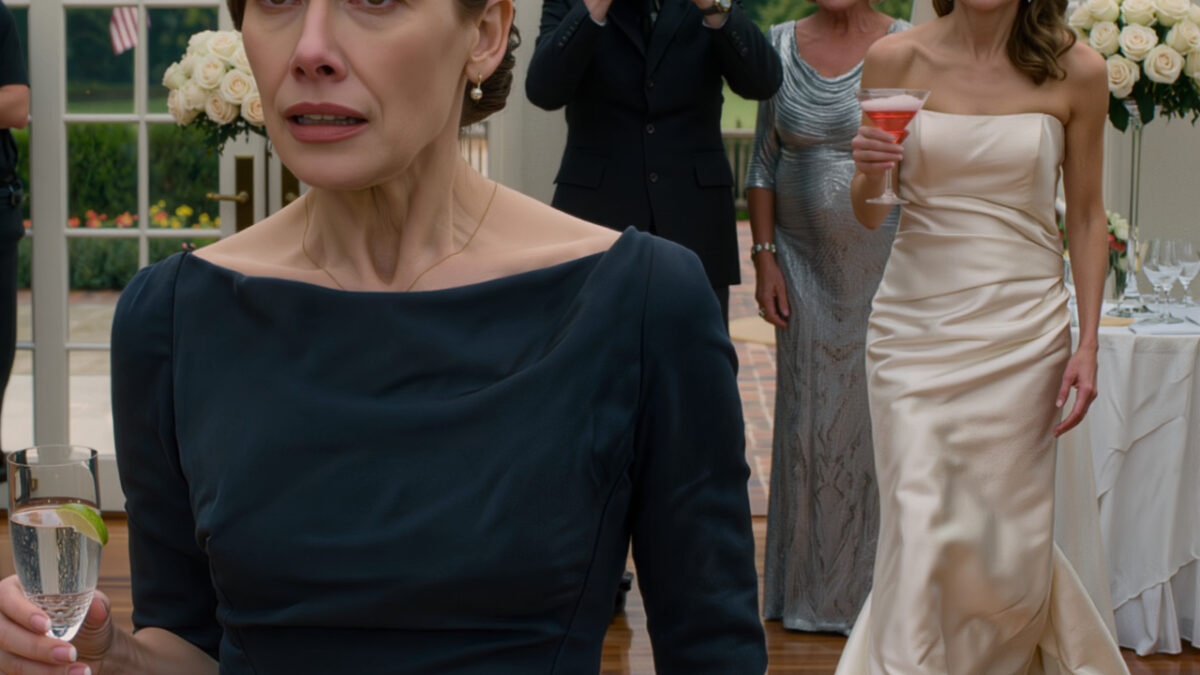
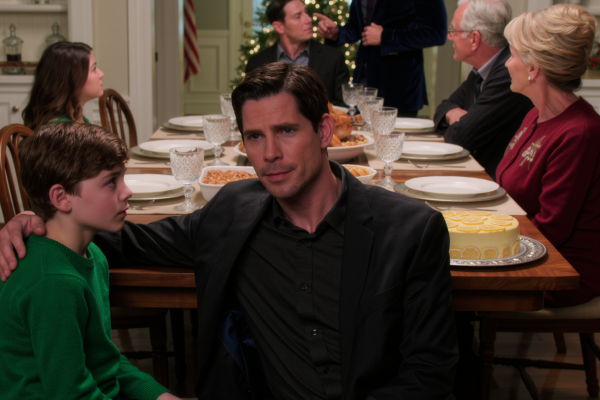
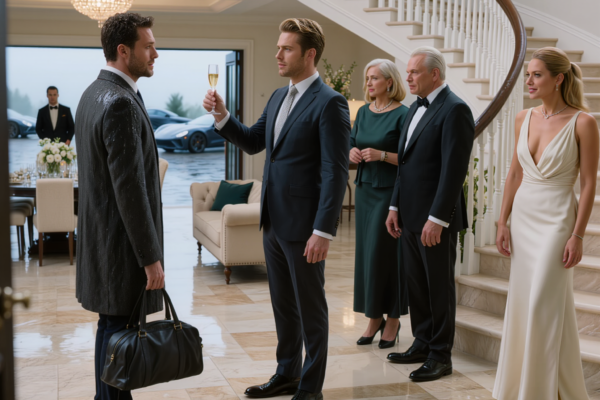
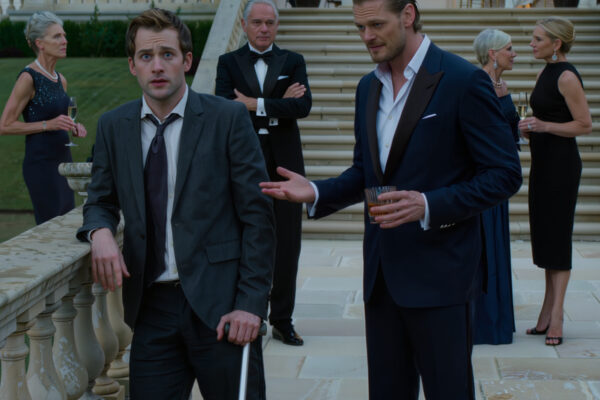
The bass from the wedding DJ’s oversized speakers was vibrating through the polished hardwood floors of the glass conservatory, sending a dull, rhythmic ache straight up through the soles of my heels. Around me, nearly 250 guests were laughing, drinking expensive imported champagne and celebrating the absolutely flawless union of my younger sister, Fallon, and her new husband.
The entire room smelled of imported white roses, catered cedar plank salmon, and the overwhelming suffocating scent of expensive perfume. I was standing near the far edge of the dance floor, holding a glass of sparkling water with a lime wedge, desperately waiting for a polite moment to slip out the side garden doors, call a car, and go home to my quiet apartment.
I did not want to be there. I had never wanted to be there in the first place. I am an actuary. My entire professional life is dedicated to observing environments, calculating risk, and mitigating catastrophic disasters before they happen.
Standing in that room, watching the blinding artificial LED lights set up around the perimeter to perfectly illuminate my sister’s face, my internal risk assessment was screaming at me to leave. Then the music abruptly cut off. It did not fade out naturally.
It was killed midbeat, sending a jarring silence rippling through the massive crowd. Fallon stepped into the absolute center of the room. She was wearing a custom-made silk gown that easily cost more than my first car, holding a heavy crystal cocktail glass filled with a strange cloudy pink liquid.
The hired camera crew, three large men dressed entirely in black, immediately swarmed her. Their heavy camera lenses focused tight on her face, capturing every micro expression. She raised the glass slightly, her eyes scanning the sea of confused guests until they locked directly onto mine.
Her smile was sharp, calculated, and predatory. It was the exact same smile she wore when we were children. Right before she would shatter one of my belongings and seamlessly blame the destruction on the family dog, she marched straight toward me.
the heavy fabric of her dress sweeping across the floor, the cameras trailing her every single step. The guests parted for her like the Red Sea. Before I could even process the sudden aggressive shift in the room’s energy before I could take a single step backward or raise my hand to defend myself, Fallon pulled her right arm back and hurled the entire contents of the crystal glass directly into my face.
The heavy liquid hit my eyes, my nose, and my left cheek with a violent wet slap. For one single suspended second, the room erupted into scattered, uncomfortable laughter. The guests thought it was a bit.
They thought it was a sisterly rivalry played out for Fallon’s massive social media audience. A scripted moment of drama for her dedicated followers. I blinked aggressively, trying to clear the thick, sticky moisture from my eyelashes, fully expecting the smell of cheap vodka or sugary cranberry juice to hit my nose.
Instead, a pungent, toxic wave of burning sulfur and melting plastic invaded my lungs. Then the burning started. It did not feel like hot tea. It did not feel like spilled coffee.
It felt as though a swarm of invisible microscopic hornets had landed directly on my face and begun furiously chewing through my epidermis. A sickening bubbling heat spread rapidly across my left cheek, trailing down my jawline and sinking into my neck. My vision blurred instantly, thick tears pouring from my eyes, not out of sadness or humiliation, but from a fierce, involuntary biological reaction to sudden trauma.
Through the high-pitched ringing in my ears, I heard Fallon’s voice. It was artificially loud, pitched perfectly for the boom microphones hovering above us. Oh, relax, Sloan. It is just a joke.
Do not be such a jealous downer at my wedding. I reached a trembling hand up to wipe the heavy liquid away from my eye. The very moment my fingertips brushed against my cheek, the pain flared into a blinding white-hot agony that stole the breath from my lungs.
My skin felt loose. It felt soft and entirely wrong. I pulled my hand back and forced my watering eyes open. My fingertips were smeared with a shiny wet redness.
It was not pink cocktail dye. It was my own blood mixed with the top layer of my dissolving skin. The laughter in the room died instantly, replaced by a sudden, horrifying, breathless silence.
A woman standing near the teiered dessert table let out a piercing scream. Do not move. A voice yelled from my right. It was Greer, my best friend and co-orker, violently shoving her way through the crowd of frozen staring guests.
Before Greer could reach me, my mother Sibil materialized out of nowhere. She was wearing a heavy silver evening gown, her face pale beneath her heavy makeup, but her eyes were darting frantically toward the camera crew, not toward my bleeding face. She grabbed a thick coarse linen napkin from a passing stunned waiter and lunged directly at me.
“Stop making a scene,” Sloan Sibil hissed viciously under her breath, her fingers gripping the back of my neck with surprising strength to hold me still in the light.
“You are ruining the footage.”
She slammed the dry, rough linen napkin directly onto my blistering face and dragged it downward with brutal, unforgiving force. I finally screamed. The friction of the rough fabric dragging against my chemically melting skin sent a shock wave of pure, unadulterated torment straight through my central nervous system.
My knees buckled beneath my weight. I shoved my mother backward with both hands, knocking the napkin out of her grip. It fluttered to the hardwood floor, stained with dark red blood and terrible yellowish biological fluids.
Do not touch me, I gasped, my chest heaving violently as I tried to pull clean oxygen into my burning lungs. Greer was suddenly there, wrapping her strong arms around my shaking shoulders, physically shielding me from my mother and the unblinking camera lenses. I am calling 911, Greer shouted at the entire room, her voice echoing off the glass ceiling.
Someone get water. Real water right now. Fallon was standing exactly 5 feet away, the empty crystal glass still dangling casually from her manicured fingers. She looked at the blood staining the floor, then looked directly at the nearest camera lens.
Her carefully rehearsed innocent expression faltered for a fraction of a second. She had expected me to turn red with anger. She had expected me to yell, to stomp my feet, to give her the jealous meltdown she desired.
She had not expected my face to literally begin blistering and bleeding in front of 200 guests. It was just a cocktail, Fallon stammered, taking a slow step backward. She is overreacting.
She always does this. She is just trying to make it about her. I did not yell at her. I did not curse. I forced myself to stand up completely straight.
Even though every single nerve ending in the left side of my face was screaming in agony. I looked past my sister and found the venue manager, a terrified looking man in a dark suit holding a radio.
“Take that glass,” I told him, my voice shaking but frighteningly level and cold.
“Put it in a sealed plastic bag immediately. Do not let anyone touch it. Do not wash it. If it disappears, I will hold this venue legally and financially responsible for destruction of evidence.”
Sibil stepped forward again, her hands raised in a calming maternal gesture that was entirely fake. Sloan, honey, please, let us just go to the private bridal suite and wash it off. We do not need an ambulance.
We absolutely do not need the police at your sister’s wedding. I looked at my mother. I looked at the woman who had just tried to aggressively scrub the physical evidence off my dissolving skin.
Get away from me, I whispered. Greer practically carried me out the side garden doors into the cool night air and shoved me into the passenger seat of her car. We did not wait for the ambulance.
The nearest hospital was only 10 minutes away and the burning was actively spreading down my neck, eating through the delicate fabric of my dress color. When Greer dragged me through the sliding glass doors of the emergency room, the triage nurse took one single look at my face and slammed her hand onto a red button on the wall.
Within seconds, I was rushed into a sterile, brightly lit trauma room. The smell of the wedding was entirely gone, replaced by the sharp clinical scent of saline and iodine. A doctor with graying hair leaned over me, shining a blindingly bright light into my eyes.
His expression was grim, his jaw tight. He did not ask for my insurance card. He did not ask if I had any underlying allergies. He looked at the bubbling dark red burns covering the entire left side of my face.
He turned to the nurse standing quietly behind him. Get the heavy irrigation kit. Start a saline flesh immediately, continuous flow, and call the police precinct. Tell them we have an intentional chemical assault.
I lay back on the stiff, uncomfortable hospital bed, the freezing cold saline pouring endlessly over my face, draining into a plastic basin positioned beside my ear. I stared at the harsh fluorescent lights on the ceiling. I was in an emergency room on a Saturday night, my face ruined while my sister danced at her reception.
How did my life escalate to this exact moment of violence? What sickness was living inside my family? And more importantly, how was I going to make them pay for every single second of this?
The emergency room was freezing. The cold saline solution ran continuously over my cheek for 30 straight minutes, numbing the surface, but failing to reach the deep, agonizing fire burning beneath my skin. The doctor had administered a strong intravenous painkiller through my arm, which dulled the sharpest edges of the agony, wrapping my mind in a thick, heavy synthetic fog.
But even through the medication, my brain absolutely refused to shut down. As I mentioned, I am an actuary. For the past 10 years, I have worked for a massive corporate insurance firm located in the heart of Manhattan.
My entire professional existence revolves around assessing risk. I calculate the precise probability of disasters. I look at massive spreadsheets, historical data trends, and human behavioral patterns to determine exactly how much a catastrophe will cost, how it will happen, and who will ultimately pay the bill.
I earn $250,000 a year because I am exceptionally good at seeing a disaster coming from a mile away. Yet, I had entirely failed to calculate the catastrophic risk of my own blood relatives. Lying in that hospital bed, staring blindly at the sterile ceiling tiles, I thought deeply about the role I had been assigned by my parents since childhood.
I was the invisible child, the workhorse, the permanent scapegoat. I paid my own way through a demanding college degree. I bought my own apartment in the city with my own savings.
I quietly built a life of stability, logic, and financial security. Fallon, on the other hand, was the golden child. She was beautiful, loud, and constantly demanding oxygen from everyone in the room.
When she dropped out of college after two semesters, my parents called her brave for finding her own path. When she decided to become a lifestyle influencer, racking up $50,000 in crippling credit card debt to buy designer bags and fund fake luxury vacations, my mother defended her fiercely, claiming Fallon was simply investing capital into her personal brand.
My quiet, numerical successes were always ignored because they were boring. I did not provide drama. I did not provide content for their dinner party conversations. I closed my good eye, a bitter, painful memory rising to the surface of my mind.
5 years ago, I received my first major promotion at the firm. It was a massive milestone, a testament to years of 80our work weeks. I brought the official printed offer letter to my parents’ house for Sunday dinner, hoping for just one single moment of genuine parental pride.
I left the envelope on the kitchen counter while I went to wash my hands. When I came back, the letter was gone. My mother had crumpled it up and thrown it directly into the garbage can to make room on the counter for a massive stack of promotional public relations boxes Fallon had received from a cheap, unknown cosmetics company.
When I confronted her, pulling my ruined letter out of the trash, Sibil had just rolled her eyes and sighed loudly.
“Oh, Sloan, it is just a piece of paper. You are always so sensitive about everything. Fallon actually needs the space to unbox her gifts for her followers. Her career completely depends on visibility.
You sit at a quiet desk all day doing math. Try to be a little supportive of your sister for once.” Visibility. That was the only currency my family respected.
Fallon was terrified of being irrelevant. She knew deep down she had no real talent, no actual marketable skills. Her entire online persona was built on a fragile foundation of lies, heavy filters, and borrowed money.
She needed constant escalating drama to keep her audience engaged. And my mother, a covert narcissist who lived vicariously through reading Fallon’s online comments, was her eager, willing accomplice. My father, Thatcher, simply vanished into the background, preferring to drink beer in the garage rather than confront the toxic environment brewing in his own living room.
I was the only person who saw them clearly. I was the only one who refused to play along with the fake influencer lifestyle. I did not let Fallon film me.
I did not pretend we were a happy, tight-knit family for her weekly vlog. I kept my distance, and because I refused to be a compliant extra in her manufactured reality show, I became the villain of her narrative. I heard the heavy squeaking sound of rubber sold shoes approaching my bed.
The doctor pulled the privacy curtain back. A uniformed police officer stepped into the room holding a small black notepad. Miss Ward, the officer said, his voice gentle but entirely professional.
I am Officer Davis. Can you tell me exactly what happened at the venue tonight? I told him everything. I did not cry. I did not raise my voice in hysterics.
I spoke in precise bullet points, delivering the facts with the cold, calculated precision of a corporate risk report. I described the crystal glass, the color of the liquid, the positioning of the cameras, and my mother’s aggressive attempt to scrub the chemical deeper into my skin with a napkin.
We secured the glass from the venue manager, Officer Davis said, flipping a page in his notepad. The crime scene unit ran a preliminary test on the residue left at the bottom. Miss Ward, do you know if your sister works with industrial cosmetic chemicals?
She is an influencer, I replied. my voice raspy and weak from the heavy pain medication. She receives hundreds of beauty products a month from various brands. Why? The officer looked at the doctor, then back to me, his expression tightening.
The liquid was not a beverage. It was an industrial strength chemical peel acid, the specific kind used in professional medical spas meant to be heavily diluted and applied with strict safety protocols. Undiluted, it acts like a corrosive agent.
It causes immediate secondderee chemical burns upon contact with human tissue. The room seemed to physically tilt. The monitor tracking my heart rate began to beep faster, a rapid staccato sound echoing in the small space.
Fallon had not just thrown a hot cup of coffee at me in a moment of anger. She had weaponized a dangerous chemical. She had deliberately sought out a corrosive acid, poured it into a glass, and aimed it directly at my eyes.
She told the crowd it was a joke. I whispered, “The horrifying reality of the malice settling into my bones like heavy ice.”
“People who commit assault often use humor as a shield when there are witnesses present.”
Officer Davis said flatly, writing something down.
“We are going to visit your sister tonight, but I need to ask you a question, and I need you to think carefully. Has she ever physically threatened you before? Was there a financial motive to harm you in front of those cameras?
I stared at the officer. A financial motive? Fallon documented everything. She monetized everything. She did not throw acid in my face because she simply lost her temper. She did it because a camera was rolling.
I realized then that this was not a prank gone wrong. This was an assassination of my character and my physical body explicitly designed to generate views, engagement, and revenue. I looked at Greer, who was sitting in the corner plastic chair, her face pale and furious.
Greer, I said, my voice finally breaking through the medication. Bring me my work laptop tomorrow morning. I did not know it yet, but the police visit to the wedding reception would only be the beginning.
The authorities would secure the physical evidence, but the true brutal battle was going to happen in the digital world. And I was about to show my family exactly what happens when you force a senior actuary to calculate the cost of vengeance. Thank you for listening so far.
If you are hooked on this story, please hit the like button and subscribe to the channel. Your support means everything. Let us get back to the fallout. The next morning, I woke up in my own apartment.
Greer had driven me home from the hospital at 3:00 in the morning, filled my massive stack of prescriptions at a 24-hour pharmacy, and forced me to drink a full glass of water before tucking me into bed like a wounded animal. Harsh sunlight crept through the gaps in my blinds, striking my face.
I winced. The entire left side of my face was covered in a thick, sticky layer of prescription burn ointment and heavy sterile gauze. The pain was no longer a burning fire.
It was a dull, intense, throbbing ache that radiated into my teeth and down my neck. I felt heavy, exhausted, and incredibly fragile. Then my cell phone vibrated loudly against the wooden nightstand.
Then it vibrated again and again. A continuous rapid fire buzzing filled the quiet bedroom. I reached over with a trembling hand and picked it up. My screen was a chaotic, overwhelming waterfall of notifications.
Dozens of missed calls, hundreds of text messages, and an endless scrolling stream of social media alerts. I unlocked the screen and opened the very first message. It was from a cousin I had not spoken to in 3 years.
I cannot believe you tried to ruin Fallon’s wedding. You need severe psychiatric help. My stomach dropped into my shoes. I opened another message, this one from a former college roommate I hadn’t seen in a decade.
Sloan, what is wrong with you? Why did you attack your sister on her special day? My hands began to shake uncontrollably. I opened an anonymous social media link that had been forwarded to me 12 times in the past hour.
The link opened directly to Fallon’s main video page. The video already had over 1 million views. The thumbnail was a highly edited split screen. On the left side was a glamorous professional photo of Fallon in her wedding dress crying perfectly framed tears.
On the right side was a blurry zoomed in still frame of me, my arm raised defensively in the air, my mouth open in a shout. The caption read in bold tragic yellow letters. My sister could not let me have one happy day.
I clicked play, my heart hammering against my ribs. The video was highly edited, spliced together with ruthless precision. It did not show Fallon walking toward me with the glass.
It did not show the liquid hitting my face. It started at the exact moment I shoved my mother backward to get the agonizing napkin off my skin. The footage was slowed down dramatically, making me look erratic, unhinged, and violent.
It showed me pushing a well-dressed older woman, then shouting aggressively at the bride. The actual audio of my scream of pain was entirely muted, replaced by soft, melancholic piano music. Then the video cut abruptly to Fallon sitting on her pristine white living room couch.
She was wearing an oversized, cozy sweater, looking exhausted, traumatized, and fragile.
“I have always loved my sister,” Fallon said directly to the camera, her voice trembling with perfectly practiced emotion. Even when she constantly struggled to be happy for me, I tried to include her in my wedding. I tried to share my joy, but some people are just deeply broken inside.
She caused a massive scene. She got physically aggressive with our mother, and she tried to destroy the one day that was supposed to be mine. I am choosing compassion today.
I hope one day Sloan can heal whatever deep trauma makes my happiness hurt her so much. She did not mention the crystal glass. She did not mention the chemical peel.
She did not mention the emergency room, the doctors, or the police arriving at her venue. She had successfully rewritten reality before I even woke up. I scrolled down through the comments.
Thousands of strangers were eagerly diagnosing me with severe personality disorders. They called me a bitter, aging, jealous spinster. They praised Fallon for her incredible grace under pressure. Some highly motivated commenters were actively trying to find out where I worked so they could report my violent behavior to my employer.
My phone rang in my hand, startling me. It was an incoming call from my boss, Richard, the managing director of the corporate insurance firm. I took a deep breath, trying to steady my racing heart, and answered.
Hello, Richard. Sloan, Richard said. His voice was tight, clipped, formal, entirely lacking its usual professional warmth. I am going to keep this brief. HR received over 40 emails this morning from random internet accounts.
They all contained a link to a video of you at a wedding. I closed my eyes, a wave of nausea washing over me. Richard, that video is fabricated. I was assaulted.
I spent the entire night in the emergency room with severe chemical burns on my face. I am very sorry to hear you were injured, Sloan. Truly, Richard replied, though he sounded more panicked about liability than sympathetic about my pain, but the firm simply cannot have its senior risk actuaries going viral in violent family altercations.
Our clients trust us with billions of dollars. We require absolute stability and discretion from our senior staff. HR is placing you on a mandatory paid administrative leave pending an internal review of the situation.
A review. I croked the sheer injustice choking me. Richard, I am the victim of a violent crime. I filed a police report last night. Send the police report to HR immediately, he said swiftly.
But until the public noise dies down and this is resolved, you are completely locked out of the company servers. I am sorry, Sloan. This also means you are pulled off the Reynolds merger account.
The bonus structure for that project will have to be reallocated to another team member. The line went dead. I lowered the phone to my lap, staring blankly at the wall.
I had just lost a $20,000 performance bonus. I was barred from the prestigious job I had sacrificed my entire 20s to build because my sister needed content for her channel. I did not cry.
The shock and fear had burned away, leaving a vast cold, calculating emptiness in my chest. I stood up, walked slowly to my home office, and opened my personal laptop. I did not write a defensive, emotional social media post.
I did not call my parents to scream at them. I opened a blank Microsoft Excel spreadsheet. I named the file liability assessment_ward. I labeled column A, evidence required. I labeled column B financial damages incurred.
I labeled column C, liable parties. I typed $20,000 lost corporate bonus into the first empty cell. Underneath it, I added the estimated cost of the emergency room visit, the cost of the ruined silk dress, the cost of future dermatology treatments and scar revision surgery.
They thought I would hide. They thought I would delete my accounts and disappear into shame, allowing them to monetize my absolute destruction. They forgot that I did not react to trauma with emotion.
I reacted with data. I was going to quantify every single ounce of damage they had inflicted on my life, and I was going to collect the dead in full. The doorbell rang sharply.
It was Greer carrying two large coffees and a yellow legal pad. The police went to the wedding venue last night, she said, dropping the legal pad onto my desk without preamble. They confiscated the raw footage from the camera crew.
But that is not all. I got a call early this morning from someone who was at the wedding. Someone who is very, very scared. I looked up from the spreadsheet, the cold logic humming in my veins.
The disaster was fully modeled. Now it was time to calculate the ruin. Greer pulled up a chair beside my desk, handing me a coffee. She looked at the spreadsheet glowing brightly on my monitor and did not ask any questions.
She knew exactly how my brain operated under immense pressure. Who called you? I asked, my voice flat, devoid of the panic I had felt just an hour ago when I saw the video.
Sutton, Greer replied. I frowned, ignoring the sharp pull of the healing skin on my cheek. Sutton was Fallon’s 22-year-old assistant. She was a naive, overworked, underpaid girl who fetched coffee, managed Fallon’s ring lights, and acted as a glorified servant disguised as a bridesmaid.
Why is she calling you instead of calling me? I asked. because she thinks you are going to sue her into bankruptcy and she is terrified,” Greer said, opening her phone.
“She left the wedding early last night.”
“When the police showed up at the venue to seize the glass and question the catering staff, Fallon panicked.”
Sutton said Fallon and your mother cornered her in the private bridal suite.
“My fingers hovered over the keyboard. What did they tell her to do?”
“They told her to take the fall,” Greer said, her eyes darkening with disgust. They told her to tell the cops that she mixed the drinks, that she accidentally picked up a bottle of spa treatment instead of cocktail syrup. Cibil promised Sutton a $5,000 cash bonus if she took the blame, saying the cops would just write it off as a catering accident and no one would press charges.
A cold, creeping nausea washed over me. My mother was willing to bribe a young, vulnerable girl to commit perjury just to keep Fallon’s influencer image spotless. Did she do it?
I asked. No, Greer said. Sutton is young, but she is not stupid enough to confess to a felony assault. She ran out the back door and called me this morning.
But Sloan, there is something else. Sutton did not just run away. She recorded them. I froze. The coffee cup halfway to my mouth. Recorded who? Your mother and Fallon before the wedding.
While they were getting ready in the suite, Greer tapped her phone screen and slid it across the wooden desk toward me. Sutton is the one who mixes Fallon’s drinks. She always uses an audio memo app to record Fallon’s instructions because Fallon constantly changes her mind and then yells at Sutton for getting it wrong.
Yesterday afternoon, Sutton left her phone recording on the vanity table while she went to find ice. I stared at the small audio file sitting in the center of the screen. It felt like a live grenade.
I pressed play. The audio was slightly muffled by background noise, the worring of hair dryers, pop music playing from a Bluetooth speaker, the rustle of heavy dresses, but the voices were absolutely unmistakable. First, I heard Fallon.
Her voice lacked the breathy, sweet tone she used for her followers. It was harsh, demanding, and impatient. Is it ready? The drink for Sloan. Then my mother’s voice. calm, authoritative, chilling.
I am doing it now, but the color is too light. If it just looks like water, it will not read well on camera. We need a visible reaction. Just pour the whole bottle of the peel in.
Fallon snapped. I want her skin to flush. I want her to look insane and red-faced when she yells at me. The sponsors love family conflict, but it has to look authentic.
If she just gets wet, she will just walk away. If I pour the whole bottle, it might burn her. Fallon, Sibil noted, though she did not sound concerned at all.
She sounded like she was discussing the weather. Who cares? Fallon scoffed loudly. She has thick skin, literally and figuratively. Just make it strong, Mom. We need her skin bright red for the camera.
We need the meltdown. There was the distinct sound of glass clinking against glass. A thick liquid pouring. Done. Civil said, “Make sure the camera crew has her entirely in frame before you throw it.
Do not miss her face.” The recording ended. Absolute silence filled my home office. The air felt thin, like all the oxygen had been sucked out of the room. I played the audio again, and then a third time.
I needed to hear it over and over until the horrifying reality of it crushed the last remaining pathetic hope inside me that my family actually loved me. They had premeditated it. They had calmly discussed the chemical composition of the weapon.
My mother, the woman who gave birth to me, had carefully mixed a corrosive acid into a glass to ensure it caused a severe physical reaction purely for visual aesthetics. They wanted me in pain. They wanted me disfigured just enough to look unhinged on highde video.
I reached out and stopped the playback. I turned back to my spreadsheet. I added a new tab at the bottom of the screen. I titled it criminal conspiracy. Sutton sent this to you.
I asked Greer, my voice perfectly steady, frighteningly calm. She emailed it to me from a burner account. She said she wants immunity. She said if you give this to the police, she will testify in court that Syibble mixed the drink and Fallon threw it.
Send the audio file to my email. Then back it up to three different cloud servers, I instructed, my fingers flying across the keys. I picked up a pen and started writing on a notepad.
We are not giving this to the police yet. Greer stared at me like I had lost my mind. Sloan, this is a smoking gun. This proves premeditated assault. They could go to state prison for this.
The police are already investigating the physical assault. I explained the actuary inside me taking complete control of the chessboard. The police can put Fallon in handcuffs, but handcuffs do not destroy her.
If she gets arrested today, she spins it. She cries on camera, claims she didn’t know what was in the bottle, and her followers raise a massive legal defense fund for her. She gets more famous.
Sibil plays the tragic, supportive mother. I looked at the spreadsheet, my eyes tracing the numbers. $20,000 lost medical bills. My reputation dragged through the mud. I do not just want them arrested, I said softly, feeling the tight pull of the burn on my cheek.
I want them dismantled. I want the sponsor money. I want the brand deals. I want the massive house Fallon just bought. I want every single thing they value to be legally systematically stripped away from them until they have absolutely nothing left but each other.
Greer sat back in her chair, a slow, grim smile spreading across her face. Okay, where do we start? We start with the money, I said. Fallon mentioned sponsors in the recording.
She said the sponsors love family conflict. She wasn’t just making a vlog. She was filming a funded commercial project. Before Greer could respond, my phone vibrated again. It wasn’t a text from an angry internet troll.
It was a phone call. The caller ID read, “Declan.” Declan was my older brother. He was 36, a widowerower who worked 60 grueling hours a week as a construction manager to support his 16-year-old daughter, Marin.
Since his wife died of cancer 3 years ago, Declan had been a ghost. He was exhausted, depressed, and entirely dependent on my mother for child care. Sibil used that dependency to control him, weaponizing his deep grief to keep him compliant and silent.
I had not spoken to Declan in 2 months. He had not been at the wedding because he was working a double shift in another state to pay for Marin’s braces. I answered the phone.
Declan, he did not say hello. He did not ask how I was. Sloan, Declan said, his voice trembling so violently I could barely understand him. You have to help me.
I don’t know what to do. Declan, slow down. What is wrong? It is Marin. He choked out, a raw, terrifying sob tearing out of his throat. Sloan. Marin locked herself in the bathroom.
She is screaming. She found out what Fallon did. My heart stopped. What Fallon did to me at the wedding? Declan, it is fine. I am handling it, not you.
Declan shouted, his voice cracking with pure agony. What Fallon did to Marin? Oh my god, Sloan. They sold her. What are you talking about? I demanded, standing up so fast my office chair rolled backward and hit the wall with a loud thud.
Declan, breathe. Tell me exactly what happened to Marin. Over the phone, I could hear the muffled rhythmic sound of a fist banging frantically against a wooden door. Declan was sitting on the floor outside his daughter’s bathroom.
I could hear Marin crying on the other side, a deep hyperventilating whale that made the hair on my arm stand up. It was the sound of a child in absolute inconsolable distress. Marin called me at work an hour ago.
Declan gasped, trying desperately to pull himself together. She saw the viral video of you and Fallon. But she didn’t just look at the video. She looked at the background of the screen Fallon was recording in.
Fallon was sitting in her home office. On the monitor behind her, there was an editing timeline open. I pressed the phone harder against my ear. An editing timeline for what?
For a television show, Declan said, his voice dropping into a hollow, deadened whisper. Sloan Marin zoomed in on the screenshot. It is a reality series. And the file opened on the screen.
The file was named episode 6, The Depressed Child, Fallon’s Rescue. A sickening weight dropped into the pit of my stomach. Declan, what is in the video? Two months ago, Declan explained, his words rushing out in a frantic panic.
Marin was staying at mom’s house while I was out of town for a sight inspection. It was the anniversary of her mother’s death. Marin had a massive panic attack in the guest bedroom.
She couldn’t breathe. She thought she was dying. Mom called Fallon instead of calling a doctor. Fallon came over and and she filmed it slow. She shoved a camera in my 16-year-old daughter’s face while she was choking on her own grief, and she filmed the entire thing.
I closed my eyes. The puzzle pieces were slamming together with brutal, horrifying clarity in my mind. Fallon didn’t just want YouTube views. She had sold a reality television doku series to a major streaming sponsor, a show about her complicated, emotional family.
She needed drama. She needed trauma. And because she had no real struggles of her own, she was harvesting ours. She used my face for the season climax. And she used a grieving teenager’s panic attack for the emotional redemption arc.
Declan, I said, my voice cold and hard as steel. Listen to me carefully. Did you sign a minor release form? Did you give any network production company or sponsor legal permission to broadcast images of Marin?
No. Declan shouted, his anger finally breaking through the panic. Never. I didn’t even know the video existed until today. Marin said mom promised her she made Fallon delete it.
My mother, Civil Cibil had known about the chemical peel in my drink. Cibil had known about the camera crew and Cibil had allowed her teenage granddaughter to be exploited for a television pitch. Sloan Marin is talking about hurting herself.
Declan sobbed. the sound of a broken father echoing through the phone. She says millions of people are going to watch her have a mental breakdown on TV. She says she can’t go to school.
She can’t live like this. I am going to kill them. Sloan, I swear to God, I am going to drive to mom’s house and I am going to kill them.
Do not do anything stupid, Declan. I ordered my actuary brain shifting into overdrive, calculating the catastrophic fallout of a violent confrontation. If you go over there screaming, mom will call the police and paint you as an unstable, violent father.
She will use it to take custody of Marin. You know she will. Silence fell over the line, save for Marin’s muffled crying in the background. Declan knew I was right.
Sibil was a master of weaponizing the legal system against emotional people.
“What do I do?”
he whispered, entirely defeated. You tell Marin that the video is never going to see the light of day. I said staring at my spreadsheet. You tell her that her aunt Sloan is going to rip the contract to shreds.
Then I want you to go into your email. I want you to search for any documents, docuign links, or PDFs mom might have sent you in the last 6 months. Mom manages all your paperwork, Declan.
Your taxes, your insurance. She slipped a release form in there somewhere and forged your signature. Find it. Okay. Declan said his breathing slowing down. Okay, I will look. Sloan, your face.
I saw the video. Are you okay? I am fine. I lied smoothly. The burn was searing, a constant fiery reminder of the acid eating into my skin. Find the paperwork, Declan.
I will call you back tonight. I hung up the phone. I looked at Greer. She had heard enough of the conversation to understand the gravity of the situation. They sold Marin’s panic attack, I said, my voice shaking with a rage so profound it felt cold.
Greer covered her mouth with her hand. Oh my god, a minor. Sloan, if they sold a reality show to a major network, there has to be a massive paper trail.
Corporate sponsors require ironclad legal releases, background checks, risk assessments. Exactly. I said, a dangerous clarity washing over me. I clicked on a new cell in my spreadsheet. Fallon is playing a chaotic street game, but a network sponsor, a streaming platform, they play a corporate game.
And nobody plays the corporate game better than an actuary. I typed a new entry into the liability column. Unauthorized commercial exploitation of a minor. Fraudulent signature. We need the pitch deck, I told Greer.
When someone sells a show, they create a pitch deck, a massive presentation outlining the episodes, the characters, the drama, and the financial budget. If Fallon pitched this to a network, there is a document out there that proves she planned my assault and Marin’s exploitation months in advance. How do we get it?
Greer asked, leaning over the desk. Fallon isn’t going to just hand it over. No, I agreed. But Fallon doesn’t work alone. She is too lazy to edit her own videos.
She hires freelancers and freelancers talk when they don’t get paid. I opened a new tab on my browser and went to Fallon’s old YouTube videos. I scrolled past the glamorous thumbnails down into the description boxes.
I was looking for credits. I found one from 8 months ago. Video edited by Bellamy Vance. I searched Bellamy’s name on a professional networking site. She was a 26-year-old freelance video editor living in Brooklyn.
More importantly, she had recently posted a public complaint on a freelancer forum about a major lifestyle influencer who had ghosted her on a $15,000 invoice. I smiled. It was not a happy smile.
It was the smile of a predator finding the exact weak point in the fence.
“Greer,” I said, grabbing my coat and my car keys.
“We are going to Brooklyn. We are going to buy a very angry video editor a very expensive cup of coffee. This was no longer just about a ruined dress or a chemical burn on my cheek.
This was about a 16-year-old girl crying on a bathroom floor, terrified of the world. My family had built a house of cards on top of our trauma. It was time to pull out the bottom row and watch them completely collapse.
If you are as furious as I am at Fallon and Cibil, please hit the like button. Drop a comment on what you think their punishment should be and subscribe to the channel so you do not miss the epic takedown in the next part. The coffee shop in Brooklyn was loud, smelling heavily of roasted espresso beans and wet wool coats.
Rain was beginning to streak the large glass windows, blurring the street lights outside into smeared halos. Greer and I sat at a small scarred wooden table in the back corner. I kept my coat collar pulled up high, trying to shield the heavy white bandages on my face from the curious stairs of the baristas.
We had been waiting for 15 minutes when Bellamy arrived. She was young, maybe 26, wearing an oversized denim jacket and carrying a heavy waterproof backpack. She looked exhausted, the kind of deep, bone weary exhaustion that comes from working freelance in a city that constantly demands more than it gives.
She spotted us, hesitated for a fraction of a second, and then marched over to our table. She slid into the booth across from me, her eyes immediately darting to the bandages covering my cheek.
“You are Sloan,” Bellamy said, her voice flat, devoid of any pleasantries.
“I saw the video, the one Fallon posted. It is entirely edited. I could tell just by looking at the cut points.”
“It is,” I replied, keeping my voice low and steady. and I know she owes you $15,000 for your editing work on her channel over the past eight months. I saw your post on the freelancer forum.
Bellamy let out a bitter sharp laugh, dropping her backpack onto the floor. She owes me exactly $15,420. I edited her daily vlogs. I color corrected her terrible lighting. I cut out every single time she screamed at her assistant.
And then the moment she landed her massive streaming deal, she stopped returning my emails and blocked my number. She told her new production manager that my work was amateur and refused to pay the final invoices. I leaned forward slightly, ignoring the pulling sensation of the burned skin on my jaw.
Bellamy, I am an actuary for a corporate insurance firm. I deal with contracts and liabilities every single day. I know that as a freelancer, until your invoice is paid in full, you retain the legal copyright to the raw files and the project files you created.
Is that correct? Bellamy narrowed her eyes, studying me carefully. Yes, legally, the footage and the edits are mine until the final check clears. I am going to write you a personal check right now for $15,420, I said, my voice perfectly calm.
I am buying your copyright. I want the raw files, but more importantly, I want the pitch deck. The presentation she used to sell the reality series to the streaming network.
Bellamy stared at me. The ambient noise of the coffee shop seemed to fade away. She looked at my bandages, then down at the table, her jaw tightening. She reached down into her heavy backpack and pulled out a sleek silver external hard drive.
She placed it squarely in the middle of the wooden table. I do not want your money, Sloan, Bellamy said quietly. I frowned confused. Why? Because I have a younger sister, Bellamy said, her voice trembling slightly with suppressed anger.
And I saw the raw footage Fallon sent me 2 months ago. The footage of your niece having a panic attack. Fallon wanted me to edit it. She told me to add dramatic sad music under the audio of the girl crying.
She wanted me to cut out the part where the girl begged her to stop filming. I refused. That is the real reason she fired me and withheld my pay.
I told her it was child exploitation. A cold, heavy silence settled over our table. Greer reached across and placed her hand over mine. Bellamy pushed the silver hard drive across the table until it touched my coffee cup.
Everything is on there, the raw video files, the audio stems, and the master PDF of the pitch deck she submitted to the streaming network’s executive board. 5 months ago. Burn her to the ground.
Sloan. 30 minutes later, Greer and I were back in my apartment. My laptop was open on the kitchen island. The silver hard drive plugged into the side port. My heart was beating a slow, heavy, methodical rhythm against my ribs.
I was no longer a sister dealing with family drama. I was an investigator opening a corporate fraud file. I doubleclicked the PDF labeled master pitch deck vinyl. The document filled my screen.
It was 50 pages long, professionally designed with highresolution graphics and bold cinematic typography. The title page read, “The Ward family unfiltered, a reality DOA series.” I scrolled past the executive summary, past the budget breakdowns, and past the glamorous photos of Fallon posing in various expensive outfits.
I scrolled until I hit the character profiles. There was a page dedicated to my mother, Cibil. The headline read, “The mastermind matriarch.” The description painted her as the loving, controlling glue holding a chaotic family together.
There was a page dedicated to my brother Declan, the tragic widowerower. And then I found my page. The headline was written in bold, aggressive red letters. Sloan, the bitter actuary.
I read the text beneath it, my blood turning into ice water in my veins. Sloan is the estranged, highly educated, emotionally guarded older sister. She is entirely threatened by Fallon’s effortless ability to connect with millions of people online.
Sloan’s deep-seated jealousy and constant resistance will create the central conflict that the family must overcome throughout the season. I stared at the words. She had not just stolen my image.
She had assigned me a role without my consent. She had commodified my boundaries and packaged my desire for privacy as bitter jealousy. I kept scrolling. I reached the episode outlines.
Episode 1 was the introduction. Episode 2 centered heavily on Marin’s grief, promising a raw, unfiltered look at a teenager spiraling. Then I reached the outline for episode 3. The title was The Wedding Rupture.
Beneath the title, Fallon had written the exact narrative arc for the episode. Sloan’s inability to celebrate her sister causes a massive public break at the wedding reception. Sloan loses control.
Fallon chooses Grace. Sibil refuses to abandon either daughter, forcing a dramatic family intervention. Below the text was a page of sample promotional images meant to give the network executives a visual tone of the episode.
One of the images was a stock photograph. It showed a woman in a pale dress, her arm raised defensively, her face red and distorted in anger. Across the stock image, someone had typed the words, “My jealous sister ruined my wedding.”
I pushed my chair back from the kitchen island. The air in my apartment felt suffocatingly thin. This document was created 5 months ago. 5 months before I even received a wedding invitation in the mail.
5 months before my mother began obsessively calling me, demanding that I wear a pale colored dress to the reception, claiming dark colors would ruin the visual balance of the family photographs. Dark colors hide stains. Pale colors show everything.
They show spilled wine and they show blood perfectly. They planned it, Greer whispered, reading over my shoulder, her voice shaking with pure horror. Sloan, they literally storyboarded your assault.
Yes, I said my voice completely devoid of emotion. They sold my collapse before they even had a marriage license. But they made a fatal error. What error? Greer asked.
They sold a fraudulent product to a corporate entity, I replied, pulling up a new email draft. A streaming network is a multi-billion dollar corporation. Corporations have legal compliance departments.
They have strict morality clauses. They have lawyers who care deeply about liability, unconented minors, and felony assault occurring on a funded production. I attached the pitch deck PDF to the email.
Then I attached the audio recording of Cibil and Fallon discussing the chemical peel. Who are you emailing? Greer asked. The head of legal compliance at the streaming network, I said, typing her email address into the recipient line.
I am going to introduce them to the real Ward family. The email sent with a soft digitized swoosh. I sat back in my chair and looked at the clock on my wall.
It was 9 in the evening. I did not expect a reply until Monday morning. Corporate lawyers rarely worked on weekends unless there was a catastrophic emergency. My phone rang.
It was Declan. I am outside your building, Declan said, his voice sounding hollow and entirely exhausted. Can you buzz me in? 10 minutes later, Declan was sitting on my living room couch.
He looked like he had aged 5 years in a single afternoon. His work boots were covered in concrete dust. His hands were shoved deep into the pockets of his heavy jacket, and his eyes were redrimmed.
“Marin is asleep,” Declan said softly, staring at the floor.
“I gave her a benadryil. She cried until she literally threw up Sloan. She is terrified to go to school on Monday. She thinks everyone is going to see that video of her.
They will not see it, Declan. I promised. Sitting down in the armchair across from him. I have the master files, but I need to know if you found the release form, the document mom sent you.
Declan reached into his jacket pocket and pulled out a folded piece of printer paper. His hands were shaking as he smoothed it out on the coffee table between us. I searched my email archives like you said, Declan explained.
his voice thick with a mixture of betrayal and absolute rage. I found an email mom sent me three months ago. The subject line was standard insurance update forms. It had a docuign link attached to it.
I usually just click through and sign whatever she sends me because I am standing on a loud construction site and I trust her to handle the admin stuff. But I looked at the actual document history today. I leaned forward and picked up the paper.
It was a standard ironclad commercial television release form. It granted Fallon’s production company the irrevocable right to use Marin’s name, image, voice, medical history, and personal story throughout the universe in perpetuity. At the bottom of the page was Declan’s electronic signature.
“You did not sign this,” I stated. It was not a question. Look at the digital audit trail on the second page, Declan said, pointing a callous finger at the small print at the bottom of the document.
I flipped the page. Every electronic signature software records an audit trail. It logs the exact time the document was opened, the exact time it was signed, and the specific IP address of the device used to sign it.
The document was signed on a Tuesday morning at 10:14. At 10:14 on that Tuesday, Declan said, his voice dropping into a dangerous, quiet register. I was 300 feet in the air on a scaffolding rig in Albany.
My foreman has the safety logs to prove it. I did not have my phone. I did not have a computer. I looked at the IP address listed on the audit trail.
I did not need to run a trace on it. I already knew exactly what it was. It was the static IP address of my parents’ home internet router. Sibil had opened the email.
she sent to Declan. Sibil had clicked the signature box. Cibil had forged the legal consent of a custodial parent to sell a minor child’s psychological trauma to a television network.
She forged it, I said, the words tasting like ash in my mouth. Why? Declan asked, his voice finally breaking. Why would our own mother do this to Marin? For what?
For Fallon to get a few more followers. I flipped to the third page of the document packet Declan had printed. It was a payment schedule. Not just for followers, Declan, I said, pointing to a specific line item in the budget.
There in black and white was a line labeled management and talent coordination fee. Civil war. Beside the label was a payment structure. Sibil was receiving a 15% cut of Fallon’s total network advance plus a monthly retainer of $3,000 simply for securing family participation.
Declan stared at the number. He did not yell. He did not throw anything. He just sat back against the couch, completely and utterly broken. Our mother had sold his grieving daughter for $3,000 a month to fund her retirement.
My laptop chimed from the kitchen island. A loud, sharp notification sound. I walked over and opened the screen. It was an email from Veta, the head of legal compliance at the streaming network.
The email was incredibly brief. It did not contain any corporate pleasantries. Miss Ward, I have reviewed the audio file and the PDF attached to your previous email. The network takes allegations of unconented minor exploitation, fraudulent signatures, and felony assault on a funded production with the utmost seriousness.
I am initiating an emergency legal hold on all production activities related to the Ward family project immediately. I am mandating a compliance review meeting for this Monday at 9 in the morning at our Manhattan headquarters. Your presence along with your brother Declan is requested.
Legal counsel for Fallon Ward and Civil Ward have already been summoned. Do not discuss these materials publicly. I read the email twice. I looked at Declan. Put on a suit on Monday morning, Declan, I said, my voice ringing with a cold.
Absolute certainty. We are going to Manhattan. We are going to a boardroom and we are going to watch them burn. The corporate headquarters of the streaming network was located in a massive glass skyscraper in Midtown Manhattan.
The lobby was a cavernous space of white marble and polished steel, entirely devoid of warmth. It was a building designed to intimidate, built by people who dealt in billion dollar contracts and ruthless negotiations. Declan and I stepped out of the elevator on the 42nd floor.
I was wearing a sharply tailored navy blue blazer and trousers. The heavy white bandages were still taped securely to the left side of my face, a stark, glaring contrast to the professional corporate environment. Declan walked beside me, wearing his only tailored suit, his jaw locked tight.
A security guard escorted us down a long, silent hallway and opened the heavy double doors to a massive executive boardroom. Sitting at the far end of the sprawling mahogany table was Veta, the head of legal compliance. She was a woman in her late 50s with sharp, intelligent eyes, wearing a severe black suit.
Two corporate lawyers sat flanking her, laptops open, faces entirely impassive. On the opposite side of the table sat Fallon and my mother, Sibil Fallon was wearing a soft beige cashmere sweater and minimal makeup. She had clearly dressed for the role of the innocent, misunderstood victim.
Civil sat next to her wearing her pearls, looking deeply offended that she had been summoned. Next to Fallon sat her new husband, Miles, looking incredibly pale and nervous. A high-priced entertainment lawyer sat next to Cibil, aggressively flipping through a stack of papers.
The moment we walked in, Fallon’s eyes darted to the bandages on my face. She flinched just slightly, but quickly composed herself. Cibil did not even look at me. Please sit, Veta commanded, her voice slicing through the tense air like a scalpel.
Declan and I took our seats on the empty side of the vast table. Let us be absolutely clear about why we are here. Veta began, folding her hands neatly on the table.
The network has committed a $250,000 advance to Fallon Ward’s production company to develop a reality series. Our contracts contain strict morality clauses, strict requirements for legal consent, and zero tolerance for illegal activities. Miss Sloan Ward has submitted evidence suggesting catastrophic breaches of every single one of those clauses.
Fallon’s entertainment lawyer immediately leaned forward. With all due respect, VA, this is a family dispute. Sloan is disgruntled. She caused a scene at my client’s wedding and she is now making wild unsubstantiated allegations to sabotage my client’s career out of pure jealousy.
Unsubstantiated? Veta repeated. The word hung in the air. She did not look at the lawyer. She looked directly at Fallon. Let us test that theory. Veta reached out and tapped a button on her laptop.
The audio file Sutton had recorded began to play through the boardroom’s high-end speaker system. Just pour the whole bottle of the peel in. I want her skin to flush.
I want her to look insane and red-faced when she yells at me. The sponsors love family conflict. The sound of my mother’s voice followed cold and calculating. If I pour the whole bottle, it might burn her.
Fallon, who cares? She has thick skin. The recording ended. The silence in the boardroom was absolute crushing and suffocating. Fallon’s face strained of all color. She looked like she was going to be physically sick.
Sibil’s mouth dropped open, her perfectly manicured hands gripping the edge of the mahogany table until her knuckles turned stark white. That that is edited. Fallon stammered, her voice pitching up in panic.
That is fake. Someone generated that. We ran it through our digital forensics software this morning. One of the network lawyers stated flatly. It is an unedited continuous native audio file recorded on an Apple iPhone.
It is not fabricated. VA did not give them a second to recover. She clicked another button on her laptop and the massive television screen mounted on the wall behind her flared to life.
It displayed the digital audit trail of Marin’s release form. Declan Ward Veta said, turning her sharp gaze to my brother. Did you sign this commercial release form granting us permission to broadcast footage of your minor daughter experiencing a psychological crisis?
Declan sat up straight, his voice rumbling with a quiet, terrifying fury. I did not. On the date and time that document was signed, I was working on a scaffolding rig 300 m away in Albany.
My mother, Cybil Ward, forged my signature. Sibil gasped, pressing a hand to her chest in a theatrical display of shock. Declan, how could you accuse me of such a thing?
I manage your paperwork because you are too incompetent to do it yourself. I had your verbal permission. Verbal permission does not cover irrevocable commercial broadcast rights for a minor.
Beta snapped. Her patience entirely exhausted. She turned her freezing glare onto Cibil. We traced the IP address of the signature. It originated from your home router. You committed federal wire fraud to secure a $3,000 monthly talent coordination fee from our network.
Fallon’s lawyer was furiously texting under the table, clearly realizing the catastrophic legal liability his client was suddenly facing. This is a misunderstanding, Fallon cried, tears finally spilling down her cheeks. Real tears this time.
Tears of pure terror. I didn’t know about the signature. My mom handles all the paperwork. I just make the content. Do not throw me under the bus, Fallon. Sibil hist, her pristine facade completely cracking.
I did exactly what you told me to do. You needed the panic attack footage for the climax of episode 6. It was a blood bath. They were turning on each other instantly, like rats trapped in a sinking barrel.
Then the final twist occurred. Miles Fallon’s husband of exactly three days slowly stood up from his chair. He was sweating profusely. He reached into his briefcase and pulled out a small black hard drive.
He placed it gently on the table and slid it toward Veta. Miles, “What are you doing?” Fallon demanded, her voice drill.
“I am saving myself from going to federal prison,” Miles said, his voice shaking. He looked at Veta.
“I was a producer on the project. I have the master files. I have the unedited wedding footage showing Fallon throwing the glass without provocation. I have the emails discussing the setup.
I am handing over all company assets to the network and I am formally requesting legal immunity in exchange for my full cooperation. Fallon shrieked, lunging across the table toward the hard drive, but her lawyer grabbed her arm, pulling her back down into her chair. Veta looked at the hard drive, then looked at Fallon.
The compliance director closed her laptop with a sharp, definitive snap. The contract is terminated, VA announced, her voice echoing in the silent room. Effective immediately. We are invoking the morality clause and the fraud clause.
We will be initiating aggressive litigation by the end of business today to recover the entire $250,000 advance. Furthermore, we are turning all of these files over to the district attorney’s office. Have a nice day.
Veta stood up and walked out of the room. The two network lawyers followed her. Declan and I sat at the table. I looked across at my mother and my sister.
They were staring into the abyss of their own absolute destruction. There were no cameras here to save them. There were no followers to defend them. There was only the cold, hard, numerical reality of the debt they had just incurred.
I stood up, buttoned my blazer, and looked at Fallon. I told you the color pale would show everything, I said quietly. I turned and walked out of the boardroom with my brother.
If you are loving this satisfying takedown, make sure to hit the like button and drop a comment letting me know what you would have said in that boardroom. Keep watching for the final collapse. The fallout was not immediate.
It did not happen overnight. Corporate litigation moves like a glacier, slow, freezing, and absolutely unstoppable in its destruction. 3 days after the compliance meeting, the network officially filed a massive lawsuit against Fallon’s limited liability company, demanding the immediate return of the $250,000 advance, plus legal fees and punitive damages for breach of contract and fraud.
Two days after that, Miles officially filed for a highly publicized no fault divorce, moving out of their massive new house and taking all of his production equipment with him. He released a very brief, carefully worded public statement claiming he was horrified to discover the unethical practices of his former partner and was choosing to step away to focus on his own integrity.
Fallon was entirely radioactive. Brands that had sponsored her for years, dropped her within 48 hours. Her management agency terminated her contract. Her social media comment sections, once filled with adoration, turned into a vicious digital firing squad as leaks about the forged minor release form began circulating on gossip blogs.
But the true, devastating reality of the situation did not hit me until a rainy Thursday evening, exactly one week after the compliance meeting. I was sitting at my kitchen island working on my laptop. The bandages on my face now reduced to a smaller specialized hydrocoloid patch over the worst of the chemical burn.
The doorbell rang. I looked through the peepphole. It was Thatcher, my father. I unlocked the door and pulled it open. Thatcher stood in the hallway looking small, defeated, and older than his 62 years.
He was wearing an old windbreaker, completely soaked from the rain. He did not have an umbrella.
“Sloan,” he said, his voice rough.
“Can I come in?”
I stepped aside, letting him into the apartment. He did not take off his wet jacket. He stood awkwardly in the center of my living room, looking at the modern furniture, the clean surfaces, the quiet stability I had built for myself.
“What do you want, Dad?”
I asked, crossing my arms over my chest. I felt no warmth toward him. He had stood by and watched Cibil and Fallon abuse me for decades, choosing his own comfort over my safety.
Thatcher took a deep, shuddering breath. He reached into his jacket pocket and pulled out a thick envelope. He placed it on the kitchen island.
“We are going to lose the house, Sloan,” he said, the words falling out of his mouth like heavy stones. I stared at him, my actuary brain struggling to compute the statement. What do you mean you were going to lose the house?
The mortgage on your house in Austining was paid off 5 years ago. Thatcher closed his eyes, rubbing a trembling hand over his face. It was. But 6 months ago, when Fallon was pitching the television show, she needed money to hire a professional production crew to shoot a highquality pilot episode.
The network wanted to see a proof of concept before they committed the advance. A cold dread began to pull in my stomach.
“Dad, what did you do?”
“Your mother talked me into it,” he whispered, staring at the floor. She said it was a guaranteed investment. She said the moment the network advanced the quarter of a million, Fallon would pay us back with 20% interest.
So, we took out a second mortgage, a home equity line of credit. How much? I demanded $150,000. Thatcher choked out. We gave it all to Fallon’s LLC. And then when she got the advance from the network, she didn’t pay us back.
Cibil said Fallon needed the cash liquid to buy the new house with Miles to look successful for the cameras. Cibil promised me the money would come from the backend royalties of the show. I stared at the man who raised me.
I felt absolutely nothing but a terrifying clinical disgust. They had mortgaged their own home, their only asset, to fund a television show built on the premise of destroying my character and exploiting my 16-year-old niece. They had literally financed my chemical assault.
And now the show is cancelled, I said slowly, tracing the path of destruction. The network is suing Fallon for the advance. Fallon doesn’t have the money because she spent it on a house and a wedding.
She is going to declare bankruptcy, which means her LLC defaults on the loan she owes you. We can’t make the monthly payments on the second mortgage, Sloan. Thatcher pleaded, tears finally leaking from his eyes.
I am retired. Your mother’s coordination fee from the network was supposed to cover the payments. We are going to be foreclosed on. We are going to be on the street.
He pushed the envelope toward me. Please, Sloan. The police detective called yesterday. They are moving forward with felony assault charges against Fallon based on the audio recording you submitted.
And they are investigating your mother for wire fraud regarding Marin’s contract. If you just call the district attorney if you just tell them it was a misunderstanding, a family fight that got out of hand, we can settle this civily. The network might drop the lawsuit if the criminal charges go away.
Please, you make a good salary. You can help us. I looked at the envelope. I knew it contained desperate financial statements, a plea for me to bail them out of a disaster they had meticulously built with their own hands.
“You want me to drop the charges?”
I clarified, my voice eerily calm.
“You want me to lie to a police detective and a federal prosecutor, commit perjury, and risk my own actuarial license and career, so that the two women who burned my face with industrial acid and sold my niece’s trauma can avoid the consequences of their actions? We are your family,” Thatcher cried, his voice echoing in the quiet apartment.
“You can’t just throw us away over money. It was never about the money, Dad,” I said, stepping back from the island.
“It was about the fact that you allowed my mother and my sister to view me as collateral damage. You knew they were setting me up at that wedding. You stood in that room and watched her throw a chemical weapon at my face, and you did absolutely nothing.
You only came here today because the consequences finally reached your doorstep. Thatcher stared at me, his mouth opening and closing silently. He had no defense. There was no defense.
Take your envelope, Dad, I commanded, pointing toward the front door. I am not dropping the charges. I am not calling the district attorney. I am not giving you a single dime to save a house that you mortgaged to fund my destruction.
You gambled your entire life on Fallon’s lies. Now you get to pay the house edge. He stood there for a long moment looking at my face, looking at the red raw skin peeking out from under the hydrocoloid patch.
He finally realized that the obedient, quiet daughter he had ignored for 34 years was entirely gone. Thatcher picked up the envelope, turned around, and walked out the door. I locked the deadbolt behind him.
I walked back to my laptop, opened my spreadsheet, and highlighted the entire document. I hit save. The math was finally complete. The criminal justice system does not operate on the timeline of television drama.
It requires patience, endless paperwork, and a cold, unyielding persistence. 10 months after the wedding, the dust finally began to settle in a courtroom in downtown Manhattan. I sat in the second row of the wooden gallery benches wearing a professional gray suit.
Declan sat directly beside me, his presence is silent, solid pillar of support. Marin was not there. We had explicitly shielded her from the legal proceedings, ensuring her name was heavily redacted in all public court filings to protect her privacy.
At the defense, table saton. She looked entirely unrecognizable from the glamorous bride she had been nearly a year ago. She was wearing a plain conservative navy dress. Her hair was pulled back into a simple severe ponytail.
She wore no makeup. The arrogant, untouchable influencer persona had been completely stripped away, leaving only a terrified, exhausted 28-year-old woman facing the crushing weight of the law. She had not gone to trial.
Her high-priced defense attorney had aggressively advised her to take a plea deal the moment the prosecution entered the raw audio recording, the pitch deck, and Miles’s unedited wedding footage into the discovery file. The evidence of premeditation was simply too overwhelming to fight in front of a jury. The judge, a stern woman in her 60s, looked down at Fallon over her reading glasses.
Fallon Ward. The judge spoke, her voice amplified by the microphone, ringing clearly through the quiet courtroom. You have plead guilty to one count of assault in the second degree and one count of reckless endangerment.
The court has reviewed the victim impact statement submitted by your sister, Sloan Ward, as well as the overwhelming digital evidence of your premeditation. Fallon kept her head bowed, staring fixedly at her hands resting on the wooden table. Your behavior was not a prank.
It was a calculated, vicious, and highly orchestrated act of physical violence designed for financial gain. The judge continued, her tone laced with absolute disdain. You weaponized a dangerous chemical against a family member for internet notoriety.
However, factoring in your lack of prior criminal history and your full acceptance of the plea agreement, I am sentencing you to 3 years of supervised probation. A small collective sigh of relief seemed to escape from the defense table, but the judge immediately raised her hand. Do not mistake probation for leniency, the judge warned sharply.
During these three years, you are subject to a strict permanent restraining order. You are to have zero contact with Sloan Ward or Declan Ward. You are prohibited from mentioning them, referencing them, or monetizing their likeness on any public platform or social media channel.
Furthermore, you are ordered to pay full criminal restitution to the victim in the amount of $60,000 covering her medical bills, lost corporate wages, and legal fees. If you violate a single term of this probation, you will serve the maximum suspended sentence in a state correctional facility. We are adjourned.
The gavvel banged. It was a sharp definitive sound. It was the sound of a spreadsheet balancing out to absolute zero. I stood up and walked out of the courtroom with Declan.
We did not look back at Fallon. She was no longer my sister. She was simply a closed case file. The consequences for my parents were equally devastating, though handled outside of a criminal courtroom.
The district attorney had investigated Cibil for wire fraud regarding Marin’s forged release form because the network had cancelled the contract before any broadcast occurred and because Declan fiercely advocated for a quiet resolution to keep Marinoff the witness stand. Cibil avoided federal prison. Instead, she received a permanent crushing financial ruin.
Unable to make the payments on the $150,000 second mortgage they had taken out to fund Fallon’s production company, my parents’ house in Austining was formally foreclosed on by the bank. The childhood home where I had been ignored, where Fallon had been crowned a queen, was sold at a public auction to cover the debt.
Thatcher and Cibil were forced to move into a tiny, cramped two-bedroom apartment on the outskirts of the city. Their retirement savings were entirely depleted by Fallon’s legal defense fees and the civil settlements they had to pay to the streaming network to avoid further fraud litigation. Cibil no longer had a country club membership.
She no longer had a beautiful kitchen counter to display PR boxes. She had nothing but the crushing reality of her own actions. As for me, I returned to work 3 weeks after the network compliance meeting.
Once the internal HR investigation concluded that I was the undeniable victim of a premeditated assault, I was fully reinstated at the corporate insurance firm. I walked into Richard’s corner office on a Monday morning and placed a thick bound folder on his desk. What is this, Sloan?
Richard asked, looking incredibly uncomfortable. That is a comprehensive riskmanagement case study, I replied, standing tall. It details exactly how I identified, quantified, and neutralized a massive liability threat across multiple legal, corporate, and civil domains, resulting in a 0 loss for my personal assets and a complete dismantling of the hostile entity.
Richard opened the folder, scanning the executive summary I had written outlining how I cornered the streaming network into dropping the project. You did not just manage a crisis, Sloan, Richard said softly, looking up at me with a newfound, profound respect. You weaponized compliance law.
I did, I confirmed. And I believe the firm requires a new senior director of corporate risk assessment. Someone who understands that the worst threats do not always come from competitors.
Sometimes they come from the people sitting right at your table. I want the promotion, Richard, and I want the $20,000 bonus that was reallocated while I was on administrative leave. Richard closed the folder.
He didn’t even hesitate. I will have HR draft the promotion paperwork this afternoon. I walked out of his office, feeling the cool, conditioned air of the firm wash over me.
The hydrocoloid patch on my cheek was gone, replaced by a thin, pale pink scar that curved along my jawline. It was a mark of survival. It was proof that I had walked through the fire and emerged entirely unbreakable.
The final scene of the story did not happen in a courtroom, a corporate boardroom, or a hospital. It happened on a warm, quiet Friday evening in June, sitting around the small dining table in my apartment. Declan had brought over takeout from Marin’s favorite Thai restaurant.
The apartment smelled of lemongrass, garlic, and peanut sauce. We were sitting in comfortable, easy silence, passing containers of noodles back and forth. Marin was looking better. The deep, heavy shadows under her eyes had faded.
She was laughing again. Declan had stepped up entirely. With Cibil out of the picture, Declan had been forced to stop relying on our mother’s toxic help and learn how to be a fully present, fiercely protective single father.
He was going to therapy. He was communicating with Marin. He was no longer a ghost haunting his own life. We did not talk about Fallon. We did not talk about Cibil or Thatcher.
We had excised the infection. And now we were simply allowing the healthy tissue to grow back. After dinner, as the sun began to set, casting a warm golden hour glow through my large living room windows, Marin pulled out her phone.
“We should take a picture,” Marin said, leaning against her father’s shoulder. Declan smiled, putting his arm around her. I leaned in from the other side, resting my head against Declan’s shoulder.
There was no professional lighting crew. There were no ring lights, no carefully rehearsed poses, no desperate need to perform an emotion for an invisible audience of strangers. We were just three people who had survived a catastrophe together.
Marin held up the phone. The screen reflected my face. The pale pink scar on my left cheek was visible in the golden light. I did not turn my head to hide it.
I did not feel the need to filter it out. It was a part of my data set now. It was the physical calculation of what it cost to finally be free.
The phone flashed once, a slightly blurry, entirely genuine photograph. Send that to me, I told Marin, smiling a real, unfiltered smile. I did not post the photo online. I did not add a caption about healing or forgiveness.
I simply saved it to my camera roll, locked my phone, and put it face down on the kitchen island. Not every single memory needed to be monetized. Not every moment of peace needed to be witnessed by the world to be real.
For the first time in my entire life, I was completely beautifully invisible to the public eye. And I had never felt more powerful. Recently, a distant cousin who had heard fractured rumors about the fallout sent me a long, emotional text message.
She said that I was incredibly heartless for pushing my parents into foreclosure and sending my sister into bankruptcy. She told me that blood is thicker than water and that one day I would deeply regret using the corporate legal system to ruthlessly crush my own family. What do you guys think?
Was I wrong to use the cold calculating logic of an actuary to absolutely dismantle the people who tried to use my physical pain for internet fame? Should I have just taken the high road and walked away quietly? Let me know your thoughts in the comments below.
And if you believe that justice requires holding toxic family members fully accountable for their actions, please hit the like button and subscribe to the channel for more stories about surviving the unimaginable. Thank you for listening.