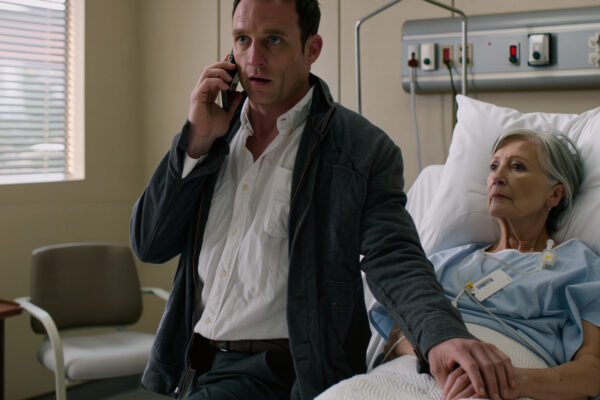
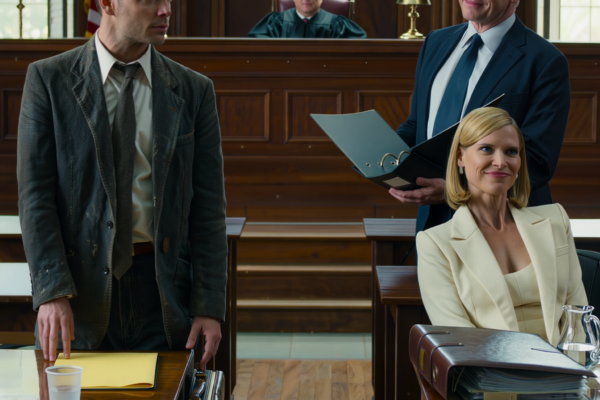
After working 91-hour weeks to help deliver a $267 million quarter, I opened my recognition envelope expecting something meaningful and found a $7 voucher instead, so I didn’t complain or make a scene—I simply forwarded the message to every executive involved, added one calm sentence, and by the next morning the people who thought I would stay quiet were suddenly asking for a meeting.
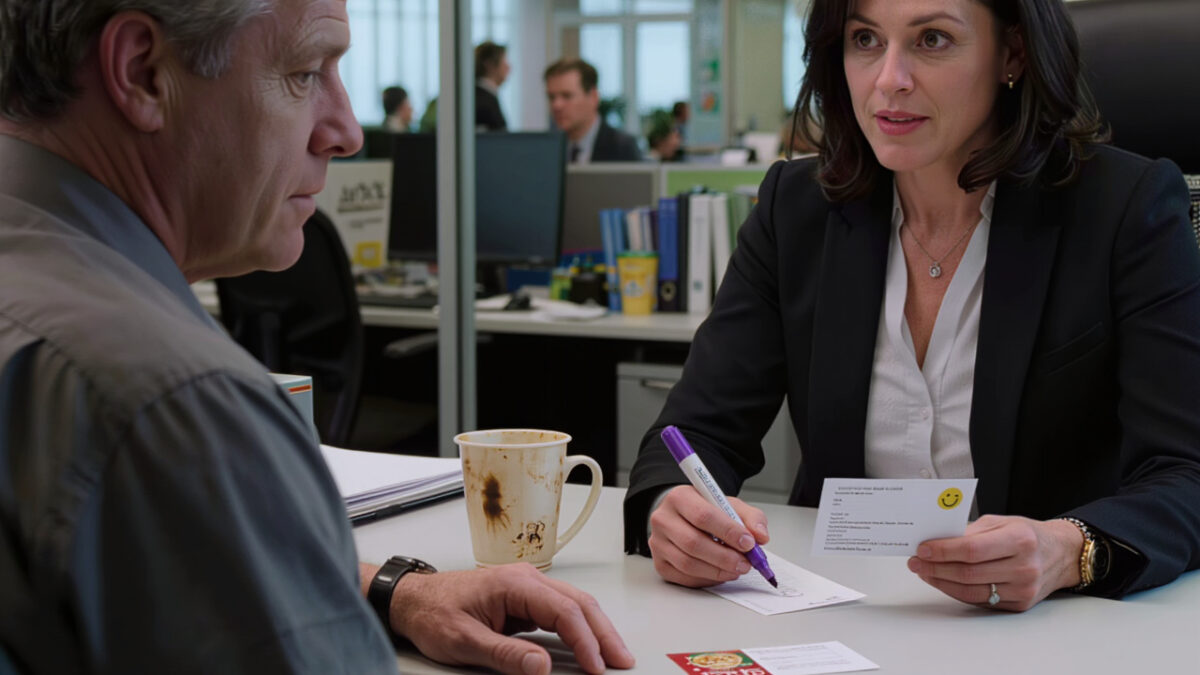
Angela Foster slid a $7 restaurant voucher across my desk like she was handing me the keys to a new car. Purple marker, handwritten message, appreciate the little things complete with a smiley face. I’m Howard Brennan, 47 years old, and I stared at that piece of plastic for exactly 4 seconds.
Long enough to remember sleeping in my office chair Tuesday night because we were coordinating a system upgrade across three time zones. Long enough to recall the 91-hour workweek that closed our record-breaking $267 million in quarter. Long enough to think about my aging body telling me this pace wasn’t sustainable anymore.
Then I smiled, not because I was grateful, because in that moment Angela had just handed me everything I needed to walk away from 15 years of my life. But let me back up and explain how I got to this point, sitting in a corporate office holding a $7 coupon after delivering the biggest quarter in company history.
For the past 15 years, I’ve been the senior operations director at Apex Technologies. On paper, we’re an enterprise software solutions company. In reality, we sell complex systems to Fortune 500 companies that don’t always understand what they’re buying, but know they need to stay competitive in a world where technology changes faster than most executives can keep up.
I didn’t start out in operations. I began as a production coordinator right out of college back when Apex had 200 employees instead of 2,000. This was 1999, when the company was still figuring out what it wanted to be.
I worked my way up through planning, logistics, and system design. By year five, I was managing cross-functional teams. By year 10, I was architecting the operational frameworks that still run the company today.
The thing about operations is that it’s not glamorous work, but nothing moves without it. Sales can promise anything to clients. Engineering can build the most sophisticated software in the world, but operations determines whether customers actually get what they paid for when they need it at the quality they expect.
It’s the difference between a company that talks about excellence and one that actually delivers it. My former director, Gary Wallace, understood this. Gary was old school, 58 when I started working under him.
A guy who’d built operational systems for three different companies before landing at Apex. He protected our department when executives wanted impossible timelines. He fought for proper staffing when other departments complained about head count.
He made sure operational expertise was respected, not taken for granted. Gary had a simple philosophy, operations is like the foundation of a house. Nobody thinks about it until it cracks, and by then it’s too expensive to fix.
He made sure we never let it crack. Working under Gary, I learned how to build systems that could scale, how to anticipate problems before they became disasters, and how to manage teams that kept everything running smoothly even when sales was promising delivery dates that made engineering nervous. The work was demanding but fair.
We stayed late when it mattered. We handled emergencies that came in at 5:45 p.m. on Fridays. We dealt with client implementations that required coordination across multiple time zones and technical teams.
But Gary protected us when it counted. He pushed back against impossible deadlines. He told the C-suite when their projections were fantasy, not reality. He made sure bonuses and promotions reflected contribution, not just title.
Then Gary retired 18 months ago and everything changed. Angela Foster arrived with an MBA from Wharton, 3 years of consulting experience at McKinsey, and exactly zero understanding of how manufacturing adjacent operations actually work. She was 31, sharp as a blade, and absolutely convinced that efficiency metrics and data analytics could solve any operational challenge.
Her first team meeting was a master class in business school buzzwords, optimization, streamlined processes, data-driven decision-making, and leveraging synergies for maximum throughput. She talked about bringing fresh perspective to operations and modernizing our approach for the digital age. What she didn’t do was ask a single question about our current systems, our client relationships, or why certain processes existed.
She didn’t inquire about our team’s experience, our institutional knowledge, or what we’d learned from 15 years of handling every kind of operational crisis you could imagine. After the meeting, she pulled me aside. Howard, I’ve heard great things about your institutional knowledge.
Gary spoke very highly of your technical expertise. I’m counting on you to help drive this transformation and bring our department into the 21st century. Translation, I’m going to change everything that’s currently working, and I need you to make sure it doesn’t completely fall apart while I figure out what I’m doing.
I tried to give her the benefit of the doubt. Everyone deserves a learning curve, especially when they’re taking over complex systems they didn’t build. I walked her through our client onboarding protocols, explained the difference between standard implementations and custom integrations that required special handling.
I showed her the early warning systems I built to catch problems before they became disasters, the relationships we’d cultivated with key clients, and the informal networks that kept information flowing smoothly between departments. She listened, took detailed notes, asked intelligent questions. For a few weeks, I thought maybe this could work.
Maybe fresh eyes on old systems would actually help us improve. Then she started optimizing. The first sign of trouble was the Monday morning metrics dashboard.
“We need real-time visibility into operational performance,” she announced during a team meeting.
“Just a quick snapshot of key performance indicators. Nothing too heavy, just data that helps leadership make informed decisions.” The problem? Our existing systems were designed for weekly and monthly reporting cycles, not daily metrics.
Creating daily dashboards meant someone had to manually pull data from six different platforms, cross-reference it with current client schedules, validate accuracy against multiple sources, and format everything into executive-friendly charts. That someone was me and my team.
“Where will the additional hours come from?”
I asked during the rollout meeting.
“We’ll streamline existing processes,” she said confidently.
“Work smarter, not harder. This is about efficiency optimization. What happened instead was that within 8 weeks, my standard 50-hour work week became 65 hours. The metrics dashboard required 2 hours every morning just to compile and validate.
Client emergencies still needed immediate attention. Monthly reporting deadlines didn’t disappear. Quarterly planning cycles still demanded the same level of detail and analysis. Our team of eight experienced coordinators shrank to six when two people left for positions at companies that understood work-life balance.
Angela’s response, “This is a great opportunity for everyone to expand their skill sets and take on more responsibility.” No replacement hires were approved. No adjustment to deliverables was made.
Just more work distributed among fewer people with the expectation that we’d maintain the same quality and turnaround times that had made our department the backbone of the company’s operational success. By month four under Angela’s leadership, I was averaging 75 hours a week. By month eight, it was 85.
This quarter, the one that generated our record $267 million, I tracked 91 1 hours per week for 12 straight weeks. You might wonder why I didn’t push back harder. Why I didn’t just say no to the impossible workload.
Three reasons, all of them sitting in my checkbook every month. Alimony payments of $2,800, my daughter Sarah’s pre-med program at Northwestern, and my son Jake’s engineering degree at Colorado State. At 47, with an ex-wife who’d gotten half of everything in our divorce settlement, two kids whose education costs more per year than I used to make in total, and an aging father showing early signs of dementia.
Walking away from a $185,000 salary wasn’t exactly a simple decision. But the real reason I stayed wasn’t financial. It was professional pride. The systems I’d built over 15 years were handling massive growth flawlessly.
The operational frameworks I designed were processing more transactions than anyone had thought possible when we first implemented them. My team was performing miracles under impossible conditions, and I wasn’t about to let 15 years of work collapse because some new director thought she could optimize human beings like software code.
I thought if we just got through this quarter, if we hit the numbers everyone was demanding, leadership would recognize what it actually cost to achieve those results. I thought record revenue would translate to proper staffing, reasonable workloads, maybe even some meaningful recognition of what we’d accomplished. The quarter closed on a Thursday, 267 million dollars in booked revenue, 34% above target, making it the highest performing quarter in company history.
My operational systems handled the volume without a single major failure, zero critical downtime. Customer satisfaction scores actually improved despite the increased transaction load. Friday morning, the celebration was exactly what you’d expect from a company that just posted record profits.
We had cupcakes in the break room. Blue frosting with the company logo printed in edible ink. Angela gave a brief speech about team performance and operational excellence. Using the same corporate vocabulary that meant everything and nothing.
Generic applause, quick photos for the company newsletter, then back to work. No bonus announcements were made, no discussions about head count increases, no acknowledgement that we’d just proven my systems could scale way beyond what anyone had projected when we designed them. Just sugar and stock phrases about appreciating everyone’s hard work.
The weekend came and went. I spent Saturday catching up on personal emails I’d been ignoring for weeks and Sunday trying to have dinner with my kids without checking my phone every 10 minutes. Sarah mentioned she’d been calling me for 3 days about something related to her MCAT prep.
Jake asked if I was okay because I’d missed our monthly lunch 2 months in a row. Monday afternoon, Angela called me into her office. I walked in tired but hopeful, expecting maybe a real conversation about resources, about sustainable growth, about building on what we’d achieved.
Instead, I saw a stack of glossy vouchers on her desk. Corporate branding, restaurant partner logos, the of promotional materials you’d get in a new employee welcome packet or at a job fair.
“Howard,” she said, beaming like she was about to deliver great news, “I wanted to personally thank you for your dedication this quarter. Your leadership made all the difference in our success.” She picked up a purple marker, uncapped it with a small pop, and carefully wrote on one of the vouchers.
I watched her form each letter in neat, cheerful handwriting. Appreciate the little things. AF. Then she drew a small smiley face next to her initials, the kind of doodle you’d see on a greeting card from your grandmother.
She slid it across her desk toward me. It landed next to my coffee cup, which I noticed was empty and had a ring stain on the bottom because I’d been reusing it for 3 days straight. $7 toward any purchase at Metro Cafe Network, a chain of corporate lunch spots with overpriced sandwiches and coffee that tasted like it had been brewing since the Clinton administration.
I picked up the voucher and examined it. $7. Not $10, not $15, not even enough to cover a full lunch at the cafes where it was valid. Maybe a sandwich without a drink, or coffee and a muffin if you didn’t mind spending your own money to supplement your appreciation.
“These are just small tokens,” Angela continued, gesturing to the stack of identical vouchers.
“We’re giving them to the people who really stepped up this quarter. I wanted to add a personal touch to show that we notice individual contributions.” I looked up at her.
She was genuinely smiling, not mocking, not being passive-aggressive, just completely and utterly oblivious. In her mind, this was thoughtful leadership, a meaningful gesture that showed she understood the human side of management.
For 91 hours a week, for 15 years of operational expertise, for systems that had just processed $267 million in quarterly revenue without breaking, for staying late, coming in early, working weekends, missing family dinners, postponing doctor appointments, and sacrificing every aspect of my personal life to keep her department running flawlessly, $7 and a purple marker smiley face.
“You know what, Angela?”
I said, letting a slow smile spread across my face, “You’re absolutely right. I really should start appreciating the little things.” She exhaled, her shoulders dropping slightly as relief washed over her expression.
“I knew you’d understand, Howard. You have such a great perspective on what really matters. That’s why you’re such a valuable leader here.”
“I do.”
I said, still smiling.
“I really do understand now.”
I walked back to my desk, sat down, placed the voucher next to my keyboard. The office was humming with its usual afternoon energy. People typing, phones ringing, the gentle whoosh of the HVAC system trying to keep 200 bodies comfortable in a space designed for 150.
For the first time in months, I actually heard the sounds around me instead of just existing in a bubble of deadline stress. I opened my laptop and pulled up the Q3 operational report I’d compiled for next week’s board presentation. 15 pages of charts, graphs, and metrics that told the story of our record quarter, $267 million in process revenue.
Zero critical system failures. 15% efficiency improvement over the previous quarter. Customer satisfaction ratings that had actually increased despite the massive volume spike. Then I turned on my scanner. The scanner hummed to life, a sound I’d heard thousands of times over the years, but never quite like this.
I fed the voucher through face up, watching the light bar sweep across Angela’s purple marker handwriting and that cheerful little smiley face. The machine beeped softly and produced a perfect digital image. I opened a new slide in PowerPoint, something I could do in my sleep after 15 years of creating executive presentations.
On the left side, I placed our Q3 revenue summary. Clean fonts, professional formatting, the kind of chart that made board members nod approvingly. 267 million in bold blue text.
On the right side, I dropped in the scanned voucher. Purple marker clearly visible against the white plastic background. The smiley face looked even more ridiculous when enlarged to match the scale of the revenue numbers.
No commentary needed, no angry annotations or sarcastic footnotes, just two facts side-by-side letting anyone with functioning eyes draw their own conclusions about the company’s priorities. I saved the file as Q3 results and recognitions HBPPTX and sat back in my chair. Around me, the office continued its normal rhythm.
Keyboards clicking, phone conversations about implementation schedules, the distant hum of the coffee machine that had been making terrible espresso since 2018. My colleague Jennifer was troubleshooting a client integration issue two desks over, patiently explaining why their timeline expectations weren’t realistic given their technical constraints. Normal operational work, the kind I’d been doing for 15 years, the kind that kept this company running smoothly while executives took credit for strategic vision and market leadership.
I opened a new email and began typing. Subject: Q3 operational results and personal transition. Dear leadership team, the attached comparison and summarizes both our Q3 achievement and my experience delivering it.
Over the past 15 years, I have built and maintained the operational infrastructure that enabled today’s record performance. This quarter, that infrastructure processed $267 million in revenue through systems I designed, coordinated by teams I developed, following protocols I established. To achieve these results, I averaged 91 hours per week for 12 consecutive weeks.
My team of six coordinators worked similar schedules, managing client implementation across multiple time zones while maintaining our department’s zero failure track record. The attached image shows our official Q3 revenue achievement alongside the tangible appreciation I received for this performance. At 47, supporting two college students and managing family medical expenses, I understand the value of dedicated work.
I also understand the value of appropriate recognition. The operational systems I built will continue serving this company effectively. The institutional knowledge I carry will transition with me when I resign effective 2 weeks from today.
I have learned to appreciate many things during my tenure here. The satisfaction of building systems that work, the pride of developing teams that perform under pressure, and the importance of working for leadership that values human contribution as more than a line item in a budget. Thank you for the opportunity to contribute to Apex’s growth over the past decade and a half.
Howard Brennan, senior operations director. I attached the PowerPoint slide and reviewed the recipient list twice. CEO Richard Torres, who joined the company 3 years ago and still thought my name was Harold.
COO Patricia Wells, who understood operations better than most executives, but was still convinced that efficiency meant doing more with less. CFO Michael Davidson, who’d actually worked his way up from accounting and might appreciate the visual comparison. VP of human resources Sandra Kim, who would have to deal with the aftermath.
And Angela Foster copied for visibility into exactly how her leadership style was perceived by the people doing the actual work. At 3:47 p.m. on a Tuesday afternoon that felt like the end of everything and the beginning of something else, I clicked send. The response was faster than I expected.
By 3:51, my phone was buzzing with calls from extensions I didn’t recognize. By 3:54, Jennifer looked over from her troubleshooting session with raised eyebrows. Howard, your phone’s been ringing non-stop.
Everything okay? Everything’s fine, I said. And for the first time in months, I meant it. At 3:56, our CFO forwarded my email to someone with the subject line urgent, need to discuss operational transition immediately.
At 3:58, Angela’s direct line appeared on my caller ID. I let it go to voicemail. I was already moving, gathering the personal items I’d accumulated over 15 years of making this office my second home.
Family photos from back when I still had time to take family photos, the spare reading glasses I kept in my desk drawer after too many late nights staring at spreadsheets, the insulated coffee mug my kids had given me for Father’s Day 3 years ago, back when they still believed their dad’s job was something to be proud of, instead of something that kept him from being present in their lives.
Everything else belonged to the company. The technical manuals, the process documentation, the emergency contact lists, the informal notes about client preferences and system quirks that made the difference between smooth operations and constant firefighting. 15 years of institutional knowledge that couldn’t be replaced by hiring someone with an MBA and a fresh perspective.
People were starting to stare as I emptied my desk drawers. Word was spreading the way it always does in open offices, through glances and whispered conversations, and the kind of energy that builds when something significant is happening. Marcus from procurement walked by and gave me a subtle thumbs-up.
Elena from client services mouthed “Good for you” when she thought nobody was looking. I didn’t make any speeches or send any departmental farewell emails. The PowerPoint slide said everything that needed saying.
I just packed my things, logged out of my computer, and walked toward the elevator carrying a cardboard box that represented the personal parts of 15 years. The elevator doors opened with their familiar ding. I stepped inside, turned around, and looked back at the operational department I’d built from the ground up.
My team was still working, still solving problems, still keeping the company running despite everything. They were good people doing important work under impossible conditions. The doors closed, and for the first time since Angela had handed me that voucher 2 hours earlier, I felt something that might have been peace.
The lobby felt different on my way out. Same polished floors, same corporate promotional videos playing on mounted screens, same receptionist nodding politely at departing employees. But I wasn’t mentally reviewing tomorrow’s task list or calculating how many hours I’d need to catch up on delayed projects.
I was done calculating. I pushed through the glass doors into late afternoon sunlight. October in Denver with that crisp mountain air that reminded you winter was coming whether you were ready or not.
The parking lot stretched out in neat rows filled with sedans and SUVs belonging to people still inside, still working, still believing their dedication would eventually be recognized with something more substantial than vouchers and cupcakes. I was halfway to my truck when I heard it. Howard Angela’s voice, sharp with panic, cutting through the ambient noise of traffic and distant construction.
Heels clicking fast on asphalt, I stopped beside my truck, turned around. She was half running between parked cars, her usually perfect appearance disheveled. Her blazer was askew, several strands of hair had escaped from her normally immaculate style, and she was slightly out of breath.
“Wait,” she called, reaching me with her hand raised like she could physically stop me from leaving.
“We need to talk.”
I leaned against my driver’s side door, crossed my arms, and waited. She caught her breath, straightened her blazer, and tried to reassemble her professional composure.
“About your email,” she said.
“You embarrassed me in front of the entire executive team. Do you understand how that makes our department look?”
“Depends on who’s reading it,” I replied.
“To me, it looks honest.”
“The voucher was symbolic,” she said quickly.
“You know we have budget constraints. We can’t just hand out cash bonuses every quarter.”
“Angela,” I said calmly, “I didn’t ask for a bonus. I asked for recognition that matched the value delivered.”
“Then what do you want?”
The frustration in her voice was edging towards something like desperation.
“Because right now it feels like you’re trying to damage this company on your way out.”
“What I want is leadership that understands operational excellence requires sustainable practices. What I want is a director who recognizes that 91-hour weeks aren’t a badge of honor, they’re a management failure. What I want is someone who knows the difference between appreciation and exploitation.”
She folded her arms defensively.
“You think I don’t fight for this department? Do you have any idea what kind of pressure I’m under from above?”
“Revenue targets come from corporate. I don’t set them.”
“And your solution was a $7 voucher with a a face.”
“It was a gesture,” she said again, like repetition could change reality. A personal touch to show individual recognition. It was a message, I replied, crystal clear. 15 years of operational expertise equals $7 and some purple marker enthusiasm.
Her phone buzzed. She glanced down reflexively and I saw the stress building in her face. The screen showed a text preview from the COO. Emergency leadership meeting. Howard’s resignation.
Conference Room A now. She looked back up at me and for a moment the professional mask dropped completely. I saw what was underneath. A 31-year-old woman who’d been promoted beyond her experience level trying to manage systems she didn’t fully understand while satisfying executives who measured everything except what actually mattered.
HR called, she said quietly. They want to make an offer. Senior VP of Operations. 20% salary increase. Equity participation. I’m not negotiating, I said. She blinked. What? I’m not negotiating.
I’m informing you that I’m leaving. You can’t just walk away from 15 years, she said, incredulous. Think about your career trajectory, your industry reputation. I have 15 years of proven results and an operational track record that speaks for itself.
My reputation will survive. The question is whether yours will. Her phone buzzed again. Another message this time from the CEO’s assistant. I could see the reality settling in. The person who understood their operational infrastructure better than anyone was walking away and there was no quick replacement for institutional knowledge.
At least come back inside and talk to the executive team, she said. They want to meet with you immediately. There’s room to work something out if you’ll just No, I said.
Howard, be reasonable. Angela, I said quietly. This is me being reasonable for the first time in 18 months. I unlocked my truck, opened the door. She stood there in the parking lot, phone buzzing with urgent messages, watching someone who was no longer her problem drive away.
Six months later, I’m sleeping eight hours most nights. My blood pressure is normal for the first time in years. I took a position as VP of operations at a mid-size manufacturing consultancy, where the CFO is 54 and understands that experience costs money, but inexperience costs more.
Sarah finished her MCAT prep with me actually present to help with practice questions. Jake and I have resumed our monthly lunches, and he’s considering operations management as a career path, though I’ve warned him to choose his bosses carefully. My father’s dementia is progressing, but I have time now to take him to appointments and handle the paperwork that comes with managing someone else’s life while they’re still living it.
The new company gave me equity, reasonable deadlines, and something Angela never offered: respect for the knowledge that comes from doing difficult work well for a long time. I heard through industry contacts that Apex hired three new coordinators to handle the workload I used to manage alone. The operational systems I built are still running, but without someone who understands their design principles, small problems are becoming bigger ones.
They’re learning what Gary Wallace tried to teach Angela. Operations is like a foundation. Nobody thinks about it until it cracks. If you’re reading this and thinking about your own version of that voucher, whether it’s a pizza party after record profits, a branded coffee mug for extraordinary effort, or a $7 coupon for sacrificing your health and family time, pay attention.
That moment of recognition isn’t gratitude, it’s revelation. You’ve built something valuable with your time, your expertise, your dedication. When someone hands you a token and expects gratitude, they’re telling you exactly how little they understand what you’re worth.
At 47, I learned that appreciating the little things means recognizing when it’s time to find people who appreciate the big things: your knowledge, your commitment, and your irreplaceable human contribution to something larger than yourself. Life’s too short to accept vouchers when you’ve earned genuine respect.